Jun 10, 2013 | Agendas, Events
On Friday 7 June 2013, the ICJ convened a parallel event during the Human Rights Council’s 23rd regular session held in Geneva.
The event, held in Room IX of the Palais des Nations, addressed key issues concerning past and present challenges to the rule of law in Zimbabwe in the context of the upcoming elections and the need for the international community to remain vigilant about the necessity for free, fair and peaceful elections in the country. The event was chaired by Martin Okumu-Masiga, Deputy Director of the ICJ’s Africa Regional Programme. Panelists were MacDonald Lewanika, Director of Crisis Coalition; Okay Machisa, Director of the Zimbabwe Human Rights Association; and Irene Petras, Executive Director of Zimbabwe Lawyers for Human Rights.
Zimbabwe is scheduled to hold general elections before the end of 2013. Past elections in the country have been marred by violence and attacks on human rights defenders and the rule of law more generally. In the period leading to the 2013 elections, there have been several incidents of crackdown on political dissents and independent voices. The impunity enjoyed by past and current perpetrators electoral violence has continued to exacerbate fears for the integrity, peaceful conduct and fairness of the upcoming elections.
Zimbabwe-HR Council side event on elections in Zimbabwe-event-2013 (event flyer in pdf)
ICJ draws attention to risks of violence in the forthcoming general elections in Zimbabwe
Apr 5, 2013 | News
The ICJ urged the Cambodian Bar Association to make it clear that its new Code of Ethics, launched today, does not restrict the freedom of lawyers to express their opinions.
Article 17 of the new Code of Ethics states (in an informal translation by the ICJ) that “All interventions made publicly or through public media by lawyers in their capacity as lawyers may be permitted only within the framework of strict compliance with the duties of the legal profession. Such interventions require diligence.”
This language replaces Article 15 of the 1995 Code, which demanded all lawyers in Cambodia to “inform” or “consult” the Bar President before making media statements.
“The language of the new Article 17 is an improvement over the old Code, but it is ambiguous and raises fears that lawyers will not be able to exercise their right to express their opinions freely,” said Emerlynne Gil, ICJ’s International Legal Advisor on Southeast Asia. “The Cambodian Bar Association must clarify that under Article 17, lawyers, like all others, can address important legal and policy issues publicly and openly.”
The ICJ asserted that the Bar Association must clearly and publicly state that Article 17 shall not be construed to mean that lawyers must seek permission prior to engaging in public activities in their professional capacity.
The ICJ also expressed concern over the previous statements made by the Bar Association implying that lawyers could be sanctioned for expressing certain views of the country’s laws or legal reforms. During a press conference on 15 March 2013, the Bar Association said that the purpose of Article 17 was to prevent lawyers from misinterpreting the law and thus “making society chaotic”.
“The best means of increasing public awareness of the laws and strengthening the rule of law is to encourage greater public discussion,” said Emerlynne Gil. “Disagreements about the meaning of laws are part of the nature of the legal process and should be encouraged publicly.”
The ICJ recognizes the grave difficulties of facing the legal system in Cambodia, where fewer than 1000 active lawyers must provide services for a population of more than 14 million people. “We share the Cambodian Bar Association’s concerns about the need to uphold the professional competence and integrity of its members,” said Emerlynne Gil. “However, this concern should be addressed through efforts to improve legal education expertise rather than limiting the right of lawyers to freedom of expression.”
For questions and clarifications, please contact Ms. Emerlynne Gil, International Legal Adviser for Southeast Asia, tel. no. +662 619 8477, fax no. +662 6198479 or emerlynne.gil@icj.org
Jan 17, 2013 | News
 The ICJ expresses great concern over the recent pattern of attacks on human rights defenders in Zimbabwe by the Law and Order Section of the Zimbabwe Republic Police (ZRP).
The ICJ says the systematic assault on human rights defenders has taken the form of arbitrary arrests of human rights practitioners, unjustifiable raids on their offices and interference with their meetings amongst other forms of harassment.
Such attacks have been a continuous source of international concern, including when raised by United Nations Human Rights Council in its Universal Periodic Review of Zimbabwe in 2011.
There has been a failure on the part of the Zimbabwe judiciary to exercise its responsibility of judicial oversight over these abuses, the ICJ adds.
“Government officials including the ZRP are using repressive laws to harass and intimidate human rights defenders and NGOs with the aim of causing them to abandon their work in promoting and defending human rights in Zimbabwe,” said Martin Masiga, Deputy Director of the Africa Regional Programme of the ICJ. “It is deplorable that the government has contrived to fabricate charges against its own citizens to discredit, delegitimize and frustrate their lawful civic activities.”
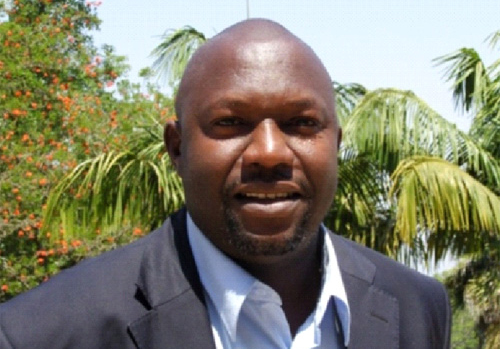
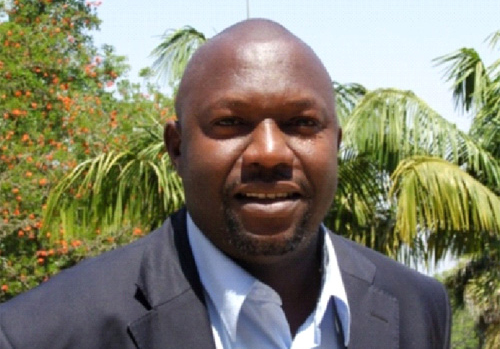
The ICJ underscores the reports of the arrest of Zimbabwe Human Rights Association (ZimRights) Director Okay Machisa (photo) on Monday, 14 January 2013 in Harare on charges of allegedly “conspiring to commit voter registration fraud and publishing or communicating falsehoods”.
The magistrate in this matter denied bail for reasons inconsistent with international fair trial standards and which appeared to be politically motivated.
The arrest of Okay Machisa follows the detention of his deputy, Leo Chamahwinya and three other staff members of ZimRights in December 2012 on the same charges.
These arrests occurred just a few weeks after ZimRights [publicly] denounced the trend of increasing police brutality across Zimbabwe and called for urgent action by competent authorities to address these human rights violations.
The Zimbabwean Constitution, the African Charter on Human and Peoples’ Rights and the International Covenant on Civil and Political Rights, to which Zimbabwe is a state party, guarantees the right to the freedom of opinion, expression and association.
The UN Declaration on Human Rights Defenders, which articulates universal standards for the protection of those working to protect human rights, affirms that “everyone has the right, individually and in association with others, to promote and to strive for the protection and realization of human rights and fundamental freedoms at the national and international levels “.
Accordingly, Zimbabwe has a legal obligation to protect those persons and organisations that strive for the protection and promotion of human rights.
Zimbabwe reportedly will hold national elections in 2013, the first since the formation of the Government of National Unity following the tragic events of the 2008 national election.
The ICJ insists it is essential for the people of Zimbabwe and for the advancement of Zimbabwe in the arena of constitutional democracy that State officials exercise their responsibility to protect human rights activists instead of attacking them.
The ICJ urges the Government of Zimbabwe to respect regional and international human rights standards, and to call upon its law enforcement agencies to cease the harassment and intimidation of HRDs in Zimbabwe.
The ICJ calls on the Zimbabwean judiciary to exercise its responsibility to uphold international fair trial standards and the constitutional provisions of Zimbabwe in adjudicating the matters relating to human rights defenders, including the officials of ZimRights.
Contact:
Martin Okumu-Masiga, Deputy Director of the ICJ Africa Regional Programme, t: +27110248268; e-mail: martin.okumu-masiga(at)icj.org
Nov 30, 2012 | News
The ICJ condemns the reintroduction of Anti-Homosexuality Bill in the Ugandan Parliament. The bill has passed out of committee and is expected to come to a floor vote in early December.
According to reports from civil society organizations in Uganda, the bill still contains the death penalty for acts of “aggravated homosexuality.”
In addition, the Anti-Homosexuality Bill criminalizes the promotion of homosexuality, which is defined to include all advocacy activities.
“Adopting the Anti-Homosexuality Bill would be a serious threat to the human rights and human dignity of LGBT individuals and organizations,” said Alli Jernow, Senior Legal Adviser at the ICJ. “Under the Bill, not only might someone face life in prison or the death penalty for being gay, but human rights defenders would also be prevented from speaking out to challenge the law.”
Under the Bill, anyone in authority, such as a teacher or medical professional, who fails to report an offence to law enforcement within twenty-four hours, is liable to three years’ imprisonment.
The ICJ says the bill is dangerous and deadly and urges Parliament to reject it.
Parliament must also reaffirm the rights to non-discrimination, privacy, freedom of expression and freedom of association for all Ugandans, the ICJ adds.
The Anti-Homosexuality Bill has already been used to justify a general clampdown on civil society in Uganda.
Meetings and workshops have been disrupted and advocacy groups working on human rights have been threatened.
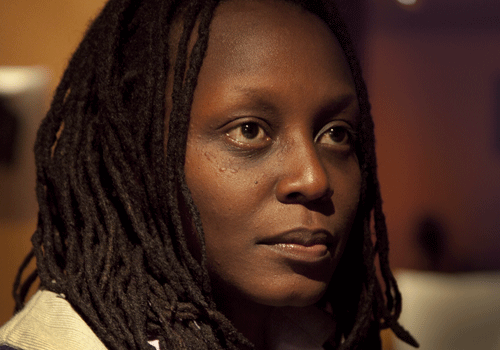
In February 2012, the Minister of State for Ethics and Integrity, Simon Lokodo, shut down a capacity-building session for LGBT activists organized by Freedom and Roam Uganda (FARUG) at a hotel in Entebbe and threatened to arrest FARUG’s executive director Kasha Jacqueline Nabagesera (picture above).
In June 2012, police raided a workshop for East African LGBT human rights defenders that had been organized by the East and Horn of Africa Human Rights Defenders Project and they detained participants for several hours.
Minister Lokodo also told the press that he was going to ban 38 organizations that were “sympathetic to LGBT people.”
“If adopted, the bill would clearly violate the human rights of all Ugandans,” Jernow added.
International human rights law, including treaties to which Uganda is a party, prohibit the criminalization of same-sex sexual conduct and forbid the imposition of the death penalty for non-violent conduct, including sexual relations between consenting adults.
International human rights law also guarantees the right of everyone, regardless of sexual orientation or gender identity, to freedom of expression, association and peaceful assembly.
Contact:
Alli Jernow, ICJ Senior Legal Advisor, t + 41 22 979 3823 ; e-mail: alison.jernow(at)icj.org
Nov 27, 2012 | News
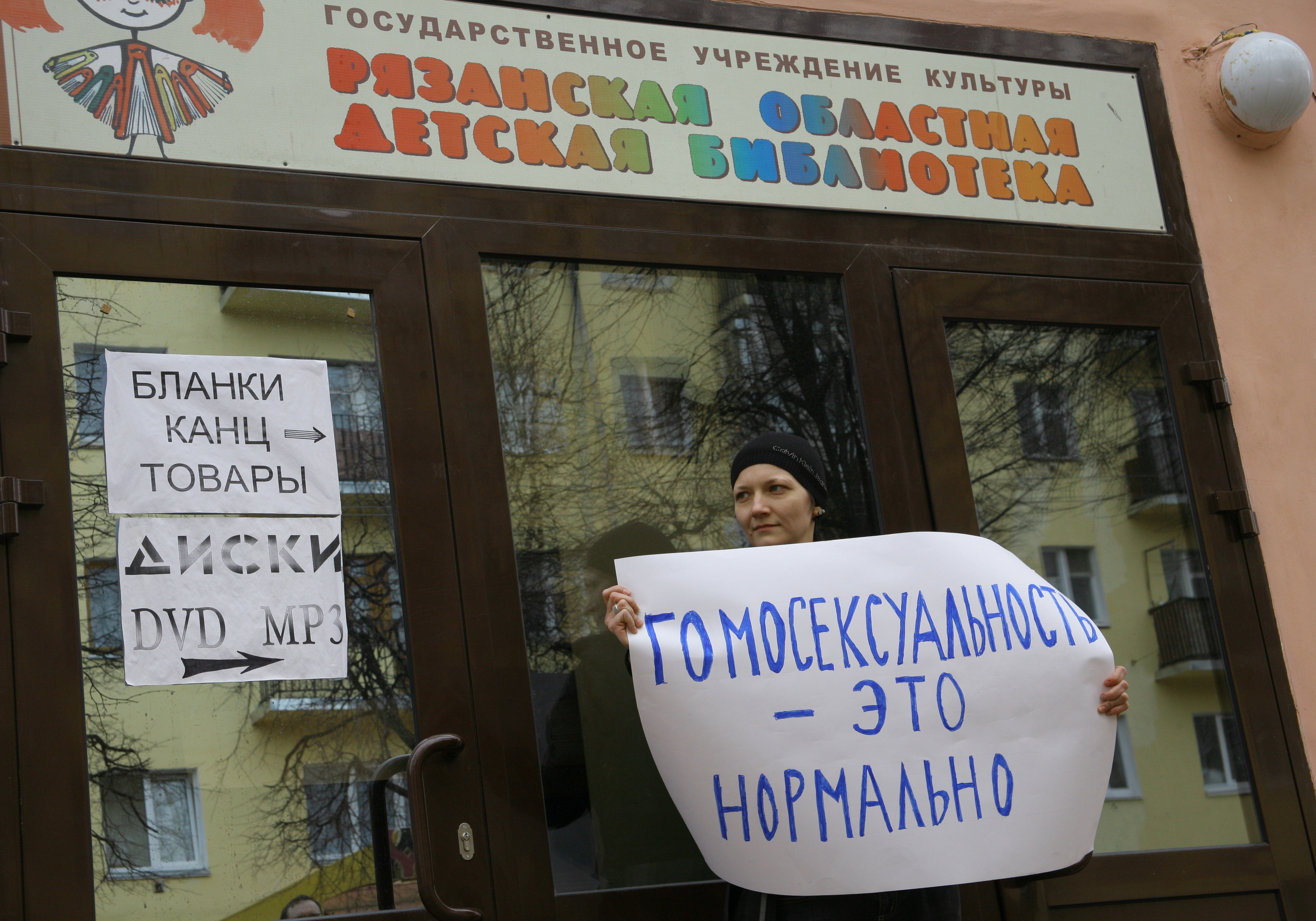 The ICJ and ILGA-Europe welcome the historic decision by the UN Human Rights Committee in Irina Fedotova v. Russian Federation, which was released on 19 November.
“We are very pleased with the Committee’s Views in this case and in particular with the recognition that expressing opinions and information about same-sex sexual orientation cannot be limited in the name of public morality,” said Alli Jernow, ICJ Senior Legal Advisor.
In March 2009, Fedotova had displayed posters declaring “Homosexuality is normal” and “I am proud of my homosexuality” near a secondary school building in Ryazan.
The Ryazan Law on Administrative Offences prohibited “public actions aimed at propaganda of homosexuality among minors.” She was arrested, convicted, and ordered to pay a fine of 1,500 roubles.
Fedotova lost her appeal to the district court and the Constitutional Court ruled that the prohibition of information that was “capable of harming health, morals and spiritual development, as well as forming perverted conceptions about equal social value of traditional and non-traditional family relations” could not be considered a violation of the right to freedom of expression.
But the Human Rights Committee held that Russia had violated Fedotova’s rights to freedom of expression and to be free from discrimination.
These rights are guaranteed by articles 19 and 26 of the International Covenant on Civil and Political Rights.
“The decision is especially important because it effectively reverses the position taken by the Committee in the 1982 case of Hertzberg v. Finland, which upheld a ban similar to the one in the Fedotova case,” Jernow added.
The Human Rights Committee ordered the Russian Federation to reimburse the fine paid by Fedotova as well as her legal costs and to ensure that the relevant provisions of domestic law are made compatible with articles 19 and 26 of the Covenant.
Since the Ryazan law was adopted, a number of other regions in Russia have adopted legislation banning “homosexual propaganda.” Activists across the country, including in St. Petersburg, have been arrested and convicted under such laws.
In its decision, the Human Rights Committee emphasized that limitations for the purpose of public morals, which are derived “from many social, philosophical and religious traditions,” could not be based exclusively on a single tradition.
Furthermore, any such limitations “must be understood in light of universality of human rights and the principle of non-discrimination.” The Committee recalled that the “prohibition against discrimination under article 26 comprises also discrimination based on sexual orientation.”
The Committee stated that Russia “has not shown that a restriction on the right to freedom of expression in relation to ‘propaganda of homosexuality’ – as opposed to propaganda of heterosexuality or sexuality generally – among minors is based on reasonable and objective criteria.”
Fedotova’s actions were not aimed at involving minors in any particular sexual activity. Rather, “she was giving expression to her sexual identity and seeking understanding for it.”
“We hope this landmark decision will send a strong signal to Russia to reconsider such discriminatory steps and to abandon any legislative proposals criminalising ‘homosexual propaganda’,” said Evelyne Paradis, Executive Director of ILGA-Europe.
The ICJ had submitted a legal opinion, which the Committee excerpted in detail, arguing that the law was discriminatory and that limitations on rights could not discriminate. Earlier this year, the ICJ and ILGA-Europe published a briefing paper titled “Homosexual Propaganda Bans: Analysis and Recommendations.”
Contact:
Alli Jernow, ICJ Senior Legal Advisor, t + 41 22 979 3823
Juris Lavrikovs, ILGA-Europe, t + 32 2 609 54 16 and + 32 496 708 375