
Myanmar: Government must do far more to comply with International Court Justice’s order on protection of Rohingya population
In order to comply substantially with the International Court of Justice’s provisional measures Order in the case of The Gambia v. Myanmar, Myanmar should carry out legal reforms and cooperate with international accountability processes, said the ICJ today.
The Gambia has accused Myanmar of violations of the 1948 Genocide Convention in respect of its treatment of Rohingya population, characterized by acts of widespread killing and displacement of the population.
The call comes as Myanmar is scheduled to report on “all measures taken” to give effect to the provisional measures Order (Order) issued by the Court on 23 January 2020.
“Myanmar has not taken ‘all measures within its power’ to prevent acts of genocide until it implements comprehensive legal and constitutional reforms,” said Sam Zarifi, Secretary General of the International Commission of Jurists. “Accountability lies at the heart of prevention, and so long as the Tatmadaw remains unaccountable to the civilian authorities the cycle of impunity for criminal atrocities within the country will continue.”
Since the Order, Myanmar has taken a limited number of steps linked to its compliance with the Order, including issuing three Presidential Directives encouraging anti-hate speech activities, and ordering compliance with the Genocide Convention and the preservation of evidence of human rights and related violations in Rakhine.
Myanmar has also asserted that the findings of the Government-commissioned Independent Commission of Inquiry (ICOE), which made selective admissions including that war crimes may have been committed during the 2017 “clearance operations” in Rakhine, have been transmitted to the Attorney General and the Commander-in-Chief of the Tatmadaw and that action would be taken “in conformity with military justice procedures if there is credible evidence of any commission of offence by members of the Tatmadaw.”
However, the Government has yet to amend or repeal key laws that facilitate discrimination against the Rohingya, including the 1982 Citizenship Law, 2015 Race and Religion Protection Laws and 2014 Myanmar National Human Rights Commission Law. On 6 May 2020, the International Commission of Jurists published a report on the killing of a journalist, Ko Par Gyi, in September 2014, which condemned the fundamentally flawed “military justice procedures” used to address allegations of serious human rights violations. The report highlighted the many deficiencies in ensuring to accountability for serious human rights violations in Myanmar under its prevailing legal framework, including:
- that several provisions of national laws facilitate impunity for serious human rights violations by soldiers against civilians, shield security forces from public criminal prosecutions and deny victims and their families of the right to truth about violations;
- investigations into unlawful killings routinely lack the independence, impartiality and effectiveness necessary to establish the truth and to provide accountability and redress; and
- the rights of victims and their families are rarely respected, including the right to access information concerning the violations and accountability processes, and the right to remedies and reparations.
The UN Human Rights Council has established an Independent Investigative Mechanism to look at allegations of genocide, crimes against humanity and other atrocities in Myanmar, but the government has failed to extend its cooperation with the mechanism.
“Myanmar’s inability to prevent serious human rights violations under the existing legal framework underscores the need for it to cooperate with international justice processes, including the UN’s Independent Investigative Mechanism for Myanmar – and for the UN Security Council to refer the situation to the International Criminal Court,” added Zarifi.
Download the statement with detailed background information here.
Contact
Sam Zarifi, Secretary General of the International Commission of Jurists, t: +41 79 726 4415; e: sam.zarifi(a)icj.org
Kingsley Abbott, Coordinator of the ICJ’s Global Accountability Initiative, t: +66 94 470 1345; e: kingsley.abbott(a)icj.org
Related work
Report: Remove barriers to justice for killing of journalist Ko Par Gyi
Statement: Why law reform is urgent and possible
Statement: Implement International Court of Justice provisional measures Order without delay
Briefing Paper: Four immediate reforms to strengthen the Myanmar National Human Rights Commission
Briefing Paper: Myanmar’s discriminatory citizenship laws can and must be reformed
Myanmar: Implement “provisional measures” order of the International Court of Justice without delay
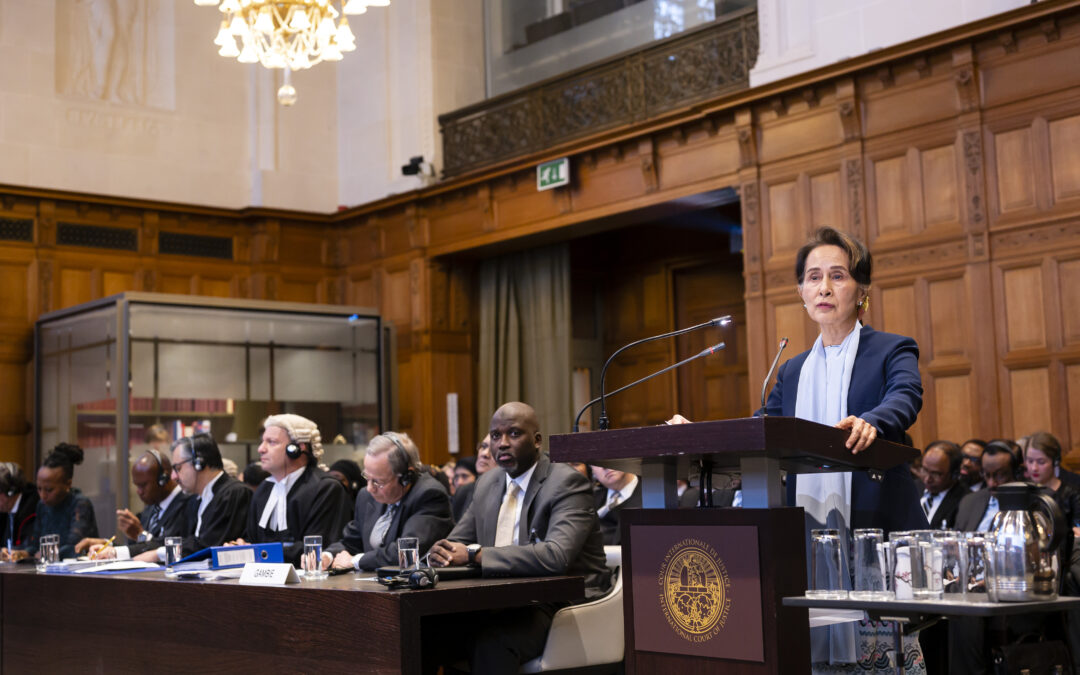
The ICJ welcomes today’s Order of the International Court of Justice (Court) in the case of The Gambia v Myanmar indicating provisional measures to protect the rights of the persecuted Rohingya minority under the Genocide Convention and calls on Myanmar to implement the Order without delay.
“The Order is a significant step towards justice for the Rohingya as it imposes specific, legally-binding, obligations on Myanmar to take critical steps to protect their rights under the Genocide Convention,” said Sam Zarifi, Secretary General of the International Commission of Jurists, currently in Yangon, Myanmar. “It is now incumbent on the whole international community, including States, civil society and UN agencies, to urge and assist Myanmar to fulfil its obligations under the Order.”
In its Order, delivered orally, the Court found it had prima facie jurisdiction over the case and indicated a series of provisional measures, including that Myanmar must:
- take all measures within its power to prevent the commission of all acts within the scope of the definition of genocide set out in Article II of the Genocide Convention;
- ensure that its military as well as any irregular armed units which may be directed or supported by it, and any organizations or persons which may be subject to its control, direction or influence do not commit acts of genocide, conspiracy to commit genocide, direct and public incitement to commit genocide, attempt to commit genocide, or complicity in genocide;
- take effective measures to prevent the destruction and ensure the preservation of any evidence related to allegations of acts within the scope of Article II of the Genocide Convention; and
- submit a report to the Court on all measures taken to give effect to the Order within four months as from the date of the Order and thereafter every six months until a final decision on the case is rendered by the Court. Every report will be communicated to the Gambia which will then have the opportunity to submit to the Court its comments thereon.
Provisional measures are orders the Court has the power to make aimed at preserving the rights of the Parties to a case pending the final decision of the Court in order to avoid irreparable damage to the rights which are the subject of the dispute, in this case the rights of the Rohingya.
A hearing on the merits of the case will be heard at a later date.
The role of the Court is to settle disputes submitted to it by States in accordance with international law – its role does not extend to determining the criminal responsibility of individuals for perpetrating serious human rights violations.
“As Myanmar is unwilling and unable to conduct investigations and, where appropriate, prosecutions of serious human rights violations domestically which meet international law and standards, the various processes underway around the world directed towards criminal accountability- including the investigation of the International Criminal Court – remain necessary and urgent,” added Zarifi.
In 2018, the International Commission of Jurists issued a baseline study of the obstacles to accountability for serious human rights violations in Myanmar identifying “systematic impunity” within the country as a result of the “lack of accountability of perpetrators of human rights violations; lack of access to effective remedies and reparation for victims; and ongoing challenges with the independence and accountability of justice actors.”
International processes underway around the world directed at criminal accountability for serious human rights violations in the Myanmar situation include:
- On 14 November 2019, the International Criminal Court commenced an investigation into those crimes which were partially committed inside the territory of Bangladesh, a State Party to the Rome Statute.
- In September 2018, the UN Human Rights Council established a Independent Investigative Mechanism for Myanmar (IIMM), which is mandated to collect, consolidate, preserve and analyse evidence of violations of international humanitarian law and human rights violations and abuses committed in Myanmar since 2011.
- In November 2019, a Rohingya activist, Tun Khin, filed a criminal complaint in Argentina under its “Universal Jurisdiction” law.
To download the full statement with background information, click here.
Contacts
Sam Zarifi, ICJ Secretary General, t: +41 79 726 4415; e: sam.zarifi(a)icj.org
Kingsley Abbott, Coordinator of the ICJ’s Global Accountability Initiative, t: +66 94 470 1345; e: kingsley.abbott(a)icj.org
Myanmar: legal briefing on upcoming hearing on provisional measures at the International Court of Justice
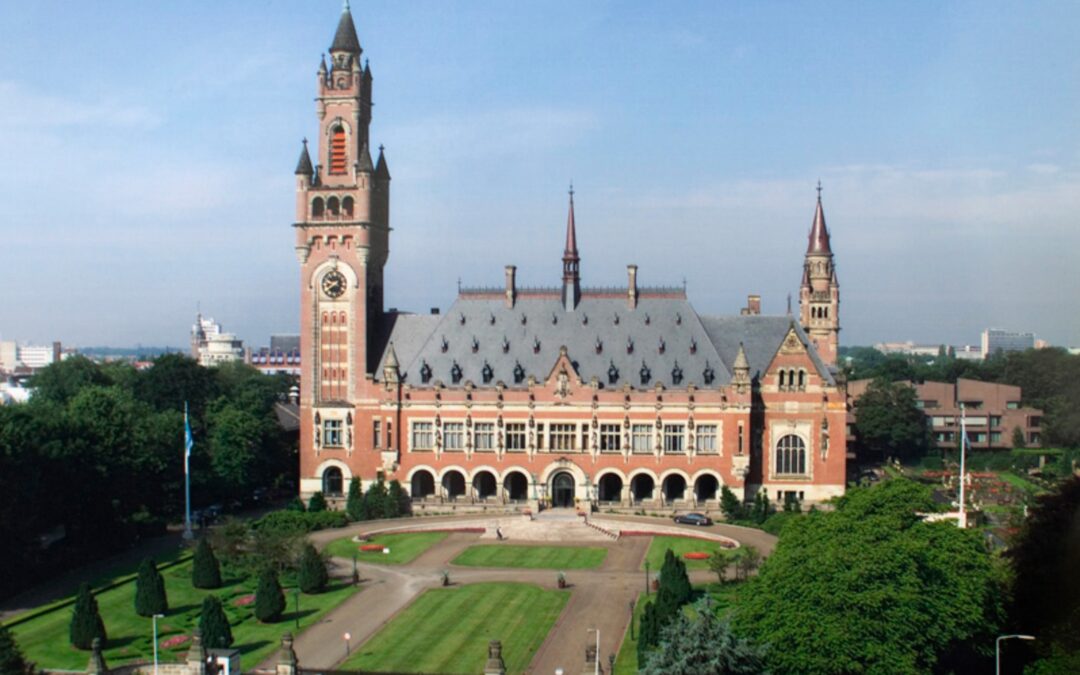
Today, the International Commission of Jurists published a legal briefing on the hearing on provisional measures to be held at the International Court of Justice between 10-12 December 2019 in the case of The Gambia v Myanmar.
Questions answered include:
- What allegations does The Gambia make against Myanmar?
- What provisional measures has The Gambia requested?
- What are provisional measures?
- What is the process for requesting provisional measures?
- What factors are taken into account on a request for provisional measures?
- If the Court indicates provisional measures, are they binding on the parties?
- What is Daw Aung San Suu Kyi’s role in the proceedings?
Download:
Myanmar-Provisional Measures Briefing-Advocacy-Analysis Brief-2019-ENG (English)
Myanmar-Provisional Measures Briefing-Advocacy-Analysis Brief-2019-BUR (Burmese)
Contact:
Kingsley Abbott, Senior Legal Adviser and Coordinator of the ICJ’s Global Accountability Initiative, kingsley.abbott(a)icj.org
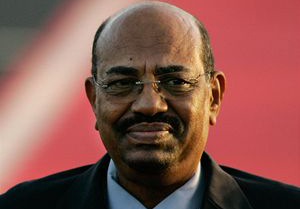
ICC judgment in al-Bashir case a victory for international justice
The ICJ welcomed today’s judgment by the International Criminal Court (ICC) that South Africa had violated its legal obligations by failing to arrest Sudanese President Omar al-Bashir during his visit to the country in June 2015.
The ICC said the South Africa should have surrendered him to the ICC for prosecution.
President al-Bashir (photo) had been indicted by the ICC for genocide, crimes against humanity and war crimes in connection with attacks against civilians in the Darfur region of the country.
“The judgment is a victory for international justice. It is an extremely important step toward tackling impunity in Sudan and worldwide,” said Arnold Tsunga, the ICJ Africa Regional Director.
The court said unequivocally that South Africa had a duty to arrest and surrender president Bashir to the ICC for prosecution.
It said that South Africa had a duty to recognize that head of state immunity did not apply to al Bahsir under the terms of the Rome Statute, and that leaving the question of immunity to South Africa’s voluntary discretion would have created “an insurmountable obstacle for the court to exercise its jurisdiction.”
The Court also said that Sudan itself had an obligation to remove and immunities for al-Bashir in respect to matters for which he was under indictment.
“The ICJ calls upon the Governments of South Africa and Sudan to respect the judgment of the Court, and urges all States to cooperate with the Court to bring President al-Bashir, and others indicted to justice,” Tsunga added.
The ICC also called on the UN Security and the Assembly of States Parties of the ICC to take appropriate measures to address the non-compliance by South Africa and Sudan.
Background
South Africa has been a party to the Rome Statute of the International Criminal Court since 27 November 2000.
States parties to the Rome Statute are obliged to cooperate with ICC, including by arresting and surrendering persons under indictment by the ICC who may be on their territory.
South Africa took measures to cooperate with the ICC by enacting the Implementation of the Rome Statute of the International Criminal Court Act, 2002.
Accordingly, South Africa had a duty to arrest President al-Bashir when he visited South Africa in 2015
President al-Bashir stands accused of serious crimes, with two warrants of arrest issued by the pre-trial chamber of the ICC.
They all are for war crimes, crimes against humanity and genocide, related to events in the Darfur region of Sudan.
Among the acts are widespread murder, rape and torture.
Contact
Arnold Tsunga, ICJ Director for Africa, t +27716405926 ;
Thulani Maseko, ICJ Legal consultant, t: +268 7602 5165
Ian Seiderman, ICJ Legal & Policy Director, t: +41 22 979 3837
Recent News
 International Covenant on Civil and Political Rights (ICCPR)28 Sep 2026
 HRC63: ICJ Raises Concern over Torture, Executions and Impunity in Libya23 Sep 2026
 HRC63: ICJ Calls for Renewal and Strengthening of the Venezuela Fact-Finding Mission21 Sep 2026
 Joint Statement: Attacks on the Rule of Law, Judicial Independence and Access to Justice in Zambia17 Sep 2026