Aug 31, 2016 | News
ASEAN meeting should highlight disappeared Lao leader Sombath Somphone, denial of liberties, said human rights and advocacy groups at a press conference held today in Bangkok.
On the eve of the annual ASEAN leaders summit in Vientiane, the groups (Human Right Watch, ASEAN Parliamentarians for Human Rights, Civil Rights Defenders, Focus on the Global South, Mekong Watch and the ICJ) called upon the Lao PDR Government to commit to address its widespread violations of human rights, including instances of enforced disappearances and arbitrary detention.
Visiting world leaders have a unique opportunity to publicly raise human rights concerns during the ASEAN summit in Vientiane from September 6-8. They should press the Lao government to cease the abuses that have consistently placed Laos at the bottom of rights and development indexes measuring rights, press freedom, democracy, religious freedom, and economic transparency, the groups added.
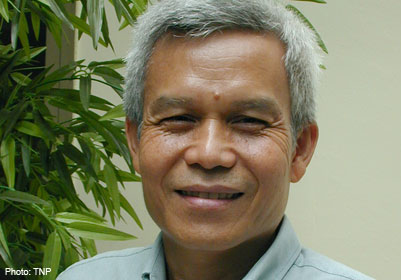
At the event organized by The Sombath Initiative at the Foreign Correspondents Club of Thailand in Bangkok, the groups also released a set of briefing papers on forcibly disappeared civil society leader Sombath Somphone (photo), Laos’ restrictions on democracy and human rights, lack freedom of expression, failure to meet human rights obligations, and impacts of foreign aid and investment.
“More than three and half years after he disappeared, the Lao government still has provided no clear answers to what happened to my husband, Sombath Somphone, who was taken away in truck at a police checkpoint in Vientiane,” said Shui Meng Ng, wife of Sombath and board member of The Sombath Initiative.
“President Obama, the United Nations, and ASEAN and its dialogue partners should urge the Lao Government to urgently resolve the case of Sombath’s enforced disappearance and return him safely to me and my family. They should also demand the Lao Government end enforced disappearances, so that the ordinary people of the country can respect their government rather than fear it.”
“The fact that the Lao PDR government’s last detailed report on the progress of the investigation was released over three years ago suggests the Lao authorities are not carrying out an effective investigation into this case as they are required to do under international law,” said Kingsley Abbott, a Senior International Legal Adviser with the International Commission of Jurists (ICJ).
“It is not enough for the Lao government to simply keep asserting on the international stage that it is investigating this case. International law obliges Lao PDR authorities to conduct an investigation that is credible and effective, and provide regular updates on its progress including to Sombath’s wife, Shui Meng,” he added.
Basic civil and political rights are systematically denied in Laos, and government authorities move quickly to arbitrarily arrest those expressing critical views of the government, either in day to day life or more recently on-line.
In March 2016, police arrested three Lao migrant workers who had posted critical comments about the Lao government while they were working in Thailand, and continues to detain them arbitrarily. A Lao court also sentenced activist Bounthanh Khammavong in September 2015 to 4 years and 9 months in prison for posting critical comments on Facebook.
Laos also imposes onerous restrictions on the right to freedom of association that are incompatible with its human rights obligations.
The government strictly controls the registrations of organizations such as non-profit associations (NPAs), and closely monitors the work plans and budgets of NPAs that it does approve to operate.
Any person who dares to organize and operate an unsanctioned organization faces arrest and prosecution.
Workers are compelled to belong to the Lao Federation of Trade Unions and organizing unions outside that framework is illegal. At the village level, mass organizations controlled by the ruling Lao People’s Revolutionary Party are often the only organizations operating.
Public protests or assemblies are strictly forbidden without government permission, and any efforts organize such events face immediate suppression by the police and security forces.
“Civil society in Laos remains under a hostile spotlight from the government, and UN rights officials have noted that there are few places in the world where they have encountered greater fear and intimidation among community organizations and NGOs,” said Walden Bello, former member of the Philippines Congress and Vice Chair of ASEAN Parliamentarians for Human Rights (APHR).
“Laos has now become one of the most rights repressing countries in ASEAN: leaders in the region and from around the world must stop looking the other way, and demand Vientiane end its asphyxiation of independent civil society,” he added.
Read the full text and quotes here: Laos-End to Human Rights Abuses-News-Press Releases-2016-ENG (in PDF)
Contact
Kingsley Abbott, ICJ Senior International Legal Adviser, t: +66 9 4470 1345, e: kingsley.abbott(a)icj.org

Aug 29, 2016 | News
Tens of thousands of enforced disappearances in South Asia can only be addressed if all the region’s governments immediately criminalize this serious human rights violation, said today lawyers and activists from Bangladesh, India, Nepal, Pakistan and Sri Lanka.
The call came at a Conference on Enforced and Involuntary Disappearances, organized by the ICJ and Human Rights Commission of Pakistan (HRCP) on the eve of the International Day of the Victims of Enforced Disappearances.
South Asia has among the highest number of alleged victims of enforced disappearances in the world: tens of thousands of cases have been documented in Sri Lanka, Nepal, Pakistan and India, and since 2009, there has also been a surge in enforced disappearances in Bangladesh.
“Sri Lanka’s ratification of the Convention on Enforced Disappearance and its pledge to criminalize the practice is a welcome step,” said I. A. Rehman, Secretary General for the Human Rights Commission of Pakistan.
“Other States in the region should now follow suit and show that they are serious about their commitment to human rights by making enforced disappearance a specific crime in their domestic law,” he added.
Under international law, an enforced disappearance is the arrest, abduction or detention by State agents, or by people acting with the authorization, support or acquiescence of the State, followed by a refusal to acknowledge the detention or by concealing the fate or whereabouts of the “disappeared” person which places the person outside the protection of the law.
The UN General Assembly has repeatedly described enforced disappearance as “an offence to human dignity”.
At present, enforced disappearance is not a distinct crime in any South Asian country, which is one of the major hurdles to bringing perpetrators to justice.
In the absence of a legal framework on enforced disappearance, unacknowledged detentions by law enforcement agencies are considered “missing persons” cases.
On the rare occasions where criminal complaints are registered against alleged perpetrators, complainants are forced to categorize the crime as “abduction” or “kidnapping”.
These categories do not recognize the complexity and the particularly serious nature of enforced disappearance, and often do not provide for penalties commensurate to the gravity of the crime.
They also fail to recognize as victims relatives of the “disappeared” person and others suffering harm as a result of the enforced disappearance, as required under international law.
“Despite thousands of cases of enforced disappearance across South Asia, the governments have failed to follow their legal obligation to treat these crimes as the serious human rights violation they are,” said Sam Zarifi, ICJ’s Asia Director.
“South Asian governments have done very little to support the victims and survivors of enforced disappearance, or to ensure the rights of their family members to truth, justice and reparation,” he added.
Other barriers to bringing perpetrators to account are also similar in South Asian countries: military and intelligence agencies have extensive and unaccountable powers, including for arrest and detention; members of law enforcement and security forces enjoy broad legal immunities, shielding them from prosecution; and military courts have jurisdiction over crimes committed by members of the military, even where these crimes are human rights violations.
Victims’ groups, lawyers, and activists who work on enforced disappearance also face security risks including attacks, harassment, surveillance, and intimidation.
A comprehensive set of reforms, both in law and policy, is required to end the entrenched impunity for enforced disappearances in the region – criminalizing the practice would be a significant first step, said ICJ and the HRCP.
Contact
Sam Zarifi, ICJ Asia Pacific Regional Director (Bangkok), t: +66 807819002; e: sam.zarifi(a)icj.org
Read also
ICJ Practitioners’ Guides No. 9 Enforced Disappearance and Extrajudicial Execution: Investigation and Sanction and No. 10 Enforced Disappearance and Extrajudicial Execution: the Right of Family Members, which provide legal practitioners, activists and policy-makers with detailed and practical references on international standards on enforced disappearances and extrajudicial killings.
South Asia-International disappearances day statement-News-2016-ENG (full text in PDF)
Aug 16, 2016 | News
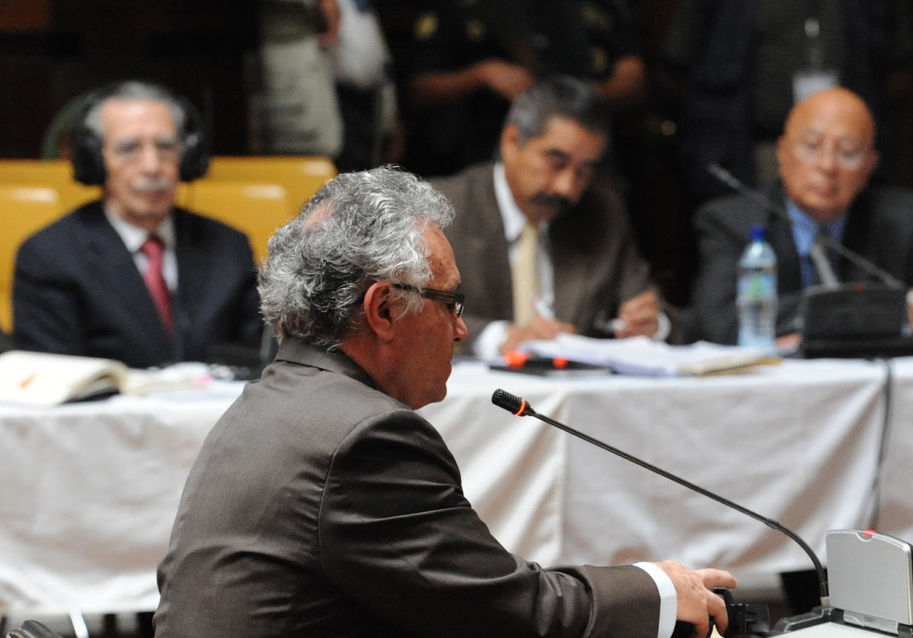
The ICJ said today that the attack on Ramón Cadena, its director in Central America, is deplorable evidence that human rights lawyers in Guatemala cannot carry out their activities without fear of reprisal.
Around a dozen armed men ransacked Ramón Cadena’s house in Guatemala City on Monday morning while he was attending a workshop elsewhere in the country.
The ICJ regional director for Central America is the latest victim of a recent wave of harassment and intimidation against human rights defenders and legal and environmental activists in Guatemala and neighboring Honduras.
“The ICJ strongly condemns the attack against Ramón Cadena, which is most likely linked to his activities as a human rights lawyer,” said Wilder Tayler, ICJ Secretary General.
Ramón Cadena, a highly prominent human rights lawyer in the region, was a key witness in the trial of former President Efrain Rios Montt for his role in the alleged genocide and other atrocities committed during the civil war of the 1970s and 80s.
Ramón Cadena has also been providing legal advice and support (on behalf of the ICJ) to the communities fighting against mining projects in Guatemala.
“We urge the Guatemalan authorities to provide the much needed protection to Ramón Cadena and promptly and thoroughly investigate the attack to find the culprits. They must also combat the increasing threats and growing insecurity faced by human rights defenders in the country, which is a clear assault on human rights,” Tayler added.
Contact
Wilder Tayler, ICJ Secretary General, t +41 76 562 38 10 ; e: wilder.tayler(a)icj.org
Several organizations have also condemned the attack on Ramón Cadena and issued a statement in Spanish which can be read here.

Aug 8, 2016 | News
The ICJ has deplored a suicide attack at a hospital in Quetta, which killed dozens of people today, in the deadliest attack ever on lawyers in Pakistan and among the worst anywhere.
Many of those killed were lawyers, who had been gathered at a hospital in Quetta following the killing of former president of the Balochistan Bar Association, Bilal Anwar Kasi, in a shooting incident earlier in the day.
“This attack targeted mostly lawyers and intellectuals (many of them from the Pashtun community) who had gathered at the hospital to mourn the loss of one of their own,” said Sam Zarifi, ICJ’s Asia Director.
“As such, it constituted a serious loss for the legal community and increases existing pressure on the independence of the bar.”
The ICJ calls on the Pakistani Government to conduct an immediate, impartial and thorough investigation into the attack and to bring those responsible to justice, including anyone who ordered or was otherwise complicit the crime.
The ICJ also urges the Government to take urgent measures to guarantee the security of lawyers, which should include effective measures of protection against attempts on their lives and lives of their family members.
The UN Basic Principles on the Role of Lawyers affirm that“[w]here the security of lawyers is threatened as a result of discharging their functions, they shall be adequately safeguarded by the authorities.”
“If lawyers are under constant fear of violence, they cannot ensure the functioning of an independent and impartial legal profession – an indispensible requirement for rule of law,” Zarifi added.
Contact:
Sam Zarifi, ICJ Asia Pacific Regional Director (Bangkok), t: +66 807819002; e: sam.zarifi(a)icj.org
Reema Omer, ICJ International Legal Adviser for Pakistan (London), t: +44 7889565691; e: reema.omer(a)icj.org

Jul 12, 2016 | News
The International Commission of Jurists (ICJ) has issued a joint statement condemning increasing acts of harassment and intimidation against journalists in Lesotho.
The joint statement expresses concern about a number of incidents threatening freedom of expression, exemplified by the recent shooting of the editor of the Lesotho Times newspaper, and have called on Lesotho Authorities to ensure the right to freedom of expression is protected.
In addition to the ICJ, the statement has also been signed by: amaBhungane Centre for Investigative Journalism; Amnesty International; Freedom of Expression Institute; Institute for Democracy; Lawyers for Human Rights; Lawyer for Human Rights (Swaziland); Media Institute for Southern Africa – Zimbabwe Chapter; Media Monitoring Africa; Open Society Initiative for Southern Africa; PEN Afrikaans; PEN South Africa; Rights 2 Know Campaign; SOS Coalition; Southern Africa Human Rights Defenders Network; Southern AFrican Litigation Centre; Transformation Resource Centre; Zimbabwe Human Rights NGO Forum; and Zimbabwe Lawyers for Human Rights.
Lesotho-Joint statement-Freedom of expression-Advocacy-2016-ENG (full text in PDF)