May 30, 2013 | Agendas, Events
On Wednesday 29 May 2013, the ICJ co-sponsored a parallel event with Human Rights Watch and other NGOs during the Human Rights Council’s 23rd regular session held in Geneva.
The event, held in Room IX of the Palais des Nations, addressed key issues concerning the independence of judges and lawyers within the Russian Federation. The event was chaired by Róisín Pillay, Director of ICJ’s Europe Programme. Panelists were Gabriela Knaul, the UN Special Rapporteur on the independence of judges and lawyers; Tamara Morshchakova, ICJ Commissioner and former Deputy Chair of the Russian Consitutional Court; and Karinna Moskalenko, ICJ Commissioner and founder of the International Protection Centre.
May 3, 2013 | Advocacy, News
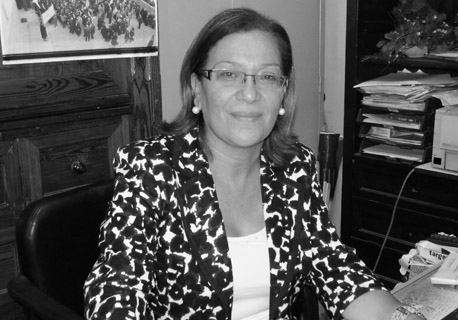
Today, the ICJ sent a letter to the Tunisian Minister of Interior and the Minister of Justice requesting them to take immediate action in order to ensure the security and physical integrity of Justice Kalthoum Kennou.
Justice Kalthoum Kennou is a Tunisian judge on the Court of Cassation, President of the Tunisian Association of Magistrates, and ICJ Commissioner.
This call comes as Justice Kennou received a letter containing serious death threats, demanding her withdrawal from the judiciary. Justice Kennou is active in the establishment of an independent judiciary and the protection of human rights.
The ICJ strongly condemns these threats and all acts of intimidation against the judiciary and human rights defenders in Tunisia, and calls on the Tunisian authorities to initiate the necessary investigations and inquiries in order to find, prosecute, and punish the individuals behind these brutal threats.
Tunisia-Lettre Kalthoum Kennou – MoI-advocacy-2013 (full text in pdf)
Apr 24, 2013 | Feature articles, News
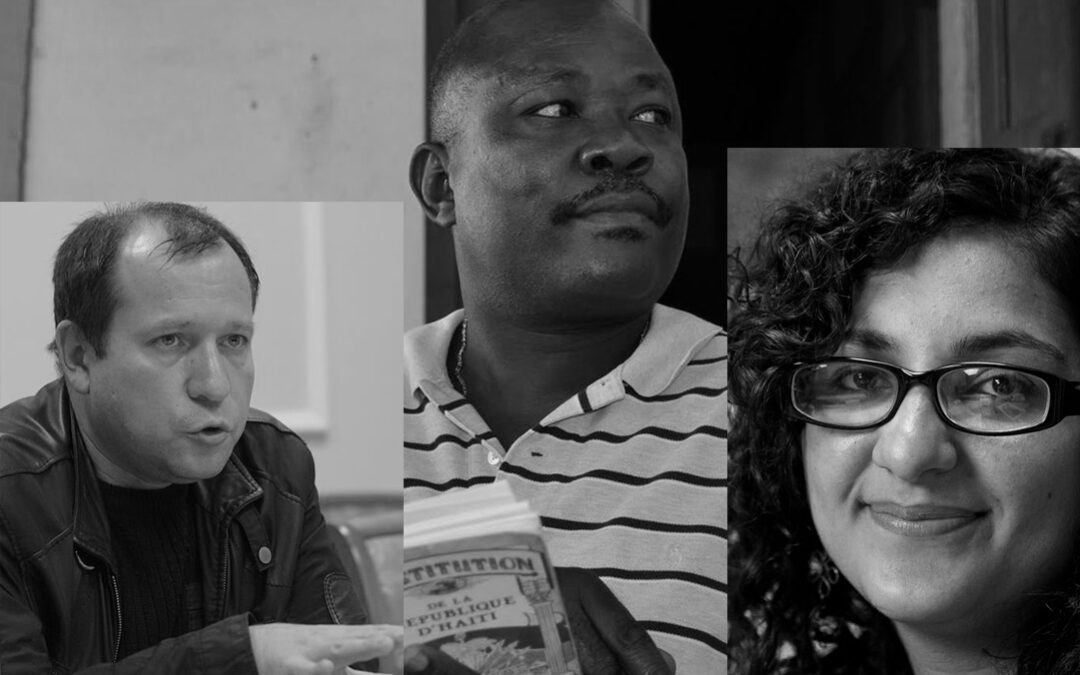
The three final nominees for the Martin Ennals Award for Human Rights Defenders are Mona Seif (Egypt), Joint Mobile Group (Russia) and Mario Joseph (Haiti). The ICJ is one of the ten members of the jury.
The Martin Ennals Award is given to Human Rights Defenders who have shown deep commitment and face great personal risk. The aim of the award is to provide protection through international recognition.
Selected by ten leading human rights organizations (ICJ, Amnesty International, Human Rights Watch, Human Rights First, International Federation of Human Rights, Front Line Defenders, HURIDOCS, Diakonie – German Protestant Welfare, World Organization Against Torture and International Service for Human Rights) it is the world’s most important Human Rights Prize.
The 2013 Award will be presented on Oct. 8th at a ceremony hosted by the City of Geneva.
Mona Seif (Egypt) is the core founder of the” No To Military Trials for Civilians”, a grassroots initiative which is trying to stop military trials for civilians.
Since February 25, 2011, Mona has brought together activists, lawyers, victims’ families, local stakeholders and started a nationwide movement against military trials.
As part of the recent crackdown on the Freedom of Speech in Egypt she has been charged along with other Human Rights activists.
She noted that “International solidarity, and I mean people’s support not governments, empowers us to continue our battle and stop military trials for civilians“.
After the murder of several human rights activists working in Chechnya, Igor Kalyapin started the Joint Mobile Group. To reduce the risk they send investigators on short missions to Chechnya to document Human Rights abuses.
This information is then used to publicise these abuses to seek legal redress. Igor Kalyapin speaking of the effect of international publicity said “… when the international community is watching us it is more difficult for the authorities to take steps against us…”
Mario Joseph, Haiti’s most important Human Rights lawyer, has worked on some of the most important cases in Haiti, including the current case against the former dictator Jean-Claude “Baby Doc” Duvalier.
His family received asylum in the United States in 2004, while he chose to return to Haiti. He has faced threats and harassment for much of his 20 years as a lawyer although it has intensified in recent months.
He says: “this recognition from the Ennals Award shines a vital spotlight on my work, and on the work of everyone who is fighting for human rights in Haiti. That spotlight will make our work safer and more effective.”
MEA-Short Summary-2013 (read the pdf)
MEA-MONA SEIF bio-2013 (read the pdf)
MEA-JOINT MOBILE GROUP bio-2013 (read the pdf)
MEA-MARIO JOSEPH bio-2013 (read the pdf)
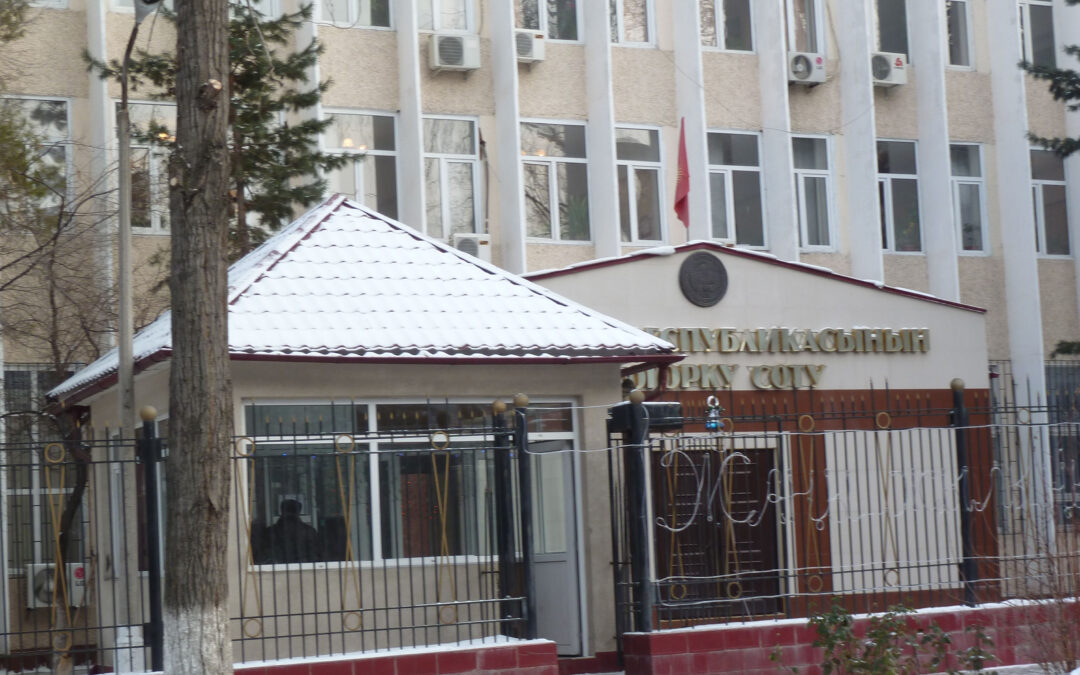
Apr 2, 2013 | News
The ICJ today expressed serious concern at the physical assault of lawyers Tatiana Tomina and Ulugbek Usmanov at a Supreme Court hearing in Bishkek this morning.
The ICJ called on the Kyrgyzstan authorities to take effective measures to protect the physical security of lawyers as well as all other parties in court proceedings, and to hold accountable those responsible for today’s attacks.
The assaults took place during the Supreme Court hearing in the case against Shamshidin Niyazaliyev, who was recently acquitted of charges relating to the outbreak of widespread ethnic violence in the South of Kyrgyzstan in June 2010. During the hearing, several persons present in the courtroom subjected the two lawyers and the mother of Shamshidin Niyazaliyev to beatings. No immediate steps were taken by the Court to prevent the beatings, which continued for several minutes before security officers intervened.
“There has been a pattern of serious attacks on lawyers in Kyrgyzstan, but this is the first time that the authorities have failed to guarantee the security for lawyers at the Supreme Court”, Róisín Pillay, Director of the ICJ Europe Programme said today. “These attacks violate the international obligations of the Kyrgyz authorities to ensure the security of lawyers and to protect the right to a fair trial. No justice is possible unless all the parties to the judicial process are fully protected and lawyers are able to discharge their functions without harassment, or attack”.
International standards, including the UN Basic Principles on the Role of Lawyers, require that “where the security of lawyers is threatened as a result of discharging their functions, they shall be adequately safeguarded by the authorities”.
It is now essential for the credibility of the judicial system that today’s assaults are thoroughly and independently investigated and that those responsible are brought to justice, the ICJ emphasised.
According to lawyer Tatiana Tomina, the attacks began when about 15 men and women started insulting, pushing and punching the lawyers as they walked into the courtroom. The defendant’s mother, the only apparent supporter of the defendant allowed into the Court, was kicked and punched in the head. When the defence lawyers began to read a statement, several women attacked Tatiana Tomina and attempted to take documents from her by force. The panel of presiding judges did not attempt to prevent the beatings and security officers only appeared after several minutes had passed. Tatiana Tomina and the mother of the defendant were able to escape through the back door of the court. However Ulugbek Usmanov was unable to escape and suffered more serious injuries.
The Court adjourned the hearing for two hours. After the hearing resumed, only a few security persons were present in the courtroom and the defendant’s mother did not attend this part of the hearing. Following five minutes of deliberations the Supreme Court overturned the earlier acquittal.
Reportedly, at the hearing, defence statements were constantly interrupted, lawyers were insulted and prevented from speaking in defence of their clients and the Court refused to call any of the five witnesses of the defence. In her comments to the ICJ, lawyer Tatiana Tomina stated: “[i]n three years nothing has changed either in terms of the attitude towards lawyers or in terms of the investigation of criminal cases, which has not improved at all.” The ICJ has previously raised concerns at violence against lawyers in cases related to ethnic disturbances in the south of Kyrgyzstan in 2010.
CONTACTS
Róisín Pillay, Director, ICJ Europe Programme, roisin.pillay@icj.org
Temur Shakirov, Legal Adviser, ICJ Europe Programme, temur.shakirov@icj.org
ICJ condemns assaults on lawyers in Supreme Court (Full Text in Russian, PDF)

Mar 25, 2013 | News
Beatrice Mtetwa was eventually released today after mounting pressure from human rights groups and legal bodies, including the ICJ.
High Court Judge Joseph Musakwa finally decided to grant bail to Beatrice Mtetwa, under three conditions: that she deposits $500, that she resides at the given address and that she does not interfere with the ongoing investigations.
The ICJ believes that the politically-motivated harassment against Mtetwa is a threat to the legal profession in Zimbabwe – intended to alarm lawyers and intimidate them from providing independent representation.
Beatrice Mtetwa was arrested after attempting to come to the aid of her clients, Thabani Mpofu, Felix Matsinde, Anna Muzvidziwa and Worship Dumba, all MDC-T members, the opposition party.
The government has cracked down hard on dissidents as Zimbabwe approaches presidential elections.