Aug 12, 2013 | News
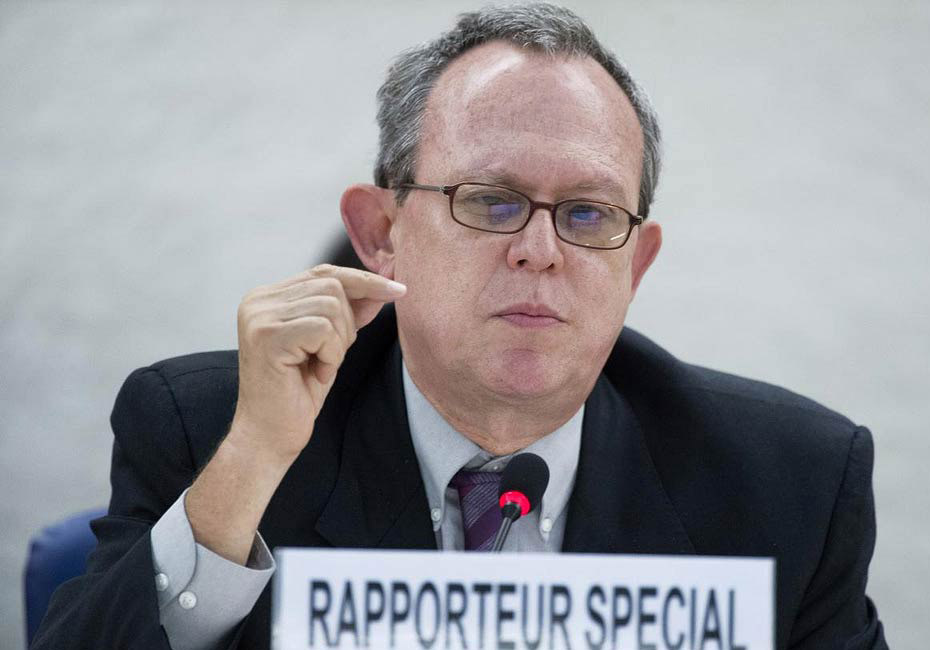
The ICJ is calling for the immediate release of Adilur Rahman Khan, a prominent Supreme Court lawyer and human rights defender in Bangladesh.
Mr Khan is the Secretary of Odhikar, a Bangladeshi human rights organization that has documented human rights violations allegedly carried out by Bangladeshi security forces.
Plainclothes police officers arrested Mr Khan from his home on 10 August 2013 without an arrest warrant.
“Adilur Rahman Khan is being charged for the lawful exercise of the right to freedom of expression, so Bangladeshi authorities must immediately and unconditionally drop all charges against him and release him,” said Ben Schonveld, ICJ’s South Asia director. “Until the charges are dropped, he must be released on bail.”
Adilur Rahman Khan was charged on 11 August under section 57 of the Information and Communication Technology Act, 2006, for distorting information regarding a police operation on a Hefazat-e Islam rally in May this year.
Odhikar reported that 61 people had been killed in the police crackdown on the rally. The government denied any casualties.
He was not allowed to speak with his family or his lawyers until August 11, when a Magistrate’s Court refused bail and remanded him for a further five days of custodial interrogation.
On August 12, the High Court Division of the Supreme Court stayed the remand order, directing that Mr. Khan be sent back to jail, where he could be interrogated ‘at the gate of the prison.’
“Adilur Rahman Khan’s arrest is illustrative of a deeply worrying government strategy to muzzle and discredit the work of human rights defenders and distract attention from human rights violations,” added Schonveld. “The High Court’s stay of the remand order is a positive development. However, the Bangladesh government must uphold its obligations under domestic and international law to guarantee freedom of expression and allow human rights defenders to carry out their work.”
Article 19 of the International Covenant on Civil and Political Rights (ICCPR), to which Bangladesh is a party, guarantees ‘freedom to seek, receive and impart information and ideas of all kinds, regardless of frontiers, either orally, in writing or in print, in the form of art, or through any other media of his choice.’
The UN Basic Principles on the Role of Lawyers provide that lawyers must be allowed to carry out their work ‘without intimidation, hindrance, harassment or improper interference.’
Further, lawyers shall, in particular, have the right to take part in public discussions of matters concerning the law, administration of justice and the promotion and protection of human rights.
In addition, the UN Declaration on Human Rights Defenders clarifies that States must create an enabling environment for human rights defenders and take all necessary measures to protect human rights defenders ‘against any violence, threats, retaliation, de facto or de jure adverse discrimination, pressure or any other arbitrary action as a consequence of his or her legitimate exercise of his or her rights.’
CONTACT:
Ben Schonveld, ICJ South Asia Director (Kathmandu), t: +977 14432651; email: ben.schonveld(a)icj.org
Sam Zarifi, ICJ Asia-Pacific Director, (Bangkok), t: +66 807819002; email: sam.zarifi(a)icj.org

Jul 27, 2013 | News
La CIJ condenó el asesinato de la jueza del Tribunal de Sentencia de la ciudad de El Progreso y Pro-Secretaria de la Junta de la Directiva Nacional de la Asociación de Jueces por la Democracia de Honduras.
La Jueza Mireya Mendoza fue ultimada por los disparos hechos desde una motocicleta mientras conducía su vehículo en la mañana del 23 de Julio en la ciudad de El Progreso, Departamento del Yoro, Honduras.
Ramón Cadena, Director de la CIJ para Centroamérica señaló: “Condenamos en los más enérgicos términos el asesinato de la Jueza Mendoza Peña”. Más de 50 abogados y abogadas han sido asesinados en Honduras en los últimos tres años
“Ataques de este tipo contra jueces y abogados no solamente constituyen graves crímenes sino que socavan seriamente el Estado de Derecho y la administración de la justicia en Honduras. La CIJ solicita al Gobierno de Honduras que disponga una investigación pronta, efectiva e imparcial sobre este nuevo crimen y que tome las medidas de protección necesarias para abordar la ola de intimidación y hostigamiento que sufren los profesionales del Derecho en ese país”, añadió Cadena.
La CIJ también expresó su solidaridad con la Asociación de Jueces por la Democracia en Honduras (AJD), que ahora se viste de luto por tan infame asesinato. La AJD es una organización profesional fundada en 2006, conformada por jueces y juezas comprometidos con la defensa y promoción de la independencia judicial como un presupuesto esencial para el fortalecimiento del Estado de Derecho, asumiendo la defensa de los derechos profesionales e intereses gremiales de jueces y juezas en Honduras.

Jul 26, 2013 | News
The ICJ today called on the Tunisian authorities to conduct an investigation into the targeted assassination of Mohamed Brahmi, a prominent opposition figure and member of the Tunisian National Constituent Assembly.
The investigation should be prompt, thorough, independent and transparent, with a view to holding the perpetrators to account.
This killing came less than six months after the assassination of another opposition figure, Chokri Belaid.
The ICJ is deeply concerned that these assassinations are part of a large campaign of intimidation against opposition figures, human rights defenders, including lawyers and judges. Many of them were subject to death threats. For example, in May 2013, Justice Kalthoum Kennou, a Tunisian judge on the Court of Cassation and ICJ Commissioner received an anonymous letter threatening her with death and ordering her to quit the judiciary.
“The Tunisian authorities must fully and promptly investigate the assassination of Mohamed Brahmi and ensure that the perpetrators are criminally held to account”, said Said Benarbia Senior Legal Advisor of the ICJ’s Middle East and North Africa Programme. “Tunisian authorities must also take all effective measures to end all forms of intimidation against opposition members, human rights defenders and judges, including by ensuring their security and physical integrity”, he added.
The ICJ also called on the Tunisian authorities to respect and protect the right of individuals to peaceful assembly and refrain from any unlawful use of force against them.
Mohamed Brahmi – Press Statement (ENG – Full Text in PDF)
May 30, 2013 | Agendas, Events
On Wednesday 29 May 2013, the ICJ co-sponsored a parallel event with Human Rights Watch and other NGOs during the Human Rights Council’s 23rd regular session held in Geneva.
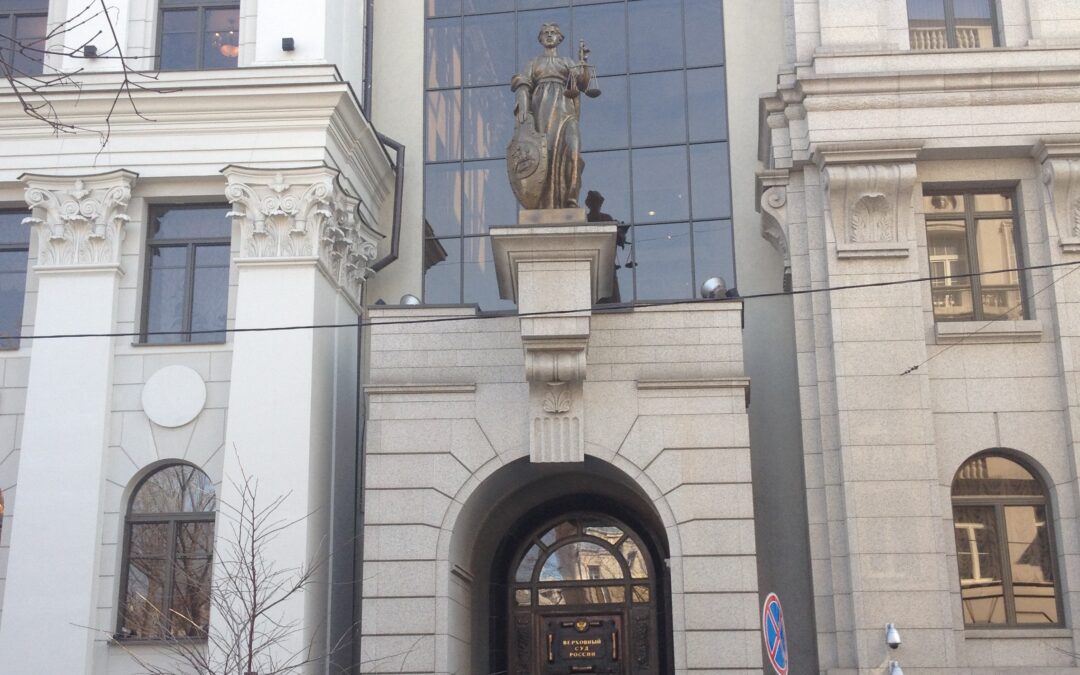
The event, held in Room IX of the Palais des Nations, addressed key issues concerning the independence of judges and lawyers within the Russian Federation. The event was chaired by Róisín Pillay, Director of ICJ’s Europe Programme. Panelists were Gabriela Knaul, the UN Special Rapporteur on the independence of judges and lawyers; Tamara Morshchakova, ICJ Commissioner and former Deputy Chair of the Russian Consitutional Court; and Karinna Moskalenko, ICJ Commissioner and founder of the International Protection Centre.