Nov 14, 2013 | Events, News
The International Bar Association Human Rights Institute (IBAHRI) and the ICJ urge Commonwealth Heads of States meeting in Colombo this week to make Sri Lanka accountable to Commonwealth values.
The IBAHRI and the ICJ are holding a press conference in Bangkok, Thailand, this morning after a high-level IBAHRI delegation was blocked from entering Sri Lanka late last week.
You can watch the event here: http://www.ustream.tv/recorded/40754120
Further reading:
Sri Lanka-Muttur killings-ICJ-ACF Q&A-briefing paper-2013 (full text in pdf)
ICJ open letter signed by 56 eminent jurists and senior judges from around the world
ICJ report Authority without Accountability: The crisis of impunity in Sri Lanka
Nov 1, 2013 | News
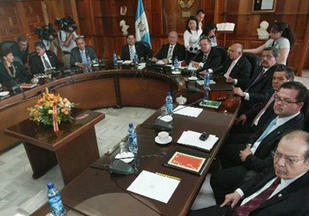
Jueces europeos y centroamericanos expresaron en Tegucigalpa su preocupación por la falta de independencia del sistema judicial en países como Honduras, Guatemala y El Salvador.
Instaron a los Estados a tomar medidas para garantizar la autonomía de esa rama del poder público.
El 31 de octubre y 1 de noviembre se llevó a cabo en la ciudad de Tegucigalpa (Honduras) el foro denominado “Encuentro de Juristas Europeos y Centroamericanos: experiencias sobre la defensa de la independencia judicial”.
Durante el mismo, se tuvo la oportunidad de intercambiar experiencias en torno a las amenazas que hoy día persisten en contra de la independencia judicial y las medidas que los estados de Centroamérica deben tomar para fortalecer los diferentes sistemas de justicia en la región.
El foro reconoce el papel fundamental que tienen todos los jueces y juezas en la construcción y consolidación de la Democracia y el Estado de Derecho en Centroamérica; las y los participantes expresan su preocupación porque aún existen serias amenazas a la independencia judicial, entendiéndose dicha independencia como una garantía para los ciudadanos y ciudadanas.
En tal sentido, los estados centroamericanos deben respetar plenamente la independencia del Poder Judicial.
Honduras-Foro Jueces Independencia en CA-news-web story-2013-spa (full text in pdf)
Oct 24, 2013 | News
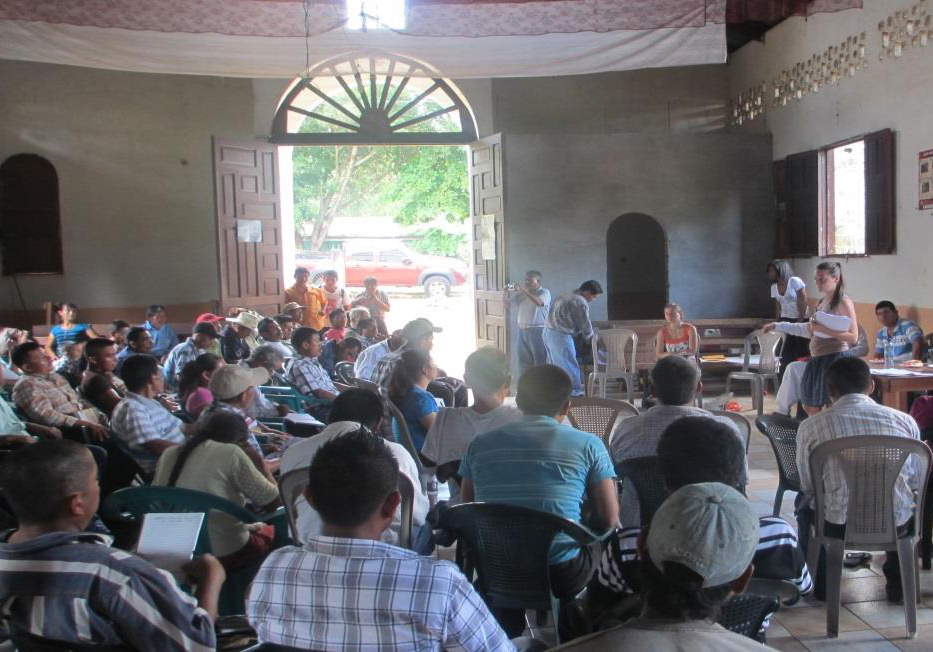
Los días 22, 23 y 24 de octubre se reunieron en el Departamento de Petén diferentes comunidades, dirigentes comunitarios, defensores de derechos humanos y organizaciones sociales.
El objetivo de la reunion fue evaluar la situación de las comunidades que viven en los municipios de San Andrés y La Libertad, de dicho departamento.
Entre otras organizaciones y dirigentes del departamento de Petén, estuvieron presentes las organizaciones Unión Verapacense de Organizaciones Campesinas (UVOC) y el Comité de Desarrollo Campesino (CODECA), ambas integrantes de la Coordinadora Nacional de Organizaciones Campesinas (CNOC); dirigentes del Frente de Resistencia en Defensa de los Recursos Naturales y Derechos de los Pueblos (FRENA) del Departamento de San Marcos y dirigentes de la Sociedad Civil de Santa Cruz Barillas del Departamento de Huehuetenango; representantes del Bufete de Derechos Humanos (BDH), representantes de El Observador y de la Oficina de la Comisión Internacional de Juristas (CIJ) para Centroamérica.
Después de realizar varios talleres, reuniones, análisis y reflexión sobre la situación de derechos humanos en dichos municipios, las organizaciones mencionadas pudieron constatar que continúa la política de persecución, represión y hostigamiento en contra de las comunidades y de sus dirigentes y pobladores, por el hecho de que sus comunidades quedaron en áreas declaradas “protegidas” en la década de los años noventa.
Muchos dirigentes están sufriendo amenazas por parte de las autoridades estatales, mientras el Ejército de Guatemala mantiene diferentes “retenes” que sirven para amedrentar a las poblaciones y a sus dirigentes y para evitar que trasladen alimentos y medicinas a sus comunidades.
El Concejo Nacional de Áreas Protegidas (CONAP) pretende obligar a las comunidades que viven en zonas protegidas a firmar “Acuerdos de Cooperación”, que resultan lesivos a sus intereses y que no otorgan seguridad jurídica sobre la propiedad y posesión de sus tierras. Al resistirse a firmar dichos acuerdos, representantes de CONAP amenazan a las comunidades y a sus dirigentes con implementar desalojos forzosos en su contra y en contra de sus comunidades.
Esta actitud contrasta con la política gubernamental hacia la compañía petrolera PERENCO, a la cual durante la gestión del ex Presidente Álvaro Colom, se le prorrogó el contrato petrolero por 15 años más a partir del año 2010, aún en contra de preceptos constitucionales e internacionales. Además, recientemente el Gobierno concesionó seis licencias más de exploración petrolera, algunas en áreas protegidas, a favor de diferentes empresas privadas en los Departamentos de Petén, Quiché, Huehuetenango e Izabal.
El Departamento de Petén es uno de los más afectados por las políticas de desalojos forzosos del Estado de Guatemala.
Guatemala-NOTA INFORMATIVA PETEN-web story-2013-spa (full text in Spanish, pdf)

Aug 29, 2013 | News
También la CIJ solicita audiencia temática a la comisión interamericana de derechos humanos.
La CIJ condenó los ataques que se han venido dando en contra de defensores de derechos humanos en Guatemala.
Por tal razón, conjuntamente con organizaciones sociales y campesinas como el Comité de Unidad Campesina (CUC), Asociación para la Promoción y el Desarrollo de la Comunidad (CEIBA), WAQIB´KEJ y otras organizaciones sociales de Guatemala, solicitaron a la Comisión Interamericana de Derechos Humanos una audiencia temática sobre el fenómeno de la criminalización de la protesta social el pasado viernes.
El objeto de la misma es, además de proporcionar información sobre el fenómeno de la criminalización de la protesta social, identificar patrones de represión en contra de líderes sociales en Guatemala.
Según la CIJ, este fenómeno es un claro retroceso del proceso democrático de Guatemala.
En efecto, se han identificado patrones de represión estatal, utilizando el derecho penal para reprimir las libertades de pensamiento, expresión y reunión de sus actores.
En este contexto, la CIJ nota con preocupación varios patrones de ataque en contra de defensores y defensoras de Derechos Humanos de Guatemala, que preocupan profundamente y que se expresan en detenciones ilegales, campañas de difamación y acusaciones falsas, ataques directos que han quitado la vida a cuatro periodistas en los últimos meses y falta de investigación pronta y eficiente, que identifique quien está detrás de estos hechos y si hay presencia de estructuras criminales organizadas que cometen estos crímenes para evitar la defensa de los derechos de los Pueblos Indígenas y de sus territorios.
Ramón Cadena, Director de la CIJ para Centroamérica expresó: “Pedimos a las autoridades del Sistema de Justicia que investiguen estos ataques. La impunidad de estos hechos sigue siendo alarmante. Por esta razón, la Organización de las Naciones Unidas debería nombrar cuanto antes al futuro representante de la Comisión Internacional contra la Impunidad (CICIG), quien debería ser un Fiscal con experiencia para continuar la lucha en contra de cuerpos ilegales y aparatos clandestinos de seguridad.”
Aug 21, 2013 | News
The ICJ today called on the government of the Kyrgyz Republic to take urgent measures to prevent repeated attacks on lawyers.
The call followed reliable reports of an assault on two lawyers in a court in the south of the country.
On 20 August 2013, lawyers Dinara Medetova and Kubanychbek Zhoroyev were physically attacked following a hearing in the Osh Regional Court.
This is the latest in a series of such attacks, which have threatened the lives and safety of lawyers, have hindered lawyers in defending the rights of their clients, and have undermined the fairness of trials.
The ICJ understands that the Ministry of Interior has denied that the attack on the lawyers took place. However this attack is confirmed by the accounts of reliable witnesses.
The ICJ is concerned that, in the face of repeated attacks of this kind, the government and law enforcement authorities have consistently failed to take effective measures to prevent them, or to ensure that they are effectively investigated and the perpetrators brought to justice.
“Denying that these attacks take place can only perpetuate the problem,” said Róisín Pillay, Director of the ICJ Europe Regional Programme. “What is needed is an independent, impartial and thorough investigation into the incident.”
“The government must work with the law enforcement authorities to ensure that the safety of lawyers, witnesses and defendants in criminal trials is ensured throughout the country, and that the Krygyz Republic protects the right to a fair trial, as required by its international legal obligations,” she added.
The two lawyers were defending Makhamatkir Bizurukov, an ethnic Uzbek, in a trial related to the 2010 ethnic clashes in the south of the country.
According to information available to the ICJ, the lawyers were repeatedly interrupted, insulted and threatened by members of the public in the course of the hearing, creating an atmosphere of intimidation which prevented the lawyers from effectively defending their client.
During the hearing, the lawyers also received death threats to which the judge did not respond.
After the hearing, reports indicate that around ten women, supporters of the victims in the case, physically attacked the lawyers.
“If it hadn’t been for my colleague who helped me to escape, I could have been very seriously injured or even dead”, lawyer Medetova told the ICJ. The lawyer later returned to Bishkek due to her fear of further attacks.
This attack took place despite an earlier written request by the defence lawyers in the case submitted to the local Police Department, President of the Court and the Osh Regional Prosecutor that security measures be taken during the hearing, in light of attacks on the accused, witnesses and lawyers at a previous hearing in the same case.
The ICJ understands that the head of the Police Department and the Prosecutor had assured lawyer Medetova that measures would be taken to guarantee the safety of the lawyers.
In the event however, the police took no action to prevent or halt the attacks on the lawyers in the courtroom.
Following the attack, the police reportedly told the lawyers that they could not protect them, as the supporters of the victim would consider such protection as bias in favour of the accused.
The ICJ recalls that international standards, including the UN Basic Principles on the Role of Lawyers, require that “where the security of lawyers is threatened as a result of discharging their functions, they shall be adequately safeguarded by the authorities”.
The ICJ urges the government to unequivocally and publicly condemn these attacks and to ensure that effective measures are taken to investigate them and bring those responsible to justice.
CONTACTS:
Róisín Pillay, Director, ICJ Europe Programme, roisin.pillay(a)icj.org
Temur Shakirov, Legal Adviser, ICJ Europe Programme, temur.shakirov(a)icj.org
Kyrgyzstan-Attack on lawyers-news-press release-2013-ENG (full text in pdf)
Kyrgyzstan-Attack on lawyers-news-press release-2013-RUS (full text in pdf)