Oct 16, 2017 | Advocacy
The ICJ, Amnesty International and Human Rights Watch are urging Pakistan to take immediate steps towards meeting “the highest standards in the promotion and protection of human rights,” following the country’s election to the Human Rights Council.
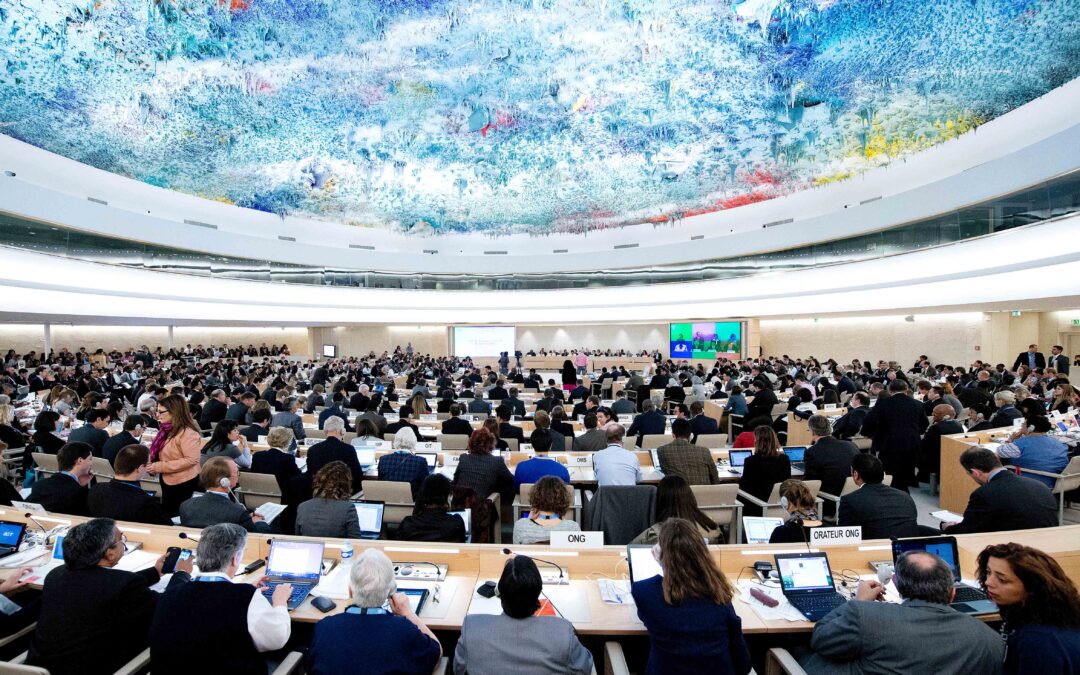
Today, the UN General Assembly selected 15 states to serve as members of the UN Human Rights Council from January 2018 to December 2020.
From the Asia-Pacific region, Nepal, Qatar, Afghanistan and Pakistan were selected out of five candidates.
To secure the UN Human Rights Council membership, Pakistan pledged its commitment to the promotion and protection of human rights.
However, the pledge failed to address directly many of the most serious human rights issues facing Pakistan, including enforced disappearances, the use of the death penalty, blasphemy laws, the country’s use of military courts, women’s rights including the right to education, and threats to the work of human rights defenders, lawyers and journalists.
According to UN General Assembly Resolution 60/251, “members elected to the Council shall uphold the highest standards in the promotion and protection of human rights.” The Resolution also provides that, “when electing members of the Council, Member States shall take into account the contribution of candidates to the promotion and protection of human rights and their voluntary pledges and commitments made thereto.”
Pakistan’s abuses have been highlighted by various national and international human rights organizations, UN treaty-monitoring bodies, and special procedures of the UN Human Rights Council.
Pakistan has affirmed in its election pledge that it is “firmly resolved to uphold, promote and safeguard universal human rights and fundamental freedoms for all.”
Given the pressing human rights issues in the country, the ICJ, Amnesty International, and Human Rights Watch urge Pakistan to take the necessary action to fulfill these responsibilities.
Contact
Frederick Rawski (Bangkok), ICJ Asia Pacific Regional Director, e: frederick.rawski(a)icj.org
Reema Omer (London), ICJ International Legal Adviser, South Asia t: +447889565691; e: reema.omer(a)icj.org
Download
The full statement with additional information: Pakistan-ElectiontoHRC-Advocacy-2017-ENG (in PDF)
Sep 19, 2017 | Advocacy, Non-legal submissions
The ICJ today joined other civil society organisations in calling for the UN Human Rights Council to renew the mandate of the Commission of Inquiry on Burundi and to initiate suspension of Burundi’s membership in the Council, and other measures of justice and accountability.
The call came in an open letter to all Member and Observer States of the Human Rights Council.
The letter in English: HRC36-OpenLetter-Burundi-2017-EN
Jun 23, 2017 | Advocacy, Non-legal submissions
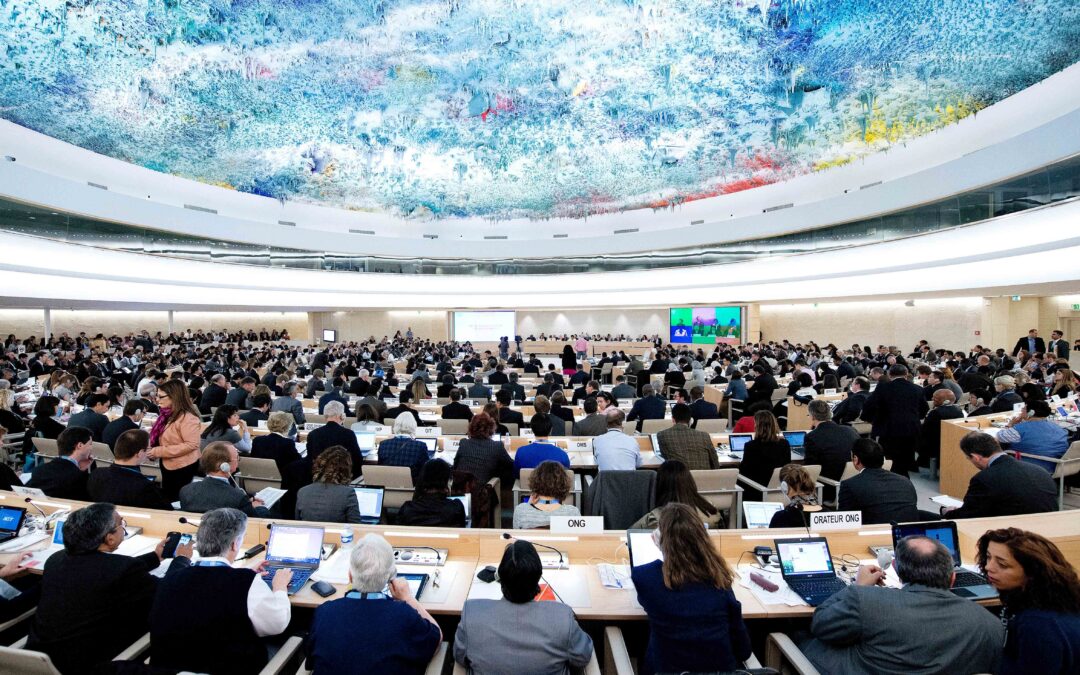
The ICJ has joined other NGOs in highlighting some of the achievements and failures of the June 2017 session of the UN Human Rights Council in a statement at the end of the session.
The statement, delivered on behalf of the group of NGOs by the International Service for Human Rights (ISHR), read as follows:
At the close of this session, we welcome the commitment by many States from all regions to enhance the Council’s success and effectiveness, and the performance of Human Rights Council (HRC) members through a series of concrete actions. The steps outlined by the Netherlands, such as more competitive HRC elections and the application of objective human rights based criteria to determine whether and how to act on situations of concern, would go a long way in making the Council more accessible, effective, and protective.
The leadership shown by States in the development of joint statements on killings in the Philippines‘ so-called ‘war on drugs’ and threats against human rights defenders, and on the increasingly dire situation in the Maldives are examples of this. We regret the lack of such leadership on other States including China and Egypt.
Although we’d hoped for a more robust response on the Democratic Republic of the Congo (DRC) from the Council, the international team of experts brings hope of uncovering the truth about the horrific violence in the Kasai. The UN, this Council, and the DRC itself must now ensure unhindered access for and support to the team, for it to independently produce a robust and credible report, which will constitute a step towards accountability.
We congratulate Cote d’Ivoire for its six years of cooperation with the UN and the mandate of the Independent Expert. We urge the Council to continue to pay attention to the human rights situation, particularly in the context of recent mutinies, and to assist the country in the implementation of the Independent Expert’s recommendations, including by striving for A-status for its National Human Rights Institution (NHRI).
We also echo the joint call by several States urging you to create a publicly accessible register of alleged acts of intimidation and reprisals and to provide short oral updates on cases at the start of every Item 5 general debate giving States concerned the opportunity to respond.
We also welcome the joint statement of the core group on civil society space together with some NGOs, and its reaffirmation that the “substantive participation of civil society makes this Council’s debates and work, including the UPR, richer and more meaningful”.
Mr President,
We are pleased that both resolutions on discrimination and violence against women were adopted by consensus, and that adverse amendments designed to remove language on comprehensive sexuality education and women human rights defenders were defeated. We regret that the Russian Federation and others systematically seek to remove reference to human rights defenders in all resolutions at each session. Denial of the existence of defenders is absurd, given the long history of formal recognition of the concept by the Commission on Human Rights, Council and General Assembly.
We regret that the resolution on the “protection of the family” fails to fully recognise that older persons are individual rights holders entitled to self-determination and autonomy, and ignores a significant UN process, the General Assembly Open-Ended Working Group on Ageing. The resolution also fails to acknowledge that diverse forms of the family exist. The entire initiative is implicated in an effort to subvert the aims of our human rights system and the universality of rights.
In closing, Mr President, we are dismayed at the lack of progress in terms of ensuring the most effective participation of civil society, in accordance with established rules and practice of the Council. Although symbolic, the massive reduction of reserved NGO desk space in this room is illustrative of this.
We are concerned about the lack of formal engagement by you and your Bureau with civil society, the absence of visible steps to curb and respond to intimidation or reprisals, and the abusive interruptions of NGO statements, including in some instances by the chair. And we look forward to engaging with your office to reverse this trend.
Thank you.
Among the NGOs joining the statement were the following:
- Amnesty International
- CIVICUS
- Human Rights Watch
- International Commission of Jurists
- International Lesbian, Gay, Bisexual, Trans and Intersex Association (ILGA)
- International Longevity Center Global Alliance
- International Platform Against Impunity
- International Service for Human Rights
The joint statement may be downloaded in PDF here: UN-HRC35-EndSessionStatement-2017
* For additional information on ICJ priorities and activities at the session, see the following:
Refugees and migrants: the role of judges and lawyers
Business responsibility to protect human rights
Corporate impunity; legal protection of refugees and migrants
Discrimination against women in access to justice
Threats to independence of judges and lawyers; backsliding on violence against women
Ensuring women’s access to justice for gender based violence
Turkey: judicial independence and freedom of expression
Civil society space in the Human Rights Council
Call for strong action on Egypt at the Human Rights Council
Continuing lack of accountability for rendition and secret detention
“Protection of the Family”: concerns regarding the resolution
UN Human Rights Council adopts resolutions on independence of judges and lawyers
Nov 11, 2016 | News
The ICJ today condemned efforts by a group of States led by the African Group of the UN Members States to halt the work of the UN Independent Expert charged with protecting people from discrimination and violence based on sexual orientation and gender identity (SOGI).
The organization said that the move constituted an unwarranted interference with the independence and capacity of the Human Rights Council to discharge its mandate for the promotion and protection of all human rights and fundamental freedoms for all, without discrimination.
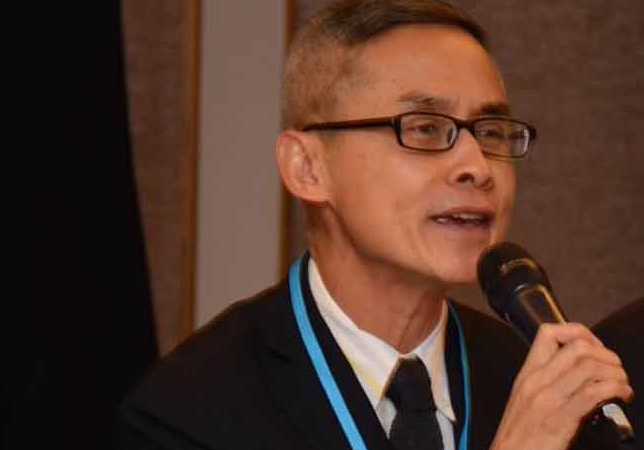
On 3 November 2016 Botswana on behalf of the African Group introduced a draft resolution before the Third Committee of the UN General Assembly in New York questioning the authority for the mandate of the Independent Expert Vitit Muntarbhorn (photo) and deferring action indefinitely on confirming the mandate’s establishment.
The ICJ is calling on the African Group to withdraw its draft resolution.
If a vote on the resolution does go ahead, the ICJ said that States must resoundingly reject it and send a signal to the world that the rights of all persons must be protected on an equal basis and that the UN Human Rights Council is capable of acting to secure such protection.
The ICJ considers that adoption of the resolution would represent a dramatic setback to the Human Rights Council’s efforts to tackle violence and discrimination based on SOGI.
Each year, the Third Committee of the UN General Assembly considers the Human Rights Council’s annual report.
This year, that report contains Human Rights Council resolution 32/2 on Protection against violence and discrimination based on sexual orientation and gender identity.
The Human Rights Council’s adoption of resolution 32/2 on 30 June 2016 made history by establishing the first-ever mandate of an Independent Expert of the Human Rights Council on protection against violence and discrimination based on SOGI.
In September this year the Human Rights Council appointed Prof. Vitit Muntarbhorn of Thailand to discharge this mandate.
Since then, Prof. Muntarbhorn has duly taken up his position and has begun fulfilling this work.
The draft resolution that the African Group has tabled at the Third Committee questions the basis in international law for the establishment of the Independent Expert’s mandate on SOGI and seeks to defer action on Human Rights Council resolution 32/2 indefinitely.
Since the Human Rights Council was set up in 2006, none of its resolutions mandating the establishment of a Special Procedure has ever been challenged by the General Assembly.
The ICJ considers that the adoption of the African Group’s resolution would set an extremely detrimental and regressive precedent by blocking the Human Rights Council from carrying out its own mandate.
It would undermine the UN’s preeminent human rights body’s overall authority by sapping its independence and ability to fulfil its mandate for the promotion and human rights for all without discrimination as it sees fit.
Contact
Livio Zilli, ICJ Senior Legal Adviser and UN Representative, t: +41 22 979 38 23 ; e: livio.zilli(a)icj.org
Read also
What is the Future of the SOGI Mandate and What Does it Mean for the UN Human Rights Council?
Sep 16, 2016 | News
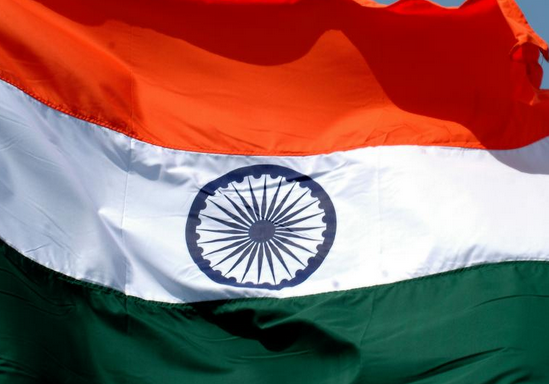
Indian authorities have detained a Kashmiri human rights activist after stopping him from traveling to the United Nations Human Rights Council in Geneva, Human Rights Watch and the ICJ said today.
Khurram Parvez was arrested in his home on 15 September 2016, a day after being prevented from leaving the country with a group of rights activists who were traveling to Geneva to raise concerns about the security force crackdown in Jammu and Kashmir.
Human Rights Watch and the ICJ call on authorities to immediately release Parvez and allow him to attend the Human Rights Council session.
“Indian authorities seem to have missed the irony of blocking a rights activist on his way to the UN Human Rights Council,” said Sam Zarifi, Asia Director at the International Commission of Jurists.
“Monitoring and engage
ment by civil society is necessary to prevent human rights violations and ensure accountability. The Government should immediately release Khurram Parvez and begin working with him and other activists to address the difficult issues facing Jammu and Kashmir,” he added.
Parvez, 39 years of age, is chair of the Asian Federation Against Involuntary Disappearances (AFAD) and program coordinator of the Jammu Kashmir Coalition of Civil Society (JKCCS).
He has documented cases of enforced disappearances and investigated unmarked graves in Kashmir.
According to his lawyer, Parvez has been detained by Kashmir police under “preventive detention” provisions of the Code of Criminal Procedure, including section 151 (arrest to prevent the commission of cognizable offense).
The Government’s actions against Parvez violate his right to freedom of movement.
Under international human rights law, any restrictions on freedom of movement for security reasons must have a clear legal basis, be limited to what is necessary and be proportionate to the threat.
This is further supported by article 5 of the UN Declaration on Human Rights Defenders, which states that “[f]or the purpose of promoting and protecting human rights and fundamental freedoms, everyone has the right, individually or in association with others, at the national and international levels… to communicate with nongovernmental or intergovernmental organizations.”
“Instead of trying to silence human rights activists, India should be addressing the serious human rights problems in Jammu and Kashmir and holding perpetrators of abuses to account,” said Meenakshi Ganguly, South Asia Director at Human Rights Watch.
“Preventing open discussion of these issues, whether in India or in Geneva, sends a message to Kashmiris that the government has no interest in addressing their concerns,” she added.
Background
Violent protests broke out in Jammu and Kashmir state after the killing of Hizb-ul-Mujahedin militant Burhan Wani in an armed encounter on 8 July.
Since then, the authorities have placed large parts of the state under curfew restrictions to try to stop protesters who hurl stones at security forces and attack police posts.
Security forces have used unnecessary lethal force to contain the violence, which has resulted in the death of 80 protesters and 2 police officers, and thousands injured.
Some protesters, including children, lost their vision from pellets fired from riot-control guns.
While police have a duty to protect lives and property, under the UN Basic Principles on the Use of Force and Firearms by Law Enforcement Officials, they should use non-violent means as far as possible, only use force when unavoidable and in a proportionate manner, and use lethal force only when absolutely necessary to save lives, Human Rights Watch and International Commission of Jurists said.
The authorities have also attempted to censor news and restrict access to information.
The Government shut down local newspapers for three days, blocked mobile internet services temporarily, and ordered local cable operators to block the transmission of five news channels on television.
India has failed to address longstanding grievances in Jammu and Kashmir.
Numerous expert committees in India have recommended steps to address past human rights violations, including a repeal of the draconian Armed Forces Special Powers Act, but the Indian Government has ignored these recommendations.
Contact:
Sam Zarifi, ICJ Asia-Pacific Regional Director, (Bangkok); t:+66(0) 807819002; e: sam.zarifi@icj.org