Oct 2, 2019 | News
This support comes as the ICJ documents failure of criminal justice system on human rights accountability with its report Accountability for Serious Crimes under International Law in Libya: An Assessment of the Criminal Justice System.
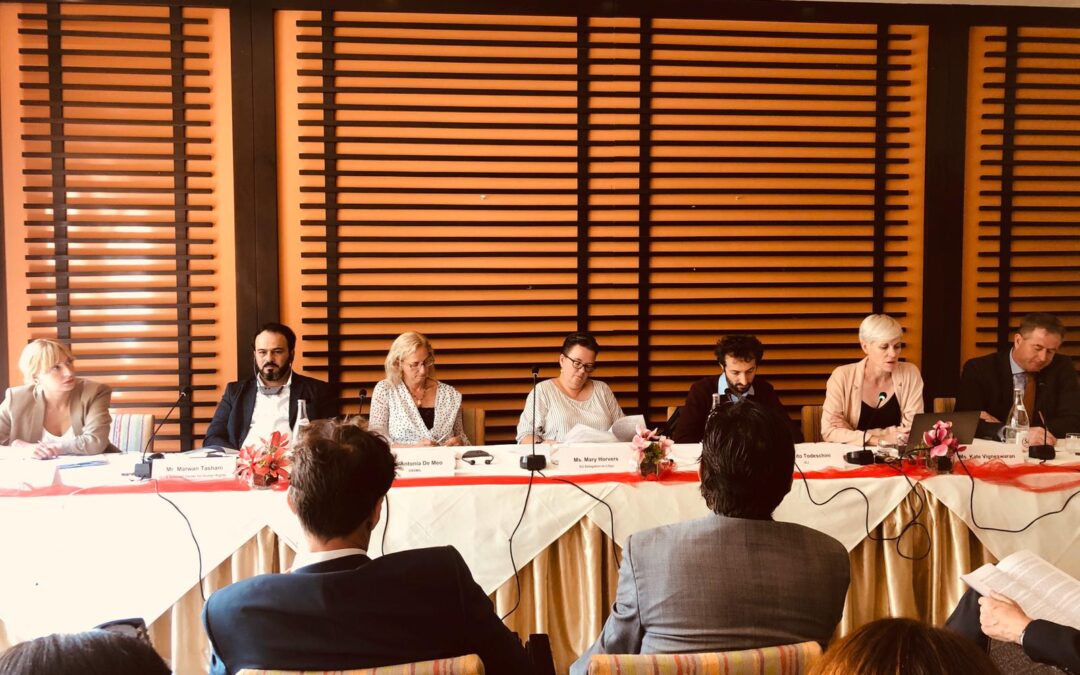
At today’s launch of the publication, the UN Support Mission in Libya (UNSMIL), the Delegation of the European Union to Libya (EUDEL) and the European Union Border Assistance Mission (EUBAM) supported calls for the establishment of a UN Commission of Inquiry for Libya.
The ICJ’s report examines the criminal justice framework in Libya and finds that investigations and prosecutions of crimes under international law have been limited to a handful of cases, and that future cases are unlikely meet international standards necessary to ensure fair and effective justice, in particular the rights to liberty and a fair trial and the prohibition on torture and ill-treatment.
The support by international actors echoes the ICJ’s call for the establishment of a Commission of Inquiry or similar mechanism to monitor, document and report on human rights violations in order to identify perpetrators, and gather and preserve evidence for future prosecutions, either national or international.
UNSMIL, the EU and a number of States expressed their support for the establishment of a Commission of Inquiry or similar mechanism at the 42nd session of the Human Rights Council.
The ICJ also advocated for such a mechanism in its statement to the Council on 25 September.
At the launch, ICJ Senior Legal Adviser Kate Vigneswaran said that “it’s time for States to stop working on the premise that the Libyan criminal justice system can effectively ensure accountability for crimes committed by State and non-State Actors and instead look at options for ensuring they don’t go unpunished.”
The ICJ’s report also calls on States and UN actors to ensure they adopt human rights-compliant terms in their engagement with Libya and to refrain from entering into or implementing agreements with Libyan authorities that could give rise to support for or complicity in violations of international law.
Kate Vigneswaran stated: “Human rights and accountability should underpin any agreements and engagement with Libyan actors entered into by States, rather than being sidelined in the interests of a political solution. Time has shown that the absence of human rights at the forefront of dialogue and engagement with stakeholders has failed to ensure the cessation of egregious human rights violations and abuses being perpetrated throughout the country.”
The launch, which was held in partnership with the Embassy of the Netherlands in Libya, was opened by the Netherlands’ Ambassador, H. E. Mr. Lars Tummers.
Kate Vigneswaran discussed the key findings and recommendations contained in the report. A panel comprised of ICJ Commissioner Marwan Tashani and representatives of EUDEL, EUBAM and UNSMIL responded to the report and provided insights into their work in Libya.
Sep 30, 2019 | Advocacy, Non-legal submissions
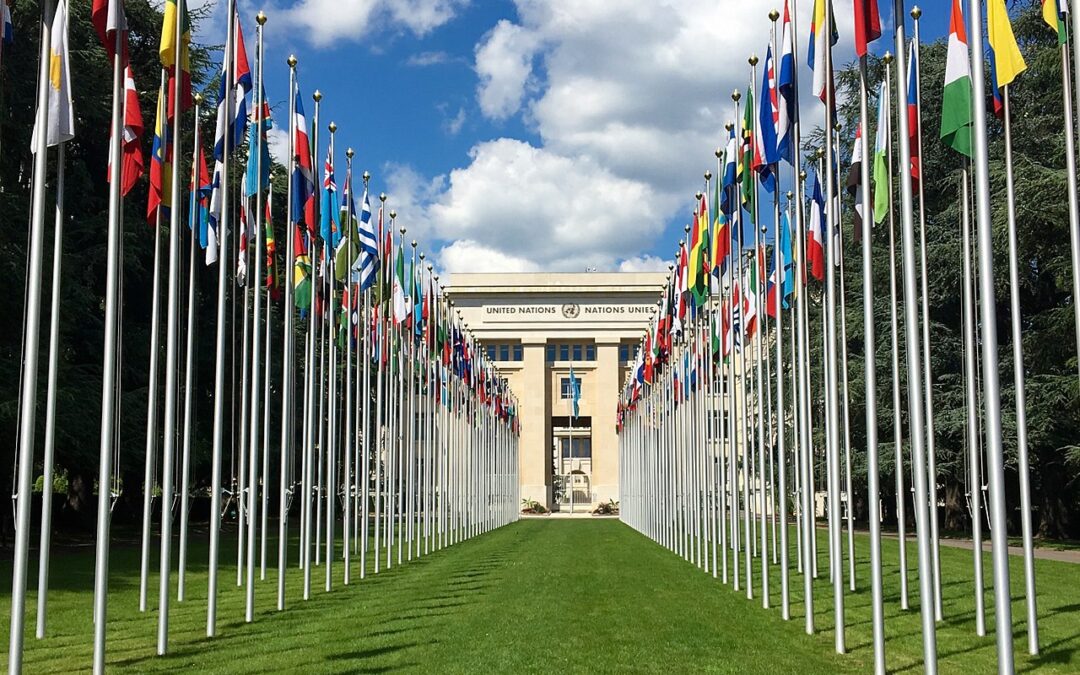
The ICJ has made a submission to the UN Human Rights Committee in advance of its forthcoming examination of Pakistan’s follow-up report under International Covenant on Civil and Political Rights (ICCPR).
In its submission, the ICJ has brought to the Committee’s attention concerns in relation to the following issues:
- Shortcomings in the legal framework relevant to enforced disappearances;
- The continuing practice of enforced disappearances and, in this context, the ongoing impunity of law enforcement and security agencies;
- The promulgation of the Actions (in aid of civil power) Ordinance, 2019; and
- The ineffectiveness of the Commission of Inquiry on Enforced Disappearances.
The Human Rights Committee will examine Pakistan’s follow-up report during its 127th session, which will be held in Geneva from 14 October to 9 November 2019.
The UN Human Rights Committee issued its Concluding Observations in August 2017, following its review in July 2017 of Pakistan’s first periodic report. Among its many recommendations, for follow-up the Committee prioritized recommendations related to the death penalty; enforced disappearances and extrajudicial killings; and freedom of religion, conscience and belief.
The Committee requested Pakistan to provide information on the implementation on these recommendations within one year of the adoption of the Concluding Observations, which was due on in August 2018.
Pakistan submitted its follow up report to the Committee in May 2019.
Download
Pakistan-UNHCR submission-advocacy-non legal submission-2019-ENG(submission in PDF)
Sep 18, 2018 | Events, Multimedia items, News, Video clips
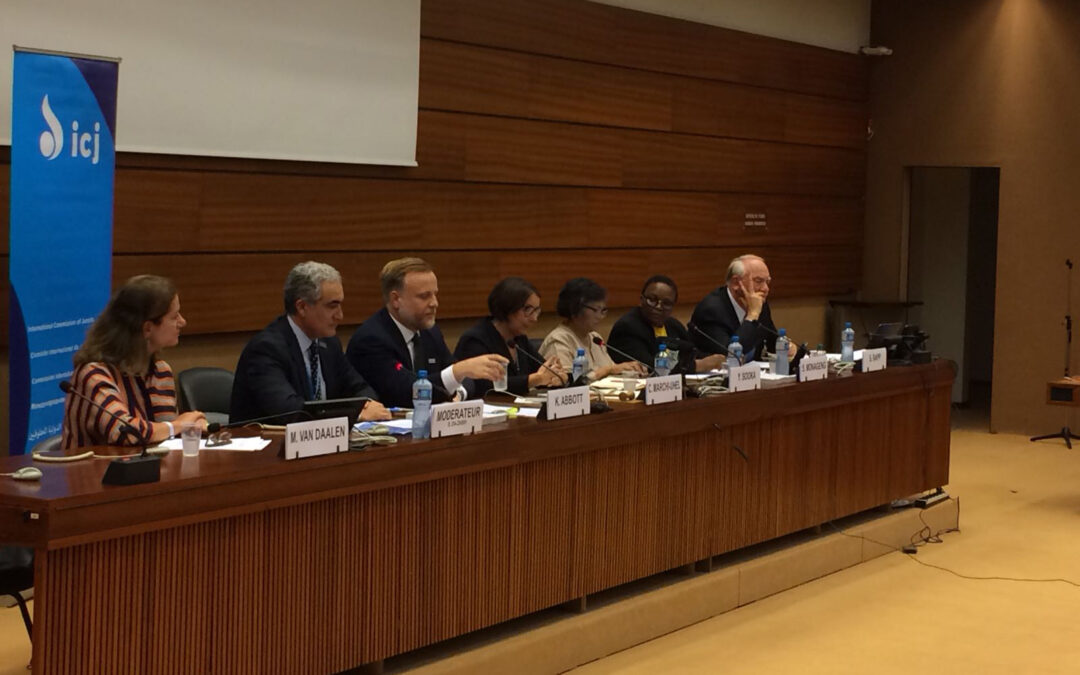
The ICJ organized this side event today (Tuesday 18 September 2018), in cooperation with the Permanent Mission of the Netherlands, at the Human Rights Council.
https://www.facebook.com/ridhglobal/videos/1005764152964172/
Background
Particularly when crimes under international law are perpetrated on a large scale in situations of crisis, there is an urgent need to preserve evidence for use in eventual criminal proceedings, whether at the International Criminal Court or other national or international tribunals
Too frequently, obstacles prevent immediate direct recourse to international courts and prosecutors. One response has been the creation of mechanisms to collect and preserve the evidence in the meantime. Examples include the International Independent and Impartial Mechanism (IIIM) for Syria, and the Commission on Human Rights in South Sudan.
At the current session of the Human Rights Council, the Fact-Finding Mission on Myanmar has called for establishment of an IIIM pending referral to the ICC or an ad hoc tribunal.
Opening Remarks:
Ambassador Monique T.G. van Daalen, Permanent Mission of the Netherlands
Moderator:
Saman Zia-Zarifi, Secretary General, International Commission of Jurists
Panelists:
- Catherine Marchi-Uhel, Head, International, Impartial and Independent Mechanism (IIIM) for Syria
- Yasmin Sooka, Chairperson, Commission on Human Rights in South Sudan
- Sanji Monageng, former Judge/Vice-President of the ICC, and Commissioner of the ICJ
- Stephen Rapp, Chair, Commission for International Justice & Accountability (CIJA), Distinguished Fellow, US Holocaust Memorial Museum, and former United States Ambassador-at-Large for Global Criminal Justice
- Kingsley Abbott, ICJ Senior Legal Adviser (Global Accountability), formerly with the Extraordinary Chambers in the Courts of Cambodia and the Special Tribunal for Lebanon
Universal-ICJ-NL-Side event-News-events-2018-ENG (flyer of the event in PDF)
Jul 12, 2018 | Advocacy, Non-legal submissions
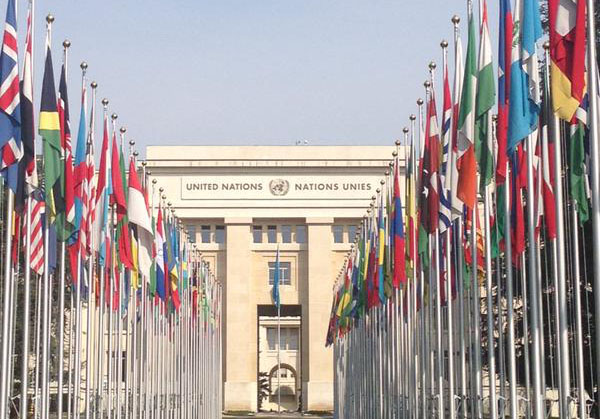
Today, the ICJ filed a submission to the Human Rights Council’s Working Group on the Universal Periodic Review in advance of its review of Cambodia’s human rights record in January/February 2019.
In its submission, the ICJ expressed concern about the following issues:
(1) Misuse of the law under the false pretext of the ‘rule of law’; and
(2) Lack of an independent and impartial judiciary.
The ICJ further called upon the Human Rights Council and the Working Group on the Universal Periodic Review to recommend to the Cambodian authorities to:
(i) Repeal or amend domestic laws to bring them in line with Cambodia’s international human rights obligations;
(ii) Repeal or amend domestic laws to ensure the independence of the judiciary and remove excessive powers granted to members of the Executive branch;
(iii) Abolish government-issued regulations or directives that contravene human rights protected under international human rights law;
(iv) Halt efforts to bring into force legislation drafted with the purpose of – or in any event –violating rights protected under international human rights law;
(v) End the prosecution of individuals on so-called lèse-majesté charges under the Cambodian Criminal Code and release individuals detained in connection with them;
(vi) End all use of legislation as a tool of harassment, intimidation or silencing of members of the political opposition, civil society, critical media, lawyers, prosecutors, judges and/or individuals;
(vii) Release all prisoners currently imprisoned or detained on politically motivated charges;
(viii) Uphold the right to fair trial of all persons, including of detained persons;
(ix) Take necessary measures to hold to account perpetrators of harassment, intimidation and violence against members of the political opposition, civil society, critical media, lawyers, prosecutors, judges and/or individuals for the legitimate exercise of their fundamental freedoms;
(x) Take necessary measures, in law and in practice, to guard against legal harassment of lawyers, prosecutors and judges on the basis of the political affiliations or agendas of their clients.
Contact
Kingsley Abbott, ICJ Senior Legal Adviser, e: kingsley.abbott(a)icj.org
Full submission in English (PDF) : Cambodia-UPR-Advocacy-Non legal-submission-July-2018-ENG
Jun 20, 2018 | News
The Trump administration’s broader rejection of multilateralism and rule of law, its actual practices, and paralysis of other States, are the real issues, says the ICJ.
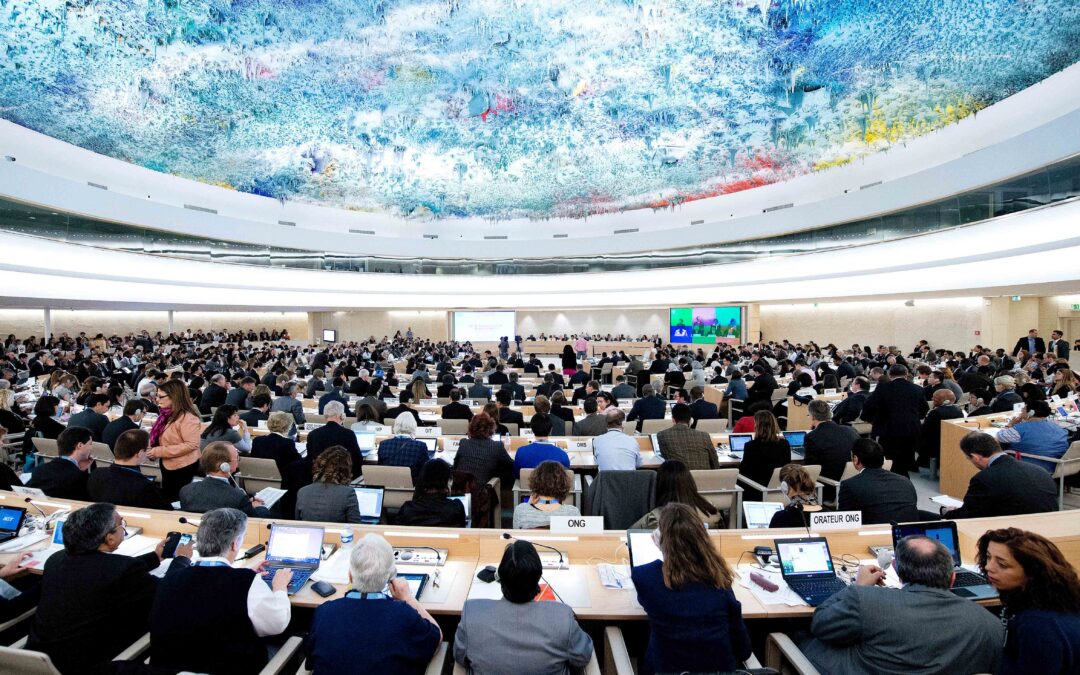
On the evening of 19 June, the United States of America announced it was formally abandoning its membership of the UN Human Rights Council.
“The withdrawal of the United States from the United Nations Human Rights Council is symptomatic of its broader rejection of multilateralism and rule of law, and how it acts in practice, both at home and abroad,” said ICJ Secretary General Sam Zarifi in reaction.
The inhuman caging of thousands of migrant and refugee children, and turning a blind eye to the grave human rights violations in North Korea, are but two recent and glaring examples, along with a recent highly critical report by the UN Special Rapporteur on extreme poverty and human rights, Philip Alston, following his visit to the US last year.
Even more concerning, the US retreat comes at the same time as openly racist and nationalist authoritarianism rises across Europe. Even where they are not immediately succeeding in coming to power, such movements are slowly paralyzing Europe at exactly the time its moderating or progressive influence on world affairs in general, and human rights in particular, is most needed.
The US in fact is cooperating in New York with the very same countries it publicly condemns, to cut the funding and mandate for the day-to-day human rights work of the UN – whether through the Office of the High Commissioner for Human Rights, the Secretary General’s Rights up Front Initiative, or UN country offices. And many many other countries are complicit in that exercise by their silence.
With moves by other powerful States to seize and dilute the UN’s human rights machinery, it has never been more important for other States sincerely committed to defending human rights and the rule of law to step into the empty seats the US is leaving behind.