Jul 16, 2018 | Multimedia items, News, Video clips
Changes within the Commission enhance the organization’s capacity to respond to increased threats to rights protection via erosion of the rule of law, particularly in relation to the independence of the judiciary.
The ICJ is pleased to announce new leadership at the ICJ as Professor Robert K. Goldman (US) has been elected President of the organization and Justice Radmila Dragicevic-Dicic (Serbia) has been elected Vice-President, a role she will undertake jointly with Professor Carlos Ayala (Venezuela) who was also appointed Vice-President earlier in the year.
Professor Robert K. Goldman served as Acting President of the ICJ following the sad passing of former President Professor Sir Nigel Rodley in 2017.
The President and Vice-Presidents are supported by the Executive Committee, which has also been bolstered by new members Justice Sir Nicolas Bratza (UK), former President of the European Court of Human Rights; Dame Silvia Cartwright (New Zealand), former Governor-General of New Zealand; and Shawan Jabarin (Palestine), prominent human rights activist and Director General of Al-Haq, an independent Palestinian non-governmental human rights organization.
“I am honoured to have been elected President of the ICJ and to be able to work with such proficient and inspiring jurists amongst ICJ leadership and in the wider Commission itself, without whom the ICJ could not provide the expertise and leadership it does on such a wide range of human rights issues,” said Professor Robert K. Goldman, ICJ President.
“Those that have taken on a new role in ICJ leadership will help guide the organization in augmenting efforts to defend the rule of law amidst the current political backdrop of increasing antipathy and hostility towards rights protections,” he added.
In addition to these changes in the senior leadership of the ICJ, the organization is also pleased to welcome five new members:
Justice Chinara Aidarbekova (Kyrgyzstan), judge of the Constitutional Chamber of the Supreme Court of Kyrgyzstan; Gamal Eid (Egypt), prominent lawyer and human rights defender; Jamesina Essie L. King (Sierra Leone), Commissioner of the African Commission on Human and Peoples’ Rights; Michael Sfard (Israel), prominent human rights lawyer who has represented many Israeli and Palestinian individuals and organizations; and Ambiga Sreenevasan, former President of the Malaysian Bar Council.
“The ICJ is alarmed by the increasing volume of worldwide attacks on the institutions that uphold human rights both at an international level, where UN mechanisms are constantly condemned rather than supported and enhanced to maximize their efficacy; and also on the local level, for example when we see the independence of the judiciary, an essential element of maintaining rights protections, coming under attack in places like Guatemala, Poland and South Korea,” said Saman Zia-Zarifi, ICJ Secretary-General.
“The ICJ relies on its global advocates of human rights to advance and defend the rights of others through the culmination of their vast and varied expertise and I am pleased to welcome our newest Commissioners to help in this regard, ” said Zia-Zarifi.
A further nine Commissioners were elected to serve additional terms on the Commission:
Professor Roberto Garreton (Chile), Professor Robert K. Goldman, Hina Jilani (Pakistan), Professor Jose Antonio Martin Pallin (Spain), Justice Sanji Monageng (Botswana), Tamara Morschakova (Russia), Dr Jarna Petman (Finland), Belisario dos Santos Jr (Brazil) and Justice Philippe Texier (France).
Hina jilani (Pakistan) and Belisario dos Santos Jr (Brazil) were both also re-elected to the Exectuive Committee and Professor Marco Sassoli (Italy/Switzerland) and Justice Stefan Trechsel (Switzerland) were re-elected as Alternates to the Executive Committee.
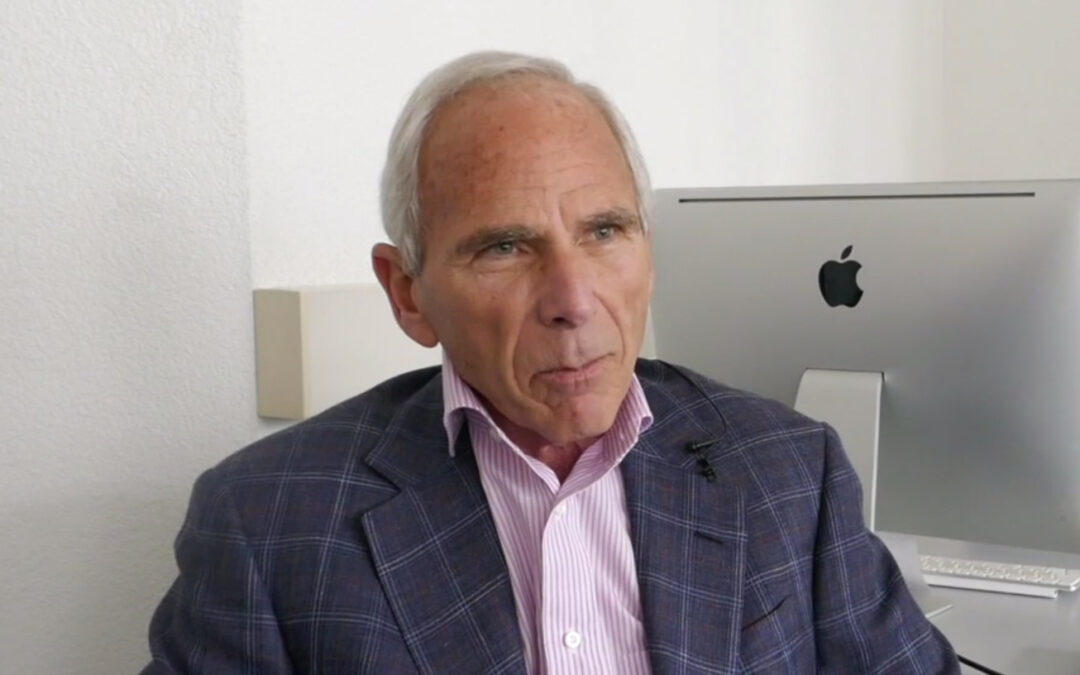
On video: Bob Goldman talks about the ICJ and the Rule of Law
Mar 6, 2018 | News
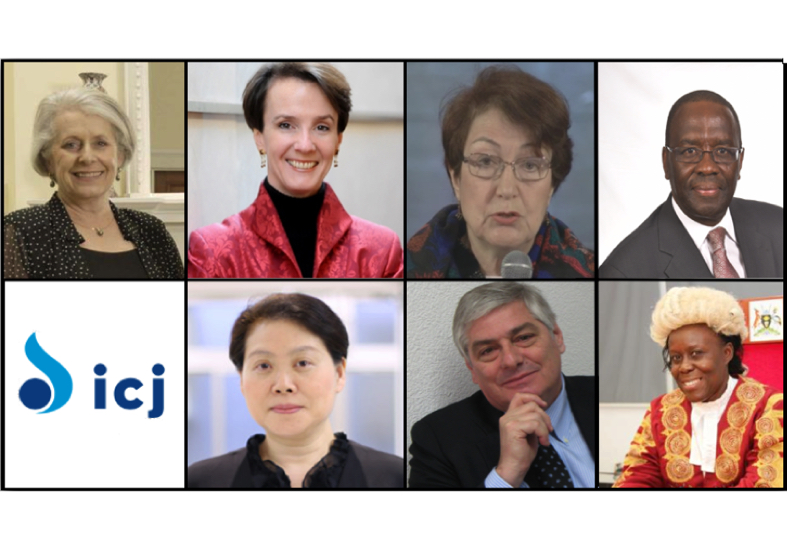
The ICJ is pleased to announce the addition of seven new members to the Commission.
They are Dame Silvia Cartwright (New Zealand), Professor Sarah Cleveland (USA), Justice Martine Comte (France), Justice Willy Mutunga (Kenya), Ms Mikiko Otani (Japan), Mr Wilder Tayler (Uruguay) and Justice Lillian Tibatemwa-Ekirikubinza (Uganda).
“The ICJ is pleased to welcome seven new Commissioners, five of whom are women, whose wealth of experience and expertise from a diverse range of legal backgrounds will greatly add to the Commission,” said the ICJ’s Acting President, Professor Robert Goldman.
“The addition of such strong new Commissioners helps ensure that we can carry out our fundamental work in defence of the rule of law and universal human rights at a time when we are witnessing a worldwide attack on respect for human rights and dignity,” he added.
The ICJ is also pleased to announce the appointment of Professor Carlos Ayala (Venezuela) as a new Vice-President.
Professor Ayala has shown a great deal of dedication to the ICJ since his initial election to the Commission in 2012.
Amongst other roles, he has served as chairman of the Inter-American Commission of Human Rights and taught constitutional, administrative and human rights law at a number of universities around the world.
“The ICJ’s ability to promote and protect human rights through the rule of law would not be possible without the dedicated Commissioners that make this organization what it is. The newly-appointed Commissioners and Vice-President will greatly enhance the ICJ and I look forward to working with them,” said Goldman.
In addition to the new appointments, Commissioners Roberta Clarke and Justice Sanji Monageng were elected to serve on the Executive Committee.
Eight Commissioners were also re-elected to serve second terms: Justice Radmila Dragicevic-Dicic (Serbia), Mr Shawan Jabarin (Palestine), Justice Egbert Myjer (Netherlands), Justice Qinisile Mabuza (Swaziland), Professor Victor Rodriguez Rescia (Costa Rica), Professor Marco Sassoli (Switzerland), Justice Stefan Trechsel (Switzerland) and Professor Rodrigo Uprimny Yepes (Colombia).
Further information on the new Commissioners
Dame Silvia Cartwright (New Zealand) was Governor-General of New Zealand from 2001-2006 and the first woman appointed to the High Court in New Zealand. She was also a judge on the Extraordinary Chambers in the Courts of Cambodia. Amongst others, she has the following honours: Dame Commander of the British Empire (DBE) and Principal Companion of the New Zealand Order of Merit (PCNZM). Dame Cartwright has served on the Committee on the Elimination of Discrimination against Women and played a role in drafting the optional protocol to the Convention on the Elimination of Discrimination against Women (CEDAW).
Professor Sarah Cleveland (USA) is the Louis Henkin Professor of Human and Constitutional Rights and faculty director of the Human Rights Institute at Columbia Law School. She is currently a member of the UN Human Rights Committee, the US member of the Venice Commission, and former counsel to the US State Department legal adviser. She also serves as coordinating reporter of the American Law Institute’s project on the Restatement (Fourth) of the Foreign Relations Law of the United States.
Justice Martine Comte (France) has been a judge in France for more than 30 years, including having served as President of the Orléans Court of Appeal from 2011-2014. Prior to this her judicial career has been extensive and amongst other roles she has served as President of the Pontoise Tribunal of First Instance, President of the Bourgoin-Jallieu Court of First Instance and as Head of the Regional Administrative Department of Paris. She has also served as an Inspector of Judicial Services. Justice Comte is an Officer of the National Order of Merit and Knight of the Légion d’Honneur.
Justice Willly Mutunga (Kenya) served as Chief Justice & President of the Supreme Court, Republic of Kenya, 2011- 2016. He was the Commonwealth Secretary-General’s Special Envoy to the Maldives, 2016-17. He is an active member of the Justice Leadership Group. He has a previous career as an academic and in human rights movements in East Africa and Canada, and served as Executive Director of the Eastern Office of the Ford Foundation, 2004-2011.
Ms Mikiko Otani (Japan) Mikiko Otani is a member of the United Nations Committee on the Rights of the Child (CRC) (2017-) and a former Chair of the Committee on International Human Rights of the Japan Federation of Bar Associations. Prior to being elected as a member of the CRC, she was actively involved in the reporting process for Japan under the CRC and the CEDAW, representing NGOs.
Mr Wilder Tayler (Uruguay) is a Director of the National Institution of Human Rights and Ombudsman’s Office in Uruguay. He was Secretary-General of the International Commission of Jurists from 2008-2017. Between 2007 and 2014 he was a member and Vice-Chairperson of the UN Sub-Committee on the Prevention of Torture. Mr Tayler was Legal Director of Human Rights Watch from 1997 to March 2007 and before that he worked with Amnesty International as Director of the Americas Programme and a Legal Advisor.
Justice Lillian Tibatemwa-Ekirikubinza (Uganda) is a Justice of the Supreme Court of Uganda. Prior to joining the Court, she served on Uganda’s Constitutional Court for two years. Before joining the Judiciary, Tibatemwa-Ekirikubinza served as Deputy Vice-Chancellor in charge of Academic Affairs at Makerere University, Uganda, where she was also a Professor of Law. She is an author of law textbooks currently in use as reference texts in East African Law Schools.
More information about all the Commissioners can be found on the Commission page.
Feb 12, 2018 | News
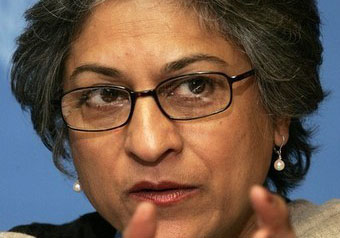
The ICJ mourns the loss of its former Commissioner, Executive Committee Member and Honorary Member, Asma Jahangir, who was at the frontline of the struggle for the rule of law and human rights in Pakistan and around the world.
Ms. Jahangir died of cardiac arrest on Sunday, 11 February, in Lahore, Pakistan. She was 66.
“The ICJ benefited immeasurably from Asma Jahangir’s contribution and leadership. She was a giant of the human rights movement, dedicated to defending the rule of law and fighting for the rights of everyone – including her fiercest detractors,” said Sam Zarifi, ICJ’s Secretary General.
Asma Jahangir was elected to the ICJ in 1998, and went on to serve on the organization’s Executive Committee until the end of her term.
She continued to work closely with the ICJ as an Honorary Member.
Asma Jahangir started her journey as a human rights defender as a petitioner is a case challenging the military dictatorship of Yahya Khan. She was only 19 at the time.
She continued throughout her life to be an outspoken critic of military rule and abuses in Pakistan and at the forefront of the struggle for human rights and the rule of law in the country.
In 1987 she co-founded the Human Rights Commission of Pakistan, which remains one of the oldest and most preeminent human rights organizations in the region.
Asma Jahangir was a senior advocate of the Supreme Court with a legal career spanning nearly forty years.
In 1987, along with other women lawyers, she established the first legal aid cell in the country for free legal representation to women, children, bonded laborers and religious minorities.
She also made lasting contribution to the human rights globally, and served as a UN Special Rapporteur for three different mandates: Extrajudicial, summary or arbitrary executions (1998 to 2004); freedom of religion or belief (2004 to 2010); and the situation of human rights in Iran (2016 – 2018).
In the course of her work as a human rights activist, she was repeatedly threatened, put under house arrest and even imprisoned. However, these attacks did not deter her from her commitment to human rights.
“Asma Jahangir’s brave, powerful voice for human rights and dignity has fallen silent much too soon. We will miss her and strive to live up to her example,” said Zarifi.
Last year, Asma Jahangir participated in ICJ’s Women profiles video series:
Asma Jahangir profile
Nov 2, 2017 | Multimedia items, News, Video clips
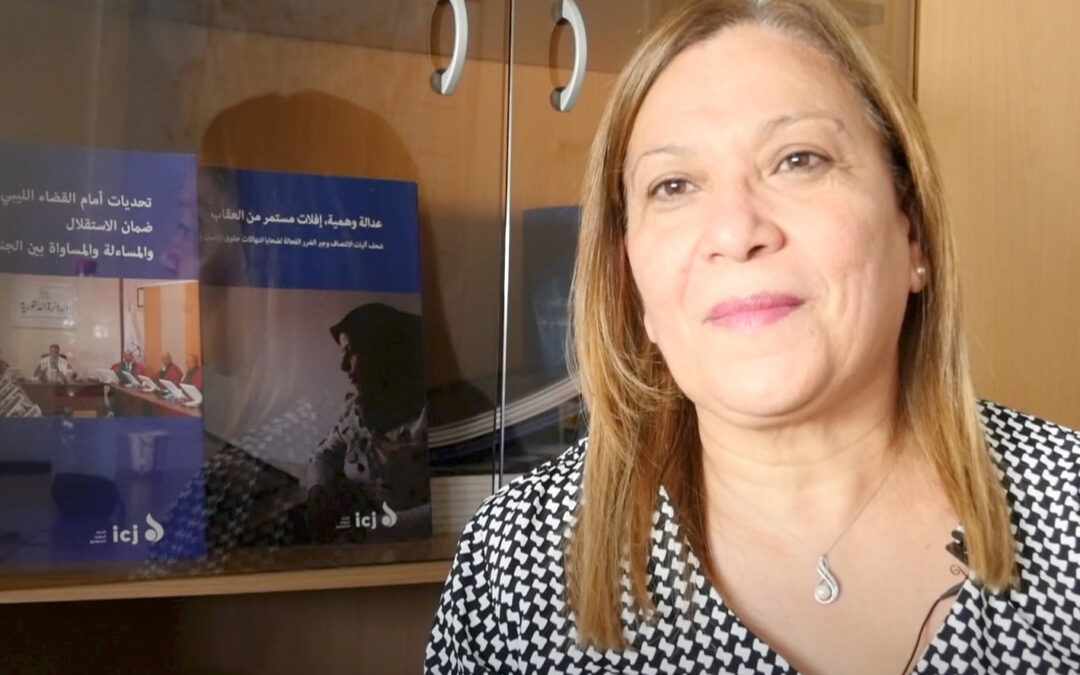
The ICJ ends its series of profiles of its women Commissioners with an interview with Judge Kalthoum Kennou is currently serving her second term as ICJ Commissioner.
Kalthoum Kennou is a Judge of the Tunisian Cassation Court.
She previously served as an investigating Judge at the Tribunal of Tozeur in Tunisia (2010 – 2012), an investigating Judge at the Tribunal of Kairouan (2005 – 2010) and a Judge at the Court of Appeal of Tunis (2001-2005).
She is a strong advocate of the rule of law and the independence of the judiciary in Tunisia, and for women’s rights.
She was active in opposition to the dictatorship of President Zine el-Abidine Ben Ali.
As a consequence of her work, she was subjected to politically motivated personal attacks including arbitrary transfers to remote parts of the country.
After the political revolution in January 2011, she became President of the Association of Tunisian Judges.
She has worked on the new Tunisian Constitution and was the first female candidate in the November 2014 Presidential elections.
In this interview, Judge Kennou speaks about the reasons that prompted her to take up a legal career.
Her father was wrongly accused of high treason and imprisoned and she wanted to show people that there could be fair judges who worked independently.
On his release, her father also supported her decision to study the law.
She was appointed a judge in 1989 but said that other women had been appointed before her so it was not that difficult.
The main problems were that male judges were reluctant to discuss certain issues in front of her and she had to stand up for herself.
“However what was a bit troublesome was with the police when I gave them instructions and I think they would have preferred it was a man and not a woman. But I stood up for myself and I became an investigating judge and I was there to give orders to the police, to the clerk of court, as a judge and as a woman judge.”
Under the dictatorship of Ben Ali, she explains in the interview that there were a quite an important number of judges who resisted and defended the independence of the judiciary.
“… I think our resistance had some results. The proof was that just after the revolution, the question of the independence of the judiciary became a demand of the people, not just the judiciary.”
She explains in the interview that now 43% of the judiciary in Tunisia are women.
This is because there are more women studying law, more women than men, and because the government is promoting women’s equality.
However, many women may take up a legal career without wishing to become a judge.
This is because of family reasons, as they don’t wish to be appointed to a court away from home and in some families, parents might feel that women should be protected from some of the real problems of society.
“But actually I think this kind of thinking is less common now and will disappear bit by bit. Judges have shown that they can have an impact and society accepts female judges more than male judges. They consider that female judges are less corrupt, that they are more serious and are making more efforts to deliver justice.”
The main problems for women in accessing justice in Tunisia are related to pressure from the family not to file complaint in cases of domestic violence.
Also there is a problem with the attitudes of the police who do not take physical aggression against a woman seriously.
The third issue is the mentality of some judges, including some women judges, who are not really convinced that a husband does not have the right to beat his wife.
“The law exists but we should also work on people’s mentalities so that the law is correctly applied.”
Judge Kennou concludes the interview with some advice for young women considering a legal career. She said that a young woman must learn to “stand up for herself and for her rights at home because you cannot be free, you cannot give to others, if your own rights are not realized… I think that a woman who wants to be a judge should be really convinced and well trained about human rights so she can apply the law in a correct manner. “
Watch the interview:
The series of profiles introducing the work of ICJ Commissioners and Honorary Members on women’s rights was launched on 25 November 2016 to coincide with the International Day to Eliminate Violence against Women and the first day of the 16 Days of Activism Against Gender-Based Violence Campaign.
Jul 28, 2017 | Multimedia items, News, Video clips
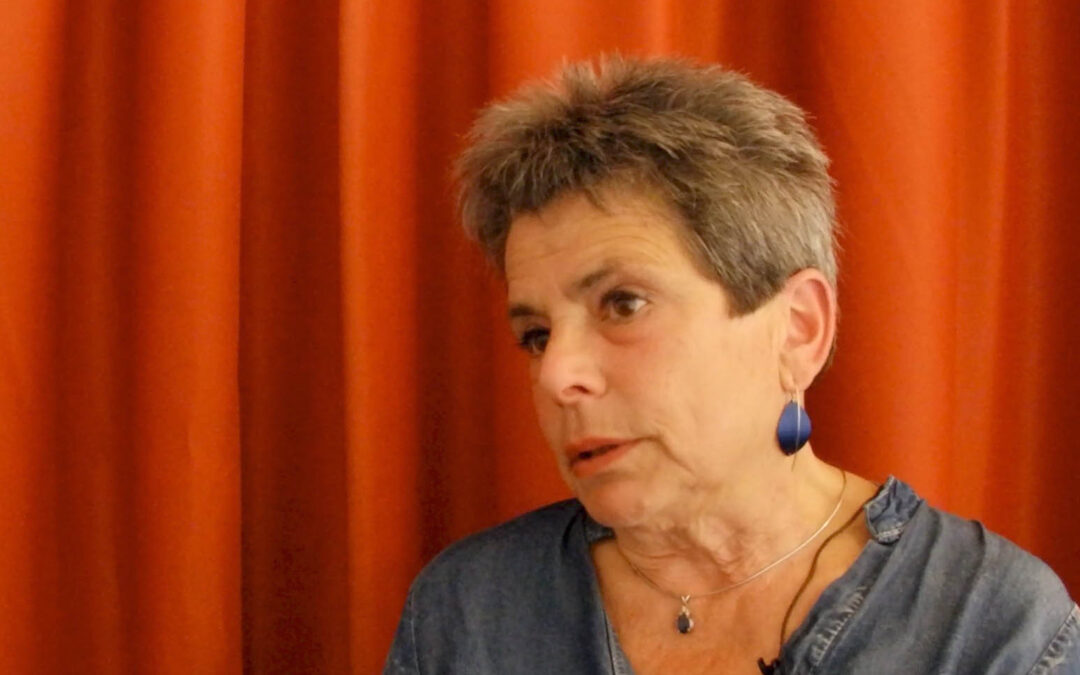
The ICJ continues its series of profiles of its women Commissioners with an interview with Prof. Jenny E. Goldschmidt, who is currently serving her third term as an ICJ Commissioner.
She was first elected to the Commission in 2003 and re-elected in 2008 and 2013.
She is a Member of the Advisory Board of Nederlands Juristen Comité voor de Mensenrechten (NJCM), and NJCM Public Interest Litigation Group. The NJCM is the ICJ’s National Section in the Netherlands.
In this wide-ranging interview, Jenny describes how she started out her career as a lawyer by studying Constitutional law; how her interests began to focus on the haves and the have nots and from there her interest in human rights developed.
She explains how she has always combined academic research and teaching with practical work, particularly during her years as the President of the Equal Treatment Commission in the Netherlands. She also stresses the importance of working in an inter-disciplinarian manner.
For example, she explained that after academics had developed concepts of direct discrimination, indirect discrimination, and systemic discrimination, these concepts were taken on board by lawyers and have been incorporated into case law.
She gave the example of how the European Court of Human Rights and the European Court of Justice are now incorporating this type of stereotyping into their equality concept.
She emphasized human rights law must protect women and that this protection must be embodied in law.
She considered that it is vital to take cases to the Treaty Bodies and courts everywhere to establish severe measures against discrimination and domestic violence.
But human rights lawyers also need sociologists to help find the arguments that convince people and how we can influence their behavior.
“Sometimes soft law and mediation can be effective and you need other disciplines to show in which cases which instruments are most effective,” she said.
She explained that because women are not a homogenous group and because of migration and all the divisions in society, inter-sectionality has become one of the crucial challenges for women’s rights.
She believes in combining a focus on the general problems which all women face as well as taking into account that some women are even less equal than others – that women who belong to minorities, that women who are disabled, that girls are more vulnerable than the majority of women.
“I think one of the things that the disability convention tries to do by giving a specific provision for women and girls rights is that it forces the authorities, the Treaty Bodies, the national and international institutions to be aware of the fact that we are talking about women and disabled people and that we have to take two perspectives at the same time into account,” she added.
When asked what advice she would give a woman who wants to pursue a career in human rights she said: “Don’t give up! And don’t think it will be easy. Human rights world still is a man’s world.”
Jenny Goldsmith is currently Emeritus Professor of Human Rights Law, and was from 2007-2014 Director of the Netherland Institute of Human Rights at the University of Utrecht.
From 1994-2003 she was President of the Equal Treatment Commission of the Netherlands.
She is on the board of Disability Studies in the Netherlands and involved in several NGOs of disability rights, democracy, and human rights.
Watch the interview:
The series of profiles introducing the work of ICJ Commissioners and Honorary Members on women’s rights was launched on 25 November 2016 to coincide with the International Day to Eliminate Violence against Women and the first day of the 16 Days of Activism Against Gender-Based Violence Campaign.