Aug 16, 2016 | News
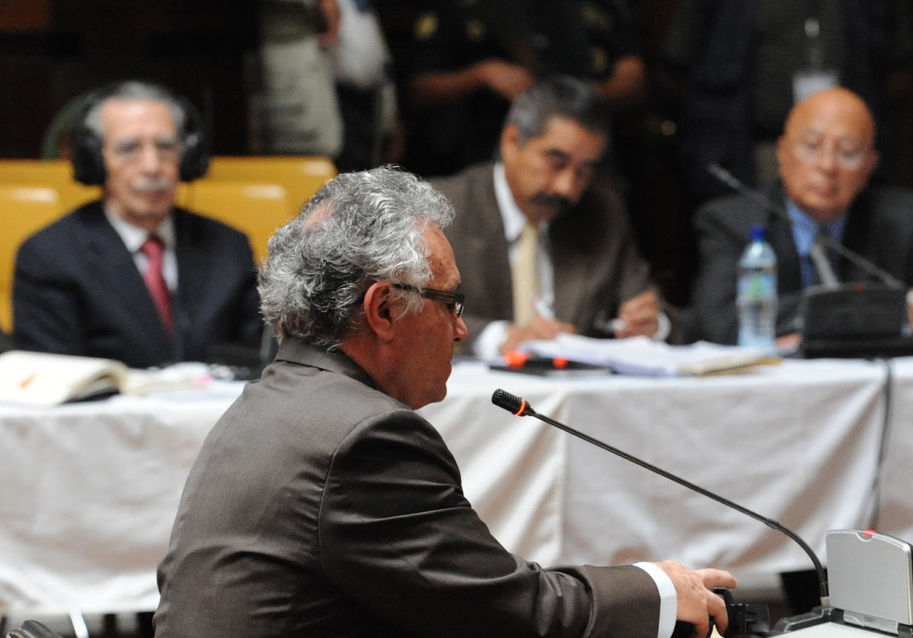
The ICJ said today that the attack on Ramón Cadena, its director in Central America, is deplorable evidence that human rights lawyers in Guatemala cannot carry out their activities without fear of reprisal.
Around a dozen armed men ransacked Ramón Cadena’s house in Guatemala City on Monday morning while he was attending a workshop elsewhere in the country.
The ICJ regional director for Central America is the latest victim of a recent wave of harassment and intimidation against human rights defenders and legal and environmental activists in Guatemala and neighboring Honduras.
“The ICJ strongly condemns the attack against Ramón Cadena, which is most likely linked to his activities as a human rights lawyer,” said Wilder Tayler, ICJ Secretary General.
Ramón Cadena, a highly prominent human rights lawyer in the region, was a key witness in the trial of former President Efrain Rios Montt for his role in the alleged genocide and other atrocities committed during the civil war of the 1970s and 80s.
Ramón Cadena has also been providing legal advice and support (on behalf of the ICJ) to the communities fighting against mining projects in Guatemala.
“We urge the Guatemalan authorities to provide the much needed protection to Ramón Cadena and promptly and thoroughly investigate the attack to find the culprits. They must also combat the increasing threats and growing insecurity faced by human rights defenders in the country, which is a clear assault on human rights,” Tayler added.
Contact
Wilder Tayler, ICJ Secretary General, t +41 76 562 38 10 ; e: wilder.tayler(a)icj.org
Several organizations have also condemned the attack on Ramón Cadena and issued a statement in Spanish which can be read here.

Jul 27, 2016 | News
Thailand’s government should immediately stop allowing criminal defamation laws to be used to harass victims and human rights defenders who seek justice for alleged incidents of torture, the ICJ said today.
Yesterday, the government charged three human rights defenders (Pornpen Khongkachonkiet, Somchai Homloar and Anchana Heemina, photo) under the criminal defamation provisions of the Penal Code and the Computer Crime Act, for publication of a report that documented 54 cases of alleged torture and other ill-treatment by the Thai authorities in the country’s restive deep South since 2004.
“Thailand must repeal or revise its vague and broad criminal defamation laws to prevent them from being used to silence human rights defenders and journalists working on important public interest issues,” said Wilder Tayler, the ICJ’s Secretary General.
“The imposition of harsh penalties such as imprisonment or large fines under these laws has a chilling effect on the exercise of freedom of expression – a right which is enshrined in treaties to which Thailand is a party and bound to uphold,” he added.
Also yesterday, the government used the same provisions to charge Naritsarawan Kaewnopparat, the niece of an army conscript who was killed after being severely punished by soldiers on a military base.
Although the Thai government has formally acknowledged that the death was caused by torture and compensated the family, none of the perpetrators have been held accountable for the death of Private Wichian Puaksom and have only faced military disciplinary sanctions of 30 days of detention or less, the ICJ reminds.
The case against Ms Kaewnopparat was brought by a military officer who alleges she accused him of being involved in her uncle’s death in the context of the family’s efforts to seek justice.
Last month, Thailand informed the Human Rights Council during its Universal Periodic Review that the Cabinet was considering a draft Act on Prevention and Suppression of Torture and Enforced Disappearance.
It was reported that the Cabinet approved the draft law on 24 May 2016 and would forward it for approval to the National Legislative Assembly.
At the conclusion of the review, Thailand also adopted several recommendations to protect human rights defenders and investigate reported cases of intimidation, harassment and attacks against them.
“Prosecuting people who seek justice for alleged torture goes against the spirit of the proposed legislation,” Tayler said.
“Thai authorities have an obligation to investigate and ensure justice for incidents of torture, but instead they are harassing and intimidating those responsible for exposing these horrendous acts.”
On 17 December 2015, Thailand joined 127 other states at the UN General Assembly in adopting a UN Resolution on human rights defenders.
The Resolution calls upon states to refrain from intimidation or reprisals against human rights defenders.
Contact:
Sam Zarifi, ICJ Asia Pacific Regional Director (Bangkok), t: +66 807819002; e: sam.zarifi(a)icj.org
Thailand-HRDs defamation charges-News-Press releases-2016-ENG (full text of press release in English, PDF)
Thailand-HRDs defamation charges-News-Press releases-2016-THA (full text of press release in Thai, PDF)

Jul 12, 2016 | News
The International Commission of Jurists (ICJ) has issued a joint statement condemning increasing acts of harassment and intimidation against journalists in Lesotho.
The joint statement expresses concern about a number of incidents threatening freedom of expression, exemplified by the recent shooting of the editor of the Lesotho Times newspaper, and have called on Lesotho Authorities to ensure the right to freedom of expression is protected.
In addition to the ICJ, the statement has also been signed by: amaBhungane Centre for Investigative Journalism; Amnesty International; Freedom of Expression Institute; Institute for Democracy; Lawyers for Human Rights; Lawyer for Human Rights (Swaziland); Media Institute for Southern Africa – Zimbabwe Chapter; Media Monitoring Africa; Open Society Initiative for Southern Africa; PEN Afrikaans; PEN South Africa; Rights 2 Know Campaign; SOS Coalition; Southern Africa Human Rights Defenders Network; Southern AFrican Litigation Centre; Transformation Resource Centre; Zimbabwe Human Rights NGO Forum; and Zimbabwe Lawyers for Human Rights.
Lesotho-Joint statement-Freedom of expression-Advocacy-2016-ENG (full text in PDF)
Jul 12, 2016 | News
The Indian Supreme Court’s recent decision reiterating the importance of accountability for human rights violations by police and security forces, in particular where unnecessary or excessive force is alleged to have been used, is a welcome step and must be immediately implemented.
In the case of EEVFAM v Union of India, petitioners alleged that 1,528 killings by the police and security forces in the Indian state of Manipur had amounted to unlawful extrajudicial executions. Manipur is the site of a long-running armed insurgency.
In 2013, a court-appointed commission – the Santosh Hegde Commission – conducted an inquiry into six of the cases mentioned in the petition, and found all the six killings to be unlawful.
“This judgment is a strong signal from the Court that human rights violations by security forces will not be tolerated in the name of national security or anti-terror policies,” said Sam Zarifi, the International Commission of Jurists (ICJ) Asia Director.
“It’s crucial for the government now to follow through on this ruling to bring the families of the victims of these and other extra judicial executions mentioned in this petition closer to truth, justice and accountability”.
The killings mentioned in the petition all took place in areas considered “disturbed” under the Armed Forces Special Powers Act (AFSPA). Once an area is declared “disturbed” under the AFSPA, armed forces are given a range of “special powers”, which include the power to arrest without warrant, to enter and search any premises, and in certain circumstances, use force, to cause death.
Under the AFSPA, governmental permission, or sanction, is required before any member of the armed forces can be prosecuted for crimes in a civilian court, thus effectively shielding armed forces from accountability for human rights violations.
“These, and other allegations, of human rights violations under the AFSPA only reiterate the urgent need to repeal this draconian and undemocratic law,” Zarifi said. “The allegations in this case are evidence of the culture of impunity that the AFSPA has perpetuated”.
In the present judgment, the Supreme Court made some welcome observations:
- It emphasized the need for accountability for human rights violations by security forces, reiterating the principles laid down in previous landmark cases. It said “every death caused by the armed forces, including in the disturbed area of Manipur should be thoroughly enquired into if there is a complaint or allegation of abuse or misuse of power”.
- It dismissed the government’s argument that legal safeguards would not fully apply to anyone considered an “enemy” under Indian law. The Court held that at least all Indian citizens were equally entitled to the enjoyment of the fundamental rights in the Constitution, stating “If members of our armed forces are deployed and employed to kill citizens of our country on the mere allegation or suspicion that they are ‘enemy’, not only the rule of law but our democracy would be in grave danger”.
- It noted that it did not have sufficient information about each of the 1,528 cases mentioned in the petition. It has directed parties to present detailed information about the status of each case.
“This judgment references India’s obligations under international human rights law, which requires the government to respect and protect the right to life and ensure access to effective remedies,” Zarifi said. “Accountability for all human rights violations is a key aspect of these rights”.
The ICJ called for independent, impartial and thorough investigations into all the cases mentioned in the petition, in line with international standards.
It said that persons responsible should be brought to justice in fair trials in civilian courts, and the family of victims should be accorded an effective remedy and reparation for any violations.
The ICJ will continue to follow the case, which will continue in four weeks. Several key issues remain to be addressed, which the court will look at in subsequent hearings.
First, how should the specific cases be investigated? The petitioners have asked for the constitution of a Special Investigation Team, comprising police officers from outside the state of Manipur, to investigate the allegations, to ensure that the enquiry is fair, independent and thorough.
Second, in what forum should trials take place? The Indian Army Act allows for army personnel on active duty to be tried by a court martial (military court) instead of a civilian court for all offences, including gross human rights violations.
International standards call for military personnel accused of gross human rights violations to be put on trial before a civilian court. The Court has left this question open for the allegations in the present petition, stating: “The law is therefore very clear that if an offence is committed even by Army personnel, there is no concept of absolute immunity from trial by the criminal court”.
Third, the Court will also consider the efficacy of the National Human Rights Commission; in particular whether its guidelines are binding or only advisory. Under Indian law, the NHRC has limited jurisdiction where human rights violations by the armed forces are concerned.
Contact
Sam Zarifi, ICJ Asia Pacific Regional Director (Bangkok), t: +66 807819002; e:sam.zarifi(a)icj.org