Jan 19, 2017 | News
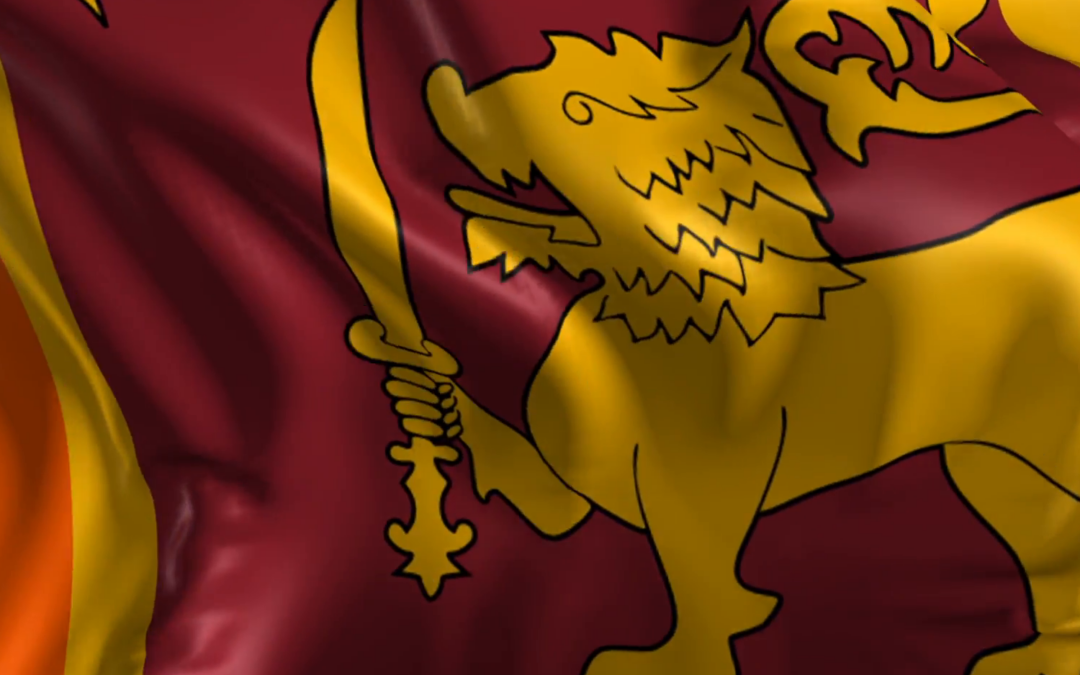
The Sri Lankan government must deliver on the clear demand for justice from Sri Lankans nationwide by implementing the Consultation Task Force recommendations without further delay, the ICJ said today.
Among these recommendations, the calls for a special court with international judges and a bar against amnesties for crimes under international law are of particular importance, the ICJ added.
The Consultation Task Force on Reconciliation Mechanisms (CTF), a panel of 11 independent eminent persons appointed by Prime Minister Ranil Wickremesinghe in January 2016, publicly released its final report on 3 January 2017.
The report, reflecting the views of people across the country gathered through island-wide public consultations on transitional justice, highlights the lack of public confidence in the justice system’s capacity and will to deliver justice for victims of Sri Lanka’s nearly 30-year armed conflict that ended in 2009.
“The CTF report highlights a widespread lack of trust among Sri Lankans across the country, regardless of region, ethnicity, religion or language, in the ability of the criminal justice system in its current form to address serious human rights abuses stemming from the conflict,” said Nikhil Narayan, the ICJ’s South Asia senior legal adviser.
The report also calls upon the Government of Sri Lanka to take necessary steps to ensure a credible transitional justice process in line with the October 2015 UN Human Rights Council resolution 30/1 that it co-sponsored.
“If the Sri Lankan government wants to restore public confidence in the system, it must seriously consider victims’ voices and implement the CTF recommendations on truth, justice and reparation consistent with the commitments it voluntary undertook at the Human Rights Council,” Narayan added.
Importantly, the CTF report reiterates the commitments pledged in HRC resolution 30/1, calling for active international participation in a special judicial mechanism established to deal with accountability for human rights abuses committed during the conflict by both sides, and for a bar against amnesties for international crimes.
According to the ICJ, the Sri Lankan government took an important first step towards reconciliation when it adopted the UN resolution and later established the CTF to carry out public consultations to hear a cross section of voices on transitional justice.
“Unfortunately, since then, it has been disappointing in its lack of urgency in implementing much of those stated promises and in its apparent disregard for the CTF recommendations,” Narayan said.
Several members of the government have dismissed the CTF’s recommendations, especially with regard to the inclusion of at least one international judge on every bench of the special judicial mechanism.
The Minister of Foreign Affairs recently spoke of the need for “an independent and credible domestic mechanism” without alluding to any international participation, as has been reiterated by those seeking redress as a crucial element to ensure faith in the justice mechanism.
The ICJ has in the past highlighted Sri Lanka’s culture of impunity in the justice system looking at a number of emblematic cases, and called into question the State’s capacity and political will to use the criminal justice system and other ad-hoc measures to deliver justice and accountability to victims and survivors of serious human rights abuses.
“As the situation of Sri Lanka comes before the UN Human Rights Council again this March, the Sri Lankan government is in a position to demonstrate both to the UN Member States but more importantly to its own people at home its seriousness in pursuing truth, justice, reparation and non-recurrence for conflict victims who have been waiting for justice for decades. It must seize this opportunity before it is one more of many missed opportunities,” Narayan added.
Contact:
Nikhil Narayan, ICJ South Asia senior legal adviser, t: +91-8939325204 (Chennai); +94-758898067 (Sri Lanka); +1-562-261-3770 (Whatsapp) ; e: nikhil.narayan(a)icj.org
Download the full text with additional background info, in PDF:
Sri Lanka-CTF recommendations-News-Press release-2016-ENG
Dec 14, 2016 | Advocacy, Non-legal submissions
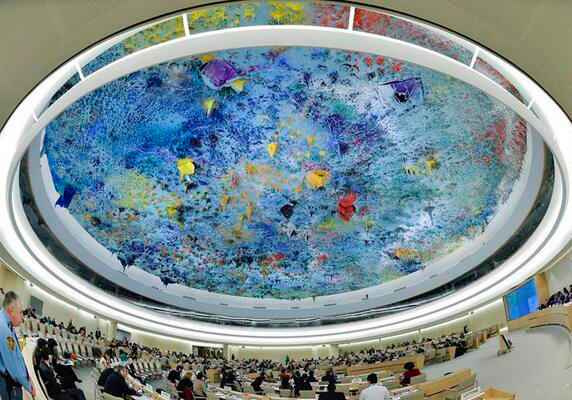
The ICJ today joined other NGOs in calling on the UN Human Rights Council to take bold and decisive action to address the grave situation in South Sudan.
The statement, made during a Special Session of the Human Rights Council, convened on an urgent basis to discuss the situation in South Sudan, underscores the negative consequences of continuing impunity and lack of accountability, and calls among other things for the Human Rights Council resolution to be adopted that would:
· Support a strengthened mandate and capacity of the UN Commission on Human Rights in South Sudan to investigate serious violations of human rights and humanitarian law and identify alleged perpetrators, with a special focus on sexual and gender based crimes.
· Request that the report of the UN Commission is transmitted to the UN Security Council for consideration and further action.
· Urge that all states encourage further concrete action to prevent a further escalation of violence and conflict, and to deter and address these on-going violations of international human rights and humanitarian law at the UN Security Council, including sanctions and the imposition of a comprehensive arms embargo.
· Urge the African Union to take immediate steps to establish the hybrid court for South Sudan provided for in the 2015 peace agreement.
The Human Rights Council ultimately adopted, without a vote (i.e. by consensus), a resolution that includes many of these elements (final text not yet available).
The full statement can be downloaded in PDF format here: un-jointstatementsouthsudan-advocacy-2016
It was delivered by Human Rights Watch on behalf of:
- Amnesty International
- Association for Human Rights in Ethiopia
- Defend Defenders
- Human Rights Watch
- Humanity United
- International Commission of Jurists
- International Refugee Rights Initiative
- International Service for Human Rights
- National Coalition of Human Rights Defenders Uganda
- Pan-African Human Rights Defenders Network
- South Sudan Human Rights Defenders Network
Sep 16, 2016 | Advocacy, Non-legal submissions
On 16 September 2016, the ICJ made a submission to the Universal Periodic Review of India.
The submission brings to the attention of the members of the Human Rights Council’s Working Group on the UPR issues concerning:
- discrimination and violence based on sexual orientation and gender identity;
- death penalty;
- impunity and accountability;
- freedom of speech, expression and association;
- ratification and implementation of international human rights instruments.
india-icj-upr-submission-advocay-non-legal-submission-2016-eng (full text in PDF)

Sep 15, 2016 | Advocacy, Non-legal submissions
The ICJ, with support of the NGO the Human Rights Commission of Pakistan (HRCP), spoke at the UN Human Rights Council today on the continuing problem of enforced disappearances in Pakistan.
The statement was delivered during an interactive dialogue with the Working Group on Enforced or Involuntary Disappearances.
The ICJ, with support of the Human Rights Commission of Pakistan (HRCP), welcomed the Working Group’s follow-up report on recommendations from its 2012 visit to Pakistan, and stated further as follows:
The practice of enforced disappearance has persisted and expanded since the Working Group’s visit. Previously restricted mainly to Balochistan, the Federally Administered Tribal Areas and Khyber Pakhtunkhwa, enforced disappearances are now a nation-wide phenomenon.
In August 2015, Zeenat Shahzadi, a Pakistani journalist, went “missing” from Lahore, a rare case of alleged enforced disappearance of a woman.
Estimates of the overall number of cases of enforced disappearance vary. The official Commission of Inquiry on Enforced Disappearances has reported nearly 1,400 unresolved cases.
The HRCP, an NGO that documents human rights violations in 60 districts, has reported 370 cases of enforced disappearance since 2014.
Other NGOs claim between 5,000 to 18,000 cases. Even by the most conservative estimates, a significant number of enforced disappearances remain unresolved.
The Government has not brought perpetrators to account in even a single case of enforced disappearance. Rather than effective measures to prevent the practice or to strengthen existing accountability mechanisms, recent legislation actually facilitates enforced disappearances.
In January 2015, Pakistan empowered military courts to try civilians for terrorism-related offences. These courts have since sentenced at least 100 people to death, and at least 12 have been hanged, after grossly unfair trials without possibility of appeal to any civilian courts, including the Supreme Court.
Families allege that some of those tried had been subjected to enforced disappearance by military authorities, and military control over the proceedings leaves the family and victim without effective remedy.
Victims’ groups, lawyers, and activists working on enforced disappearance also continue to face security risks including attacks, harassment, surveillance, and intimidation.
The ICJ and HRCP commend the Working Group for its systematic follow-up, which can have a positive impact, and urge the Working Group to continue to monitor and report on the situation in Pakistan.
The statement may be downloaded in PDF format here: hrc33-oralstatement-disappearances-pakistan-15092016
Aug 31, 2016 | News
ASEAN meeting should highlight disappeared Lao leader Sombath Somphone, denial of liberties, said human rights and advocacy groups at a press conference held today in Bangkok.
On the eve of the annual ASEAN leaders summit in Vientiane, the groups (Human Right Watch, ASEAN Parliamentarians for Human Rights, Civil Rights Defenders, Focus on the Global South, Mekong Watch and the ICJ) called upon the Lao PDR Government to commit to address its widespread violations of human rights, including instances of enforced disappearances and arbitrary detention.
Visiting world leaders have a unique opportunity to publicly raise human rights concerns during the ASEAN summit in Vientiane from September 6-8. They should press the Lao government to cease the abuses that have consistently placed Laos at the bottom of rights and development indexes measuring rights, press freedom, democracy, religious freedom, and economic transparency, the groups added.
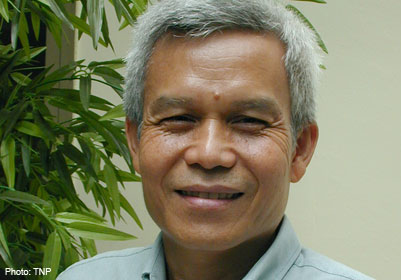
At the event organized by The Sombath Initiative at the Foreign Correspondents Club of Thailand in Bangkok, the groups also released a set of briefing papers on forcibly disappeared civil society leader Sombath Somphone (photo), Laos’ restrictions on democracy and human rights, lack freedom of expression, failure to meet human rights obligations, and impacts of foreign aid and investment.
“More than three and half years after he disappeared, the Lao government still has provided no clear answers to what happened to my husband, Sombath Somphone, who was taken away in truck at a police checkpoint in Vientiane,” said Shui Meng Ng, wife of Sombath and board member of The Sombath Initiative.
“President Obama, the United Nations, and ASEAN and its dialogue partners should urge the Lao Government to urgently resolve the case of Sombath’s enforced disappearance and return him safely to me and my family. They should also demand the Lao Government end enforced disappearances, so that the ordinary people of the country can respect their government rather than fear it.”
“The fact that the Lao PDR government’s last detailed report on the progress of the investigation was released over three years ago suggests the Lao authorities are not carrying out an effective investigation into this case as they are required to do under international law,” said Kingsley Abbott, a Senior International Legal Adviser with the International Commission of Jurists (ICJ).
“It is not enough for the Lao government to simply keep asserting on the international stage that it is investigating this case. International law obliges Lao PDR authorities to conduct an investigation that is credible and effective, and provide regular updates on its progress including to Sombath’s wife, Shui Meng,” he added.
Basic civil and political rights are systematically denied in Laos, and government authorities move quickly to arbitrarily arrest those expressing critical views of the government, either in day to day life or more recently on-line.
In March 2016, police arrested three Lao migrant workers who had posted critical comments about the Lao government while they were working in Thailand, and continues to detain them arbitrarily. A Lao court also sentenced activist Bounthanh Khammavong in September 2015 to 4 years and 9 months in prison for posting critical comments on Facebook.
Laos also imposes onerous restrictions on the right to freedom of association that are incompatible with its human rights obligations.
The government strictly controls the registrations of organizations such as non-profit associations (NPAs), and closely monitors the work plans and budgets of NPAs that it does approve to operate.
Any person who dares to organize and operate an unsanctioned organization faces arrest and prosecution.
Workers are compelled to belong to the Lao Federation of Trade Unions and organizing unions outside that framework is illegal. At the village level, mass organizations controlled by the ruling Lao People’s Revolutionary Party are often the only organizations operating.
Public protests or assemblies are strictly forbidden without government permission, and any efforts organize such events face immediate suppression by the police and security forces.
“Civil society in Laos remains under a hostile spotlight from the government, and UN rights officials have noted that there are few places in the world where they have encountered greater fear and intimidation among community organizations and NGOs,” said Walden Bello, former member of the Philippines Congress and Vice Chair of ASEAN Parliamentarians for Human Rights (APHR).
“Laos has now become one of the most rights repressing countries in ASEAN: leaders in the region and from around the world must stop looking the other way, and demand Vientiane end its asphyxiation of independent civil society,” he added.
Read the full text and quotes here: Laos-End to Human Rights Abuses-News-Press Releases-2016-ENG (in PDF)
Contact
Kingsley Abbott, ICJ Senior International Legal Adviser, t: +66 9 4470 1345, e: kingsley.abbott(a)icj.org