Feb 22, 2010 | News
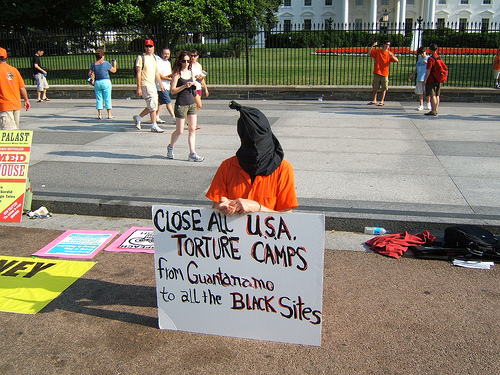
The ICJ today deplored the decision of the US Justice Department to clear the legal architects of the US torture policy from any professional misconduct.
The decision by Associate Deputy Attorney General (ADAG) David Margolis reversed the July 2009 findings of the Office of Professional Conduct (OPR) that Bush administration legal advisers John Yoo and Jay Bybee had engaged in professional misconduct by giving advice which approved as lawful the program of “enhanced interrogation”. This program consisted in clear acts of torture and ill treatment.
The OPR had been poised to refer Yoo and Bybee, who is presently a US federal judge, for disciplinary action by the state regulatory authorities. The ADAG report, while affirming that the legal advisers had exercised ‘poor judgement’, determined that they had not breached rules of misconduct because it could not be established that they had intended to give misleading advise.
USA-torture serious crime-press release-2010 (full text, PDF)
Photo by acameronhuff

Feb 17, 2010 | News
International and local human rights organizations have today urged the Nepali authorities to stop obstructing criminal proceedings over the alleged torture and murder of 15-year-old Maina Sunuwar by four army officers.
Nepal-Authorities must provide justice for torture and murder-press release-2010 (full text, PDF)
See also the open letter Government obstruction of justice and defiance of judicial authority

Feb 4, 2010 | News
A new ICJ report released today warns that the the Internal Security Act (ISA) in Thailand risks undermining the rule of law by conferring broad preventative powers to the Internal Security Operations Command (ISOC).

Jan 18, 2010 | News
A new ICJ report released today addresses the systematic absence of remedies for gross human rights violations in Sri Lanka between 1977 and 2001 – a period of widespread disappearances and unlawful killings.

Sep 23, 2009 | Advocacy, Non-legal submissions
 La Comisión Internacional de Juristas (CIJ) recuerda que en la sesión del Grupo de Trabajo sobre Examen Periódico Universal de Uruguay en mayo de 2009, se formularon varias recomendaciones al Estado.