Jun 26, 2020 | Cases, News
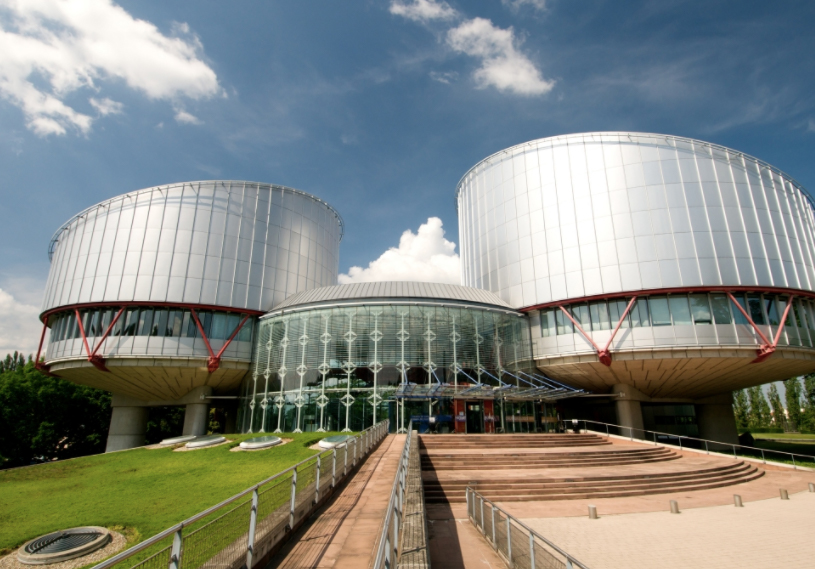
The ICJ today welcomed the judgment by the Court in the case of Bagirov v. Azerbaijan. It found that the suspension from legal practice and subsequent disbarment of Khalid Bagirov violated his rights to freedom of expression and to respect for private life under Articles 10 and 8 of the European Convention on Human Rights (ECHR).
Khalid Bagirov’s suspension from the practice of law was based on his public criticism of ill-treatment by the police, following the wide media coverage of the death of an individual in police custody. Later he represented the victim as a lawyer in the proceedings.
His subsequent disbarment arose from his remarks about a judge made in the courtroom when representing his client in another high-profile case.
The ICJ intervened in this case as a third party, providing an evaluation of the State’s obligation to protect the right to freedom of expression of lawyers in light of international standards on independence of the lawyers and the consequences of disciplinary proceedings for lawyers’ rights under Articles 8 and 10 ECHR.
The ICJ calls on the Azerbaijani authorities to fully and promptly implement the judgment, including by taking steps to restore Khalid Bagirov as a member of the Azerbaijan Bar Association.
“Khalid Bagirov must now be reinstated as a lawyer and be allowed to resume his legal practice in Azerbaijan,” said Massimo Frigo, ICJ Senior Legal Adviser.
“But in addition, this judgment shows that measures need to be taken to address the systemic problem of unjustified disbarments of lawyers who seek to defend human rights in Azerbaijan. Reforms are needed to ensure that the disciplinary process is independent and fair and that penalties are proportionate.”
In its judgment of 25 June 2020, the Court held under Article 10 of the Convention that the reasons given by the domestic courts in support of Khalid Bagirov’s disbarment were not relevant and sufficient, and that the sanction imposed on him was disproportionate to the legitimate aim pursued, having highlighted that “the disbarment cannot but be regarded as a harsh sanction, capable of having a chilling effect on the performance by lawyers of their duties as defence counsel”.
In relation to Article 8 ECHR, the Court further noted that “…in a series of cases it has noted a pattern of arbitrary arrest, detention or other measures taken in respect of government critics, civil society activists and human rights defenders … Against this background, the Court underlines that, notwithstanding the duties, in particular, with respect to their conduct, with which all lawyers must comply, the alleged need in a democratic society for a sanction of disbarment of a lawyer in circumstances such as this would need to be supported by particularly weighty reasons” which had not been established in this case.
In respect of the suspension of the lawyer, the Government contended that the interference with Mr Bagirov’s rights to private life and freedom of expression had been prescribed by law and pursued the legitimate aims of preventing the disclosure of information received in confidence or maintaining the authority and impartiality of the judiciary.
The Court found that, he was not the victim’s lawyer when he made the impugned statements about the police, furthermore, the Court mentioned that it did not find any provision of domestic law preventing a lawyer from calling for peaceful protests against police brutality for the purpose of preventing violence.
The Court further found that while Mr Bagirov’s remarks, about a judge’s lack of capacity, were capable of being offensive, the sanction imposed on him did not struck a fair balance between the need to protect the authority of the judiciary and the need to protect his rights to private life and freedom of expression.
In this connection, the Court stated that inter alia, Mr Bagirov had confined himself to making a statement in a courtroom as a lawyer, in the context of his objections to the shortcomings of the proceedings.
Background
In addition to its intervention in Bhagirov v Azerbaijan, the ICJ has also intervened as a third party in other cases of lawyers from Azerbaijan (Hajibeyli and Aliyev v. Azerbaijan, nos. 6477/08 and 10414/08, § 54, 19 April 2018).
In 2019, the ICJ published recommendations to the Azerbaijan Bar Association on the role and independence of Lawyers,
In 2016, the ICJ published a mission report Defenceless Defenders: Systemic Problems in the Legal Profession of Azerbaijan

Jun 2, 2020 | News
The ICJ has called on the Russian authorities to institute a prompt, independent and thorough investigation into the recent use of physical force against lawyers Natalia Magova, Diana Sipinova and Liudmila Kochesokova and detention of Diana Sipinova by officers of the Ministry of Interior in the Kabardino-Balkaria Republic.
Those responsible should be held accountable, the ICJ stressed.
According to the lawyers and as corroborated by video recordings available online, they arrived in the Department of the Ministry of Interior in the Kabardino-Balkaria Republic to represent their client Ratmir Jilokov, another lawyer who was detained on 20 May 2020, also following alleged violence against him by the police.
Despite the lawyers’ requests to have access to their client, they were not allowed to meet him. Instead, they were removed from the building of the Department of the Ministry of Interior with the use of physical force by several officers, which resulted in an altercation.
Moreover, Diana Sipinova was detained in the building of the Department for several hours. Both she and Ratmir Jilokov were later released.
“The use of physical force against the lawyers to prevent their meeting their client was clearly contrary to international human rights law and standards, including those on the role of lawyers,” said Temur Shakirov, Senior Legal Adviser of the ICJ Europe and Central Asia Programme.
The ICJ also raised concerns at the criminal proceedings against lawyer Diana Sipinova, following the incident of 21 May 2020, and Ratmir Jilokov, who was detained on 20 May 2020 apparently in connection with having tried to defend a client’s premises from what he considered to be an unlawful search by the authorities.
Both are accused of having used violence against police officers.
Reportedly, the criminal proceedings against Diana Sipinova and Ratmir Jilokov were instituted following their complaints of being subjected to physical attack by the officers of the Ministry of Interior of the Kabardino-Balkaria Republic.
The ICJ highlights that as provided by the UN Principles on the Role of Lawyers, States must ensure that lawyers are able to perform all of their professional functions without intimidation, hindrance, harassment or improper interference and that they do not suffer, or be threatened with prosecution for any action taken in accordance with recognized professional duties, standards and ethics.
International human rights law further guarantees the right of a person deprived of liberty to meet with his or her lawyer.
The authorities should take effective measures to prevent such acts against lawyers in the future, and to ensure that lawyers are not prevented from representing their clients in accordance with law, the ICJ said.
The ICJ furthermore calls on the authorities to terminate the criminal investigations against the lawyers in connection with their attempts to meet with and defend their clients’ interests, and for any other action they have taken in relation to the representation of their clients that was in accordance with their professional duties, standards and ethics.
Background information:
Natalia Magova, Diana Sipinova and Liudmila Kochesokova are lawyers based in Kabardino-Balkaria Republic in the North Caucasus part of the Russian Federation.
According to the official website of the Investigative Department of the Investigative Committee of Kabardino-Balkaria, Diana Sipinova and Ratmir Jikolov are charged with the criminal offence provided for by Article 318.1 (use of violence which does not endanger life or health against the public officials in connection with the performance of their duties) of the Criminal Code of the Russian Federation.
In particular, Diana Sipinova is charged with having used violence against officers of the department of the Ministry of Interior of Kabardino-Balkaria Republic when she requested access to her client on 21 May 2020. Ratmir Jilokov is charged with having used violence against the police officers who arrived in the office of his client to conduct a search on 20 May 2020.
On 30 May 2020, the first instance court imposed the preventive measure for Diana Sipinova of prohibition of certain activities for two months.
Lawyer Ratmir Jilokov, who was detained on 20 May and released on 21 May 2020, claims that the officers who arrived in his client’s office for a search failed to provide him with any legal grounds or the document authorising the search, and that he was subjected to violence when he had challenged the unlawfulness of the officers’ actions. The first instance court imposed the preventive measure of prohibition of certain activities for two months in respect of him.
The Federal Chamber of Lawyers of Russian Federation expressed their support to the lawyers and criticized the interference with their professional functions and actively participated in the defence of the lawyers.
The ICJ has previously raised concerns at violence and intimidation against Russian lawyers.
Apr 2, 2020 | News
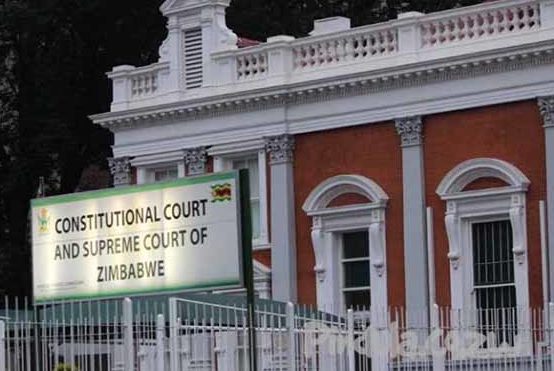
The ICJ welcomes the decision by the Constitutional Court of Zimbabwe to invalidate the enactment of Constitutional Amendment Bill (No. 1) of 2017 in Gonese and Anor v Parliament of Zimbabwe and 4 Ors. The judgment restores important Constitutional guarantees for the independence of the judiciary in Zimbabwe.
Zimbabwe adopted a new Constitution in 2013 and one of the progressive elements of this Constitution was its provisions regulating the appointment of judicial leaders such as the Chief Justice, Deputy Chief Justice and Judge President of the High Court. These judicial leaders perform important administrative functions with a huge impact on access to justice for the public.
For example, the Chief Justice is the head of the Judicial Service Commission (JSC) and therefore, presides over processes to select and recommend candidates for judicial appointment.
The Judge President is responsible for case allocation in the High Court and therefore, selects judges to sit on cases. It is important that the procedures for appointing these judicial leaders be transparent and independent of executive control in order to maintain the independence and impartiality of judges as well as promote public confidence in the judiciary.
The 2013 Constitution ensured this by prescribing procedures which accorded the executive a constrained role in the selection and appointment of these judicial leaders.
For example, the process of selecting these office bearers was to be led by an independent Judicial Service Commission (JSC) which would publicly advertise the vacancies, shortlist candidates, conduct interviews that are open to the public and recommend candidates for appointment by the President. The President was required to appoint only from the shortlist submitted by the JSC.
In 2017, the then-President of Zimbabwe Robert Mugabe signed into law a constitutional amendment bill which sought to change these provisions and give the President the authority to select and appoint these judicial leaders without conducting public interviews and without being constrained or restricted to the shortlist provided by the JSC.
The enactment of this constitutional amendment bill was challenged in the Constitutional Court on grounds that the amendment had been adopted and enacted into law without following due process.
In its judgment, the Constitutional Court concluded that, “It is declared that the passing of Constitutional Amendment Bill (No. 1) of 2017 by the Senate on 01 August 2017 was inconsistent with the provisions of s 328(5) of the Constitution, to the extent that the affirmative votes did not reach the minimum threshold of two-thirds of the membership of the House. Constitutional Amendment Bill (No. 1) of 2017 is declared invalid to the extent of the inconsistency. The declaration of invalidity shall have effect from the date of this order but is suspended for a period of one hundred and eighty days, subject to the provisions of paragraph 1(b).”
The Court directed the Senate to conduct a vote in accordance with the procedure for amending the Constitution prescribed by s 328(5) of the Constitution within one hundred and eighty days of the order given. Failure to do so will render the declaration of invalidity of Constitutional Amendment Bill (No. 1) of 2017 final, said the Court.
Commenting on this judgment, ICJ Africa Director Arnold Tsunga said: “This is a positive judgment which underscores the vital principle of legality, particularly that changes to the Constitution must be processed and enacted in strict accordance with the laid out procedures. Respect for the Constitution, and ensuring the independence of the judiciary, are fundamental elements of the rule of law; both are advanced by this judgment.”
The decision by the Constitutional Court comes at a time when the Parliament of Zimbabwe has gazetted further proposed changes to the Constitution, which amongst other things seek to give the executive a stronger role in the selection and appointment of judges to the Supreme Court and Constitutional Court.
These proposed changes would undermine judicial independence and undercut public confidence in the independence and impartiality of the judiciary. Further, these proposed changes are contrary to international and African standards. For instance, the United Nations Basic Principles on the Independence of the Judiciary enjoin member states to ensure that “Any method of judicial selection shall safeguard against judicial appointments for improper motives.”
The African Commission on Human and Peoples’ Rights’ Principles and Guidelines on the Right to a Fair Trial and Legal Assistance in Africa further provide that, “The process for appointments to judicial bodies shall be transparent and accountable and the establishment of an independent body for this purpose is encouraged.” The ICJ therefore, calls upon the government of Zimbabwe to reconsider its decision to proceed with these proposed changes to the Constitution.
Contact
Arnold Tsunga, t: +26377728 3248; e: arnold.tsunga@icj.org

Mar 9, 2020 | News
The ICJ today expressed regret at the death of Judge Khanakorn Pianchana, who committed suicide on 7 March 2020. Judge Khanakorn was widely known after an attempted suicide in October 2019 following the delivery of a verdict which he claimed was interfered by a senior judge.
Judge Khanakorn previously served as Vice Presiding Judge of the Yala Provincial Court in Thailand’s restive southern region. He passed away on 7 March 2020 at his home in Chiang Mai province.
Background
Before the suicide, Judge Khanakorn posted a two-page letter on his Facebook page, in which he claimed that he had been subject to disciplinary proceeding and had criminal charge brought against him after he had publicized his concerns about interference by a superior judge into certain rulings. These involved five individuals detained and interrogated under special security laws in southern Thailand.
In October 2019, Judge Khanakorn claimed in a public letter that he had been ordered by a senior judge to rewrite a ruling in which he exonerated the five individuals charged with murder, for lack of evidence. Following his delivery of the verdict, he shot himself in the chest in a courtroom at Yala Provincial Court.
After his first suicide attempt, according to the Office of the Judiciary’s Press Release dated 18 November 2019, the Judicial Commission initiated an investigation against him for violations of provisions on discipline of judicial officials. He was subsequently transferred to the Court of Appeal Region 5 in Chiang Mai, at which time he was further investigated for committing criminal offences under the Firearms, Ammunition, Explosives, Fireworks and Imitation Firearms Act.
On 7 March 2020, according to the interview gave by Secretary-General of Office of the Judiciary, an initial investigation of the Judicial Commission found that there had been no improper interference, and the disciplinary actions and the criminal charges that are brought against Judge Khanakorn were based on his actions for carrying a gun into court and using the gun to attempt suicide.
Contact
Frederick Rawski, ICJ Asia-Pacific Director, t: +66 64 478 1121; e: frederick.rawski(a)icj.org
Download
To download the statement in Thai, click here.

Feb 5, 2020 | Advocacy, News, Open letters
ICJ Commissioners and Honorary Members today denounced the rapidly escalating rule of law crisis in Poland, after a new law was passed that would result in harassment of judges upholding the independence of the judiciary.
A group of 44 ICJ Commissioners and Honorary Members, including senior judges, lawyers and legal scholars from around the world said in their statement “it is clear that the separation of powers, the independence of the judiciary, and the capacity of Polish judges to uphold the rule of law are now severely compromised. Judges’ freedom of expression, association and assembly are under immediate threat.”
The statement
The International Commission of Jurists (ICJ), its Centre for the Independence of Judges and Lawyers (CIJL) and the undersigned Commissioners and Honorary Members of the ICJ are alarmed at the rapidly escalating rule of law crisis in Poland.
It is clear that the separation of powers, the independence of the judiciary, and the capacity of Polish judges to uphold the rule of law are now severely compromised. Judges’ freedom of expression, association and assembly are under immediate threat.
The passing by the Sejm on 23 January of the amendments to the laws on the judiciary, and their signing into law on 4 February, means that judges will be prohibited from questioning the legitimacy or institutional independence of any Polish court, even where its members have been appointed through a politically controlled process, in violation of EU and international law. Judges will face disciplinary action for denying the validity of any judicial appointment.
This law is an attempt to prevent any Polish court from upholding the independence of the judiciary, in the face of repeated legislative and government attacks on judicial independence in recent years.
This is directly contrary to the obligations of judges under the EU treaties to apply EU law, and would therefore lead to violations of Poland’s EU law obligations. It would also lead to violations of Poland’s obligations under international human rights law, since it would require judges to act contrary to their duty to uphold the right to a fair hearing before an independent and impartial tribunal.
As the Venice Commission noted in its recent opinion on the amendments, they are clearly “designed to have a nullifying effect” on recent judgments and resolutions of the Court of Justice of the EU and the Polish Supreme Court, which have called into question the validity of recent judicial appointments. As such, they do severe damage to the rule of law in Poland.
These developments follow recent legislation which has politicised the National Council of the Judiciary (NCJ) and imposed executive control of the appointment process for judges of the Supreme Court, court presidents and other judges. A powerful new Extraordinary Chamber as well as a Disciplinary Chamber of the Supreme Court, appointed under this new system, has further entrenched political control of the judiciary.
The ICJ, its undersigned Commissioners and Honorary Members, applaud the continued resolute defence of the rule of law by sections of the Polish judiciary. This has been evident in the resolution of the Supreme Court (Civil, Criminal, Labour and Social Security Divisions) of 23 January which found that recent judicial appointments meant that some Polish courts were not sufficiently independent to be legitimately constituted.
We deplore the response by President Adrzej Duda in which he suggested that judges opposing the judicial reforms on the judiciary acted out of improper self-interest.
The undersigned ICJ Commissioners and Honorary Members affirm their solidarity with Polish judges, in particular those who are currently facing abusive disciplinary or criminal proceedings for carrying out their judicial functions in accordance with the principle of judicial independence, or for exercising their freedom of expression, association or assembly as a means to defend the rule of law.
We recall that international human rights law and international standards on the judiciary require all branches of government to respect the independence of the judiciary. Furthermore, they recognise that judges have rights to freedom of expression and association and that they have a particularly important role in contributing to discussions on issues of the functioning of the judicial system and the rule of law, especially in defending the independence of the judiciary.
We call on the international community to respond to the Polish rule of law crisis in a manner appropriate to the gravity of the situation, before the damage to the Polish legal system becomes further entrenched.
In particular, we call on the European Union to urgently advance proceedings concerning Poland under Article 7 TEU, in light of the clear breach of EU law and EU fundamental values entailed by the new law, in conjunction with previous reforms, and by the government’s open defiance of decisions of the Court of Justice of the EU and the Polish Supreme Court.
Poland-Commissioners-Statement-Advocacy-Open-Letter-2020-ENG, (full text with all signatories, PDF)