Jan 30, 2020 | News
The ICJ, in collaboration with the Zimbabwe Judicial Service Commission (JSC), convened an Anti-Corruption workshop from 27-30 January 2020.
The objective was to enhance the capacity of judicial and law enforcement officials and prosecutors in respect of their roles in anti-corruption prevention and enforcement and cyber-crime investigation.
The workshop was led by Hon. Justice Lawrence Gidudu, the Head of the Anti-Corruption Division of the High Court in Uganda, who was assisted by Moses Modoi a lawyer specializing in research and capacity building that supports anti-corruption courts.
In his keynote address, Hon. Mr Justice L. Malaba Chief Justice underlined that participation by key justice actors showed commitment towards the fight against corruption.
He noted that the education and training aspects aimed to create a common understanding of standards and techniques to be applied when handling corruption matters.
He expressed the sentiment that there were lessons to be learned from the Ugandan Court which currently has had a high success rate in corruption cases.
The training workshop is part of the ICJ’s wider efforts to ensure access to justice for all in Zimbabwe and elsewhere.
The main focus here was on the global outlook and emergency of anti-corruption action; analysis of municipal Anti-Corruption legislation; managing trials in anti-corruption courts, corruption as a transnational crime, admissibility of digital evidence; asset recovery and ethics and integrity.
There were 49 participants in the portions of the workshops from 27-28 January, including 18 women, comprising Judges from the Zimbabwe High Court; Regional, Provincial and Senior Magistrates; and Registrars from the Superior Courts.
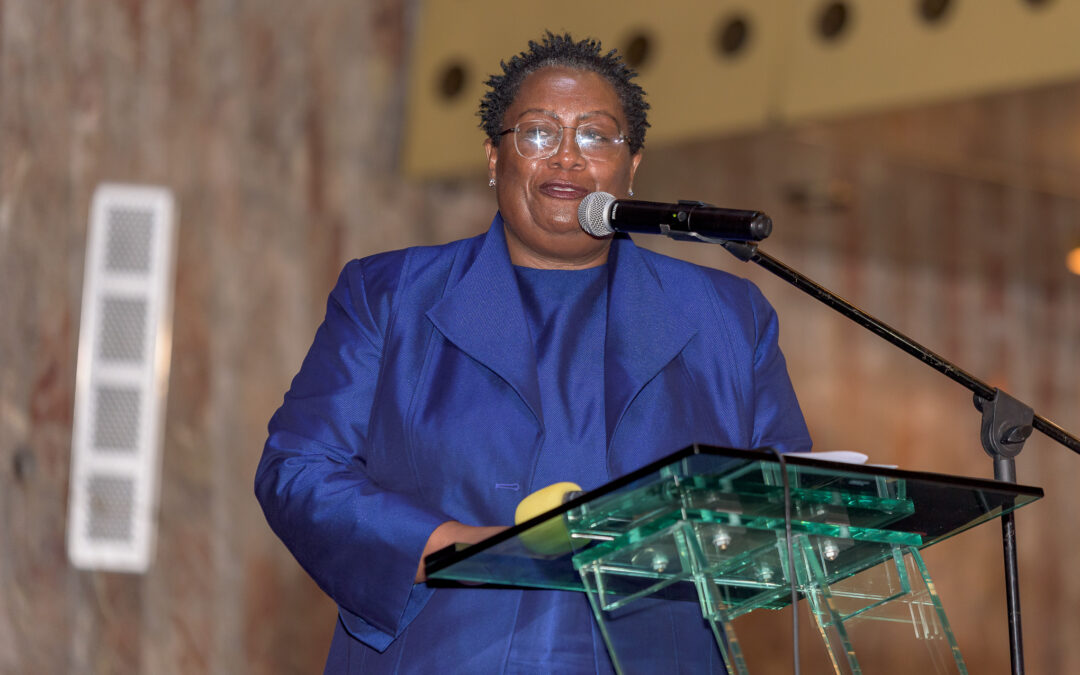
Photo: Justice Loice Matanda-Moyo, Chairperson for the Zimbabwe Anti-Corruption Commission Justice Loice Matanda-Moyo
Jan 24, 2020 | News
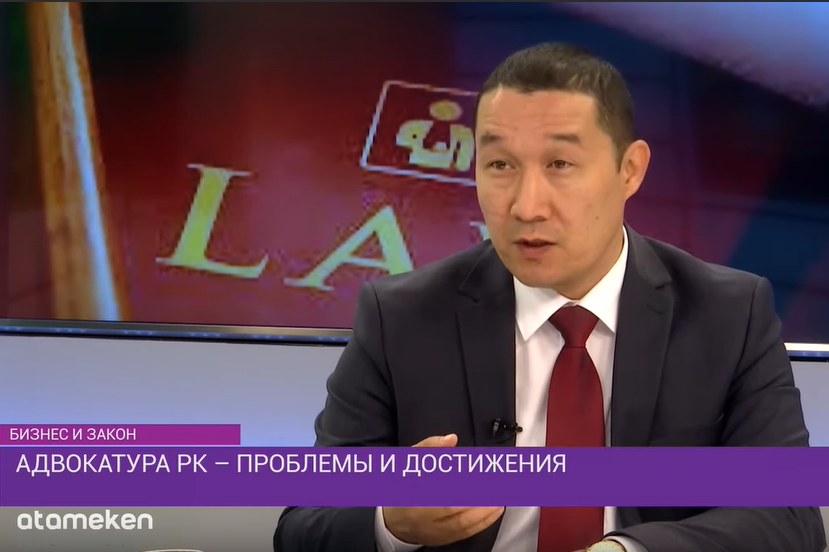
Today, the ICJ has conducted a trial observation in disbarment proceedings against lawyer Yerlan Gazymzhanov before the Saryarkyn Court of Nur-Sultan.
Erlan Gazymzhanov is facing disbarment following a lawsuit brought by the Ministry of Justice of the Republic of Kazakhstan.
The lawyer is accused of violating court rules by publishing on a social network an archive video from the hearing in a case in which he alleged inappropriate behaviour by the judge.
The case raises issues of the lawyer’s freedom of expression and possible improper interference in his work.
The ICJ will carry out an assessment of the case and its compliance with international standards following its observation of the proceedings.
Another lawyer, Amanzhol Mukhamedyarov is facing a disbarment lawsuit on the same allegations.
Mukhamedyarov’s case will be heard in separate proceedings on 4 February in Esil district court of Nursultan.
Dr Stefan Stobl, a lawyer from Munich (Germany) and a member of the ICJ Section Germany, observed today’s hearing on behalf of the ICJ.
Additional information:
Read ICJ’s trial observation manual
The ICJ has previously expressed concern about increasing restrictions on the independence of lawyers in Kazakhstan:
Kazakhstan: frivolous disbarment proceedings against prominent lawyer Sergey Sizintsev should be immediately dropped, ICJ says
Kazakhstan: ICJ alarmed at government interference in legal profession
Kazakhstan: the ICJ calls to immediately drop prosecution of lawyer Bauyrzhan Azanov
Nov 6, 2019 | News
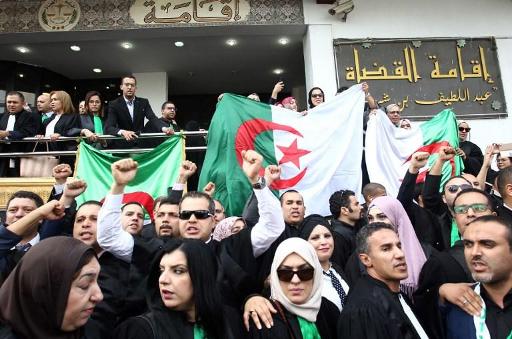
The ICJ today called on the Algerian authorities to reverse the decision of the Minister of Justice to transfer 2’998 judges, and instead ensure their right to security of tenure and protect the individual and institutional independence of the judiciary in the country.
The ICJ further called on the authorities to refrain from any unlawful or disproportionate use of force against the judges who are currently on strike in a protest against the Minister’s decision.
The call comes after security forces stormed the Oran’s Court of Appeal on 3 November 2019, using force against the judges to end the strike, and amidst the growing, legitimate demands for the establishment of the rule of law and the end the executive’s control over the judiciary.
“The Algerian authorities must end their interference in judicial affairs and ensure that all decisions pertaining to the management of the career of judges, including transfers, are taken by an independent High Judicial Council on the basis of objective criteria and transparent procedures,” said Said Benarbia, Director of ICJ’s Middle East and North Africa Programme.
Under Organic Law n° 04-12 on the High Judicial Council (HJC), the President and Vice-President of the HJC are respectively the Algerian President and the Minister of Justice. For this and other reasons the ICJ considers that the HJC as currently constituted is not independent of the executive, and consequently that the judiciary as a whole is both institutionally and in practice subordinated to the executive in contravention of international standards on judicial independence and impartiality.
“Instead of attacking judges who are seeking to defend the rule of law, the most urgent priority for Algerian authorities should be the reform of the HJC to ensure its full independence,” Benarbia added.
In 2018, the Human Rights Committee expressed, in its Concluding Observations on the fourth periodic report of Algeria, its concerns over the insufficient guarantees for judicial independence and the need to strengthen the independence and the powers of the HJC.
Contact:
Said Benarbia, Director of ICJ’s Middle East and North Africa Program, t: +41 22 979 38 17 ; e: said.benarbia(a)icj.org
Algeria-Judges strike-News-2019-ARA (Arabic version, in PDF)
Nov 5, 2019 | News
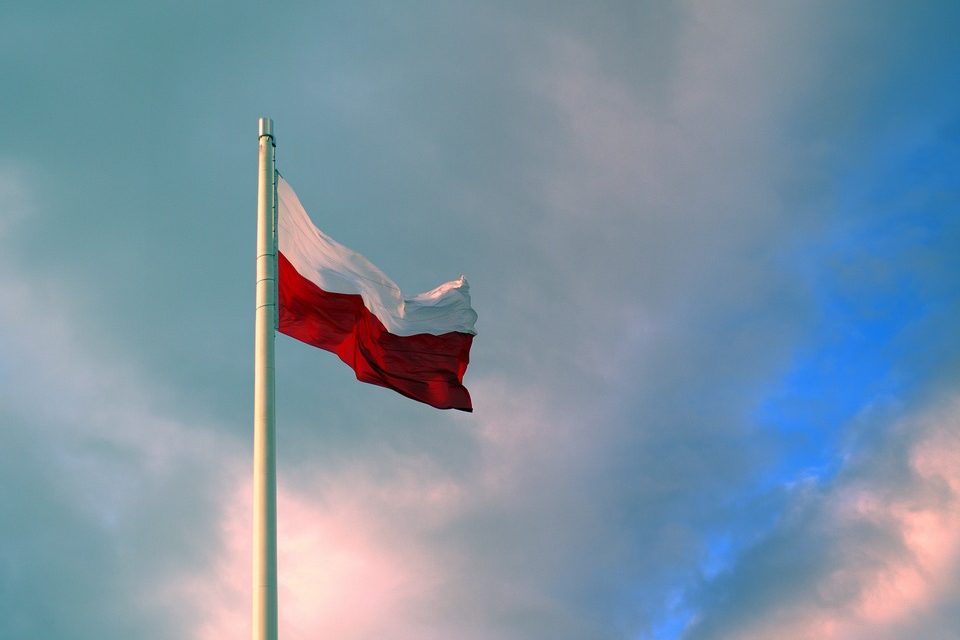
The ICJ welcomed today’s ruling of the Court of Justice of the European Union finding that Poland violated the independence of the judiciary by lowering in 2017 the pension age of Polish judges and giving the power to maintain them in office to the Minister of Justice.
The Court also found that the new law creating widely disparate retirement ages between women and men who are ordinary court judges or prosecutors – 60 and 65 respectively – constituted unlawful discrimination
“The Court of Justice has upheld the cardinal principle of the rule of law that the terms of judges cannot be determined controlled on an ad hoc basis by political powers,” said Massimo Frigo, Senior Legal Adviser of the ICJ Europe and Central Asia Programme.
“This judgment confirms that these retirement laws were a direct blow to the principle of separation of powers, the bedrock of the rule of law,” he added.
The Court of Justice held as contrary to the principle of independence of the judiciary under article 19 of the Treaty on the Functioning of the EU as series of laws lowering the age of retirement for ordinary judges, prosecutors and Supreme Court judges from 70 to 65 years for men and 65 to 60 for women. These laws allowed the Minister of Justice to decide which judges are to be reinstated.
“Poland should scrap these laws entirely and reinstate fully the situation of the judiciary prior to their enactment,” Frigo said.
“These laws were but a part of the systemic attack to the independence of the judiciary that the Polish government should stop,” he added.
The ICJ also called on Poland to bring the retirement ages of men and women back into parity.
The case was brought by the European Commission in an infringement proceeding against Poland for violation of the obligation to provide access to justice for EU law violations under article 19 TFEU.
Contact:
Massimo Frigo, Senior Legal Adviser of the ICJ Europe and Central Asia Programme, t: +41 22 979 3805 ; e: massimo.frigo(a)icj.org
More information on Massimo Frigo’s blog
Oct 22, 2019 | News
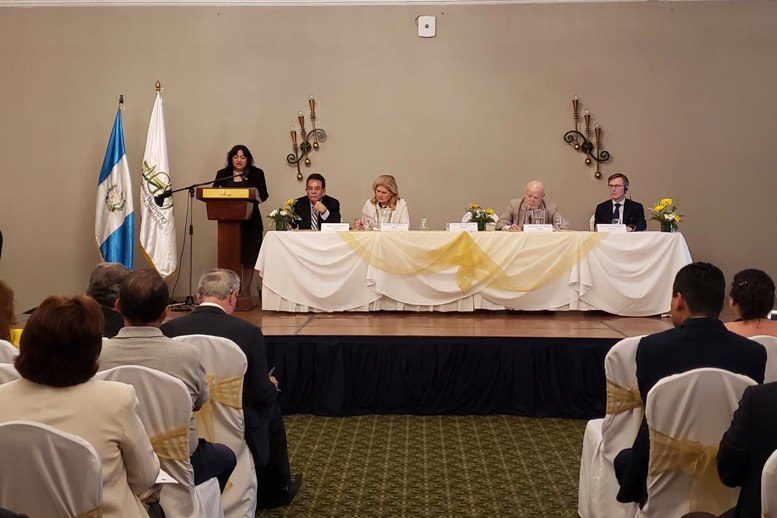
On 25 and 26 October, the ICJ in Central America will hold the VII Regional Conference on Judicial Independence, with the central theme of the protection and security of Judges.
The Conference will discuss the role that governments should play in the protection of judges, as well as the relationship between judicial independence and security of those who deliver justice.
Participants from outside the region include Radmila Dragicevic Justice of the Supreme Court of Cassation of Serbia and Vice-President of the ICJ; José Antonio Martín Pallín, Judge Emeritus of the Spanish Supreme Court of Justice and ICJ Commissioner, and Erland Flaterud and Finn Arne Schanche, both judges from Norway.
Nine other judges from Central America will attend, including Leonardo Ramírez of the Supreme Court of Justice of El Salvador Murcia and Fernando Cruz Castro, President of the Supreme Court of Justice of Costa Rica.
The ICJ regrets that the Supreme Court of Justice of Guatemala has not been in a position to receive this important delegation at its plenary on 23 October to address the issue of the security of judges.
The ICJ recalls that this Conference is held within the framework of a letter of cooperation and understanding agreed with the former President of the Judicial Branch and the Supreme Court of Justice, Ranulfo Rojas Cetina in 2015.
The ICJ is particularly concerned that there is presently an unfilled vacancy for Chief of Security for the judiciary, following the resignation of the former Chief who had allegedly engaged in conduct not consistent with his function.
Ramón Cadena, Director of the ICJ for Central America, said: “It is the duty of the Supreme Court of Justice to inform the Guatemalan public about the Judges Protection System, so that it does not become a source of corruption or in any way interferes with the work of independent, and impartial judges.”
In Guatemala, the international delegation will meet with judges such as Yassmín Barrios, Ericka Aifán, Miguel Ángel Gálvez, Carlos Ruano and Pablo Xitumul among others. They have been the subject of seemingly unfounded complaints which have posed risks to their personal security and independent judicial functioning.