Oct 3, 2019 | News
Today, ICJ and the Defender Center for Human Rights (DCHR) filed a submission to the Human Rights Council’s Working Group on the Universal Periodic Review in advance of its review of Libya’s human rights record in May 2020.
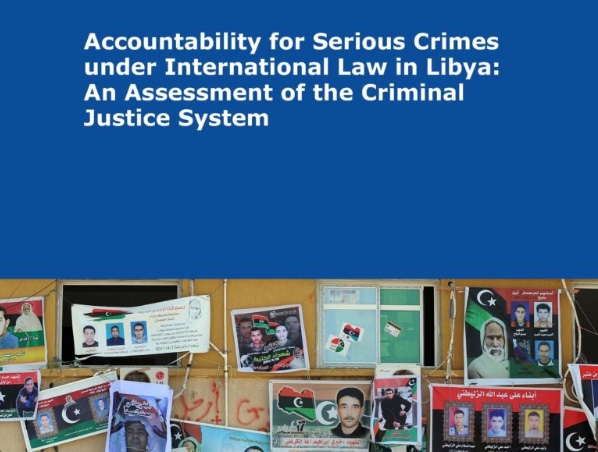
Information provided in the submission was based on the ICJ report titled Accountability for Serious Crimes under International Law in Libya: an Assessment of the Criminal Justice System, published in July 2019.
In the submission, the ICJ and DCHR drew the attention of the Working Group on the UPR to the following concerns with respect to Libya:
- Impunity for crimes under international law committed by State and non-State actors;
- The insufficient penalization of crimes under international law;
- The lack or inadequacy of investigations and prosecutions of crimes under international law;
- The systemic failure to guarantee the right to liberty and fair trial rights at pre-trial and trial stages.
The ICJ and DCHR called on the Working Group and the Human Rights Council to urge the Libyan authorities to take the following actions:
With regard to insufficient penalization of crimes under international law:
- Enact laws criminalizing war crimes, crimes against humanity and arbitrary deprivations of life (in particular arbitrary and summary executions) in line with international law;
- Amend Law No. 10 of 2013 to bring the definition of torture in line with the Convention Against Torture and the definition of enforced disappearance in line with the International Convention for the Protection of All Persons from Enforced Disappearance, and criminalize other acts of cruel, inhuman or degrading treatment or punishment consistent with international law;
- Amend article 425 of the Penal Code to include a definition of the crime of slavery consistent with international law;
- Amend articles 407 and 408 of the Penal Code to criminalize rape in line with international law and standards; enact laws criminalizing all forms of sexual and gender-based violence; and repeal article 424 of the Penal Code which extinguishes a conviction for rape or indecent assault and grants a stay of execution of the penalty imposed against the perpetrator if they marry the victim; and
- Amend (or repeal) Law No. 35 of 2012, Law No. 38 of 2012 and Law No. 6 of 2015 to exclude all crimes under international law from the scope of amnesties.
With regard to the obligation to independently and impartially investigate crimes:
- Amend article 3 of the Code of Criminal Procedure (CCP) to remove the requirement that an investigation can only be commenced upon the receipt of a criminal complaint, extend the three-month deadline for victims to file a complaint and remove the deadline entirely for crimes under international law and for other serious crimes under domestic law;
- Amend article 7 of the CCP to grant victims’ family members the right to file a complaint with a view to ensuring the commencement of an investigation;
- Repeal article 224 of the Penal Code to remove the power of the Minister of Justice to control and direct investigations and prosecutions by the Prosecutor’s Office; and
- Repeal Decree 388 of 2011 granting the “Supreme Security Committee” investigative powers and article 2 of Law No. 38 of 2012 permitting the use of information and evidence collected by “revolutionaries” during investigations and at trial.
With regard to the systemic failure to guarantee the right to liberty and fair trial rights at pre-trial and trial stages, amend the CCP in order to:
- Exclude the possibility of detaining an accused on the sole ground that she or he does not have a fixed place of residence;
- Set a maximum duration of pre-trial detention, and specify that any such detention should be employed as last resort only when necessary, proportionate and reasonable according to the circumstances of the case;
- Ensure that detainees are brought before an independent and impartial judicial authority promptly following arrest, and no later than 48 hours in any event;
- Include a provision recognizing the right to habeas corpus, and the right to compensation and other reparations for unlawful detention;
- Provide for the right to legal counsel from the moment of arrest in all circumstances, and repeal the provision requiring a lawyer to seek authorization from the investigating judge to speak during the interrogation of the accused;
- Require the disclosure of all evidence to the accused and allow them to make copies of the case file before a case is referred to court for prosecution; and
- Grant individuals the right to appeal any conviction and sentence on alleged errors of law and fact and to reconsideration of a conviction upon discovery of a new fact.
Download
Libya-UNHCR submission final-advocay-non legal submission-2019-ENG (submission in PDF)
Oct 2, 2019 | News
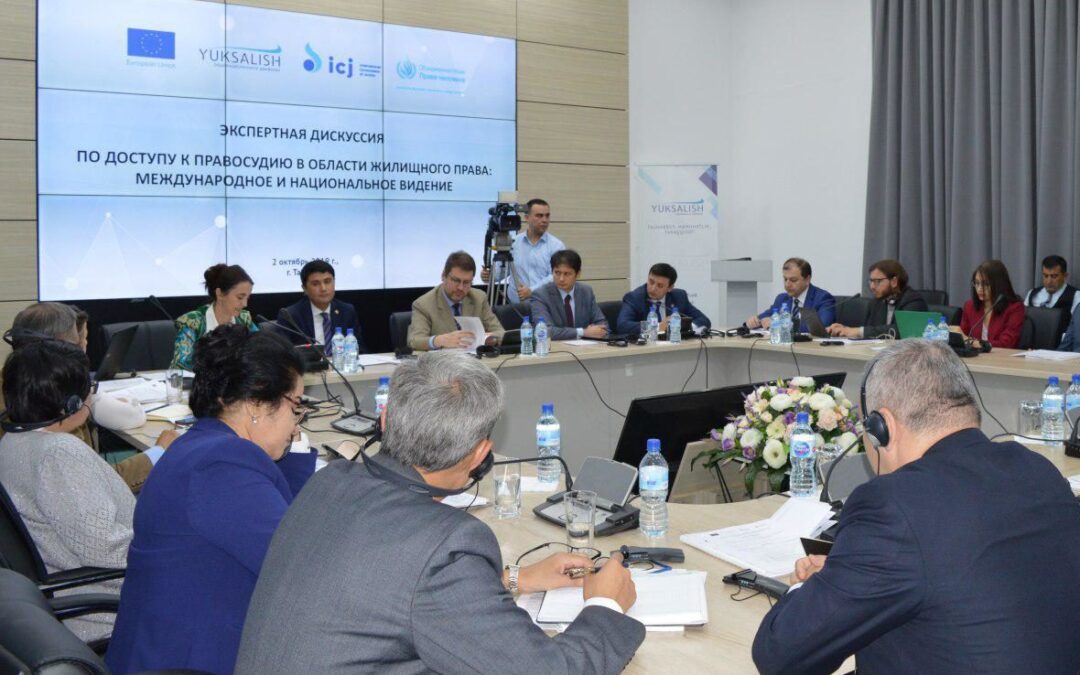
Today, the ICJ, Regional Office of the UN High Commissioner for Human Rights (OHCHR) for Central Asia and the Nationwide Movement “Yuksalish” are holding an Expert Discussions on economic, social and cultural rights (ESC) rights and standards in Uzbekistan.
The topic of the Fourth Expert Discussions is “Access to justice for housing rights: international and national perspectives.” This discussion will be focused on the right to adequate housing.
The Expert Discussions are aimed at increasing awareness about the implementation of international law and standards on ESC rights by national courts, to facilitate access to justice in relation to ESC rights and effective use of international human rights law for ESC rights at the national level.
Each Expert Discussion is supported by presentations of international and national experts.
The first experts’ meeting was held in September 2018 on international standards in labour rights, the second meeting – held in December 2018 touched upon the principle of non-discrimination in courts and court decisions, and the third meeting – held in March 2019 – was dedicated to the rights of people with disabilities.
These three events brought together lawyers, defense lawyers, individual experts, civil society activists, NGOs, academia representatives and law students via interactive discussions, research papers, peer review articles and policy papers.
“In recent years, large-scale work has been carried out in Uzbekistan to provide housing for the rural population through the construction of affordable residential buildings according to updated standards. However, participatory decision-making is in need to guarantee housing rights. It is vital to create opportunities for various groups to speak out on the topic and establish an open dialogue. We hope that today`s platform is one of such tools for exchange of opinions,” said Akmal Burkhanov, Chairperson of the Nationwide Movement “Yuksalish”.
Head of the EU Delegation in Uzbekistan Ambassador Eduards Stiprais said: “Economic, social and cultural rights are fundamental rights for every individual. They are also fundamental for the economic development of the society. No man and no company will invest in improving its situation unless it can rely on its right to appropriate the fruits of its investment.”
Helena Fraser, UN Resident Coordinator, noted in her opening remarks that “under Sustainable Development Goal 11 by 2030 all UN member States commit to “make cities and human settlements inclusive, safe, resilient and sustainable. The nationally adopted SDG targets for Uzbekistan are to ensure access to affordable housing for all; and to increase the scale of participatory planning of human settlements”.
“These, our fourth expert discussions on economic and social rights, are devoted to the important issue of the right to adequate housing, a right that is well established in international human rights law. We aim to hold a constructive discussion, informed by international law as well as national best practices, to find ways to address an array of issues linked to housing rights in Uzbekistan. We would like to thank the EU Delegation for their support, as well as our partners – the Regional UN Human Rights Office (OHCHR) for Central Asia and the Nationwide movement “Yuksalish”,” said Róisín Pillay, Europe and Central Asia Programme Director of the ICJ.
Background
Uzbekistan ratified the International Covenant on Economic, Social and Cultural Rights (ICESCR) in 1995. In 2014, the Committee on Economic, Social and Cultural Rights recommended Uzbekistan “to take appropriate measures, including legislative and other measures, to provide all evicted persons with alternative accommodation or adequate compensation”.
The third national periodic report of Uzbekistan on implementation of provisions of the ICESCR was submitted in June 2019. The list of questions regarding the submitted report will be adopted in March 2020.
The Expert Discussions are organized in the framework of the project “Advancing Civil Society in Promoting Economic, Social and Cultural Rights’ (ESCR) Standards (ACCESS)” funded by the EU through the European Instrument for Democracy and Human Rights (EIDHR).
Contact
Dilfuza Kurolova, ICJ Legal consultant, t: +998 90 9050099 ; e: dilfuza.kurolova(a)icj.org
Download
Uzbekistan-Expert discussions ESCR-News-2019-ENG (full story in PDF)
Sep 29, 2019 | News
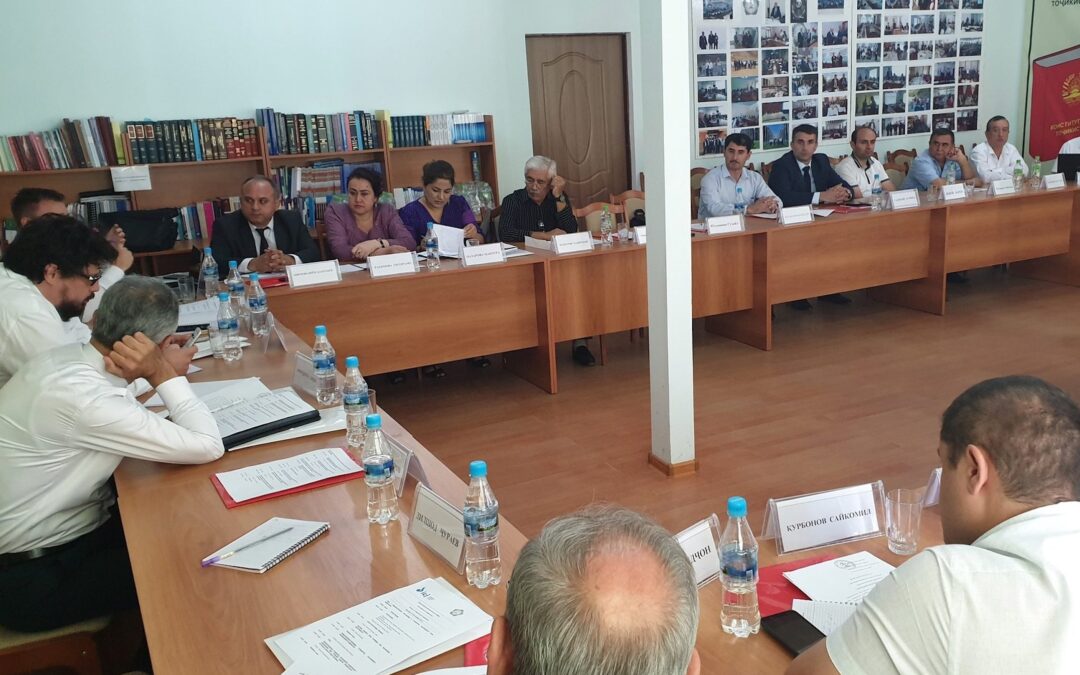
On September 27-28, the International Commission of Jurists (ICJ), in cooperation with the Union of Lawyers of the Republic of Tajikistan, held a training on protecting the rights of lawyers and guarantees of the legal profession as well as the role of the Bar Association in protecting its members.
Around thirty lawyers from all regions of the Tajikistan took part in the training. Over two days lawyers discussed effective use of international mechanisms and international law and standards related to the protection of the rights of lawyers.
Particular attention was paid to the organization, functioning and role of the Commission for the Protection of the Professional Rights of Lawyers of the Union of Lawyers of the Republic of Tajikistan.
The event was attended by members of the Commission who had an opportunity to discuss the role and the effective work of this specialized body on protection of lawyers.
The Committee on the protection of the rights of lawyers of the Ukrainian National Bar Association delegated its members to the event to share their best practices and recommendations to overcome the challenges which arise in the work of these bodies.
Jun 29, 2019 | News
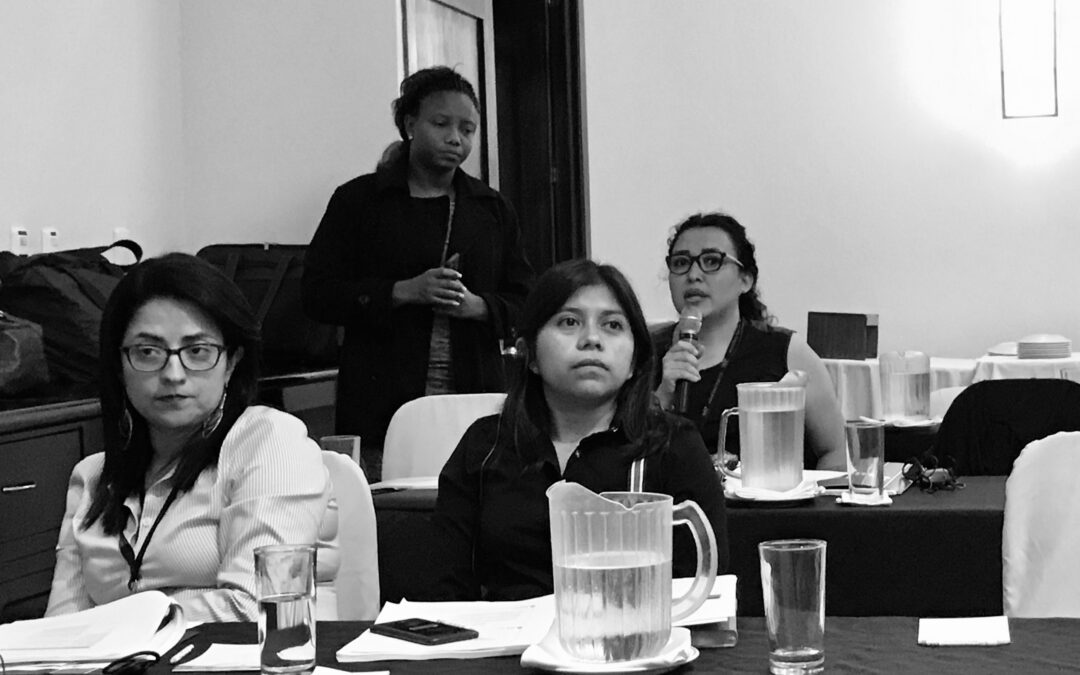
Between 26 and 29 June 2019, in Guatemala City, ICJ and its partner, Fundación de Antropología Forense de Guatemala (FAFG), with the support of the Asociación Guatemalteca de Jueces por la Integridad (AGJI) and the Bufete de Derechos Humanos (BDH), undertook trainings of more than 12 judges and 20 prosecutors on the international law and standards that apply to the investigation of unlawful death and enforced disappearances.
The workshops were conducted as part of the project under the ICJ’s Global Accountability Initiative entitled, Promoting justice for extrajudicial killings and enforced disappearances in Colombia, Guatemala and Peru, supported by the EU European Instrument for Democracy and Human Rights (EIDHR).
Opening remarks were given by Tomás Pallás Aparisi, Head of Cooperation at the EU Delegation to Guatemala, Delia Dávila, Magistrate from the Supreme Court of Guatemala and Haroldo Vasquez, President of the Asociación Guatemalteca de Jueces por la Integridad AJGI.
Ramón Cadena, Director of the ICJ’s Central America Office, addressed the international law and standards that apply to the investigation and prosecution of unlawful death and enforced disappearances and their relevance to Guatemala. Edgar Pérez, director of Bufete de Derechos Humanos (BDH) discussed the situation of enforced disappearances in Guatemala and the value and applicability of international law and standards. Marco García, a representative of FAFG, outlined the role of forensic science in the investigation of unlawful death and enforced disappearances.
Kingsley Abbott, Senior Legal Adviser & Coordinator of the ICJ’s Global Accountability Initiative, provided an overview of the revised Minnesota Protocol on the Investigation of Potentially Unlawful Death (2016), which formed the core of the materials used at the workshops.
The ICJ took the opportunity of the workshops to visit the office of its partner, the Asociación de Familiares de Detenidos-Desaparecidos de Guatemala (FAMDEGUA) and meet with Justice Delia Marina Davila Salazar of the Supreme Court of Justice of Guatemala.
Contacts:
Kingsley Abbott, Senior Legal Adviser & Coordinator of the ICJ’s Global Accountability Initiative, email: kingsley.abbott(a)icj.org
Carolina Villadiego Burbano, ICJ Legal and Policy Adviser, Latin America, and Regional Coordinator of the Project, email: carolina.villadiego(a)icj.org
Jun 13, 2019 | News
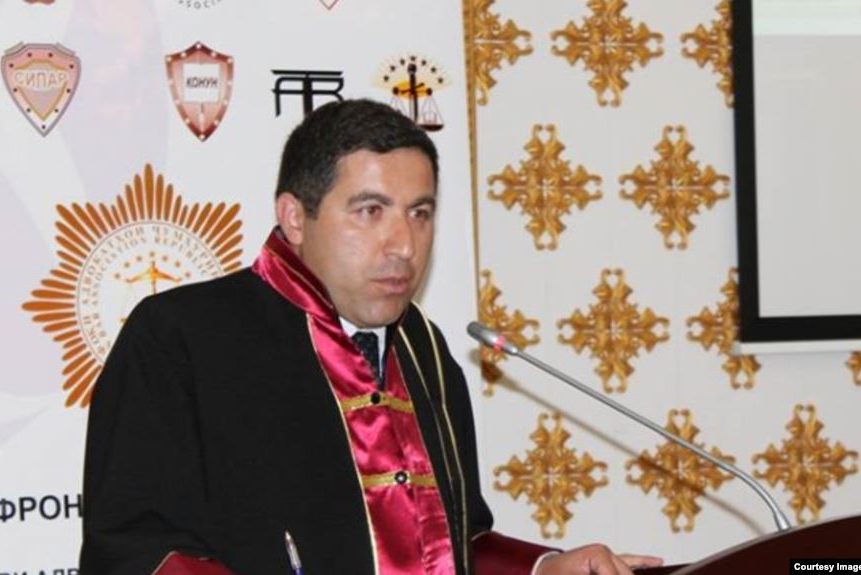
Today, the ICJ called on the authorities in Tajikistan to immediately release a prominent lawyer who is currently serving a sentence of imprisonment of 28 years on dubious charges.
The UN Working Group on Arbitrary Detention (WGAD) published a decision in Mr Yorov’s case on (date), finding that “the trials of Mr. Yorov were carried out in total disregard for the guarantees encapsulated in article 14 of the Covenant, being of such gravity as to give the deprivation of liberty of Mr Yorov an arbitrary character […].”
The Working Group recommended that the government remedy the situation of Yorov without delay and to this end “release Mr. Yorov immediately and accord him an enforceable right to compensation and other reparations, in accordance with international law”.
The ICJ has previously expressed concern that Buzurgmehr Yorov’s conviction may constitute a reprisal for his defense work in high-profile political trials in connection with his representation of thirteen leaders of the Islamic Renaissance Party of Tajikistan (IRPT).
The ICJ earlier expressed concerns at the conviction of the lawyer to a 28 year sentence in prison, which is based on clearly improper charges related to the defense of his clients.
The ICJ welcomes the decision of the WGAD and calls on the Tajikistan authorities to fully implement the decision and to take all necessary measures to protect lawyer Yorov, his family and his lawyers against any threats to their security, or any intimidation, hindrance, harassment or improper interference with their performance of their professional functions as lawyers.
In this regard, the ICJ notes recent protests by dozens of individuals who took part in a rally against Yorov in front of the representative offices of the United Nations and the European Union in Tajikistan, soon after the decision of the WGAD.
Posters of the demonstrators called on the UN High Commissioner of Human Rights to “take her hands off Tajikistan” and named organisations that had defended Mr Yorov or brought the petition on behalf of Yorov to the UN WGAD.
In this context, it is imperative that the Tajikistan government immediately publicly affirm the legitimacy of the decision of the WGAD and make clear its commitment to complying with it, the ICJ underlined.
Background
Buzurgmekhr Yorov was arrested two years ago on 28 September 2015, on charges of “fraud” and “forgery of documents.” Later, he was accused of violating three more articles of the Criminal Code, including in relation to alleged “public calls for extremist activity.”
On 6 October 2016, The Dushanbe City Court sentenced Yorov to 23 years imprisonment in a strict regime prison.
In March 2017, Yorov was sentenced to an additional two years’ deprivation of liberty for “contempt of court and insulting the representative of power.” In August 2017, he received a further three years sentence on charges of “insulting the president.”
The ICJ has, on a number of occasions, expressed its serious concerns over the arrest and conviction of Buzurgmehr Yorov and other lawyers in Tajikistan.
On 24 May 2019, the UN Working Group on Arbitrary Detention, a group of independent experts established in 1991 whose members are appointed by the UN Human Rights Council, published an Opinion finding a number of violations of human rights of Yorov protected under the International Covenant on Civil and Political Rights and recommended as a remedy his immediate release, payment of compensation or other reparation and conducting an investigation into the violation of Yorov’s rights.
The UN Basic Principles on the Role of Lawyers require that the Governments ensure that lawyers “are able to perform all of their professional functions without intimidation, hindrance, harassment or improper interference ”. Under these Principles “where the security of lawyers is threatened as a result of discharging their functions, they shall be adequately safeguarded by the authorities.” The right to “offer and provide professionally qualified legal assistance or other relevant advice and assistance in defending human rights and fundamental freedoms” is guaranteed by the Declaration on the Right and Responsibility of Individuals, Groups and Organs of Society to Promote and Protect Universally Recognized Human Rights and Fundamental Freedoms (Article 9.3(c)).