
Ukraine: proposed law against the Constitutional Court should be withdrawn
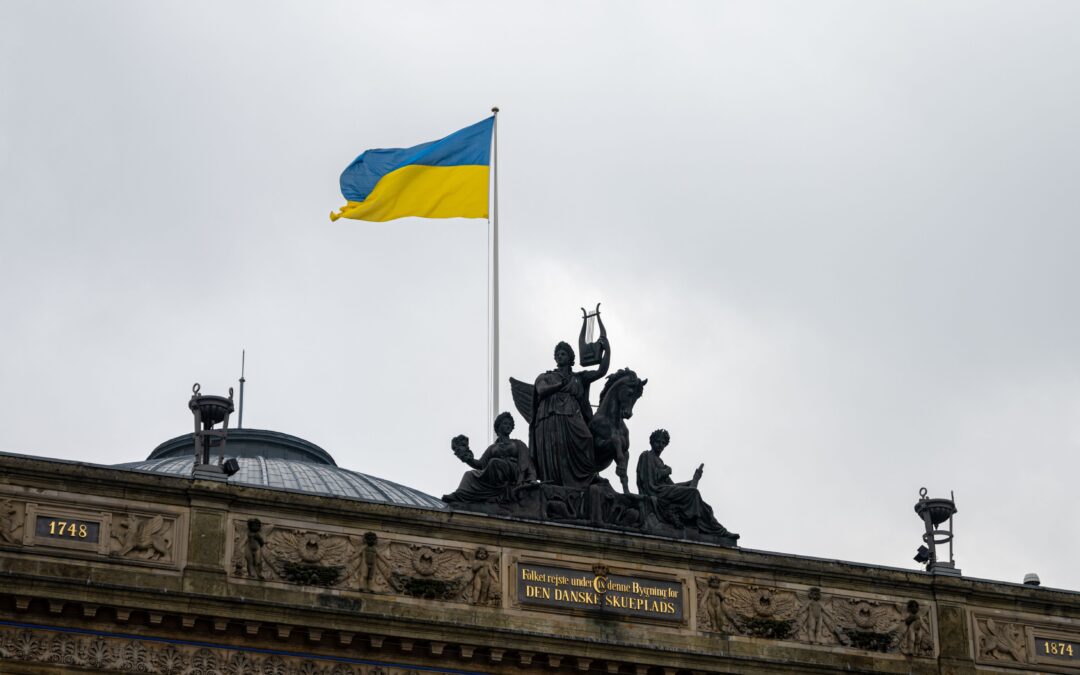
Today, the ICJ calls on the Ukrainian authorities to abandon a draft law which would dismiss the judges of the Constitutional Court of Ukraine, as a means of retaliation for a decision adopted by the Court and in order to circumvent the decision.
The authorities should also refrain from any other actions, including harassment of judges, which undermine the independence of the Constitutional Court.
“This draft law constitutes a direct attack on the ability of the judiciary to exercise its functions independently. It is incompatible with basic principles of the rule of law and the separation of powers, and with international standards on the independence of the judiciary,” said Róisín Pillay, Director of the ICJ Europe and Central Asia Programme.
“By the nature of their role, the judiciary, and especially constitutional courts may be required to decide on controversial matters. It is however essential that particularly in such cases, courts are able to operate without fear of retaliation or repression for the decisions they take,” she added.
The draft law on Restoring Public Confidence in the Constitutional Court, submitted by President Zelensky to the Ukrainian Parliament (Verkhovna Rada), aims to pronounce a decision of the Constitutional Court on anti-corruption legislation “void” and without legal consequences.
This runs contrary to the Ukrainian Constitution according to which “[d]ecisions and opinions adopted by the Constitutional Court of Ukraine shall be binding, final and may not be challenged” (Article 151-2).
The draft law would terminate the mandate of the judges of the Constitutional Court, in contravention of the Constitution of Ukraine as well as basic principles of independence of the judiciary, governing appointments, dismissal and security of tenure of judges.
The draft law provides that the powers of the Constitutional Court of Ukraine in force at the time of the decision on the anti-corruption law would be terminated from the date of entry into force of the law.
According to the explanatory note to the Draft Law, one reason the adoption of the law would be justified is because there had not been a “proper substantiation” of its judgment on the anti-corruption law. The note alleges that Court’s decision was adopted in the private interests of judges of the Constitutional Court of Ukraine, that its proper substantiation was not provided and that it contradicts the principle of the rule of law and denies the European and Euro-Atlantic choice of the Ukrainian people. The ICJ considers these allegations are inappropriate as they directly interfere with the judicial function of the Constitutional Court of Ukraine, contrary to the national legislation and international law on the independence of the judiciary.
On 2 November 2020, Oleksandr Tupitsky, the President of the Constitutional Court was summoned for interrogation by the State Investigation Bureau in connection with allegations against him of committing crimes as part of an organized group. The ICJ fears that this may be a form of pressure in relation to the Constitution Court’s decision.
Following these incidents, the Constitutional Court has stopped working as four of the judges refuse to take part in its sessions. The Court therefore lacks the necessary quorum to operate.
The ICJ calls on Ukraine to withdraw the draft law, and to refrain from any further reprisals against judges for their decisions.
Download
Ukraine-draft law constitutional court-News-ENG-2020 (full statement with background information)
Colombia: public authorities must refrain from interference with judicial proceedings in case against former President Uribe
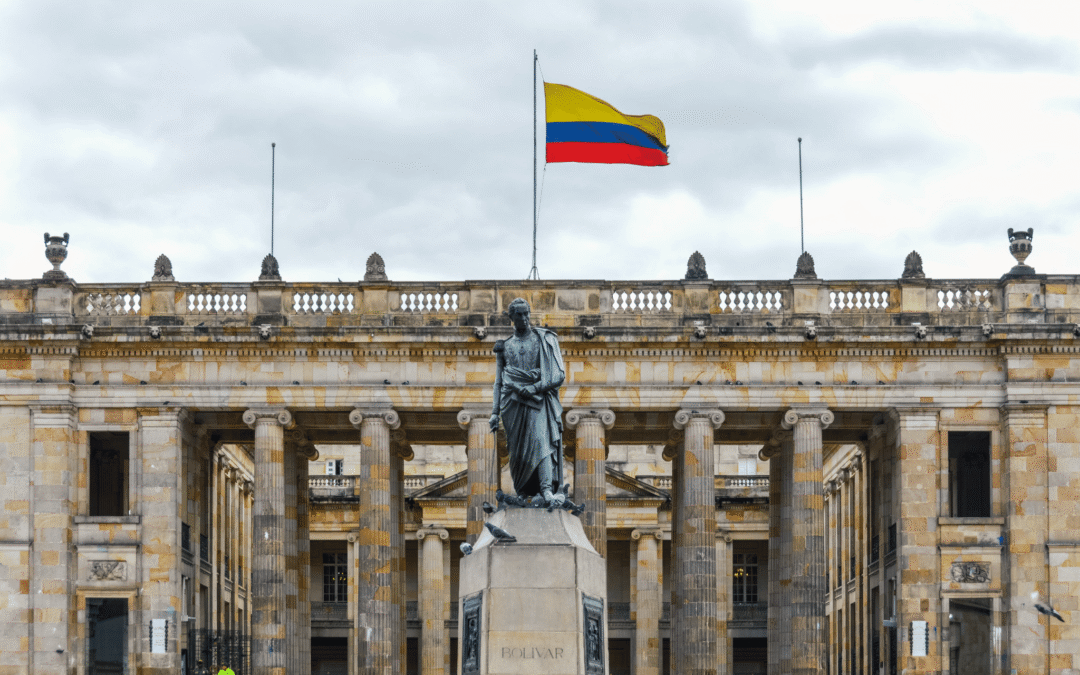
Today the ICJ called on the public authorities to refrain from comments or actions that could undermine the integrity of the judicial process and the independence of the judiciary.
On August 4, the Instruction Special Chamber of the Criminal Chamber of the Supreme Court of Justice ordered the pretrial detention, substituted for house arrest, of the former President Álvaro Uribe Velez, relating to allegations of bribery of witnesses and procedural fraud.
In recent days, a number of politicians have made highly inappropriate and inflammatory statements, including some suggesting that judges are making their decisions based on ideological or political biases rather than based on the Constitution and the law.
Colombian president Ivan Duque said in remarks broadcast on television on the 4 of August: “it hurts as a Colombian that many of those who have lacerated the country with barbarism defend themselves at liberty or are even guaranteed to never go to prison, and that an exemplary public servant who has held the highest dignity of the State is not allowed to defend himself in freedom with the presumption of innocence. I am and will always be a believer in the innocence and in the honor of him who, with his example, have earned a place in the history of Colombia.” (unofficial translation).
The ICJ stresses that it is inappropriate for a head-of-State or other executive official to intervene in this manner in a case that is under active judicial proceedings. The UN Basic Principles on the Independence of the Judiciary make clear that “it is the duty of all governmental and other institutions to respect and observe the independence of the judiciary” and this includes refraining from any “improper influences, inducements, pressures, threats or interferences, direct or indirect.”
In reaction to Senator Uribe’s arrest, the political party “Centro Democrático”, of which both President Duque and former President Uribe are members, released a press statement saying that they were planning to propose a National Constituent Assembly with the purpose of “depoliticizing justice”. Also, former President Uribe mentioned on 16 of August that he hoped his political party would initiate a reform of the justice system through a “referendum” to end the “politicization” of the Court.
The ICJ considers that any actions concerning reforms of the justice sector must be based on the standards and best practices that reinforce the independence of the judiciary and the prompt, timely and fair administration of justice, and not on a political reaction based on a single active case.
Lastly, United States Vice President Mike Pence has also made inappropriate remarks related to the Colombian justice system, tweeting on August 14 that he joined the voices that called Colombian authorities to let Alvaro Uribe “defend himself as a free man”.
Contact
Carolina Villadiego Burbano, ICJ Latin America legal and policy adviser, e: carolina.villadiego(a)icj.org
Southeast Asian Judges adopt Guidance on applying a gender perspective in their work
The ICJ today published a General Guidance aimed at assisting judges and others in the justice sector to effectively incorporate a gender perspective in their work.
The General Guidance is especially significant as it reaffirms that customs and traditions should not be invoked to justify discrimination against women.
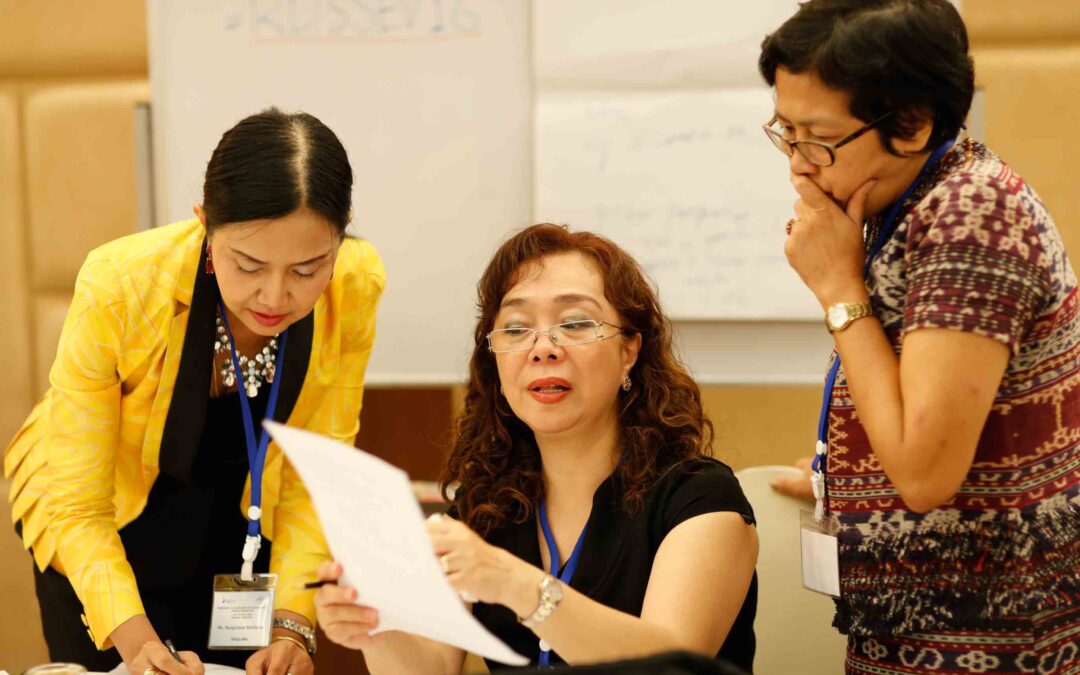
The Bangkok General Guidance for Judges in Applying a Gender Perspective was discussed and adopted by judges from Philippines, Thailand, Timor Leste, and Indonesia, at a gathering in Bangkok from 24 to 25 June 2016, hosted by the ICJ and UN Women.
During the workshop, judges from the four Southeast Asian countries deliberated extensively how best to assist judges in employing a gender perspective in deciding cases before them.
“The Bangkok General Guidance can make a powerful contribution towards achieving gender equality under the law in Southeast Asia,” said Sam Zarifi, Regional Director for Asia and the Pacific at the ICJ. “It is crucial that judges now work to implement this General Guidance in their home countries.”
The idea to initiate the development of th Bangkok General Guidance emerged from the ASEAN Regional Dialogue on Judging with a Gender Perspective, which was held in Jakarta, Indonesia in 2015.
The Supreme Court of the Philippines offered to take the lead on the project during that regional judicial dialogue.
“Women have a right to equal treatment and equal protection and non-discrimination under the law. It is our responsibility as judges to ensure that women receive equal treatment in law and in practice,” said Justice Teresita de Castro of the Supreme Court of the Philippines.
Judges attended several sessions over the course of the two-day workshop, participating in exercises focused on identifying and addressing gender stereotypes.
“Women in the region face many obstacles in accessing justice,” said Roberta Clarke, Regional Director for Asia and the Pacific at UN Women.
“But judges may be either unaware of these issues or unsure how to address these issues through the legal process,” she added.
The Bangkok General Guidance will make judges aware of means to consider evidence without resorting to gender stereotypes and decide cases based on the principle of equality recognized under international human rights standards, including the Convention on the Elimination of All Forms of Discrimination against Women (CEDAW).
Recommendations for institutional policies that should be adopted by courts to help them become more gender sensitive and gender responsive are also set out in the General Guidance.
Contact:
Emerlynne Gil, Senior International Legal Adviser for Southeast Asia, t: +66840923575 ; e: emerlynne.gil@icj.org
Southeast Asia-Bangkok-Guidance-Advocacy-2016-ENG (full PDF, in English)
Southeast Asia-Bangkok-Guidance-Advocacy-2016-BUR (full PDF, in Burmese)
Southeast Asia-Bangkok-Guidance-Advocacy-2016-MON (full PDF, in Mon language)
Southeast Asia-Bangkok-Guidance-Advocacy-2016-SHAN (full PDF, in Shan language)

Ukraine: refrain from prosecution of the Constitutional Court President
Today, the ICJ expressed concern at the attempt to initiate criminal proceedings against the President of the Constitutional Court of Ukraine, following interrogations of judges of the Constitutional Court and seizures of documents from the Court earlier this year.
On 16 June, the Chair of the Security Council of Ukraine, Valentin Nalivaychenko, is reported to have filed evidence alleging criminal offences by the President of the Constitutional Court of Ukraine, Jury Baulin.
The documents allege that he abused his office in violation of Article 364(2) of the Criminal Code of Ukraine, leading to the usurpation of power by the former President, Victor Yanukovich.
The allegations relate to a decision of the Constitutional Court of 30 September 2010, No 20-rp/2010, which overturned the adoption of the Constitution of 2004.
The initiation of the criminal proceedings is therefore based entirely on a ruling of the Constitutional Court on a question of constitutional law.
“It is inherent in the judicial function that courts issue rulings concerning matters on which public opinion may be divided. Prosecution of judges in relation to such decisions undermines judicial independence and erodes the rule of law,” said Wilder Tayler, ICJ Secretary General. “In all times but particularly in times of transition, such as at present in Ukraine, it is crucial that the executive refrain from any interference with the independence of the judiciary”.
The ICJ stressed that such attempts to initiate criminal proceedings against the President of the Constitutional Court are contrary to international law and standards on the independence of the judiciary, including the UN Basic Principles on the Independence of the Judiciary.
“Changes to the law or Constitution, must be sought and brought about through proper constitutional processes in the legislature and courts, not through prosecutions of judges. Criminal investigations and prosecutions against Constitutional Court judges must be discontinued and the government must ensure that the Court can operate without threats or interference,” Tayler added.
Following the change of government in early 2014, the ICJ expressed concern at the dismissals of judges of the Constitutional Court by the Verkhovna Rada (the Ukrainian Parliament) and called on the authorities to ensure the security of tenure of judges and non-interference with judicial independence.
Earlier this year, the Security Service of Ukraine interrogated sitting judges of the Constitutional Court in regard to the same case.
According to the State Security Service, at least 10 judges of the Constitutional Court have been interrogated. Moreover, the Security Service of Ukraine seized documents from the Constitutional Court in May 2015.
These investigations and prosecutions of Constitutional Court judges are taking place at a time when the Court is considering a number of highly significant cases, including the constitutionality of the Law “On cleansing of power”, the Law “On condemnation of the communist and national-socialist (nazi) regimes in Ukraine and prohibition of propaganda of their symbols” and the Law on an “All-Ukrainian referendum”.
The ICJ recalls that Article 1 of the UN Basic Principles on the Independence of the Judiciary clarifies that all governmental and other institutions must respect and observe the independence of the judiciary.
The principles further stipulate that [t]he judiciary shall decide matters before them impartially, on the basis of facts and in accordance with the law without restrictions or improper influences, inducements, pressures threats or interferences, direct or indirect, from any quarter or for any reason” (Article 2).
Recommendation No. R(94) 12 of the Committee of Ministers to Members States on the Independence, Efficiency and Role of Judges elaborates on this principle, stipulating that “judges should have unfettered freedom to decide cases impartially, in accordance with their conscience and their interpretation of the facts, and in pursuance of the prevailing rules of the law. Judges should not be obliged to report on the merits of their cases to anyone outside the judiciary”.
Contact:
Róisín Pillay, Director, Europe Programme, e: roisin.pillay(a)icj.org
Temur Shakirov, Legal Adviser, Europe Programme, e: temur.shakirov(a)icj.org
External link: Official information about the criminal procedure
Recent News
 Myanmar: As armed conflict rages and military rule continues, critical measures can be taken towards eventual justice and accountability for victims of Enforced Disappearance10 Sep 2026
 HRC63: ICJ Raises Alarm over Repression in Tunisia and Arbitrary Detention in El Salvador09 Sep 2026
 HRC63: ICJ Calls for Protection of Lawyers and Accountability in Myanmar07 Sep 2026
 More than fifty years on: enforced disappearance, the families who named it, and the reframing of international protection26 Aug 2026