May 5, 2021 | News
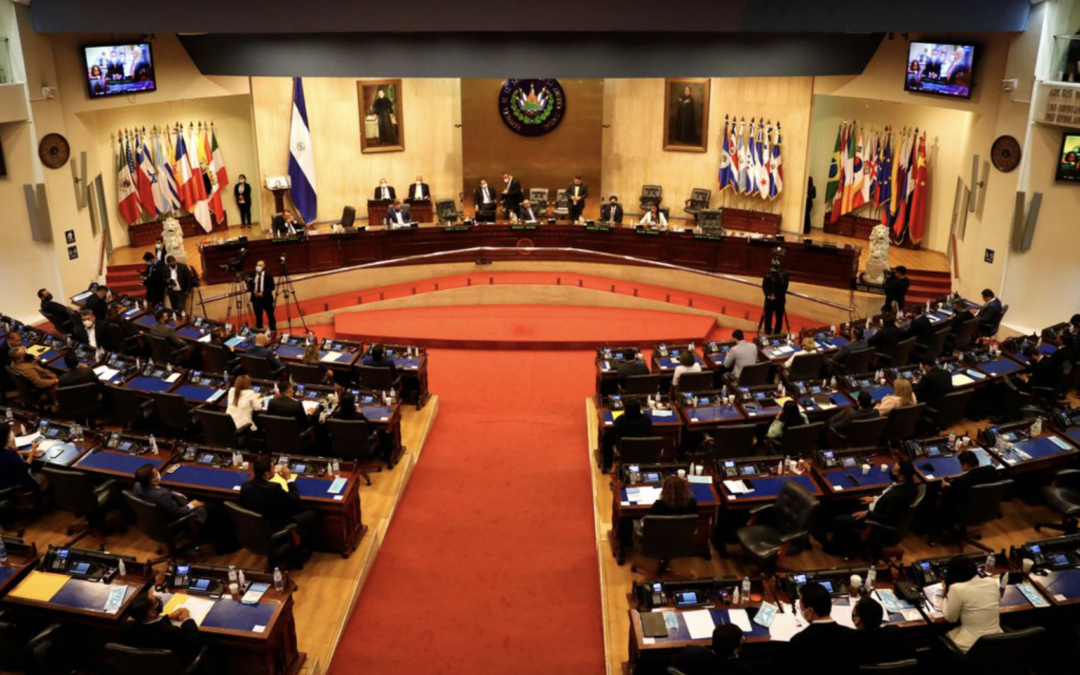
The ICJ today condemned the dismissal of all five of the justices serving in El Salvador’s Supreme Court Constitutional Chamber by the country’s newly elected Legislative Assembly, backed by El Salvador’s President Nayib Bukele.
The dismissal on 2 May was justified on vague allegations of arbitrariness and dereliction of functions particularly relating to judicial decisions taken striking down government action related to the COVID-19 Pandemic. The Legislative Assembly also dismissed El Salvador’s Attorney General.
The ICJ stressed that the dismissal violated core tenets of the independence of the judiciary, by which judges are subject to dismissal only “for reasons of incapacity or behaviour that renders them unfit to discharge their duties.” (United Nations Basic Principles on the Independence of the Judiciary). Any decision must also be subject to a fair hearing of individual judges, with full due process guarantees.
The dismissal process was carried out without any individualized hearings, and without a clear expression of a legitimate basis for the dismissal.
The ICJ is concerned that this summary dismissal will undermine the independence of the judiciary, including by intimidating other judicial authorities in the country.
The dismissal of judges and the Attorney General was followed by the immediate appointment and swearing in office of other judges in replacement. This decision violates the procedural rules of selection and appointment, which are essential to safeguard the independence and impartiality of the judges serving in the Constitutional Chamber.
The decision to dismiss the judges was taken by a qualified majority of legislators, shortly after the new legislative assembly started its functions, in a swift procedure that lasted just a few hours.
The ICJ urges the government of El Salvador to restore respect to fundamental rule of law principles to prevent the arbitrary use of power and impunity.
The country is particularly vulnerable to impunity for human rights violations, where an independent judiciary is not in place to assess the lawfulness of government actions.
The ICJ calls on the responsible authorities of the Inter-American Commission for human rights and the United Nations human rights system to address the situation as a matter of priority.
Mar 25, 2021 | Agendas, Events, News
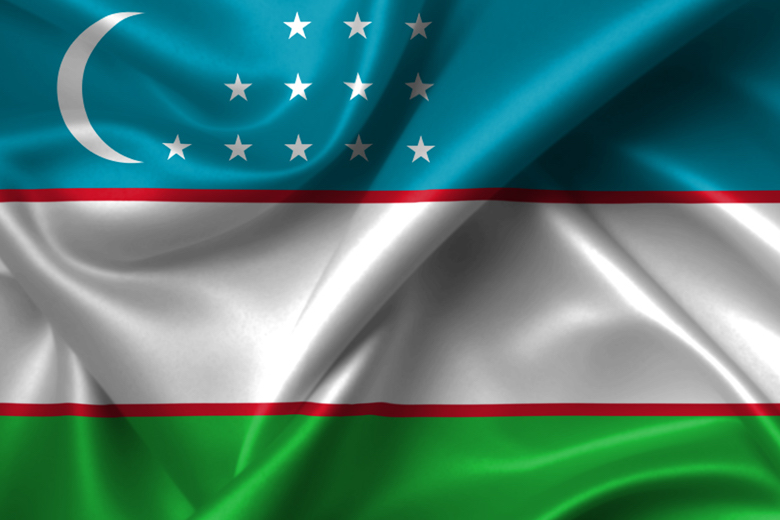
Today, the ICJ, the Office of the High Commissioner for Human Rights (OHCHR) Regional Office for Central Asia (ROCA) and the Supreme School of Judges of the Republic of Uzbekistan (SSJ) are holding a final conference on the implementation of international law on economic, social and cultural rights in the national legal framework of Uzbekistan.
This is the final event of a three-year project “Advancing Civil Society in Promoting economic, social and cultural rights Standards” (ACCESS), implemented by the ICJ, funded by the European Union.
Participants will discuss the obstacles to the enjoyment of economic, social and cultural (ESC) rights in Uzbekistan and how to strengthen protection of these rights through access to justice and legal remedies. The discussions will aim to strengthen the implementation of international law on ESC rights, including rights to housing, healthcare and rights to equal protection in the workplace, and ensure that the justice system provides effective protection and remedies where they are violated.
The OHCHR for Central Asia, the SSJ, Tashkent State University of Law, the Nationwide Movement “Yuksalish,” national and international experts will participate in the final conference.
“This is a very important project, which was timely but also challenging to implement during the period of COVID-19 pandemic. The right time to raise awareness around economic, social and cultural rights in particular. This is about accompanying the important reforms of the Government of Uzbekistan, it is about promoting human rights and the rule of law, which is also an important part of our EU Central Asia Strategy,” said H.E. Charlotte Adriaen, Ambassador of the European Union to Uzbekistan.
Ryszard Komenda, Regional Representative of the UN Human Rights Office for Central Asia noted that “this project to promote economic, social and cultural rights in Uzbekistan was and remains highly relevant and needed, including for the dissemination of legal knowledge on human rights among lawyers and representatives of civil society. The implementation of this project during the period of ongoing reforms in the country and participation of UN experts from CEDAW and CRC, makes the project especially effective, unique and timely.”
“Uzbekistan has a solid legal basis to meet its obligations to protect economic, social and cultural rights. But to realize the law’s potential in practice, people whose rights are violated need effective access to the justice system, and the courts need to apply the rights set out in international law,” said Róisín Pillay, Director of the ICJ Europe and Centra Asia Programme.
“We are happy to share our recommendations designed to ensure that people’s economic and social rights, as guaranteed in international law, are protected in practice, including through the justice system. I look forward to discussions with national and international partners during our final event,” she added.
“This project is a clear example of international cooperation of the Supreme School of Judges, which is fully consistent with its priorities. Of course, the implementation of international law on economic, social and cultural rights at the national level in Uzbekistan is one of the most significant national priorities, which requires active interaction between State authorities, the academic and expert community, and of course cooperation with international organizations,” said Khadji-Murod Isakov, the Director of the Supreme School of Judges under the Supreme Judiciary Council of the Republic of Uzbekistan.
Agenda in English
Agenda in Russian
Compilation of papers in Uzbek, Russian and English: Realising economic, social and cultural rights-2021
Contacts:
Ms. Dilfuza Kurolova, ICJ Legal consultant, t: +998 90 9050099 ; e: dilfuza.kurolova(a)icj.org
Ms. Guljakhon Amanova, National Program Officer, Uzbekistan, Regional Office of the UN High Commissioner for Human Rights (OHCHR), e:gamanova@ohchr.org
Mr. Utkir Khalikov, Head of the international department The Supreme School of Judges under the Supreme Judicial council of the Republic of Uzbekistan for Central Asia, e: inter.dep.ssj@mail.ru
The Project is financed by the European Instrument for Democracy and Human Rights (EIDHR) Delegation of the European Union to the Republic of Uzbekistan
Watch the video

Oct 27, 2020 | News
The ICJ today condemned the adoption of amendments to the Sri Lankan Constitution, which serve to expand the powers of the President, while encroaching on the powers of the parliament and courts.
The 20th Amendment to the Constitution was passed into law on 22 October, with 156 of the 225 parliamentarians voting in favour of the amendment, after a mere two-day debate, overruling the Opposition’s request for at least four days of deliberation.
The ICJ noted that the Amendment undoes most of the reforms brought about by the 19th Amendment adopted only in 2015. Critically, it introduces judicial appointment procedures which are incompatible with principles of the justice by reintroducing the Parliamentary Council, consisting only of political actors.
That body serves to merely advise the President, regarding appointments to the judiciary and other key public institutions.
The 20th amendment gives the President sole and unfettered discretion to appoint all judges of the superior courts. Under international standards, appointments to the judiciary should not be vested solely with the executive.
Given the gravity of the constitutional changes, the ICJ expressed regret that the Government had suspended Standing Order 50 (2), which requires every bill to be referred to the relevant Sectoral Oversight Committee for consideration prior to being debated in parliament.
“It is appalling that Constitutional amendments with such far reaching consequences on the constitutional governance of the country were rushed through in such haste, especially at a time Sri Lanka battles with its largest COVID-19 outbreak to date,” said Ian Seiderman, ICJ’s Legal and Policy Director.
The ICJ welcomes the alteration made to some of the problematic provisions of the 20th Amendment Bill during Committee Stage, particularly in relation to presidential immunity and the time period within which the president can dissolve Parliament.
The ICJ nonetheless is particularly concerned with the decision of the Minister of Justice to introduce entirely new provisions at Committee Stage, particularly in relation to the increase of the number superior court judges. The Supreme Court Bench will be increased from 11 to 17 and Court of Appeal from 12 to 20. These substantive amendments were not part of the gazetted 20th Amendment bill, the provisions of which were challenged before the Supreme Court by as many as 39 petitioners.
“While an increased number of judges may reduce court delays and expedite the judicial process, introducing substantive amendments such as this at Committee Stage is problematic at multiple levels,” Seiderman added.
“Sneaking in substantial changes at the last stage of the legislative process where there is no opportunity for public comment or judicial review is not consistent with democratic processes under the rule of law.”
Sep 8, 2020 | Feature articles, News
Judges from six Latin American countries revealed that there were serious obstacles, but also possibilities for justice, facing regional judiciaries as they try to protect the human rights of those who have been adversely affected by the activity of business entities.
The judges gathered as part of the Regional Judicial Dialogue on Business and Human Rights organized by the ICJ of Jurists on September 7.
The Dialogue, moderated by ICJ Commissioner Professor Monica Pinto, brought together 17 judges from Central and South America to consider the role of judges in guaranteeing the right of access to justice and remedy and reparation. The judges also considered the need to guarantee the independence of the judiciary and the security of individual judges, lawyers, and human rights defenders in the context of business activities in the region.
The session featured presentations from a member of the UN Working Group on Business and Human Rights and the Office of the UN High Commissioner for Human Rights. The Dialogue took place in the context of the 5th Regional Forum on Business and Human Rights for Latin America and the Caribbean.
Discussing access to justice and remedy and reparation, the judges shared experiences and jurisprudence in cases related to serious crimes, including against humanity committed during the Argentine military regime, as well as cases of serious corruption and embezzlement in Guatemala.
In Argentina, in a case concerning the 1976 kidnapping and torture of 24 workers employed by the local Ford Motor company at their factory in Buenos Aires during the 1976-83 military dictatorship, a Federal Trial Tribunal sentenced three persons, a former military officer and two former Ford executives to prison of between 10 and 12 years, for their complicit involvement in the crimes.
Former Ford executives were accused of providing detailed information and logistical support to security agents that led to the abduction and torture of the victims, and also allowed a detention centre to be set up inside the premises of that factory.
The three judges of the Tribunal in this case attended the meeting to share the lessons learned and the significance of the criminal proceedings in the context of efforts to bring justice and reparations for the crimes of the past.
The process and the final sentence is a landmark in the fight against impunity in Argentina and an important message to all so that these crimes are not committed again. The case clarified the ways in which private individuals (the former company executives) participated in the commission of the crimes by State agents (military and security agents), elaborating upon modalities of attribution of the acts to the accessory perpetrators.
It is also an innovation in the ways it gathered and assessed the probatory value of the available evidence of crimes committed more than 30 years ago so that the crimes could still be attributed to the perpetrators.
The reparation ordered by the Tribunal in this case was “symbolic and historical”, consisting on an acknowledgment of the facts by the State and the private actors. The victims may demand now other forms of reparation from the State, but not from individuals.
The company as such was not part of the criminal proceedings nor was it sanctioned in the final sentence, since Argentinian law does not accept the criminal responsibility of legal entities such as corporations.
A participant judge from Guatemala shared a case concerning economic crimes of corruption, fraud, illicit association and assets laundering in a provincial town in Guatemala. Here, the experience and outcomes were somewhat different.
The case involved the town major and several of his relatives as well as some 20 companies out of which nearly 20 individuals and seven companies received penalties in the final sentence.
The case is of special significance in Guatemala as one of the few, large scale, corruption cases that has reached its final stage with convictions. In the investigation and collection of evidence considered during the trial, participated several public offices and the then International Commission Against Impunity in Guatemala (CICIG), which is no longer in operation.
Thanks to recent laws on corruption and money laundering, it is possible to impose sanctions on the company, as a legal entity. In the instant case, those sanctions consisted of monetary fines but not suspension or dissolution of the legal entity to allow other administrative proceedings against the same companies to continue.
In accordance with national laws and international standards, the judges ordered full reparation, including for damages, measures of satisfaction such as public statements of apologies and publications to be made by the convicted.
Citing a graphic statement contained in the final sentence, the judge Pablo Xitumul who presided the Tribunal said “corruption and impunity are even more lethal than a cancer or a pandemic, and should be combated without delay or excuses!”
Read the full story here: Americas-Judges and BHR-News-Feature article-2020-ENG
Mar 9, 2020 | News
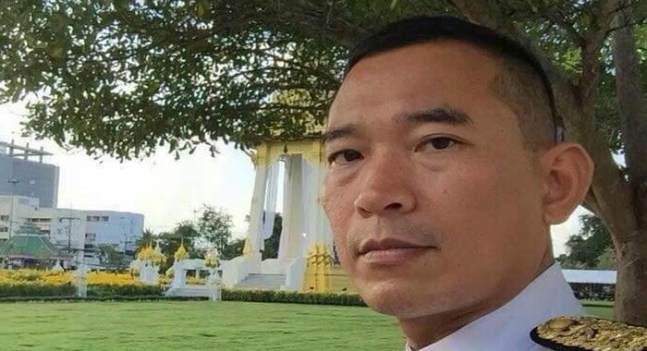
The ICJ today expressed regret at the death of Judge Khanakorn Pianchana, who committed suicide on 7 March 2020. Judge Khanakorn was widely known after an attempted suicide in October 2019 following the delivery of a verdict which he claimed was interfered by a senior judge.
Judge Khanakorn previously served as Vice Presiding Judge of the Yala Provincial Court in Thailand’s restive southern region. He passed away on 7 March 2020 at his home in Chiang Mai province.
Background
Before the suicide, Judge Khanakorn posted a two-page letter on his Facebook page, in which he claimed that he had been subject to disciplinary proceeding and had criminal charge brought against him after he had publicized his concerns about interference by a superior judge into certain rulings. These involved five individuals detained and interrogated under special security laws in southern Thailand.
In October 2019, Judge Khanakorn claimed in a public letter that he had been ordered by a senior judge to rewrite a ruling in which he exonerated the five individuals charged with murder, for lack of evidence. Following his delivery of the verdict, he shot himself in the chest in a courtroom at Yala Provincial Court.
After his first suicide attempt, according to the Office of the Judiciary’s Press Release dated 18 November 2019, the Judicial Commission initiated an investigation against him for violations of provisions on discipline of judicial officials. He was subsequently transferred to the Court of Appeal Region 5 in Chiang Mai, at which time he was further investigated for committing criminal offences under the Firearms, Ammunition, Explosives, Fireworks and Imitation Firearms Act.
On 7 March 2020, according to the interview gave by Secretary-General of Office of the Judiciary, an initial investigation of the Judicial Commission found that there had been no improper interference, and the disciplinary actions and the criminal charges that are brought against Judge Khanakorn were based on his actions for carrying a gun into court and using the gun to attempt suicide.
Contact
Frederick Rawski, ICJ Asia-Pacific Director, t: +66 64 478 1121; e: frederick.rawski(a)icj.org
Download
To download the statement in Thai, click here.