Mar 6, 2019 | News
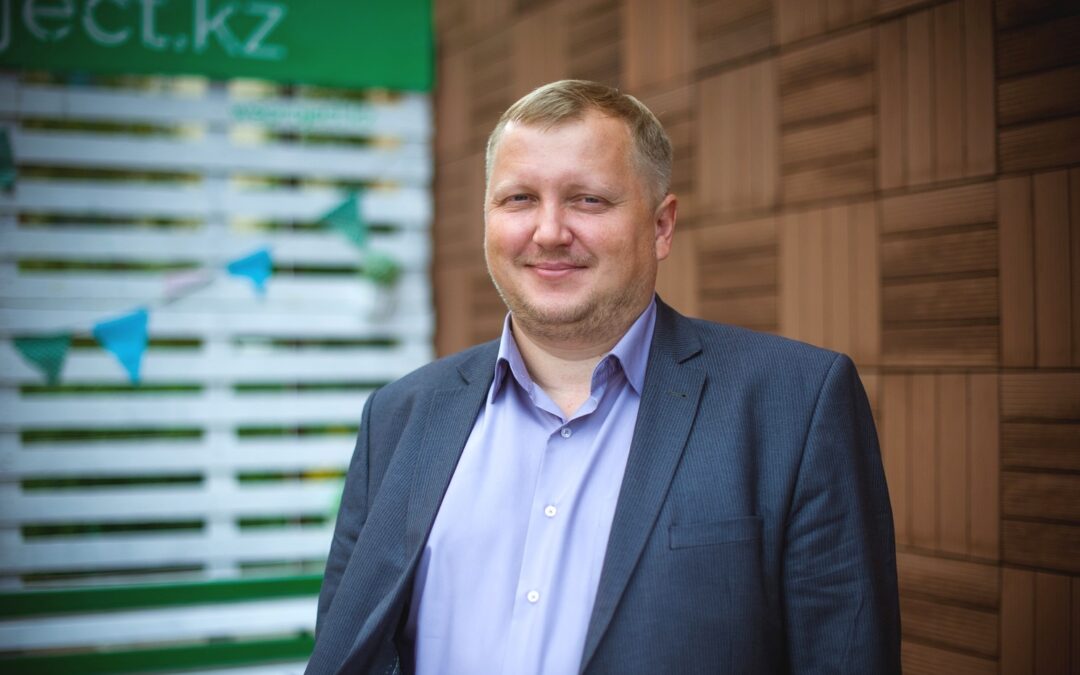
Today, the ICJ expressed concern at the initiation of disbarment proceedings by the Ministry of Justice of Kazakhstan against Sergey Sizintsev, former Executive Director of the National Bar Association and the newly-elected head of the Scientific-Consultative Board of the National Bar Association.
The official ground for disbarment of Sizintsev is his work as the Director the National Bar Association in 2016-2018 while continuing his legal practice at the same time.
On his facebook public account, however, Sizintsev alleged that this initiative is not related to the officially stated grounds, and that in fact continuing to practice while working as Director of the Bar Association is clearly permitted by the Kazakhstan’s law. Rather, he alleges, he is being pursued for his criticism of the law “On lawyers’ activity and legal aid” as well as his public statements in different international and national fora in regard to issues related to the independence of the legal profession.
The ICJ recalls that freedom of expression and association, in particular, constitute essential requirements for the proper and independent functioning of the legal profession and must be guaranteed by law and in practice.
According to Principle 23 of the UN Basic Principles on the Role of Lawyers, lawyers “[…] have the right to take part in public discussion of matters concerning the law, the administration of justice and the promotion and protection of human rights and to join or form local, national or international organizations and attend their meetings, without suffering professional restrictions by reason of their lawful action or their membership in a lawful organization. In exercising these rights, lawyers shall always conduct themselves in accordance with the law and the recognized standards and ethics of the legal profession.”
Sergey Sizintsev as Executive Director of the National Bar Association and as a member of the Parliament working group on the Law on Lawyers’ Activities, was expected to voice concerns of members of the legal position including on the new law which the legal profession consider to be restrictive.
Moreover, his position demanded that he expresses his position on behalf of the National Bar Association including to draw attention to legislative developments which can jeopardise the independence of the legal profession in Kazakhstan.
The ICJ is concerned that this initiative appears to constitute an attack on the independence of lawyers in Kazakhstan and may have a chilling effect on members of the legal profession.
The ICJ therefore calls on the Ministry of Justice to end this lawsuit immediately.
The ICJ will closely follow the case of Sergei Sizintsev and the proceedings at the Rayon Court in Petropavlovsk.
In December 2017, the ICJ organized a mission to Kazakhstan and raised concerns over the then planned reform.
In November 2018, the ICJ raised concern at the disbarment proceedings against Presidents of Aktybinsk and Pavlodar Bar Association as well as resignation of Anuar Tugel, the President of the National Bar Association of Kazakhstan, allegedly as a result of the pressure from the Ministry of Justice.
Mar 4, 2019 | News
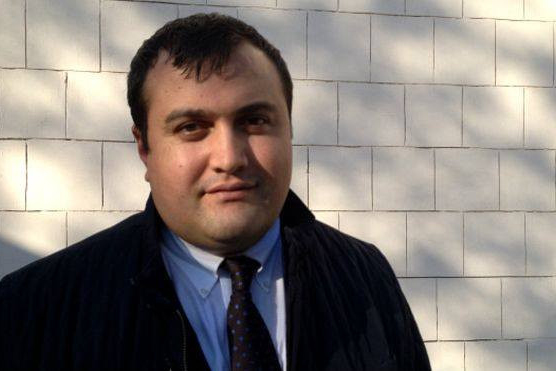
Today, the ICJ expressed concern at the disciplinary proceedings against lawyer Elchin Sadigov who was sanctioned with a reprimand on 25 February 2019 by the Presidium of the Bar Association of Azerbaijan.
The ICJ called on the Bar Association to reverse this sanction and take measures to end interference with the independent exercise of the representation of victims of human rights violations.
The decision to hold the lawyer accountable for actions taken in accordance with professional ethics and responsibilities jeopardizes the independence of lawyers and their capacity to protect human rights, and is likely to have a chilling effect on the independent exercise of lawyers’ duties in Azerbaijan, the ICJ said.
Elchin Sadigov represented Yunis Safarov, who was charged with the attempted murder of Elmar Valiyev, former mayor of Ganja City in Azerbaijan. According to Sadigov, he informed his client in a confidential conversation in detention, of the right to complain about torture or ill treatment.
Shortly afterwards, he was told that he had violated the law by persuading his client to complain about the ill-treatment which, the Prosecutor General’s Office officials “decided” in an official document, never took place.
On 5 September 2018, the Prosecutor General’s Office removed Elchin Sadigov as Safarov’s representative and complained to the Bar Association, seeking disciplinary action against the lawyer, among others, on the basis of “[…] creating false grounds to file a complaint to the European Court of Human Rights […], clearly knowing that it is not true, proposed his client to complain about torture inflicted by the police and investigative authorities, despite the fact that the accused told him that he had not been tortured, Sadigov continued psychological influence on his client again – as if he had been tortured – to refuse giving testimony, to refuse services of the State appointed lawyer […]”.
The complaint referred to the confidential conversation between the lawyer and his client, which was apparently overheard and possibly recorded by law enforcement officials. It also refers to a letter which appeared during the disciplinary proceedings, in which Sadigov’s client complained that his lawyer had tried to convince him to complain about use of torture in custody.
According to Elchin Sadigov, however, this letter may have been signed by his former client under pressure from the detention authorities.
The ICJ recalls that according to the UN Basic Principles on the Role of Lawyers, it is indispensable that lawyers “always loyally respect the interests of their clients.”
The Principles specify that they assist their clients “in every appropriate way, and taking legal action to protect their interests”. In the present case, as submitted by Elchin Sadigov and evident from the publicly available materials including photos and videos of Safarov with clear and multiple signs of severe beatings, the lawyer had every reason to believe that his client had been subjected to torture and ill treatment in custody.
Therefore, he had not only the right, but an affirmative professional duty to advise his client to use available remedies for this violation of human rights through procedural means such as a complaint. A failure to do this would be a breach of professional ethics and duties on the part of the lawyer as a trusted representative of his client. The ICJ is concerned that in this case a lawyer was held accountable for attempting to discuss with his client, in a confidential manner, issues related to the human rights of his client.
The ICJ is furthermore concerned that the principle of lawyer-client confidentiality has been violated in this case.
This principle is a fundamental component of the right to a fair trial, as protected under the International Covenant on Civil and Political Rights and the European Convention of Human Rights, to both of which Azerbaijan is a party.
According to the UN Basic Principles on the role of lawyers “[a]ll arrested, detained or imprisoned persons shall be provided with adequate opportunities, time and facilities to be visited by and to communicate and consult with a lawyer, without delay, interception or censorship and in full confidentiality…”
The ICJ is also concerned that lawyer Sadigov’s conversations may have been monitored in violation of the guarantees of professional secrecy with his client and contrary to international law and national procedure.
The ICJ considers it essential that the Bar Association send a strong signal in support of independent lawyers by lifting the sanction against lawyer Sadigov and consider legislative and practical improvements to ensure that confidentially of lawyers and their clients in detention is effectively guaranteed in practice.
Azerbaijan-Statement Sadigov-News-web stories (full story with additional information, in PDF)
Jan 31, 2019 | Multimedia items, News, Video clips
For the past two years the ICJ and its partners Refugee Rights Turkey (RRT), the European Council on Refugees and Exiles (ECRE) and Mülteci-Der (MD) have provided trainings and training materials for Turkish lawyers on international human rights law relating to migration and asylum as part of the project Fostering Access to Rights for Migrants, Refugees and Asylum-Seekers in Turkey.
The project has worked to enhance access to justice for migrants, refugees and asylum-seekers, through establishing, equipping and supporting a well-informed group of lawyers and civil society organizations in Turkey and link them with their counterparts in EU Member States to defend the rights of migrants, refugees and asylum-seekers.
In a public event on the 17 December 2019 hosted in Ankara to mark the conclusion of the project, the ICJ and its partners presented a promotional video describing the work conducted throughout the project.
Watch video here:
(Rough Turkish subtitles available but will be revised at a later stage | Turn the Turkish subtitle by clicking on CC.)
The project “Fostering Access to Rights for Migrants, Refugees and Asylum-Seekers in Turkey” is funded by the European Instrument for Democracy and Human Rights (EIDHR) of the European Union.
Jan 29, 2019 | News
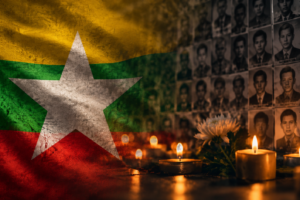
On the second anniversary of the killing of prominent lawyer U Ko Ni, in public view at Yangon International Airport, the ICJ repeats its calls for a thorough and impartial investigation with a view to establish the facts, to deliver justice and to deter the repetition of similar crimes.
“This brazen killing of a prominent democracy advocate demands a rigorous State response to show this type of crime will be fully punished,” said Frederick Rawski, the ICJ’s Director for Asia and the Pacific.
Despite an official investigation and reports of more than 100 court hearings, nobody has been held accountable for U Ko Ni’s death – criminally or otherwise – and the circumstances have not yet been satisfactorily explained.
“Myanmar simply cannot satisfy its international law obligations without conducting an impartial and independent investigation that is free of military influence. Such an investigation is a pre-requisite for conducting an effective prosecution in a fair trial setting,” added Rawski.
U Ko Ni was well known as a vocal advocate for human rights and democratic reform in Myanmar. As an adviser to the National Legal of Democracy party, he was involved in creating the position of State Counselor, which formalized a leadership role for Daw Aung San Suu Kyi, despite a constitutional provision barring her from the Presidency.
At the time of his death, it is understood that U Ko Ni was working on proposals to replace Myanmar’s 2008 Constitution, the source of law underpinning military power.
“A credible justice process is required not only for U Ko Ni and his family, but to demonstrate the State will protect the right to life of all people including democracy advocates,” said Sean Bain, legal adviser for the ICJ.
“A crime of this nature stifles participation in the democratic process and so an effective justice process is imperative to deter its repetition,” Bain added.
Myanmar has a particular obligation to ensure that lawyers and others acting as human rights defenders are protected in carrying out their work.
Any justice process must be timely, effective and shed light on the facts.
The investigation into U Ko Ni’s killing has been beset by obstacles, including the unknown whereabouts of a primary suspect, the incorrect identification of a deceased individual as a suspect and the arrest of a person with the same name, and reported military involvement in the police investigation. Lines of inquiry related to the political motivations for the killing, particularly considering the military links of many suspects, do not appear to have been pursued satisfactorily, nor impartially, given military involvement in the investigation.
Criminal proceedings in Yangon’s Northern District Court, and related proceedings in the Yangon High Court, have been sluggish. Observing lawyers and individuals including from the ICJ have noted multiple instances of admission into evidence of testimony that appears to be irrelevant, failures of key witnesses to appear, and the long drawn out process of court proceedings whereby weeklong delays are common while continuances over successive days are rare.
These issues are emblematic of challenges in Myanmar’s justice system previously identified by the ICJ in which police, prosecutors and courts generally lack the independence and or will to effectively administer justice, particularly in politically sensitive cases.
“Two years is an incredibly long time to get to the position we are in now, and in our experience this highlights broader problems with the administration of justice in Myanmar,” added Bain.
Contact
Frederick Rawski, ICJ Asia Pacific Region Director, e: frederick.rawski(a)icj.org
Sean Bain, ICJ Legal Adviser, e: sean.bain(a)icj.org
Download:
Myanmar-Ko Ni Statement-News-web stories-2019-ENG (full story with background information, PDF)
Myanmar-Ko Ni Statement-News-web stories-2019-BUR (full text in Burmese, PDF)
Read also:
Myanmar: reverse laws and practices that perpetuate military impunity – new ICJ report
Killing of lawyer U Ko Ni must be promptly and impartially investigated

Dec 16, 2018 | Agendas, Events
Today begins in Ankara (Turkey) a two-day international workshop for lawyers and CSO practitioners representing and working with migrants, refugees and asylum-seekers.
This event is organized by ICJ, in cooperation with its partners Refugee Rights Turkey, the European Council on Refugees and Exiles (ECRE), Mülteci-Der (MD) and ICJ-EI, as part of the EU co-financed project Fostering Access to Rights for Migrants, Refugees and Asylum-Seekers in Turkey.
Lawyers and civil society practitioners – representing numerous bar associations and relevant organisations from the Istanbul area and other nearby key migration and asylum locations – are taking part in the workshop that takes place on 16-17 December.
The international conference on “Legal avenues and the role of lawyers in protecting migrant and refugee rights” includes a section on strategic litigation on asylum and migration law and European experiences.
In the second part of the conference, a final workshop is held on 17 December to discuss efforts to support expertise and effectiveness of Turkish lawyers on asylum and immigration law. This workshop will bring together key stakeholders and interlocutors to strategize about the remaining gaps and needs and the next steps in this field.
During this workshop, the organisers will present their project and its results.
The project “Fostering Access to Rights for Migrants, Refugees and Asylum-Seekers in Turkey” is funded by the European Instrument for Democracy and Human Rights (EIDHR) of the European Union.
Turkey-Workshop-Agenda-MigrationAsylumIHRL-Ankara2-2018-eng (download the agenda in English)
Turkey-Workshop-Agenda-MigrationAsylumIHRL-Ankara2-2018-tur (download the agenda in Turkish)