Dec 14, 2018 | News
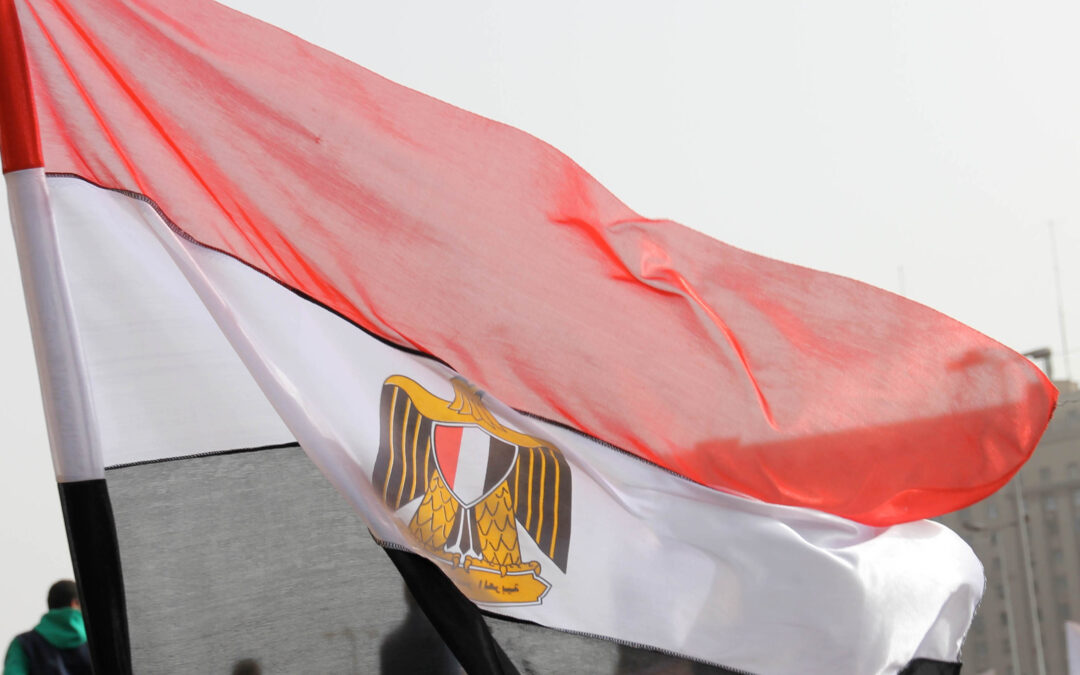
The Egyptian authorities should immediately and unconditionally release human rights lawyer Mohamed Ramadan and drop the charges against him or otherwise charge him with a recognizable crime consistent with international law, said the ICJ today.
Mohamed Ramadan was arrested, by plainclothes security officers on 10 December 2018, after attending proceedings concerning the renewal of a detention order against one of his clients. The client, Ayman Mahmoud, himself had been evidently detained for political reasons, and charged with joining and promoting an “illegal group” and “spreading false news on Facebook and Twitter to harm State interests.”
Following his arrest, Mohamed Ramadan was detained overnight in the National Security Agency Office. Ramadan’s family and lawyers did not know of his whereabouts until he was brought before the Alexandria Prosecutor on 11 December 2018.
According to information available to the ICJ, the Prosecutor charged Ramadan with joining a terrorist group, promoting its ideology including through social media and possession of publications supporting the group’s purpose (Case No. 16576/2018 Montaza), and ordered that he be detained for 15 days.
The charges appear to be to intended to prevent Ramadan’s exercise of freedom of expression and work as a lawyer. One of the lawyers who attended Ramadan’s interrogation on 11 December 2018 informed the ICJ that Ramadan had been informed by the Prosecutor to stop representing political detainees.
“The Egyptian authorities have engaged in a pattern of arresting, detaining and charging lawyers, human rights defenders and others perceived as opponents on unsubstantiated or illegitimate charges and in violation of their rights, typically under the pretext of fighting its ‘war on terrorism’,” said Saïd Benarbia, ICJ MENA Director. “The authorities should stop using laws that are purportedly designed to counter terrorism to silence persons exercising their human rights and lawyers carrying out their proper professional functions.”
According to lawyers who attended Mohamed Ramadan’s interrogation on 11 December, the Prosecutor alleged Ramadan possessed flyers opposing Egyptian President Sisi and multiple yellow vests. A credible news source reported that, prior to his arrest, Ramadan had posted a photograph on Facebook in which he wore a yellow vest to mock the government’s restriction on the sale of them.
According to media reports, earlier this month Egyptian authorities restricted the sale of yellow vests until the end of January 2019, in fear that opponents might be influenced by the French gilet jaunes protests to hold similar protests during the anniversary of the 2011 uprising against Hosni Mubarak next month.
Mohamed Ramadan is one of a number of lawyers who have been targeted in connection with carrying out their professional functions or for being perceived as opposing the Egyptian authorities.
“Imprisoning human rights lawyers, charging them for posting comments online, and deterring them from defending clients hampers the independent role they should play as a lawyer and as a last line of defence against the authorities’ abuses,” said Said Benarbia. “Egypt must protect these lawyers and safeguard their security, not muzzle their voices through abusive criminal proceedings.”
Background
In April 2017, the Alexandria Criminal Court convicted Ramadan in absentia of inciting terrorism, and sentenced him to ten years’ imprisonment followed by five years’ house arrest and a five year ban on using the internet, for posting comments attributed to him on fake Facebook profiles which were critical of the Egyptian President. His retrial is suspended until the Supreme Constitutional Court decides on the constitutionality of the Counter-Terrorism Law.
Any person arrested has the right to inform, or have the authorities notify, someone that they have been arrested and where they are being held. Detainees must be given access to a lawyer, a doctor and their family, from the time they are taken into custody, including police custody.” Restrictions on communicating with a laywer during detention also undermines the rights to liberty and to a fair trial, including under articles 9 and 14 of the International Convention on Civil and Political Rights (ICCPR), to which Egypt is a party.
Articles 19, 22 and 25 of the ICCPR protect the rights to freedom of expression, to freedom of association and to participate in public affairs. The United Nations Declaration on Human Rights Defenders commits States to generally protecting such rights exercised by HRDs and requires states to protect HRDs from violence, threats, retaliation, de facto or de jure adverse discrimination, pressure or any other arbitrary action for the lawful exercise of such rights.
Paragraphs 16 and 18 of the UN Basic Principles on the role of Lawyers require states to ensure lawyers are able to perform of their professional functions without intimidation, hindrance, harassment or improper interference, are not prosecuted or threatened with prosecution for any action taken in accordance with recognized professional duties, standards and ethics, and can exercise freedom of expression.
The ICJ has previously expressed concern over the arbitrary arrests and enforced disappearance of human rights defenders, lawyers, and political activists and persons otherwise providing support to political detainees.
In June 2018, the ICJ also expressed its concerns about Egypt’s repeated renewals of the State of Emergency since April 2017, and the use of the state of emergency to suppress the activities of and persecute students, human rights defenders, political activists, union members and those suspected of opposing the government.
Egypt-MohRamadan-News-web stories-2018-ARA (full story in Arabic, PDF)
Nov 23, 2018 | News
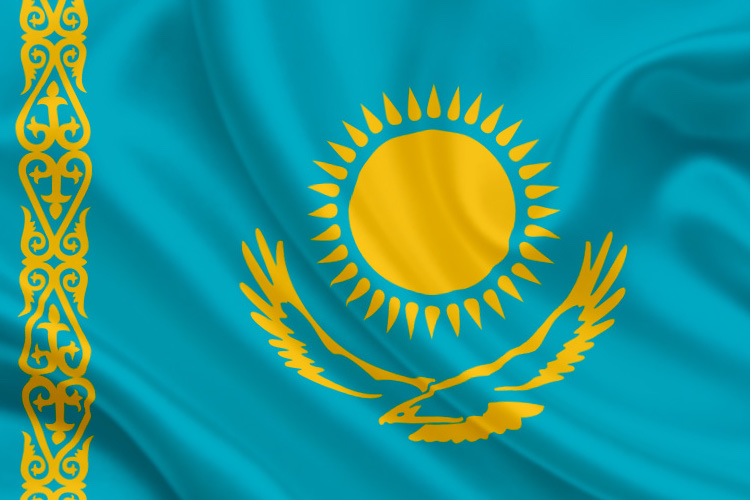
The ICJ is concerned at increasing government interference with the independence of the legal profession, including through intimidation and harassment of the leadership of the National Bar Association and individual lawyers in Kazakhstan.
In the last two months, there have been a series of resignations in the leadership of the National Bar, including Anvar Tugel, ex-President of the National Bar Association who publicly announced that his resignation was the result of “disagreement with the reform proposed by the Ministry of Justice”.
He explained that the “reform” aimed to remove the leadership of the Bar Association.
In his public statement, Tugel points out that several presidents of the local bar associations, faced pressure.
Indeed, Yakubenko Raisa and Vladimir Zolotov presidents of Aktyubinsk and Pavolodar bar associations respectively faced disbarment proceedings in the Kazakhstan courts, initiated by the Ministry of Justice.
The disciplinary charges against them are related to their administration of the bar associations.
He also pointed out that pressure was also exerted on individual lawyers, who had been invited to the Ministry of Justice and instructed which decisions to vote for at the National Conference of delegates of the regional bar associations.
Furthermore, Sergei Sizintsev, the Executive Director of the National Bar Association, has been unexpectedly dismissed from his position following the resignation of Anvar Tugel.
“Instructions about the outcome of the vote, apparently unjustified disciplinary proceedings against high profile lawyers and other such actions constitute interference with the independence of the legal profession and are of concern” Temur Shakirov, ICJ Europe and Central Asia Programme Senior Legal Adviser, said today.
“These developments cannot but create a chilling effect on the lawyers in Kazakhstan, including those independent lawyers who openly spoke against the reform of the legal profession,” he added.
Such measures are inconsistent with international law and standards on the independence of the legal profession, including the United Nations Basic Principles on the Role of Lawyers.
The ICJ calls on the State authorities, including the Ministry of Justice, to refrain from interference with the internal matters of the Bar, especially with the election of its governing bodies.
The interim leadership of the National Bar Association should ensure that elections to positions in the governing bodies are fair and transparent and are not a result of inappropriate interference from whatever quarter.
The ICJ will continue to monitor developments regarding the Kazakhstan legal profession, including disbarment proceedings against heads of regional bar associations, and other instances of apparent pressure on lawyers related to their opposition to reforms of the profession earlier criticized by the ICJ.
Background
The UN Basic Principles on the Role of Lawyers state that lawyers are entitled to form and join self-governing professional associations to represent their interests, promote their continuing education and training and protect their professional integrity.
The executive body of the professional associations shall be elected by its members and shall exercise its functions without external interference (Principle 24)
International principles on the role of lawyers also require the State to ensure that neither disciplinary sanctions, nor other measures such as criminal penalties, are unfairly or arbitrarily imposed on lawyers for action taken in accordance with their professional duties, and in accordance with accepted standards of professional conduct, including those enshrined in the Basic Principles on the Role of Lawyers
According to Principle 16 of the UN Basic Principles it is the obligation of the governments to ensure that lawyers “are able to perform all of their professional functions without intimidation, hindrance, harassment or improper interference” and that they do not “suffer, or be threatened with, prosecution or administrative, economic or other sanctions for any action taken in accordance with recognized professional duties, standards and ethics”.
The Law ‘On the Professional Activities of Advocates and Legal Assistance’ was signed into law on 10 July 2018.
Earlier the ICJ expressed concern in respect to the new law, as contradicting international law and standards on the independence of the legal profession, by enabling the executive to influence or to have control over who is allowed to practice law and substantial influence on disciplinary proceedings against lawyers. Read the full text here.
Read also
ICJ statement following the mission to Kazakhstan on the independence of the legal profession.
Nov 16, 2018 | News
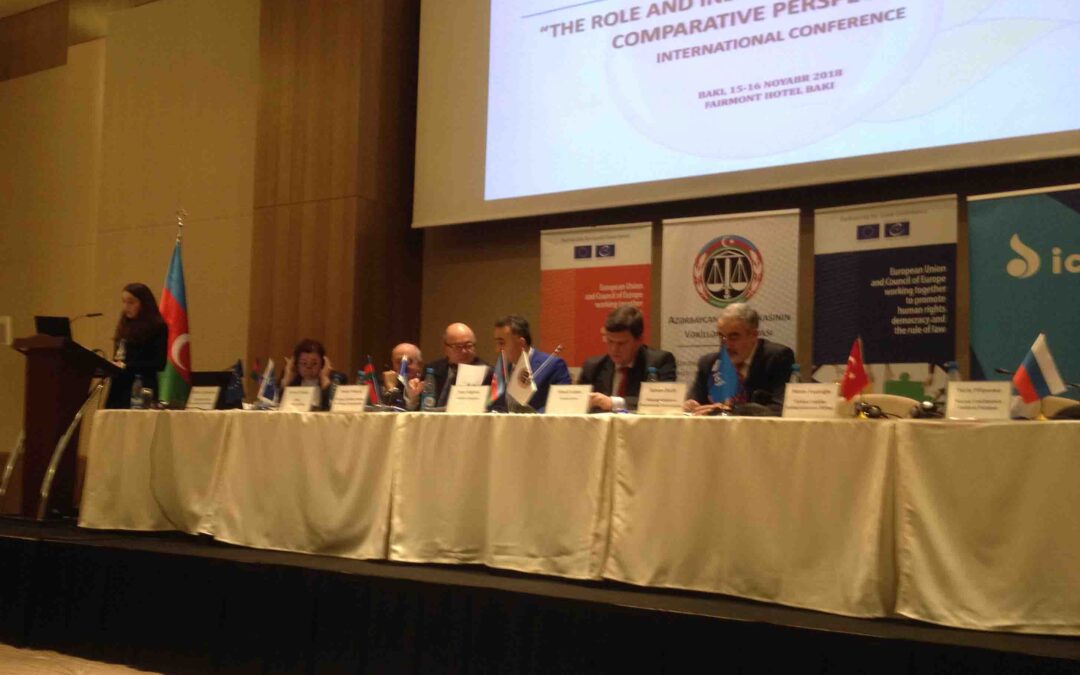
On 15 and 16 November, the ICJ, jointly with the Council of Europe (CoE) and the Azerbaijan Bar Association (ABA), is holding an international conference in Baku on “the Role and Independence of Lawyers: comparative perspectives”.
The conference, which is the first such event on the role and independence of the legal profession organized in the country, aims to bring together perspectives on the governance and role of the legal profession from international experts and representatives of bar associations from a wide range of countries, including the Council of Europe countries, Central Asian as well as representatives of international organizations.
The interventions provide a comparative view on the conditions and requirements that lawyers should comply with while carrying out their professional duty of protection of human rights of their clients.
Participants of the Conference will address in particular the organization and governance of the legal profession, lawyers’ ethics and qualification of lawyers.
Contact:
Temur Shakirov, Senior Legal Adviser, Europe and Central Asia Programme, temur.shakirov@icj.org
Live cast: https://youtu.be/POVlaKXjUrg
Azerbaijan-Conference Independence Lawyers-News-Agenda-2018-ENG (Agenda of the Conference, in PDF)
Nov 15, 2018 | News
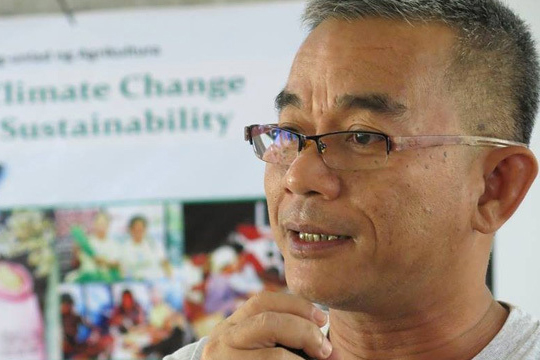
The ICJ and the Alternative Law Groups (ALG) today called on the Government of the Philippines to take immediate and effective action to addressing the apparently unlawful killing of Benjamin ‘Ben’ Ramos, a prominent lawyer and a founder of the National Union of People’s Lawyers (NUPL).
Benjamin Ramos was shot by two unidentified men in the public plaza of Barangay 5, Kabankalan City on 6 November 2018.
The ICJ and ALG call on the Government of the Philippines to conduct a thorough, prompt, impartial, and independent investigation into the killing of Benjamin Ramos.
Benjamin Ramos, in his work with the NUPL, had previously provided legal assistance to the families of the victims of the ‘Sagay 9 massacre’, which involved the killing of nine sugarcane farmers from the National Federation of Sugar Workers by unidentified armed men on 20 October 2018 in Negros Occidental, a province in the central part of the Philippines.
Given the sensitive nature of the work of Benjamin Ramos, which involved confronting powerful interests, it is important that any investigation consider the suspected links between that work and his killing.
“It is essential for the proper and effective functioning of the administration of justice that lawyers are kept safe as they fulfill their duties to protect the rights of their clients and promote the cause of justice,” said Emerlynne Gil, ICJ’s Senior International Legal Adviser.
As affirmed by the UN Basic Principles on the Role of Lawyers, governments must ensure that lawyers are able to perform all their professional functions without “intimidation, hindrance, harassment or improper interference.” In addition,“[w]here the security of lawyers is threatened as a result of discharging their functions, they shall be adequately safeguarded by the authorities”.
The organizations note that there have been at least thirty-four (34) lawyers killed since 2016, under the administration of President Rodrigo Duterte.
“The rising number of killings of lawyers is very concerning and alarming; it is an attack not only on individual lawyers but on the justice system as whole. The Philippine government must take immediate and proactive measures to ensure the safety of lawyers as they conduct their professional duties,” said Maria Generosa Mislang, National Coordinator of ALG.
Contact:
Emerlynne Gil, ICJ Senior International Legal Adviser, t: +662 619 8477 (ext. 206) ; e: emerlynne.gil(a)icj.org
Nov 9, 2018 | News
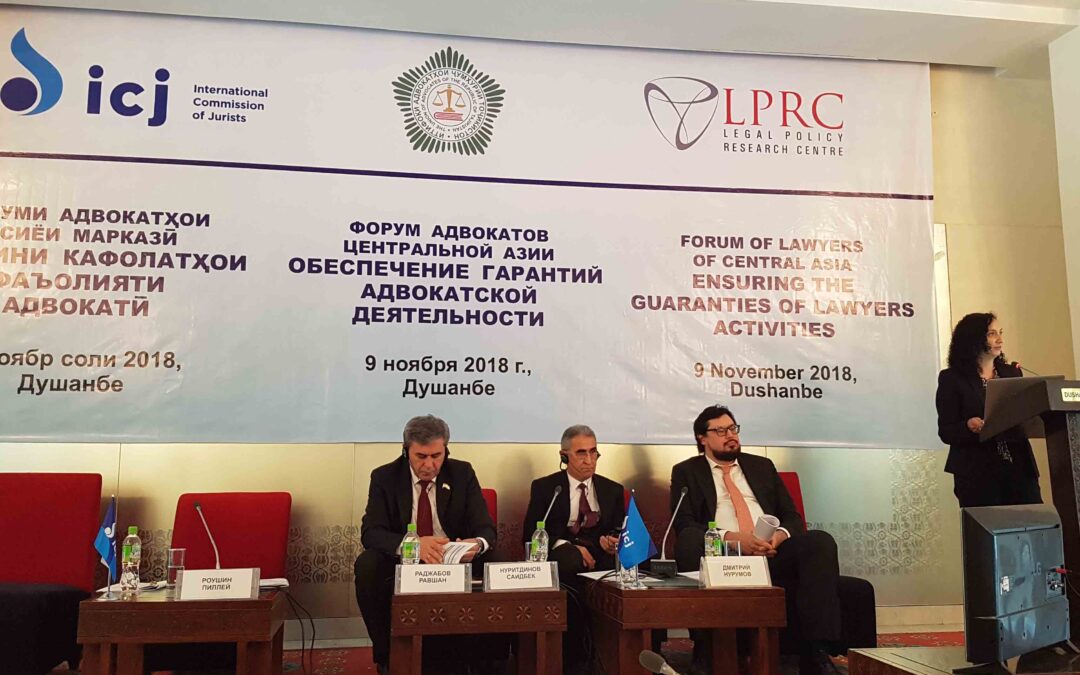
Today the ICJ, in co-operation with the Legal Policy Research Centre and the Union of Lawyers of Tajikistan, is holding a regional conference on the independence and role of lawyers, in Dushanbe.
Lawyers from Tajikistan as well as other countries of Central Asia, the Commonwealth of Independent States and Europe will discuss the legal safeguards that should apply to lawyers to ensure that they can defend the human rights of their clients and the role of bar associations in protecting the security and independence of lawyers.
They will consider the role of committees to protect the rights of lawyers, which have been established within the bar associations of several countries in the region, and how these specialized bodies can work most effectively.
A set of recommendations on the protection of lawyers in the region will be produced following the conference.
Contact:
Temur Shakirov, Senior Legal Advisor, Europe and Central Asia Programme, temur.shakirov(a)icj.org
Tajikistan-Lawyers Conference-News-Agenda-2018-ENG (Agenda, in PDF)