Mar 30, 2016 | News
The Malaysian government must immediately halt the politically motivated sedition investigation launched by the police against members of the Malaysian Bar who had called for the Attorney General’s resignation, the ICJ said today.
“The Malaysian authorities are using the archaic, colonial Sedition Act to harass and silence lawyers who are demanding that the country’s legal authorities observe international standards of propriety and independence,” said Emerlynne Gil, ICJ’s Senior Legal Adviser for Southeast Asia.
“This latest misuse of the Sedition Act constitutes a brazen political attack on the independence of the country’s lawyers,” she added.
On 29 March 2016, lawyers Charles Hector, Francis Pereira, and Shanmugam Ramasamy, received letters from police authorities summoning them to the Bukit Aman Police Headquarters on 31 March 2016 for the purpose of taking down their statements regarding a complaint filed against them under the Sedition Act (1948).
The three had proposed a motion during the Malaysian Bar’s 70th Annual General Assembly, calling for the resignation of Attorney-General Tan Sri Mohamed Apandi Ali. The motion was passed by a majority vote.
Karen Cheah Yee Lynn, Secretary of the Malaysian Bar, was also notified that her statement would likewise be taken but she was not summoned to the Bukit Aman Police Headquarters.
The Malaysian Bar demanded the resignation of Attorney-General Tan Sri Mohamed Apandi Ali after he summarily ended the investigation of alleged corruption by Prime Minister Najib Razak.
The Prime Minister appointed Attorney-General Apandi on 27 July 2015, in the midst of the corruption investigation.
Attorney General Apandi subsequently cleared Prime Minister Najib Razak of any criminal wrongdoing and instructed the Malaysian Anti-Corruption Commission to close the investigations.
“In 2012, Prime Minister Razak had promised to repeal the Sedition Act, but since then his government has increasingly relied on the law’s impermissibly vague and broad language as a useful tool of repression,” Gil said.
International standards highlight that protecting the independence of lawyers and their professional associations is essential for upholding the rule of law and the administration of justice, the ICJ says.
“This police investigation is clearly designed to challenge that independence,” Gil said.
“The Malaysian Bar has been one of the few institutions consistently defending the rule of law and human rights in Malaysia, and it is crucial to maintain the ability of its members to engage critically in upholding the standards of professional integrity and independence,” she added.
The ICJ urges the Malaysian government to repeal the archaic Sedition Act 1948 and fulfill the commitment it made in 2012 to abolish it.
Unless repealed or considerably revised so that it will be consistent with international law, the Sedition Act 1948 will continue to unduly limit and repress the freedom of expression, not only of lawyers and human rights defenders, but of all Malaysians exercising their fundamental rights, the ICJ says.
Contact
Emerlynne Gil, ICJ’s Senior International Legal Adviser, t: +66840923575, e: emerlynne.gil@icj.org
Background
Under the UN Basic Principles on the Role of Lawyers, governments have the obligation to ensure that lawyers are able to perform all of their professional functions without intimidation, hindrance, harassment or improper interference (Principle 16).
Like other citizens, lawyers are entitled to freedom of expression, belief, association, and assembly. Lawyers have the right to take part in the public discussion of matters concerning the law, the administration of justice, and the promotion and protection of human rights (Principle 23).
The UN Basic Principles on the Role of Lawyers also state that lawyers are entitled to form and join self-governing professional associations to represent their interests and protect their professional integrity (Principle 24).
Governments should ensure that these professional associations are able to function without improper interference (Principle 25).
In its 2016 resolution on human rights in the administration of justice, the UN Human Rights Council unanimously affirmed that “the independence and impartiality of the judiciary, the integrity of the judicial system and an independent legal profession are essential prerequisites for the protection of human rights, the rule of law, good governance and democracy, and for ensuring that there is no discrimination in the administration of justice, and should therefore be respected in all circumstances” (Resolution 30/7, 1 October 2015).
Malaysia’s Sedition Act 1948, originally enacted by the British colonial government and amended times over the years, criminalizes speech and publications considered to have “seditious tendencies”.
The term “seditious tendencies” is ambiguously defined to mean any kind of speech or publication that causes “hatred or contempt, or excite disaffection” against any ruler or the government or promotes “ill will and hostility between the different races or classes”.
The law also considers “seditious” any speech or publication that questions the special privileges of the Malay people, as provided in the Constitution.
Furthermore, sedition is a strict liability offence in Malaysia, which means that the intention of a person allegedly making seditious statements is irrelevant.

Mar 29, 2016 | News
Today, the ICJ expressed serious concern at the apparent murder of lawyer Yury Grabovsky who was found dead on 25 March. The lawyer had been missing for two weeks and was reportedly found shot and buried near the Kiev-Odessa main route.
“The death of lawyer Yury Grabovsky must be investigated in a prompt, impartial and effective manner. Other lawyers who may be under threat should be urgently granted the necessary measures of protection”, said Temur Shakirov, ICJ Legal Adivser.
Yury Grabovsky was the managing partner of law firm “Garbovsky and Co”, as well as Deputy Chair of the High Qualification Disciplinary Commission.
He represented Aleksandr Aleksandrov, who along with Evgeniy Yerofeyev, was detained last May in the Lugansk Region in Eastern Ukraine and accused of terrorism and a number of other crimes.
The lawyer’s whereabouts had been unknown since 5 March after he had left for Odessa to stay at “Arkadiya” hotel.
He was apparently supposed to leave the hotel on 7 March but he never took his belongings from there.
On 9 March, a court hearing did not take place because the lawyer was missing.
Garbovsky’s colleagues reportedly doubted the authenticity of a post on his facebook account stated that he had left Ukraine.
On 10 March, the National Association of Lawyers of Ukraine informed the National Police that the lawyer had been missing.
The same day, the Odessa police opened a criminal case on “intentional murder”.
On 20 March, the Chief Military Prosecutor of Ukraine, Anatoly Matios, stated that a suspect in the organization of the disappearance of Grabovsky had been apprehended.
On Friday, 25 March, Prosecutor Matios said that Grabovsky “was killed in a violent way and finished off with a firearm” which according to the Prosecutor was a “specially planned operation.”
The lawyer’s body was found shot and buried 138 km south of Kiev after one of the suspects had reportedly disclosed the place of burial.
The lawyer is said to have had an explosive bracelet on his leg, apparently intended to prevent him from escaping. The names of the suspects have not been made public.
It is the second killing of a lawyer in Ukraine this month, and the fourth such killing since January 2015, including, lawyers Alexandr Gruzkov, Yury Ignatenko, Viktor Loiko, and now Yuri Grabovskiy.
Temur Shakirov stressed that “in order to fulfil their function lawyers must be able to act without fear and free from fear of reprisals of any kind”.
The UN Basic Principles on the Role of Lawyers affirm that“[w]here the security of lawyers is threatened as a result of discharging their functions, they shall be adequately safeguarded by the authorities.”
The ICJ calls on the Government of Ukraine to investigate the case and bring those responsible to justice, including both anyone who directly carried out the killing and anyone who ordered the crime.
Urgent measures to guarantee the security of lawyers should be taken, which should include effective security measures against attempts on their lives and lives of their family members.
Contact:
Róisín Pillay, Director, Europe Programme, roisin.pillay(a)icj.org
Temur Shakirov, Legal Adviser, Europe Programme, temur.shakirov(a)icj.org
Mar 28, 2016 | News
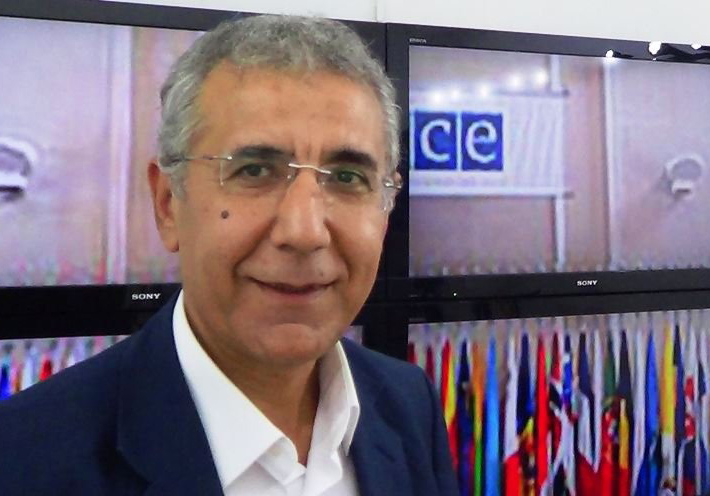
The ICJ welcomes the release of human rights lawyer Intigam Aliyev today after the Supreme Court reduced and suspended his sentence and ordered his immediate release.
Intigam Aliyev, a prominent human rights lawyer and the head of the NGO Legal Education Society, had been convicted on 22 April 2015 of tax avoidance, illegal entrepreneurship and abuse of power and sentenced to seven and a half years of imprisonment by a Baku Court.
A number of credible human rights organizations and international observers who have closely followed the case have stated that they consider the charges he was tried on to have been politically motivated, and that the real reason for his prosecution and conviction was repression by the Government of critical voices in civil society.
In a closed hearing, the Supreme Court reduced his sentence to five years of imprisonment and suspended its execution, after a request to this effect was made by Azerbaijan’s Prosecutor General, Zakir Garalov.
This unusual initiative follows the rejection, on 24 February, by the same Supreme Court of Intigam Aliyev’s complaint against his sentence.
“While the release of Intigam Aliyev is a positive step, the ICJ remains concerned that this decision appears to leave the underlying conviction in place despite credible reports that the charges were politically motivated,” said Massimo Frigo, ICJ Legal Adviser.
“If, as these allegations would suggest, Intigam Aliyev was targeted for his work as a lawyer, this would clearly violate international standards on the independence of lawyers”, said Temur Shakirov, another ICJ Legal Adviser.
Contact
Temur Shakirov, Legal Adviser, Europe Programme, temur.shakirov(a)icj.org
Massimo Frigo, Legal Adviser, Europe Programme, masimo.frigo(a)icj.org

Feb 5, 2016 | News
The ICJ today called on the Royal Thai Government to immediately drop criminal proceedings against human rights lawyer Sirikan Charoensiri.
On 2 February 2016, Sirikan Charoensiri received two summons to appear at the Chanasongkram Police Station on 9 February 2016 to be charged with two offences under the Criminal Code of Thailand: “giving false information regarding a criminal offence” and “refusing to comply with the order of an official”.
Such charges could result in punishment of up to two years’ imprisonment.
“The charges against Sirikan Charoensiri apparently relate to her efforts to protect the legal and human rights of her clients, students who never should have faced arrest or criminal proceedings for peacefully exercising their freedoms of expression and assembly in the first place,” said Matt Pollard of the ICJ’s Centre for the Independence of Judges and Lawyers.
“Prosecuting Sirikan Charoensiri for her efforts to defend human rights is totally unacceptable and will only put Thailand further in violation of its international obligations,” he added.
The charges appear to relate to the circumstances surrounding Sirikan Charoensiri’s provision of legal aid to 14 students who were arrested on 26 June 2015 after carrying out peaceful protests calling for democracy and an end to military rule.
Although the precise basis for the changes is not set out in the summonses, the complainant is named as Pol. Col. Suriya Chamnongchok, a police officer involved in the investigation of the 14 students.
Sirikan Charoensiri, a lawyer with Thai Lawyers for Human Rights (TLHR), has provided legal aid to many individuals, including activists and human rights defenders, since military rule was imposed in May 2014.
The ICJ first expressed concern about the Government’s targeting of Sirikan Charoensiri on 2 July 2015, after the Royal Thai Police threatened Sirikan Charoensiri with legal action, publically announced they were considering charging her with a crime, and visited her home and questioned her family.
These threats and harassment, like the currently pending charges, appeared to be in retaliation for her having refused consent for police to search her car after the students’ court hearing, and for having filed a complaint with the police when they proceeded to impound it.
The ICJ has brought the case to the attention of the United Nations Special Rapporteurs on the Independence of Judges and Lawyers, and on the Situation of Human Rights Defenders.
The situation of human rights in Thailand will be examined by the UN Human Rights Council in May 2016, as part of the Council’s Universal Periodic Review of all States.
“Ahead of Thailand’s human rights review by the United Nations in May, and against the background of the tabled ‘roadmap’ towards democratic rule, the need for the Royal Thai Government to restore respect for human rights only grows more urgent by the day,” said Pollard.
Contact
In Bangkok: Kingsley Abbott, International Legal Adviser for Southeast Asia, t +66 94 470 1345 ; e: kingsley.abbott(a)icj.org
In Geneva: Matt Pollard, ICJ Senior Legal Adviser, t: +41 22 979 38 12 ; e: matt.pollard(a)icj.org
Background
The International Covenant on Civil and Political Rights (ICCPR), to which Thailand is a Party, guarantees the right to peaceful assembly; the right to freedom of expression; the prohibition of arbitrary arrest or detention; the right to a fair and public hearing by a competent, independent and impartial tribunal established by law (including the right of prompt access to a lawyer and precluding jurisdiction of military courts over civilians in circumstances such as these); and the prohibition of arbitrary or unlawful interference with privacy, family, home and correspondence (which includes arbitrary searches or seizures).
The UN Declaration on Human Rights Defenders affirms the right of everyone peacefully to oppose human rights violations. It prohibits retaliation, threats and other harassment against anyone who takes peaceful action against human rights violations, both within and beyond the exercise of their professional duties. It protects the right of persons to file formal complaints about alleged violations of rights. The UN Basic Principles on the Role of Lawyers provide that governments are to ensure that lawyers are able to perform their professional functions without intimidation, hindrance, harassment or improper interference.
Thailand-Sirikan Charoensiri-News-Press releases-2016-THA (full text in PDF, Thai)
Jan 29, 2016 | News
La CIJ expresa su preocupación frente a una nueva denuncia abusiva de la Fundación contra el Terrorismo, esta vez contra el Director de la CIJ para Centroamérica y un consultor que contribuye con el Bufete de Derechos Humanos, y contra el Director de Centro de Acción Legal, Ambiental y Social.
Esta denuncia se suma a otras en contra de abogados y abogadas de Guatemala. A través de querellas y acusaciones falsas, esta Fundación pretende afectar la función que estos profesionales cumplen como defensores de los derechos humanos.
Estas denuncias falsas son parte de una campaña iniciada hace más de un año y que ha querido afectar a más de cien personas, a quienes la Fundación contra el Terrorismo ha calificado como terroristas y guerrilleros (as), sin aportar pruebas.
Efectivamente se han presentado denuncias contra funcionarios y ex funcionarios del Ministerio Público, como la ex Fiscal General Claudia Paz y Paz y la actual Fiscal General Thelma Aldana, el Fiscal de Derechos Humanos o en contra de jueces y juezas del Organismo Judicial que ejercen su función en forma independiente, promoviendo un discurso de odio en contra de estas personas que actúan como defensores y defensoras de derechos humanos.
Ante esto hechos, la CIJ demanda:
- Que el Estado de Guatemala, por medio de las autoridades correspondientes, inicie una investigación exhaustiva e imparcial acerca de las actividades que realiza la Fundación contra el Terrorismo sobre todo, que investigue el origen de aquellas actividades que dirige en contra de defensores y defensoras de Derechos Humanos;
- Que el Estado de Guatemala, por medio de las autoridades correspondientes, brinde la protección debida a defensores y defensoras de derechos humanos;
- Que una vez finalizada la investigación el Estado de Guatemala, a través de las autoridades y mecanismos correspondientes, adopte las medidas necesarias de acuerdo a derecho con respecto a la Fundación contra el Terrorismo y su Director, por llevar a cabo campañas de odio en contra de defensores y defensoras de derechos humanos.