Jul 14, 2015 | News
The Royal Government of Cambodia must immediately end the legal harassment of human rights defender, Ny Chakrya, Head of the Human Rights and Legal Aid Section of the Cambodian Human Rights and Development Association (ADHOC), the ICJ said today.
On 13 July 2015, a Deputy Prosecutor at the Phnom Penh Municipal Court questioned Ny Chakrya for two hours in relation to statements he had made at two press conferences in May 2015.
The summons and questioning were, according to information provided to the ICJ, pursuant to a complaint by an Investigating Judge and another prosecutor.
The proceedings appear to be based on the fact that at the press conferences Ny Chakrya alleged that two clients of ADHOC had been arbitrarily arrested and detained in Siem Reap province and were facing an unfair trial.
“The legal harassment of Ny Chakrya for merely raising allegations of human rights violations is itself a clear violation of human rights,” said Kingsley Abbott, ICJ’s International Legal Adviser.
“Human rights defenders play a vital role in promoting and protecting human rights and the State has a duty to create the conditions for them to be able to carry out their work effectively and without fear of retaliation,” he added.
The International Covenant on Civil and Political Rights (ICCPR), to which Cambodia is a State Party, guarantees the right to freedom of expression; the prohibition of arbitrary arrest or detention and the right to a fair and public hearing by a competent, independent and impartial tribunal established by law; and the right to seek effective remedies for alleged violations of human rights.
The UN Declaration on Human Rights Defenders, adopted by a consensus of States including Cambodia, affirms the right of everyone to peacefully oppose human rights violations.
It reaffirms the prohibition of retaliation, threats and other harassment against anyone who takes peaceful action against human rights violations, both within and beyond the exercise of their professional duties.
It also protects the right of persons to file formal complaints about alleged violations of rights.
The UN Guidelines on the Role of Prosecutors provide that prosecutors have the duty to uphold human rights and that states must ensure they have the power and discretion to fulfill this and other duties. Prosecutors should not proceed with a case they know to be unfounded.
“The complaint against Ny Chakrya was clearly without foundation and he should never have been summoned for questioning in the first place,” Abbott said. “To continue to proceed with this case would be a violation of Ny Chakrya’s rights as a human rights defender.”
The ICJ reiterates its call for the end of the legal harassment of Ny Chakrya and that his case should be closed definitively by whatever means or to whatever extent is available to the Deputy Prosecutor and other state officials.
Background:
According to information provided to the ICJ, on 22 June 2015 the Phnom Penh Municipal Court issued a summons for Ny Chakrya to appear before it for questioning pursuant to a complaint filed by the Investigating Judge and the Deputy Prosecutor of the Siem Reap Provincial Court alleging public defamation (Art. 305 of the Cambodian Criminal Code), acts of slanderous denunciation (Art. 311 of the Cambodian Criminal Code), and the publication of comments to put pressure on the jurisdiction (Art. 522 of the Cambodian Criminal Code).
On 13 July 2015 at the Phnom Penh Municipal Court, the Deputy Prosecutor questioned Ny Chakrya about statements he made at two press conferences organized by ADHOC.
At a press conference on 12 May 2015 in Siem Reap, Ny Chakrya and a lawyer from ADHOC alleged that two clients of ADHOC had been arbitrary arrested and detained in the context of a high profile land dispute in Siem Reap province.
Ny Chakrya alleged that their arrest and detention was a violation of Cambodian law and international human rights law.
At a press conference on 20 May 2015 in Phnom Penh, Ny Chakrya sought to raise public awareness about a complaint that he had filed the same day to the President of the Disciplinary Council of the Supreme Council of Magistracy.
In the complaint, Ny Chakrya alleged that the Deputy Prosecutor and Investigating Judge of the Siem Reap Provincial Court lacked independence and that the two villagers would not receive a fair trial as a result.
On 17 June 2015, the Siem Reap Provincial Court found ADHOC’s clients guilty of inciting a group of villagers to trespass on, use and destroy the property of Community Takhmao Development Agricultural & Industrial, an agricultural development company.
They were sentenced respectively to six months’ and eight months’ imprisonment.
The criminal proceedings arose in the context of a dispute between Community Takhmao Development Agricultural & Industrial and villagers in Chup Romdeng Village in Siem Reap province regarding the alleged illegal clearing of land in Siem Reap province.
Contact:
Kingsley Abbott, ICJ International Legal Adviser, t: +668 4092 3575 ; e: kingsley.abbott(a)icj.org
Jul 13, 2015 | News
The ICJ expresses concern at the recent decision of the Nizami District Court of Baku to disbar Khalid Baghirov, a prominent lawyer who litigates before national and international jurisdictions including the European Court of Human Rights.
Khalid Baghirov had been accused of the use of improper expressions and inappropriate behaviour, following statements he made in a hearing before Sheki Appeal Court, alleging that the judge in the case was biased.
On 2 February 2015, the ICJ observed the disciplinary hearing in the case of Khalid Baghirov before the Nizami District Court of Baku.
The Court’s decision, on 10 July 2015, follows the disbarment earlier this month of lawyer Alaif Ghasanov, for making a public statement about the conditions of detention of one of his clients, Leyla Yunus, a prominent human rights defender currently held in detention.
There are grounds to believe that Khalid Baghirov’s disbarment is in retaliation for his representation of clients in high profile cases, including prominent human rights defenders.
“Disbarments such as this have a chilling effect on the work of other lawyers, sending a signal that they may be penalized for discharging their functions independently and in accordance with international standards on the role and duties of the legal profession,” said Róisín Pillay, Director of the ICJ Europe Programme.
“Without independent legal representation, those who come before the courts cannot receive a fair trial and the system’s capacity to fairly administer justice under the rule of law is undermined,” she added.
Access to effective and independent legal assistance is an indispensable element of the right to a fair trial, guaranteed under the European Convention on Human Rights and the International Covenant on Civil and Political rights, to which Azerbaijan is a party.
The ICJ affirms that freedom of expression of lawyers constitutes an essential requirement for the proper functioning of the legal profession.
Article 23 of the UN Basic Principles on the Role of Lawyers states that lawyers: “[…] have the right to take part in public discussion of matters concerning the law, the administration of justice and the promotion and protection of human rights and to join or form local, national or international organizations and attend their meetings, without suffering professional restrictions by reason of their lawful action or their membership in a lawful organization.”
The European Court of Human Rights commented in its recent decision in Moris v France that where a lawyer makes statements regarding the functioning the judiciary, a matter of public interest, little room is left for restrictions on such comments which are protected pursuant to the right to freedom of expression.
In particular, the Court held that “[…] a lawyer should be able to draw the public’s attention to potential shortcomings in the justice system; the judiciary may benefit from constructive criticism”.
The ICJ calls on the public authorities of Azerbaijan as well as the Azerbaijan Collegium of Lawyers to ensure that lawyers, including those representing opposition leaders or human rights defenders, are not identified with their clients’ causes and are able to discharge their functions freely without any fear of persecution, harassment or improper interference.
Background:
Khalid Baghirov, an Azerbaijani lawyer, has represented a number of clients in high-profile cases, including Ilgar Mammadov, Leyla and Arif Yunus and Rasul Djafarov.
He has filed over 40 applications to the European Court of Human Rights, thirteen of which are pending communication.
On 17 March, 2014, Sheki Court convicted Ilgar Mammadov, leader of the “Republican Alternative” movement and former presidential candidate, and sentenced him to seven years of imprisonment.
The case was appealed to Sheki Appeal Court, and a hearing in the appeal was held on 12 August 2014.
On 25 September 2014, judge of Sheki Appeal Court Rashid Huseynov filed a complaint (1 (107)-90/2014) before the Collegium of Advocates requesting disciplinary measures against Khalid Baghirov for a breach of the Law of the Republic of Azerbaijan “On Advocates and Advocates’ Activity”, which included a failure to wear “lawyers’ outfit” in the court room, and use of improper expressions and behaviour incompatible with standards of lawyer’s conduct.
According to the complaint, on 12 August 2014, at the appeal hearing of Mammadov’s case by the Sheki Appeal Court, Khalid Baghivov was alleged to have said: “… like a state, like a court… If there were justice in Azerbaijan, neither the judge Rashid Huseynov would make unjust and biased decision, nor the person like him would be a judge”. He allegedly did not wear a lawyer’s gown during the appeal herrings on 12 and 13 August as well as on 3 and 4 September 2014 hearings.
On 19 November 2014, the Disciplinary Commission of the Advocates’ Collegium issued an opinion, finding that the applicant’s speech aimed to defame the State and was in breach of lawyer’s ethical standards.
On 10 December 2014, the Presidium of the Collegium of Lawyers suspended Khalid Baghirov’s practice, stating inter alia as follows: “The fact that advocate Khalid Baghirov stated the expression ‘like a state, like a court’ in the open court session casts a shadow not only on judiciary branch of Azerbaijan, more importantly, on our state that is considered to be holy for each citizen of Azerbaijan. […] Moreover, by using expression ‘If there were justice in Azerbaijan, neither the judge Rashid Huseynov would make unjust and preconceived decision, nor the person like him would be a judge’ Khalid Baghirov humiliated authority of the whole Justice System of Azerbaijan”.
At the same time, the Presidium applied to the Nizami District Court seeking complete termination of his right to practice law.
Contact:
Róisín Pillay, Director, Europe Programme, roisin.pillay(a)icj.org
Temur Shakirov, Legal Adviser, Europe Programme, temur.shakirov(a)icj.org

Jul 2, 2015 | News
The Royal Thai Government must immediately end its harassment and intimidation of human rights lawyer, Sirikan Charoensiri, the ICJ said today.
Sirikan Charoensiri (photo), a lawyer with Thai Lawyers for Human Rights (TLHR), has been providing legal aid to 14 students who were arrested on 26 June 2015 after carrying out peaceful protests calling for democracy and an end to military rule.
Since then, the Royal Thai Police have threatened Sirikan Charoensiri with legal action, publically announced they are considering charging her with a crime, and visited her home and questioned her family.
“The government must immediately end its harassment and intimidation of human rights lawyer Sirikan Charoensiri,” said Matt Pollard, Head of the ICJ’s Centre for the Independence of Judges and Lawyers in Geneva. “The case against her clients clearly violates Thailand’s obligations under international law, and cannot be a valid basis for the police to take any action against her for defending their rights.”
On 30 June 2015, the ICJ met in Geneva with staff members of the United Nations Special Rapporteurs on the Independence of Judges and Lawyers, and on the Situation of Human Rights Defenders, in order to bring Sirikan Charoensiri’s case to their attention.
“The ICJ has been repeatedly warning of Thailand’s steady slide away from open democracy and the rule of law,” added Pollard. “These actions of the police, targeting peacefully protesting students with prosecution in a military court, and then targeting the lawyer who comes to their defence, underscores the urgent need to restore respect for human rights in Thailand.”
Contact:
Matt Pollard, Senior Legal Adviser, ICJ’s Centre for the Independence of Judges and Lawyers, t: +41 22 979 38 12, e: matt.pollard(a)icj.org
Background
The 14 students were arrested during the evening of 26 June 2015 and were brought to a police station in Bangkok and then to the Bangkok Military Court for a hearing on pre-trial detention, which proceeded until midnight.
The students have been charged with violating order 3/2015 of the National Council for Peace and Order (which prohibits the public assembly of more than five people for political purposes) and a ‘sedition’-type offence under section 116 of Thai Criminal Code, which carries a maximum sentence of seven years imprisonment.
Upon hearing of the students’ arrest, Sirikan Charoensiri and three other lawyers drove in her car to the Bangkok Military Court in order to provide legal aid to the students.
Following the hearing and during the early morning of 27 June 2015, the police asked Sirikan Charoensiri for her permission to search her car for the student’s phones, without a warrant. She refused to consent to the warrantless search. As a result, the Police impounded her car, which contained the lawyers’ case files and personal computers, and five phones belonging to the students.
At 12:45pm, Sirikan Charoensiri went to the police station to file a complaint of malfeasance regarding the seizure of her car. The police refused to accept the complaint and in the meantime another police team searched her car with a warrant. Five phones belonging to the students were seized as evidence.
At 18:00pm, Sirikan Charoensiri again attempted to file a complaint at the police station for malfeasance. A senior investigator told her that the police had power to search her car and suggested that if she filed a complaint, it would not finish there and that the police would consider countering with some form of legal action against her. The police finally accepted the complaint at 11:00pm.
On 28 June 2015, a senior police officer told the media that they had found “important evidence” in Sirikan Charoensiri’s car and are considering whether to charge her with a crime.
On 29 June 2015, the police visited Sirikan Charoensiri’s family home and asked her parents to identify her in photos and questioned them about her background.
The International Covenant on Civil and Political Rights (ICCPR), to which Thailand is a State Party, guarantees the right to peaceful assembly; the right to freedom of expression; the prohibition of arbitrary arrest or detention and the right to a fair and public hearing by a competent, independent and impartial tribunal established by law (including the right of prompt access to a lawyer and precluding jurisdiction of military courts over civilians in circumstances such as these); and the prohibition of arbitrary or unlawful interference with privacy, family, home and correspondence (which includes arbitrary searches or seizures).
The UN Declaration on Human Rights Defenders affirms the right of everyone peacefully to oppose human rights violations. It prohibits retaliation, threats and other harassment against anyone who takes peaceful action against human rights violations, both within and beyond the exercise of their professional duties. It protects the right of persons to file formal complaints about alleged violations of rights. The UN Basic Principles on the Role of Lawyers provide that governments are to ensure that lawyers are able to perform their professional functions without intimidation, hindrance, harassment or improper interference.
Sirikan Charoensiri formerly served as a National Legal Consultant with the ICJ.
Thailand-Sirikan case-News-press releases-2015-THA (full text in PDF, Thai version)

Jun 25, 2015 | News
The ICJ today welcomed the decisions by the Kyrgyz Supreme Court declaring illegal the recent government searches of the homes and offices of lawyers, and seizures of their legal files.
In three related cases, the Court upheld the findings of the Osh regional court that the searches of the homes of lawyers Valerian Vakhitov and Khusanbay Saliyev and lawyers’ offices at the NGO “Bir-Duyno-Kyrgyzstan” by officers of the State National Security Committee were contrary to Kyrgyz law.
The Supreme Court also dismissed the attempts by the Prosecutor’s Office to initiate disciplinary action against judges of the Osh regional court as a result of their decision in these cases.
The decisions are an important affirmation of the rule of law in the Kyrgyz Republic, and will strengthen the independence of both the judiciary and the legal profession, the ICJ said.
“These decisions of the Supreme Court are crucial for securing the independence and strengthening of the legal profession under the newly established Association of Lawyers and for the ability of judges to issue independent decisions based on law and facts,” said Olga Zimareva, one of two ICJ observers who were present at the hearing.
“It is a demonstration of the judiciary’s willingness and capacity to effectively uphold the rule of law and safeguard the fundamental role of lawyers,” she added.
The International Covenant on Civil and Political Rights, which is binding on the Kyrgyz Republic, protects the right to a fair trial including lawyer-client confidentiality.
Furthermore, Principle 16 of the UN Basic Principles on the Role of Lawyers upholds the duty of States to ensure that lawyers can perform all of their professional functions without intimidation, hindrance, harassment or improper interference.
International standards require that judges should not be subjected to disciplinary action for discharging their judicial function, as was requested by the Prosecutor’s Office in this case.
Principle 2 of the UN Principles on the Independence of the Judiciary makes clear that: “[t]he judiciary shall decide matters before them impartially, on the basis of facts and in accordance with the law, without any restrictions, improper influences, inducements, pressures, threats or interferences, direct or indirect, from any quarter or for any reason”.
Background
On 25 March 2015, Umar Farooq, a United States national and journalist, was arrested by officers of the State National Security Committee (SNSC), who seized a number of items in his possession including the business cards of two lawyers, Valerian Vakhitov and Khusanbay Saliyev.
On 28 March, Umar Farooq was expelled from the Kyrgyz Republic on grounds of collection of information without accreditation.
The investigator sought a search warrant for the premises of the two lawyers on the grounds that they could contain documents “necessary for the investigation”. This was done despite a clear guarantee against such an interference under Article 29 of the Law On Advokatura and Lawyers’ Activity of the Kyrgyz Republic stating that “requisitioning, seizure, examination, inspection, copying documents, collection and use of information related to legal assistance in a particular criminal case are allowed only in the case involving a lawyer as a defendant …”.
Judges K.M. Matisakov and B.T. Satybaldiyev issued warrants to the State National Security Committee to search the NGO premises where the lawyers worked and to search the residence of Valerian Vakhitov and Khusanbay Saliyev, in separate proceedings on 26 and 27 March. Officers of searched the homes of lawyers and the office of the human rights organization Bir-Duyno-Kyrgyzstan” and seized certain case materials of the two lawyers.
In a statement issued on 31 March 2015, the ICJ deplored the unlawful actions against the lawyers and underscored that an independent legal profession is fundamental to ensuring the fair administration of justice and right to a fair trial for all persons who come before the courts.
The issuing of the warrants was successfully challenged by lawyers before the Osh Regional Court which issued its decision on 30 April 2015. Before the Supreme Court, the Prosecutor’s Office sought affirmation of the lawfulness of searchers of lawyer’s homes and work premises as well as recognition of the lawfulness of seizure of case materials, both guarantees clearly protected by national law in Kyrgyz Republic and international law and standards on the role of lawyers and the right to a fair trial.
The Prosecutor also sought disciplinary measures against the judges of the Regional Court who decided in favour of the protection of the professional guarantees of lawyers, ruling that the searches and seizures of documents were illegal.
Two ICJ observers attended the hearings at the Supreme Court: Olga Zimareva, a lawyer practicing in the Russian Federation and Almaz Osmanova, a lawyer in the Kyrgyz Republic and chair of the Central Asian League of Lawyers.
The Supreme Court issued its decisions finding the searches and seizures of documents illegal, on 24 June 2015. The reasons for the decisions have not yet been published.
The ICJ will publish its legal analysis of the proceedings and the judgment of the Supreme Court in due course.
Contact
Róisín Pillay, Director, Europe Programme, roisin.pillay(a)icj.org
Temur Shakirov, Legal Adviser, Europe Programme, temur.shakirov(a)icj.org
Kyrgyzstan-Supreme Court Vakhitov Saliyev-News-Press release-2015-RUS (full text in PDF, Russian)
Jun 21, 2015 | News
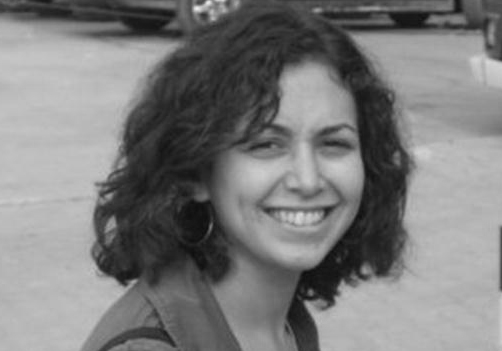
Today, one year on from the arrest and detention of human rights lawyer Yara Sallam and 22 peaceful demonstrators, the ICJ calls for their immediate and unconditional release.
On 21 June 2014, Yara Sallam, together with 22 others, was arrested and detained in the context of a peaceful demonstration in Heliopolis, Cairo.
“The Egyptian authorities must end their campaign to silence human rights defenders and all those suspected of opposing the military and the government through politically motivated prosecutions and trials,” said Said Benarbia, Director of the ICJ Middle East and North Africa Programme.
To this end, they must immediately and unconditionally release Yara Sallam and the 22 other detainees,” he added.
The demonstrators were calling for the revocation of Law No. 107 of 2013, on public meetings, processions and protests, and the release of all those detained under it.
They were forcibly dispersed by security forces and men in civilian clothes.
The ICJ has previously noted that this law is contrary to Egypt’s obligations under international law.
It imposes overly restrictive limitations on the exercise of the right to freedom of assembly and it grants sweeping powers to security forces to disperse non-violent protests, including authorizing the use of lethal force when it is not strictly necessary to protect lives, the Geneva-based organization says.
On 26 October 2014, the 23 accused were convicted by the Heliopolis Misdemeanour court and sentenced to three years in prison and three years of police monitoring on charges of, among other things, “participating in a procession of more than five people that put public safety in danger with the aim of committing the crimes of assault on people and property and influencing public authorities in their duties by using force and violence.”
Two months later, the Court of Appeal upheld the convictions, while reducing the sentence to two years imprisonment and two years of police monitoring. A challenge before the Court of Cassation is pending.
The trial of the 23 defendants violated their rights to a fair and public hearing under international law, including the International Covenant on Civil and Political Rights, a key human rights treaty ratified by Egypt in 1982.
Their lawyers were prevented from cross-examining witnesses. Members of the public, including family members, were prohibited from entering the courtroom, without any valid reason.
Further, based on its review of the case file and court judgments, the ICJ is also concerned that both courts convicted the accused in the absence of any substantial or credible evidence of the guilt of any of the 23 defendants, and without seeking to establish the personal criminal responsibility of each individual accused.
Contact:
Alice Goodenough, Legal Adviser of the ICJ Middle East and North Africa Programme, t: +44 7815 570 834 ; e: alice.goodenough(a)icj.org
Nader Diab, Associate Legal Adviser of the ICJ Middle East and North Africa Programme, t: +41 78 89 41 877 ; e: nader.diab(a)icj.org
Egypt-Release Yara-News-Press release-2015-Arabic (full text in PDF, Arabic)