Jul 8, 2020 | News
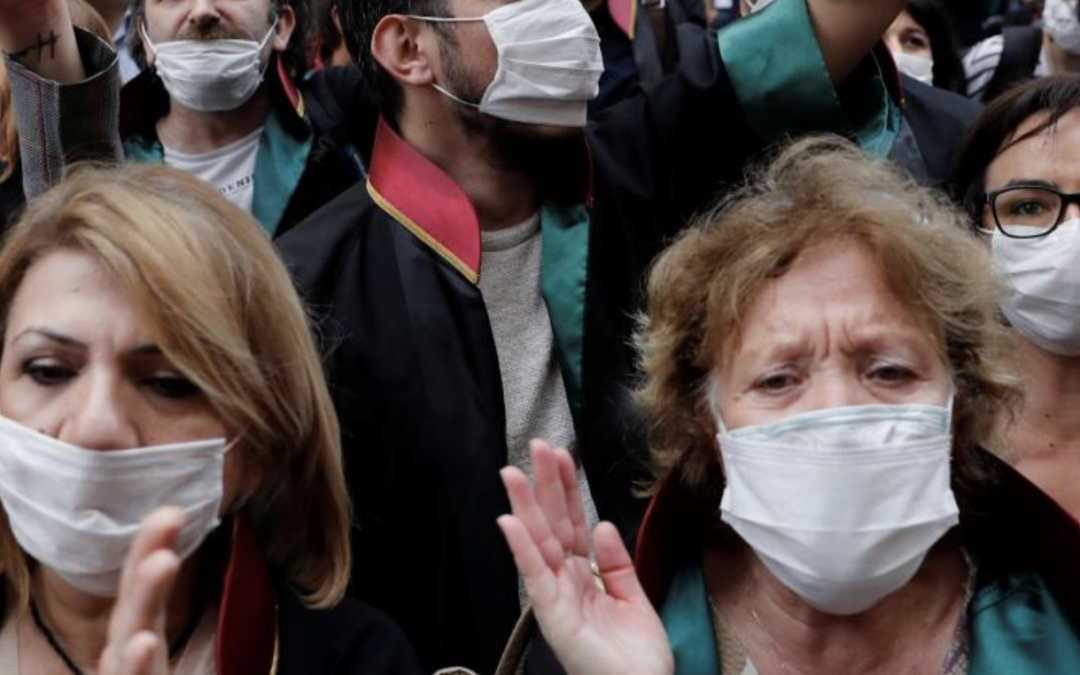
Draft law reduces leading bar associations’ authority, leads to creation of rival groups, the ICJ and Human Rights Watch said today. The Turkish government’s plan to allow for multiple bar associations appears calculated to divide the legal profession along political lines and diminish the biggest bar associations’ role as human rights watchdogs, they added.
The current bar associations have not been consulted, and 78 bars out of 80 signed a statement opposing the plan.
The ICJ and Human Rights Watch have published a question and answer document explaining the draft law, scheduled for a vote in parliament in the coming days. The document outlines the government-led effort to reduce the influence of leading bar associations, reflecting the executive’s growing dissatisfaction with the bar associations’ public reporting on Turkey’s crisis for human rights and the rule of law.
“Turkey’s prominent bar associations play a key role in defending fair trial rights and scrutinizing human rights at a time when flagrant violation of rights is the norm in Turkey,” said Hugh Williamson, Europe and Central Asia director at Human Rights Watch.
“The government move to create multiple bars and dramatically cut leading bars’ representation at the national level is a clear divide-and-rule tactic to diminish the bar associations’ authority and watchdog role,” he added.
The proposed amendments provide that in provinces with over 5,000 lawyers, a group of at least 2,000 lawyers can establish alternative bar associations.
In big cities such as Istanbul, Ankara, and Izmir, several bar associations could be established. The amendments would also greatly reduce the representation of the largest bar associations at the national level within the Union of Turkish Bars, the Ankara-based umbrella body with significant financial resources it controls and distributes to provincial bars.
The fact that the vast majority of elected legal profession representatives oppose the move and that the likely impact will be to greatly diminish the authority of leading provincial bars that have been critical of certain government initiatives demonstrates that the aim of the proposed change is to shield the government from justified criticism, the ICJ and Human Rights Watch said.
Drastically cutting the number of delegates from large bar associations representing thousands of lawyers to the national Union of Turkish Bar Associations would reduce the influence of the large bar associations in electing the national group’s president and participating meaningfully in other decision-making functions.
A provincial bar association with fewer than 100 lawyers, such as Ardahan in northeastern Turkey, for example, would be represented by 4 delegates, compared with 3 at present.
But a bar association such as Izmir in western Turkey, with over 9,500 lawyers, which sends 35 delegates, would be entitled to only 5. Istanbul, Ankara, and Izmir Bar, which represent 55 percent of the lawyers in Turkey, would be entitled to only 7 percent of all delegates within the national union.
The atmosphere of conflict in which the draft law has been introduced, its timing, and the lack of consultation with the bar associations themselves provides credible grounds for great concern and skepticism over the government’s motives, the groups said.
Over the past year, Turkey’s presidency and government have made public statements strongly criticizing leading bar associations in response to the bars’ legitimate expression of concerns about Turkey’s rule of law crisis and executive interference in the justice system.
The government has reacted strongly against the bars’ scrutiny of its failure to uphold human rights obligations through bar association publication of reports on torture, enforced disappearances, and other rights abuses ignored by the authorities.
For these reasons, the government’s proposed amendments are clearly designed to achieve a political purpose unrelated to an effort to advance or strengthen standards in the legal profession, the ICJ and Human Rights Watch said.
The government’s move is politically divisive and will contribute to undermining the appearance of independence and impartiality in the justice system.
“The government should immediately withdraw the current proposed amendment and embark on a process of full consultation with bar associations,” said Róisín Pillay, Director of ICJ’s Europe and Central Asia Programme.
“The government’s plan as it stands will only deepen mistrust in Turkey’s justice system as lacking independence by dividing the legal profession along political lines. This could have disastrous long-term consequences for upholding the role and function of lawyers and for fair trial rights.”
Contact:
Róisín Pillay, Director of ICJ’s Europe and Central Asia Programme, t: +32-2-734-84-46 ; e: roisin.pillay(a)icj.org
Massimo Frigo, Senior Legal Adviser, ICJ’s Europe and Central Asia Programme, t: +41-79-749-99-49 ; e: massimo.frigo(a)icj.org ; Twitter: @maxfrigo
Download
Turkey-Q and A on the bar associations-Advocacy-2020-ENG (Q & A, in PDF)
Turkey-Q and A on the bar associations-News-Press releases-2020-TUR (Story in Turkish, PDF)
Turkey-Q and A on the bar associations-Advocacy-2020-TUR (Q & A in Turkish, PDF)
Jun 26, 2020 | Cases, News
The ICJ today welcomed the judgment by the Court in the case of Bagirov v. Azerbaijan. It found that the suspension from legal practice and subsequent disbarment of Khalid Bagirov violated his rights to freedom of expression and to respect for private life under Articles 10 and 8 of the European Convention on Human Rights (ECHR).
Khalid Bagirov’s suspension from the practice of law was based on his public criticism of ill-treatment by the police, following the wide media coverage of the death of an individual in police custody. Later he represented the victim as a lawyer in the proceedings.
His subsequent disbarment arose from his remarks about a judge made in the courtroom when representing his client in another high-profile case.
The ICJ intervened in this case as a third party, providing an evaluation of the State’s obligation to protect the right to freedom of expression of lawyers in light of international standards on independence of the lawyers and the consequences of disciplinary proceedings for lawyers’ rights under Articles 8 and 10 ECHR.
The ICJ calls on the Azerbaijani authorities to fully and promptly implement the judgment, including by taking steps to restore Khalid Bagirov as a member of the Azerbaijan Bar Association.
“Khalid Bagirov must now be reinstated as a lawyer and be allowed to resume his legal practice in Azerbaijan,” said Massimo Frigo, ICJ Senior Legal Adviser.
“But in addition, this judgment shows that measures need to be taken to address the systemic problem of unjustified disbarments of lawyers who seek to defend human rights in Azerbaijan. Reforms are needed to ensure that the disciplinary process is independent and fair and that penalties are proportionate.”
In its judgment of 25 June 2020, the Court held under Article 10 of the Convention that the reasons given by the domestic courts in support of Khalid Bagirov’s disbarment were not relevant and sufficient, and that the sanction imposed on him was disproportionate to the legitimate aim pursued, having highlighted that “the disbarment cannot but be regarded as a harsh sanction, capable of having a chilling effect on the performance by lawyers of their duties as defence counsel”.
In relation to Article 8 ECHR, the Court further noted that “…in a series of cases it has noted a pattern of arbitrary arrest, detention or other measures taken in respect of government critics, civil society activists and human rights defenders … Against this background, the Court underlines that, notwithstanding the duties, in particular, with respect to their conduct, with which all lawyers must comply, the alleged need in a democratic society for a sanction of disbarment of a lawyer in circumstances such as this would need to be supported by particularly weighty reasons” which had not been established in this case.
In respect of the suspension of the lawyer, the Government contended that the interference with Mr Bagirov’s rights to private life and freedom of expression had been prescribed by law and pursued the legitimate aims of preventing the disclosure of information received in confidence or maintaining the authority and impartiality of the judiciary.
The Court found that, he was not the victim’s lawyer when he made the impugned statements about the police, furthermore, the Court mentioned that it did not find any provision of domestic law preventing a lawyer from calling for peaceful protests against police brutality for the purpose of preventing violence.
The Court further found that while Mr Bagirov’s remarks, about a judge’s lack of capacity, were capable of being offensive, the sanction imposed on him did not struck a fair balance between the need to protect the authority of the judiciary and the need to protect his rights to private life and freedom of expression.
In this connection, the Court stated that inter alia, Mr Bagirov had confined himself to making a statement in a courtroom as a lawyer, in the context of his objections to the shortcomings of the proceedings.
Background
In addition to its intervention in Bhagirov v Azerbaijan, the ICJ has also intervened as a third party in other cases of lawyers from Azerbaijan (Hajibeyli and Aliyev v. Azerbaijan, nos. 6477/08 and 10414/08, § 54, 19 April 2018).
In 2019, the ICJ published recommendations to the Azerbaijan Bar Association on the role and independence of Lawyers,
In 2016, the ICJ published a mission report Defenceless Defenders: Systemic Problems in the Legal Profession of Azerbaijan
Jun 9, 2020 | News
As of 9 June, at least ten prominent lawyers have been arrested and criminally charged in Zimbabwe.
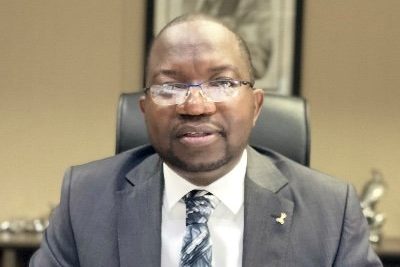
Among them, Advocate Thabani Mpofu (photo), Advocate Choice Damiso, Mr Tapiwa Makanza and Mr Joshua Chirambwe have been arrested and charged with the crime of defeating or obstructing the course of justice.
These lawyers are alleged to have falsified information in the papers filed in a legal matter in which they were representing a citizen, who was challenging the legality of President Mnangagwa’s decision to appoint Mr Kumbirai Hodzi as the Prosecutor General.
Mr Dumisani Dube was arrested on similar charges but his charges arise from a different case.
Mr Patrick Tererai was charged with disorderly conduct after he demanded access to his client who had been detained at a police station.
The ICJ notes that the criminal charges laid against all the six lawyers are linked to the performance of their duties as legal practitioners.
The ICJ reminds the Government of Zimbabwe of its domestic and international obligations pertaining to the right to fair trial and protection of the independence of lawyers, as underscored in the United Nations Basic Principles on the Role of Lawyers and the African Commission on Human and Peoples’ Rights Principles and Guidelines on the Right to a Fair Trial and Legal Assistance in Africa
These elaborate standards relevant to the right to a fair trial including under article 14 of the International Covenant on Civil and Political Rights (ICCPR) and article 7 of the African Charter on Human and Peoples’ Rights.
Of particular significance is Principle 16 of the UN Basic Principles which states that “Governments shall ensure that lawyers are able to perform all of their professional functions without intimidation, hindrance, harassment or improper interference;…. and [lawyers] shall not suffer, or be threatened with, prosecution or administrative, economic or other sanctions for any action taken in accordance with recognized professional duties, standards and ethics.”
In addition, Principle 20 provides that “Lawyers shall enjoy civil and penal immunity for relevant statements made in good faith in written or oral pleadings or in their professional appearances before a court, tribunal or other legal or administrative authority.” Similar provisions are included in Part I of the African Principles and Guidelines.
A lawyer would not generally be immune from criminal proceedings where allegations of perjury or intentionally providing false information to a court were well-founded.
In relation to this recent group of cases, the Law Society of Zimbabwe has expressed the concern that the arrests appear calculated to hinder the members of the profession from undertaking their professional duties.
In this context, the ICJ calls upon the Government of Zimbabwe to ensure that the right to fair trial for these lawyers is fully respected and that the criminal charges brought against these lawyers are not abused to subvert the independence of the legal profession.
“The arrest of ten lawyers within one week on criminal allegations arising from the performance of their duties as legal practitioners is a cause of concern. The state must ensure that these cases are handled fairly and that the criminal justice system is not abused to harass and intimidate lawyers who represent clients who are perceived as political opposition to the sitting government,” said ICJ Africa Director Arnold Tsunga.
Of late, Advocate Thabani Mpofu has represented opposition leader Mr Nelson Chamisa in a series of cases. These include the presidential election petition and the cases in which Mr Chamisa’s rise to the leadership of the opposition party has been challenged.
Contact
Arnold Tsunga, Director of the ICJ Africa Regional Programme, t: +263 77 728 3248, e: arnold.tsunga(a)icj.org
Feb 28, 2020 | News
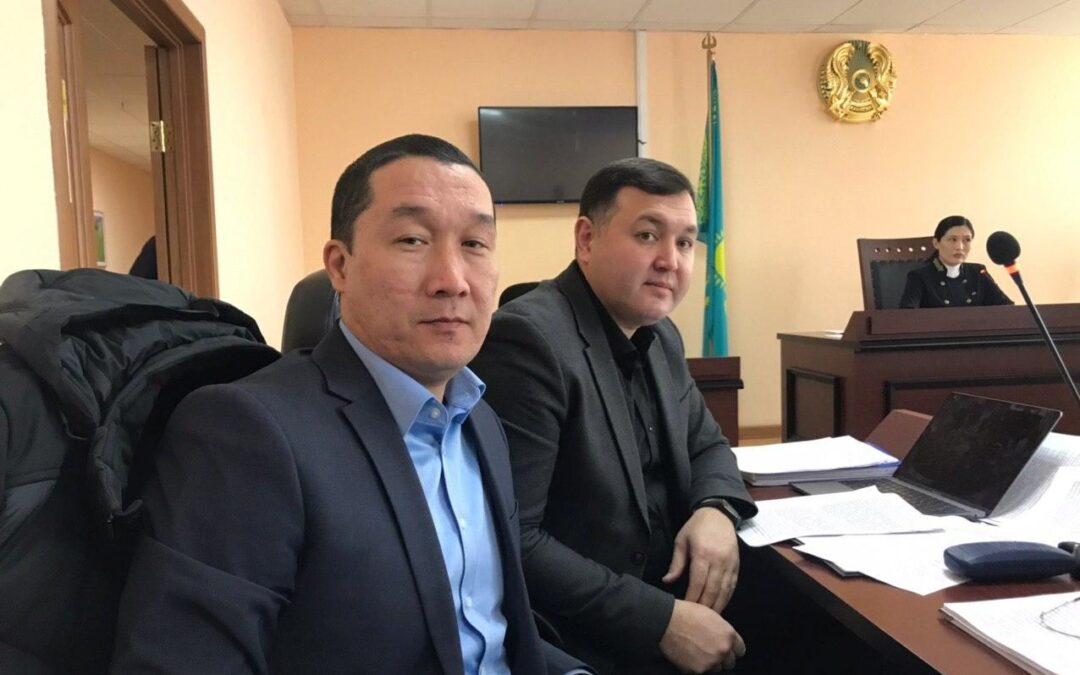
The ICJ expresses concern at the decisions of 26 February of Yesil and Saryarka district courts of Nur-Sultan to disbar two lawyers, Erlan Gazymzhanov and Amanzhol Mukhamediarov, at the request of the Ministry of Justice.
These disbarments are a blow against the ability of lawyers to exercise their profession independently.
The immediate cause for the action was that the lawyers had published clips from a video recording of court proceedings in which the lawyers had acted for the defence, showing the judge behaving in an inappropriate way, on social media. The video clip was published after the proceedings had been concluded.
Following this publication, the judge was disciplined by a specialised judicial body for her behaviour during the court proceedings. At the same time, the judiciary addressed the Ministry of Justice with a request to act against the two lawyers for posting video clips on their social media pages.
The ICJ observed the court proceedings for disbarment of the lawyers in both cases. The court hearings proceeded in an orderly manner. However, the ICJ was concerned that the Press Service of the Supreme Court issued a comment on social media during the hearings that cast doubt on the impartiality of the proceedings. Furthermore, the Presidents of Yesil and Saryarka district courts of Nur-Sultan published identical comments, including the rationale for the decisions of judges that considered the cases. This happened immediately after the court decisions were pronounced to the parties. The oral explanations of decisions by judges presiding in the cases differed from the comments published by the respective presidents of the courts. The proceedings resulted in both lawyers being disbarred.
The ICJ notes with concern that these severe sanctions do not follow from legislation concerning the alleged breaches. The ICJ stresses that the principle of legality requires, among other things, that any measure imposing restrictions on human rights must be applied only as provided for by laws that are expressed clearly and unambiguously. The requirement that a measure be in accordance with law refers not only to the existence of the law but also to the quality of such law, which must be foreseeable, since a norm cannot be regarded as law unless it is formulated with sufficient precision to enable the citizen to regulate his or her conduct: he or she must be able to foresee, to a degree that is reasonable in the circumstances, the consequences which a given action may entail.
Kazakhstan legislation does not contain any prohibition of publishing videos of court hearings online, let alone prescribe disbarment for such action. The only document against which the lawyers acted were the internal rules of the Department for Judicial Administration under the Supreme Court, which do not have the status of law and which neither explicitly nor implicitly suggest disbarment for posting the videos. Neither legislation nor lawyers’ ethical rules contain any penalty for publishing video of court hearings online. Therefore, the ICJ is concerned that the sanction imposed is not adequately prescribed by national law, and as such is unforeseeable and contrary to the principle of legality.
Following the request of the Ministry of Justice to apply a specific sanction against the lawyers –termination of the right to practice law – the courts considered only this sanction. This sanction is imposed for life. Bearing in mind the legal uncertainty as to the nature of the violations and the serious consequences that they entail, this sanction appears to be disproportionate.
Bearing in mind the existence of regular disciplinary proceedings before the National Bar Association that were introduced by the new law on the advokatura in 2018, the ICJ is concerned that these procedures were not utilized in these cases, which were initiated directly before the District Courts. The Ministry of Justice did not address the Bar Association’s disciplinary bodies, which makes a sham of the disciplinary bodies of the legal profession.
“We did not hear any convincing arguments in the proceedings as to why ordinary disciplinary proceedings of the Bar Association, including those related to an alleged breach of lawyers’ ethics, have not been used”, said Temur Shakirov, ICJ Senior Legal Adviser.
“In the circumstances such as these, the role of the Bar Association in assessing the conduct of its member is essential to ensuring independence of the legal profession as required by international law and standards”, Shakirov added.
The ICJ calls on the relevant authorities to restore the licences to practice law of Amanzhol Mukhamediarov and Erlan Gazymzhanov. Furthermore, the role of the Bar Association in various aspects of its independent functioning, including the disciplinary proceedings, especially where lawyers may face a disbarment should be strengthened. To this end, the ICJ calls on the Parliament of Kazakhstan to reconsider the legislative framework and remove the possibility of any executive authority to bypass the Bar Association’s competence to evaluate professional conduct of its members, including any disbarment or other disciplinary proceedings.
Disbarment-of-Mukhamediaov-and-Gazymzhanov-2020-ENG (full PDF document with backgroud information).
Feb 7, 2020 | News
The ICJ expresses concern at today’s physical assault of a lawyer and a journalist, who arrived in Grozny to take part in the trial of blogger Islam Nukhanov.
The ICJ called on the authorities of the Russian Federation and its Chechen local authorities to investigate the attack and ensure that those responsible be brought to justice.
On 6 February, at around 22.00 lawyer Marina Dubrovina (photo) and Yelena Milashina, a journalist of Novaya Gazeta, a Russian newspaper, were beaten up by a group of young women in the lobby of the “Kontinent” Hotel in Grozny, Chechnya.
Both women suffered injuries to the face and body. Dubrovina and Milashina had come to Grozny to observe the trial of Islam Nukhanov, a blogger from the town of Kogalzm in the Tumen Oblast of the Russian Federation, charged with possession of a weapon, who has been detained by Chechen police since November 2019 after he posted a video on YouTube, with footage allegedly taken near the residence of the head of the Chechen Republic, Ramzan Kadyrov.
On 7 February, neither Dubrovina nor Milashina was admitted to the courtroom where Nukhanov was tried, due to the public and the media reportedly being excluded from the hearing.
The ICJ urges the federal and local authorities of the Russian Federation, to investigate the attack against Dubrovina and Milashina in a prompt and independent manner.
Measures should be taken to ensure that lawyers, especially when exercising their professional duties, are protected against such attacks.
Furthermore, Islam Nukhanov’s trial should be held in public, unless and until the authorities demonstrate that the circumstances of his trial require that the public and the media be excluded from it, consistent with relevant international fair trial standards.
Background
Islam Nukhanov, 27, is a blogger of Chechen origin was apprehended on 1 November 2019 in Grozny after he posted a video clip where he filmed streets and houses in Grozny, allegedly, near the residence of the head of the Chechen Republic Ramzan Kadyrov. Since his apprehension, Nukhanov has been in detention.
In 2018, the ICJ expressed concern at allegations that the arrest and detention of Oyub Titiev, the head of the Chechen branch of the Russian human rights organisation Memorial, was carried out as retaliation for his human rights activity.
In 2016, the ICJ expressed concern at the reported resignations of federal judges in the Chechen Republic of the Russian Federation following apparent pressure by the acting Head of the Republic Ramzan Kadyrov who had suggested that resignation would be the “most correct decision of their lives”
The ICJ is concerned at the regular attacks on lawyers and human rights defenders in Chechnya, which are systemic and may have the purpose of intimidating those who wish to defend human rights in the Chechen Republic of the Russian Federation.
The UN Basic Principles on the Role of Lawyers provide that “where the security of lawyers is threatened as a result of discharging their functions, they shall be adequately safeguarded by the authorities”.