

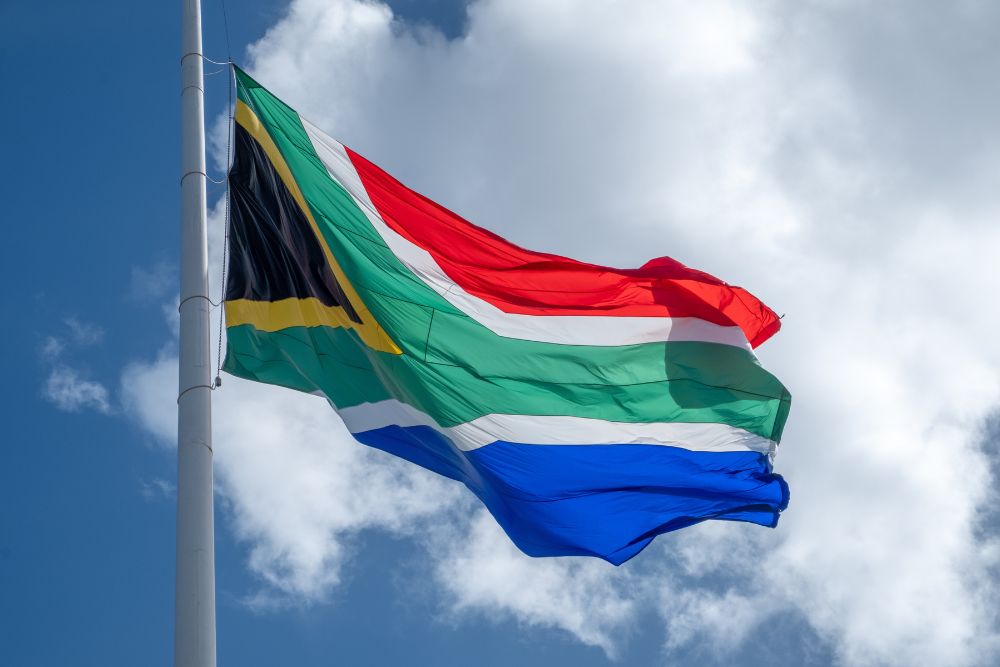
South Africa: Human rights organizations intervene in court case to have Russian President, Vladimir Putin, arrested
Today, the High Court in Pretoria was due to hear the matter of Democratic Alliance v The President of South Africa and Others. The Court agreed to hear the Southern Africa Litigation Centre (SALC) and the International Commission of Jurists (ICJ) as joint amicus curiae (friends of the court). The matter was however settled between the parties prior to the hearing in which the state has agreed to apply for an arrest warrant for President Putin.
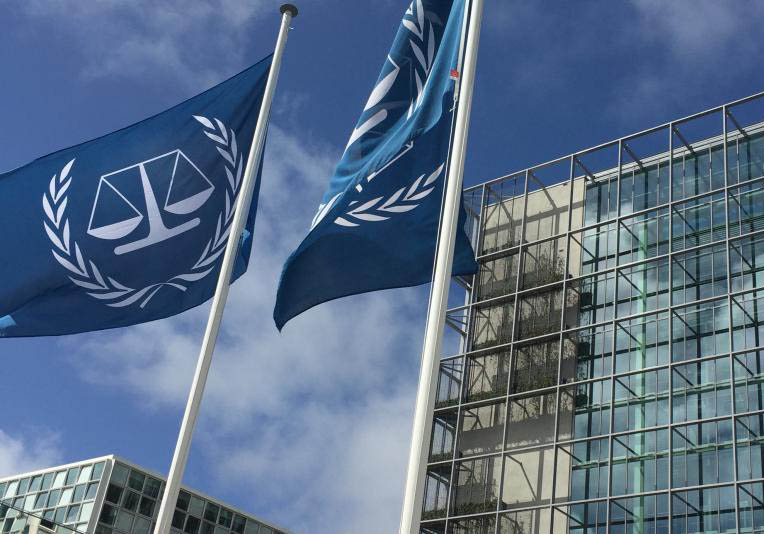
Palestine/Israel: ICC decision an important step towards accountability for crimes under international law
The ICJ welcomes the International Criminal Court’s (ICC) decision establishing that the Court can assert its jurisdiction over serious crimes alleged to have occurred in the State of Palestine since 13 June 2014.
On 5 February 2021, the ICC Pre-Trial Chamber I held by majority that: (i) Palestine has correctly acceded to the Rome Statute and has thus become a State party to it; and (ii) the ICC’s territorial jurisdiction extends to “the territories occupied by Israel since 1967, namely Gaza and the West Bank, including East Jerusalem.”
“The ruling is a first step towards breaking the cycle of impunity for crimes under international law committed by all parties to the conflict in Palestine,” said Said Benarbia, the ICJ’s MENA Programme Director. “The Prosecutor should immediately open an investigation with a view to establishing the facts about such crimes, and identifying and prosecuting those most responsible.”
The decision was prompted by a request of the ICC Office of the Prosecutor seeking confirmation of the Court’s territorial jurisdiction.
The Prosecutor had previously concluded that there is a reasonable basis to believe that “war crimes have been or are being committed in the West Bank, including East Jerusalem, and the Gaza Strip.”
On 16 March 2020, the ICJ submitted amicus curiae observations in support of the Court’s jurisdiction, arguing that:
- Palestine has successfully acceded, and is a State Party, to the Rome Statute. The Court should accordingly exercise its jurisdiction over Palestine as it does in respect of any other State Party;
- The Palestinian Territory over which the Court should exercise jurisdiction comprises the West Bank, including East Jerusalem, and Gaza; and
- Palestine is a State under international law, satisfying recognized international law criteria for statehood, displaying State activity and engaging in diplomatic relations with other sovereign States. The decades-long belligerent occupation of Palestine by itself has no decisive legal effect on the validity of its claim to sovereignty and statehood.
The Pre-Trial Chamber decision confirmed the first two of these observations, without considering the status of Palestine’s statehood under general international law.
Contact
Said Benarbia, Director, ICJ Middle East and North Africa Programme; t: +41 22 979 3817 e: said.benarbia(a)icj.org
Vito Todeschini, Legal Adviser, ICJ Middle East and North Africa Programme; t: +216 53 334 679 e: vito.todeschini(a)icj.org

ICC judgment in al-Bashir case a victory for international justice
The ICJ welcomed today’s judgment by the International Criminal Court (ICC) that South Africa had violated its legal obligations by failing to arrest Sudanese President Omar al-Bashir during his visit to the country in June 2015.
The ICC said the South Africa should have surrendered him to the ICC for prosecution.
President al-Bashir (photo) had been indicted by the ICC for genocide, crimes against humanity and war crimes in connection with attacks against civilians in the Darfur region of the country.
“The judgment is a victory for international justice. It is an extremely important step toward tackling impunity in Sudan and worldwide,” said Arnold Tsunga, the ICJ Africa Regional Director.
The court said unequivocally that South Africa had a duty to arrest and surrender president Bashir to the ICC for prosecution.
It said that South Africa had a duty to recognize that head of state immunity did not apply to al Bahsir under the terms of the Rome Statute, and that leaving the question of immunity to South Africa’s voluntary discretion would have created “an insurmountable obstacle for the court to exercise its jurisdiction.”
The Court also said that Sudan itself had an obligation to remove and immunities for al-Bashir in respect to matters for which he was under indictment.
“The ICJ calls upon the Governments of South Africa and Sudan to respect the judgment of the Court, and urges all States to cooperate with the Court to bring President al-Bashir, and others indicted to justice,” Tsunga added.
The ICC also called on the UN Security and the Assembly of States Parties of the ICC to take appropriate measures to address the non-compliance by South Africa and Sudan.
Background
South Africa has been a party to the Rome Statute of the International Criminal Court since 27 November 2000.
States parties to the Rome Statute are obliged to cooperate with ICC, including by arresting and surrendering persons under indictment by the ICC who may be on their territory.
South Africa took measures to cooperate with the ICC by enacting the Implementation of the Rome Statute of the International Criminal Court Act, 2002.
Accordingly, South Africa had a duty to arrest President al-Bashir when he visited South Africa in 2015
President al-Bashir stands accused of serious crimes, with two warrants of arrest issued by the pre-trial chamber of the ICC.
They all are for war crimes, crimes against humanity and genocide, related to events in the Darfur region of Sudan.
Among the acts are widespread murder, rape and torture.
Contact
Arnold Tsunga, ICJ Director for Africa, t +27716405926 ;
Thulani Maseko, ICJ Legal consultant, t: +268 7602 5165
Ian Seiderman, ICJ Legal & Policy Director, t: +41 22 979 3837
ICJ statement on adoption of Universal Periodic Review of Ecuador
In an interactive dialogue with representatives of its government, the ICJ called on Ecuador to take steps to ensure that its Constitution and other legislation conform with obligations pertaining to the rights of indigenous peoples. Watch the webcast.
The ICJ delivered its statement today during the adoption by the UN Human Rights Council of the Universal Periodic Review outcome document on Ecuador, during the course of the 21st regular session of the Council.
HRC21-Item6-Ecuador-OralStatement-non legal submissions-2012 (download statement, in PDF)
Recent News
 Myanmar: As armed conflict rages and military rule continues, critical measures can be taken towards eventual justice and accountability for victims of Enforced Disappearance10 Sep 2026
 HRC63: ICJ Raises Alarm over Repression in Tunisia and Arbitrary Detention in El Salvador09 Sep 2026
 HRC63: ICJ Calls for Protection of Lawyers and Accountability in Myanmar07 Sep 2026
 More than fifty years on: enforced disappearance, the families who named it, and the reframing of international protection26 Aug 2026