Jun 12, 2019 | News
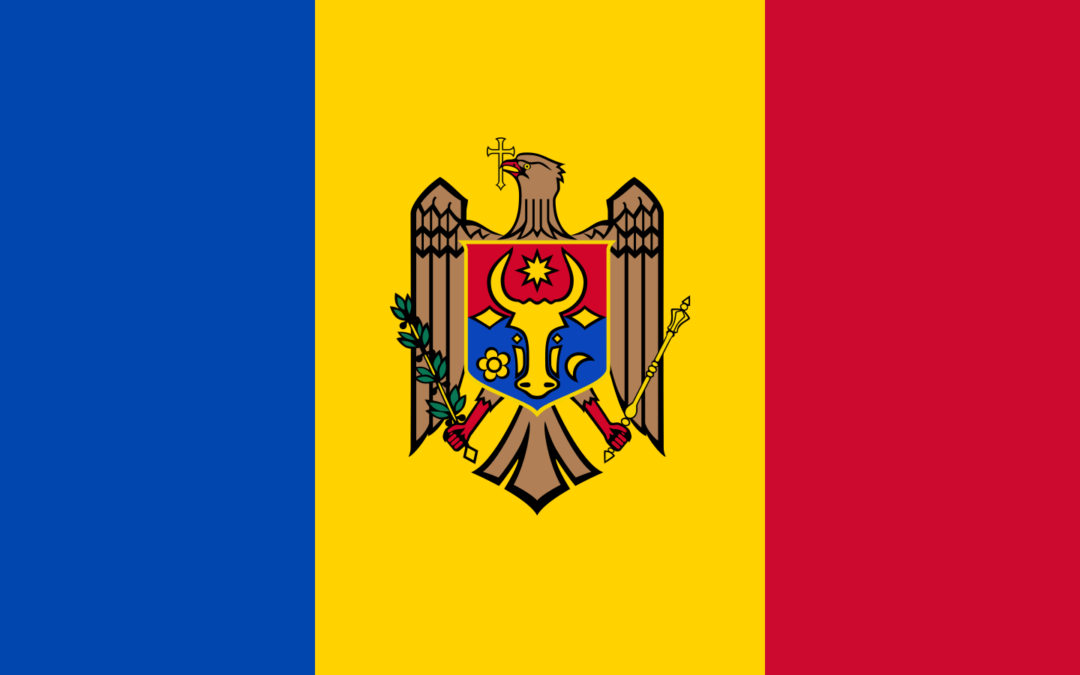
The ICJ today expressed concern at recent developments in Moldova, which are effectively paralyzing governance in the country.
During the past week, the Constitutional Court has ordered the dissolution of Parliament, suspended its functioning and invalidated its subsequent acts, including the appointment of a government and speaker, and has triggered the removal of the President.
The ICJ is particularly concerned at the excessively swift procedure through which the Constitutional Court reached its decisions to dissolve Parliament, remove a sitting President of the Republic and replace him with the Prime Minister. The ICJ calls attention to the unhelpful timing of the Constitutional Court ruling that was issued on the very day it identified as the end of the Parliamentary term, depriving Parliament of the clarity needed to exercise its powers.
These developments occur against the background of the manifest deficiencies in the institutional independence of the Moldova judiciary which were documented in a recent ICJ report.
In the report issued in March 2019, the ICJ highlighted the problematic appointment in 2018 of three judges of the Constitutional Court in circumstances that did not ensure a sufficient level of transparency, during an electoral campaign and without an open competition process. The report noted that the three appointed judges have previously been Prosecutor General, director of the intelligence service and chair of the legal committee of Parliament, part of the then ruling political majority.
The ICJ welcomes the announcement by the Secretary General of the Council of Europe that the Venice Commission has been asked to issue an urgent opinion on the constitutional crisis.
“The rule of law is the common ground on which constitutional conflicts must be solved”, said Massimo Frigo, Senior Legal Adviser of the Europe Programme of the ICJ. “We call on all institutions and parties in Moldova to seek a solution that squarely complies with the rule of law and the international law and standards to which Moldova has subscribed. In this regard, we urge all parties concerned to wait for the opinion by the Council of Europe Venice Commission in this matter and to reconsider the situation in light of its findings.”
Background
The Constitutional Court, in decisions issued on 7, 8 and 9 June 2019, held that Parliament should be dissolved for having been unable to establish a government within three months of the end of the previous Government’s term of office.
The decisions triggered the removal from office of the President of the Republic, Igor Dodon, for having refused to dissolve Parliament. This led to the interim appointment of Pavel Filip, as acting President of the Republic.
The Court also declared unconstitutional and void any act issued by Parliament after 7 June.
Neither Parliament nor President Dodon have accepted the decisions of the Constitutional Court on their removal or on the validity of their acts, nor do they consider as legitimate the appointment of Pavel Filip as acting President.
Parliamentary factions constituting the current majority in Parliament had reached a deal to form a coalition government and appointed a speaker and Prime Minister.
According to the Constitutional Court’s interpretation of article 85 of the Constitution, these agreements failed to respect the three-month deadline.
Others have put forward different interpretations of when the deadline of the three months period to appoint a Government would elapse, and of the obligation of the President of the Republic to dissolve Parliament.
Article 85 of the Constitution states:
(1) In the event of impossibility to form the Government or in case of blocking up the procedure of adopting the laws for a period of three months, the President of the Republic of Moldova, following consultations with parliamentary fractions, may dissolve the Parliament.
(2) The Parliament may be dissolved, if it has not accepted the vote of confidence for setting up of the new Government within 45 days following the first request and only upon declining at least two requests of investiture.
(3) The Parliament may be dissolved only once in the course of one year.
(4) The Parliament may not be dissolved within the last six months of the term of office of the President of the Republic of Moldova nor during a state of emergency, martial law or war.
Contact:
Massimo Frigo, ICJ Senior Legal Adviser: t: +41 22 979 3805; e: massimo.frigo(a)icj.org
Mar 23, 2019 | News
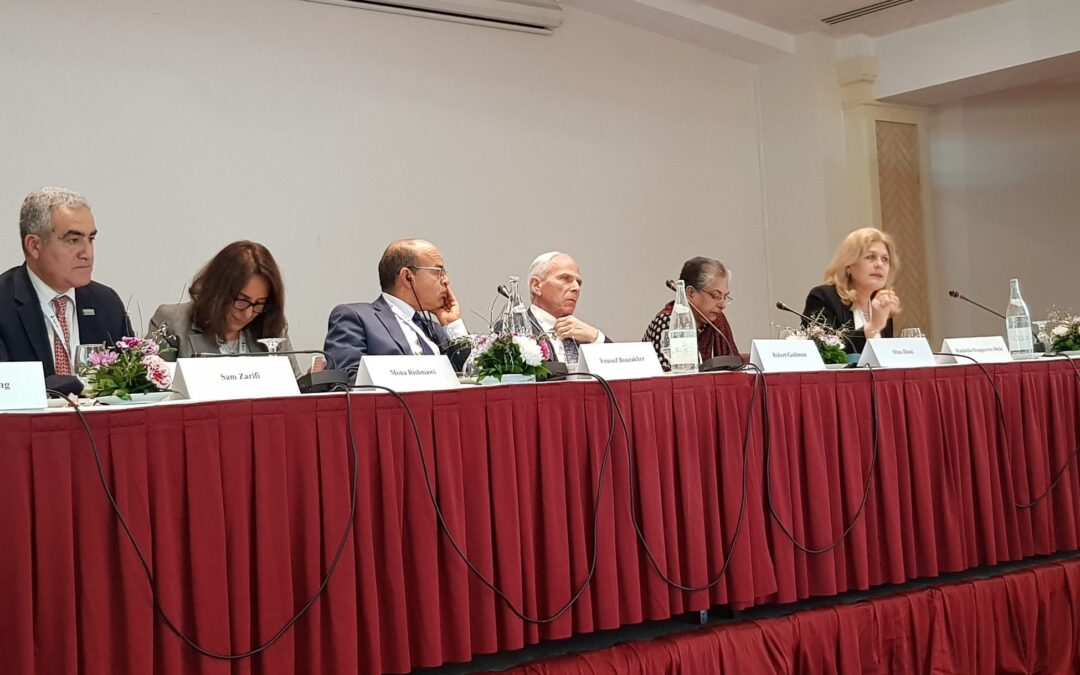
Some 100 distinguished judges and lawyers from around the world commit to expanding the reach of human rights and rule of law principles, in the face of a global backlash against human rights values. The Tunis Congress is the ICJ’s 18th Global Congress since 1952.
The ICJ World Congress, consisting primarily of jurists serving as Commissioners, ICJ National Section and affiliates, and the ICJ Secretariat, is discussing strategy for concerted action and issue a final Declaration reflecting the outcome.
“Since its founding 1952 the ICJ has been steadfast in its belief in the primacy of human rights grounded in rule of law principles as indispensable for well being of all people, as well as for peaceful and just international order,” said Sam Zarifi, ICJ Secretary General.
“Cynical manipulation by authoritarian populists positions the rule of law and human rights as obstacles to the popular will. But as the ICJ’s experience over the past six decades has shown, the rule of law is inextricably bound with the proper functioning of democracy and to the protection and promotion of human rights,” he added.
The ICJ Congress will focus on five key areas of concern: the independence of judges and lawyers and administration of justice; access to justice and accountability for human rights violations; global security and counter-terrorism; equality and non-discrimination; and fundamental freedoms and civil society space.
“The international human rights legal framework has allowed for huge improvements in the lives of people around the world since the Universal Declaration of Human Rights 70 years ago, and the ICJ has played an important role in the development of this legal framework,” Zarifi said.
“But we are now witnessing a resurgence of some of the dangerous, insidious ideas and practices that have led the world to carnage and chaos in the past: the scapegoating of groups such minorities, refugees and migrants; the undermining of multilateral institutions; and the silencing of civil society and those who are giving voice to those who are marginalized on the basis of their gender, religion, ethnicity, physical capacity or sexual orientation,” he added.
“Global powers such as the United States, Russia, and China are actively attacking the rule of law and respect for human rights around the world, while the European Union is distracted by the politics of xenophobia and fearmongering,” he further said.
“It is now crucial for other States, and for people around the world, to show that respect for the rule of law and human rights are universal values and global demands, and the ICJ is proud to pull together the community of jurists from all regions of the world to support these values and demands,” he added.
In the face of these threats and challenges, the Congress will consider means to defend and strengthen the rule of law and legal protection of human rights globally, regionally and in individual countries.
The ICJ is made up of around 60 distinguished judges and legal practitioners from all parts of the world and diverse, works on all five continents and addresses human rights protection in dozens of countries.
Mar 1, 2019 | Events, Multimedia items, News, Video clips
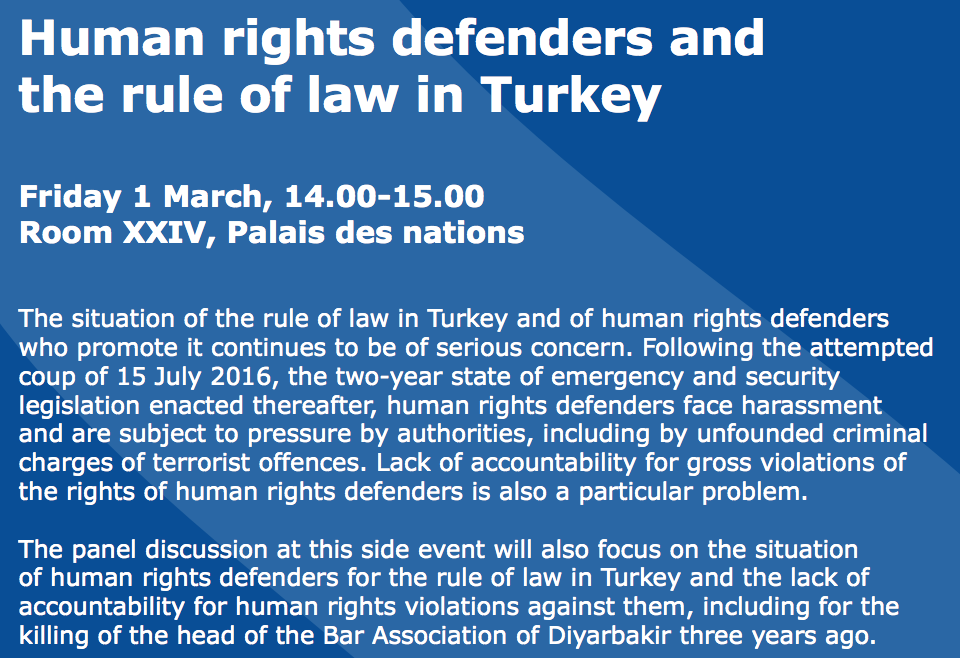
This event took place today at the Palais des Nations, United Nations, in Geneva. Watch it on video.
The situation of the rule of law in Turkey and of human rights defenders who promote it continues to be of serious concern.
Following the attempted coup of 15 July 2016, the two-year state of emergency and security legislation enacted thereafter, human rights defenders face harassment and are subject to pressure by authorities, including by unfounded criminal charges of terrorist offenses. Lack of accountability for gross violations of the rights of human rights defenders is also a particular problem.
The panel discussion at this side event will also focus on the situation of human rights defenders for the rule of law in Turkey and the lack of accountability for human rights violations against them, including for the killing of the head of the Bar Association of Diyarbakir three years ago.
The event is organized by the ICJ jointly with the International Bar Association’s Human Rights Institute.
Speakers:
– Michel Forst, UN Special Rapporteur on human rights defenders
– Feray Salman, Coordinator of the Human Rights Joint Platform (IHOP)
– Kerem Altiparmak, ICJ Legal Consultant
– Jurate Guzeviciute, International Bar Association’s Human Rights Institute
Chair:
Saman Zia-Zarifi, ICJ Secretary General
Event Flyer:
Turkey- HRD side event HRC40-News-Events-2019-ENG
https://www.facebook.com/ridhglobal/videos/795507517477571/
Feb 6, 2019 | News
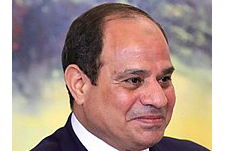
The ICJ today expressed its grave concern over amendments to Egypt’s 2014 Constitution proposed by the House of Representatives yesterday, which could increase President el-Sisi’s control over the judiciary, extend his rule for 15 more years, expand the jurisdiction of military courts’ to prosecute civilians and broaden the military’s powers.
The amendments were proposed by one-fifth of the House of Representatives on 4 February, and reported to Parliament by its General Committee yesterday.
“The proposed amendments are a flagrant assault on the independence of the judiciary, and would expand the powers of presidency and further facilitate el-Sisi’s subordination of judicial and prosecutorial authorities,” said Said Benarbia, ICJ’s MENA Programme Director.
The amendments would grant the President authority to choose the Supreme Constitutional Court’s (SCC) President and its new members, chairs of all other judicial authorities, and the Public Prosecutor.
The President would also have authority to select the Chair and members of the Commissioners Authority, a judicial board that provides advisory opinions to judges on legal issues in cases pending before the SCC.
The General Committee’s report states the amendments are to “unify the mechanism of appointment” of these institutions.
The amendments would also establish a “High Council for Joint Judicial Affairs” chaired by the President to manage all common matters relating to the judiciary.
The amendment to Article 140 of the Constitution would extend presidential terms from four to six years.
Another “needed transitional article” would reportedly also permit President el-Sisi to run for re-election for another two terms, which, combined, could permit him to stay in office until 2034.
Article 140 of the Constitution currently imposes a two-term limit, and Article 226 prohibits amendments to “texts pertaining to the re-election of the president of the Republic…unless the amendment brings more guarantees.”
“This is an attempt to undermine constitutional safeguards aimed at protecting the right of the Egyptian people to freely choose their government and to take part in the conduct of public affairs,” said Benarbia.
“In accepting these amendments, the Parliament would abdicate its responsibility to uphold the Constitution and the rule of law,” he added.
Further amendments include the “redrafting and deepening the role of the Armed Forces” by expanding its mandate to include broad terms such as “safeguarding the constitution and democracy” and “preserving the basic elements of the state and its civilian character.”
The jurisdiction of military tribunals over civilians for “direct assault[s]” against military facilities, objects and personnel would also be expanded by the removing the requirement that the assaults be “direct.”
The amendment would make permanent a temporary constitutional provision requiring the Supreme Council of the Armed Forces—a military body—to approve the appointment of the Minister of Defense.
“The amendments effectively place the military above the law and the Constitution,” said Said Benarbia.
“They pave the way for the further entrenchment of the military in civilian affairs, which has already led to significant violations of civilian rights to participate in political life and express opinions critical of the regime,” he added.
Under international law, the jurisdiction of military courts must be limited to holding military personnel accountable for alleged violations of military discipline. No civilian should be prosecuted before military courts.
The amendments, which are still subject to parliamentary discussion and drafting by parliamentary committee, must eventually be approved in a two-thirds vote, and then by a majority in a referendum.
The ICJ expressed its concerns about the process for adoption of the 2014 Constitution, and its capacity to serve as a basis for the establishment of the rule of law in Egypt.
The ICJ made recommendations aimed at facilitating public participation in the legislative process in accordance with international standards and at ensuring constitutional provisions were consistent with international human rights law.
These concerns remain valid today.
Contact:
Said Benarbia, Director of the ICJ Middle East and North Africa Programme, t: +41-22-979-3817; e: said.benarbia(a)icj.org
Egypt-Constitution Statement-News-2019-ENG (full story with background infomation, in PDF)
Egypt-Constitution Statement-News-2019-ARA (full story in Arabic, in PDF)
Dec 15, 2018 | Agendas, Events
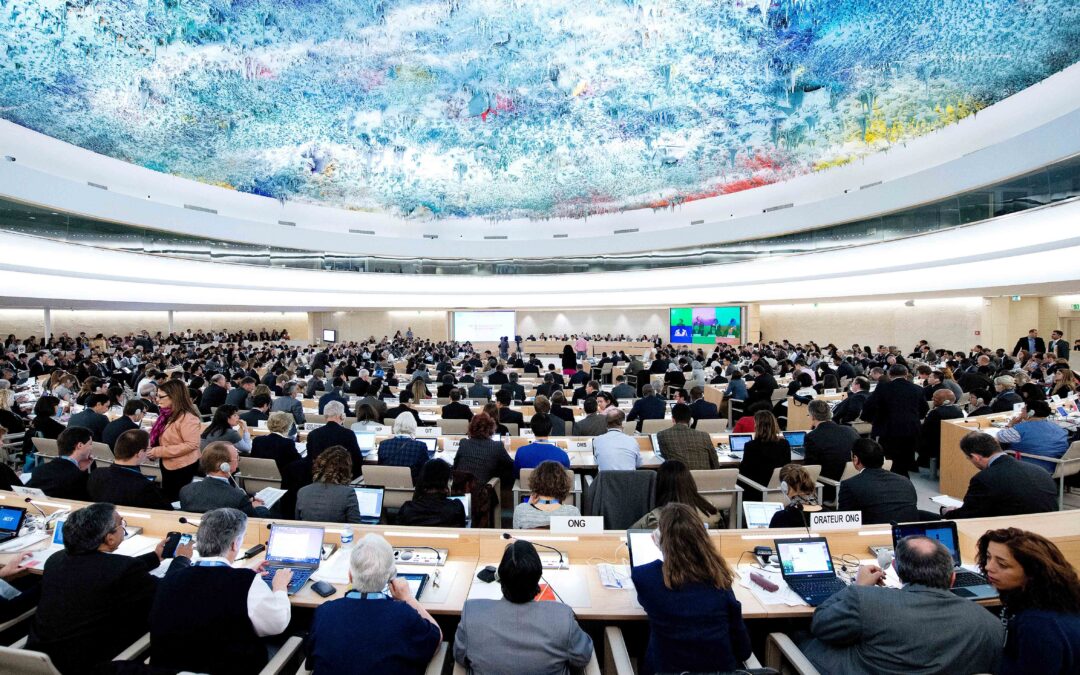
Today begins in Ankara (Turkey) a one-day workshop for lawyers and CSO practitioners on the use and strategies of UPR mechanisms.
This event is organized by ICJ, in cooperation with its partners Kapasite Geliştirme Derneği and Human Rights Joint Platform, as part a/the EU co-financed project Rebuilding and Ensuring Access to justice with civil society in Turkey.
20 lawyers and civil society practitioners are taking part in the workshop on 15 December in Ankara.
The workshop aims at discussing the functioning of the Universal Periodic Review of the UN Human Rights Council in which all States undergo periodically a peer-review of their human rights situation by other States. Turkey is set for its third cycle of examination in 2019
The main thematic areas to be discussed will be access to justice in Turkey, the situation of the judiciary and the rule of law, and the protection of womens’ rights.
The project is funded by the European Instrument for Democracy and Human Rights (EIDHR) of the European Union.
Turkey-Training-Agenda-UPR-Ankara-2018-tur (download the agenda in Turkish)
Turkey-Training-Agenda-UPR-Ankara-2018-eng (download the agenda in English)