Sep 17, 2019 | Advocacy
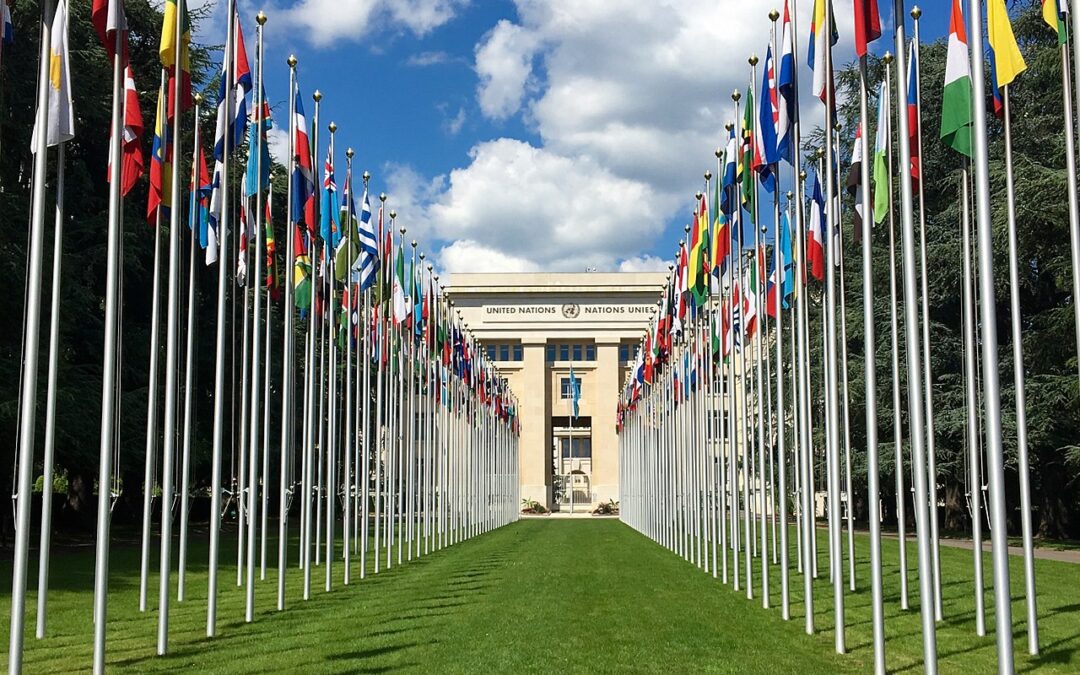
The ICJ welcomes the final report of the FFM (Independent International Fact Finding Mission).
Having monitored justice and human rights in Myanmar for over 50 years, the ICJ has an established presence in the country, and supports justice sector actors to implement reforms necessary to protect human rights through the rule of law.
With this experience, the ICJ concurs with conclusions of the FFM and the Special Rapporteur: particularly those highlighting the pervasive damage of unchecked military power and impunity on human rights, the rule of law, and development of an inclusive democratic society.
Myanmar’s Government has failed to fulfill international law obligations to investigate, prosecute and punish perpetrators of rights violations. In this context, the launch of an IIMM (Independent Investigative Mechanism for Myanmar) is necessary, and welcome. Myanmar should cooperate with the Mechanism, whose files may enable future prosecutions of individual criminals.
But this Mechanism is not a court: all States, particularly Myanmar, must work toward holding criminal trials, in competent jurisdictions, inline with international standards – noting that prosecutions target criminals, not the country.
Other immediate opportunities for Myanmar to protect human rights include: amending the National Human Rights Commission Law to expand its mandate and independence; amending laws that facilitate impunity such as the 1959 Defence Services Act; enacting an anti-discrimination law; and reviewing the 1982 Citizenship Law. These legislative reforms are urgent and possible steps that are necessary to demonstrate if the Government is genuine about its international law obligations. Any constitutional reform must also expand rights protections.
As the FFM’s mandate is ending, the ICJ would like to ask the experts: how can States best monitor and implement your recommendations, particularly related to international criminal accountability?
See also:
ICJ, Achieving Justice for Gross Human Rights Violations in Myanmar, January 2018
Terms of Reference for the UN Independent International Mechanism for Myanmar (unofficial Burmese translation), 16 January 2019, available here.
Statement to the Human Rights Council by Mr. Nicholas Koumjian, Head of the Independent Investigative Mechanism for Myanmar (unofficial Burmese translation with accompanying English text), 9 September, available here.
Sep 13, 2019 | News
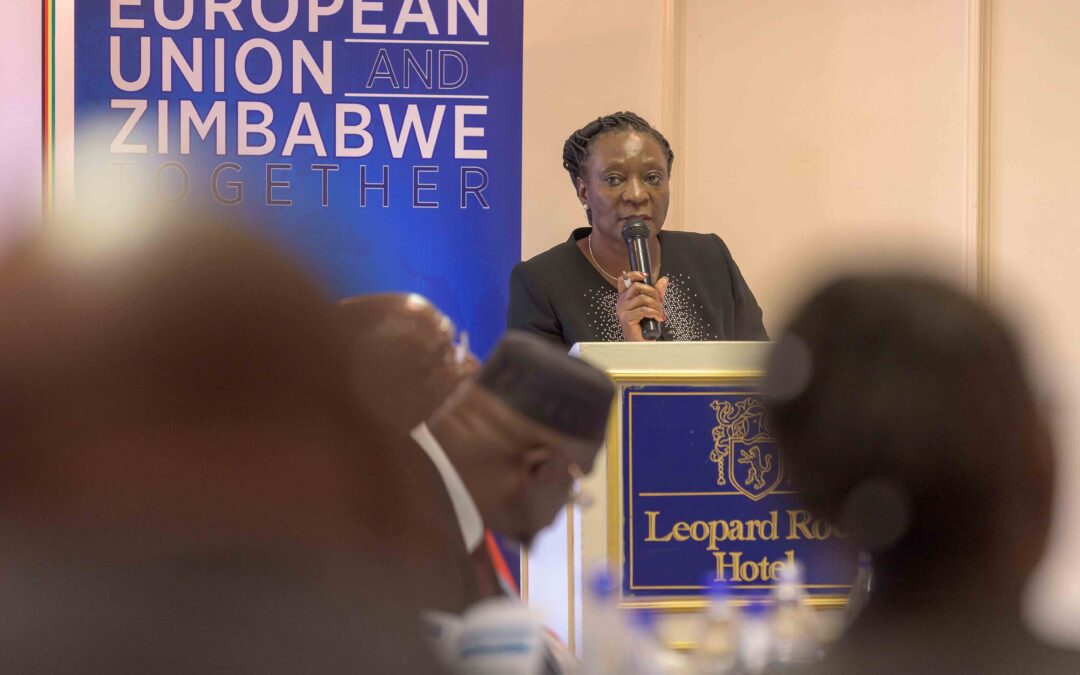
The ICJ, in collaboration with the Judicial Service Commission (JSC) of the Republic of Zimbabwe, has concluded a two-day Judicial Symposium on the theme ‘Core-Skilling: Towards a Human Rights Jurisprudence’, organized to mark the end of the second judicial term in the Zimbabwe judicial calendar.
In his remarks at the opening of the symposium, ICJ’s Africa Regional Director, Mr Arnold Tsunga, noted that the theme of the symposium had been carefully chosen to enhance discourse on national transformation in an atmosphere of respect for the rule of law and international human rights. He noted further that the symposium was to critique the concept of transformative adjudication and explore its relevance to applying the Constitution of Zimbabwe as an instrument and framework for national transformation.
Noting that the ICJ appreciated its on-going partnership with the JSC in Zimbabwe, Mr Tsunga expressed the hope that the training and symposium would enhance the effectiveness of the judiciary with a view to improving access to justice for all, especially victims of human rights violations, women, marginalized and vulnerable groups and contributing to attainment of the United Nations Sustainable Development Goals number 16 and 5.
On his part, in his opening remarks the Chief Justice of the Republic of Zimbabwe, the Hon. Chief Justice Malaba, noted that the ICJ-JSC organized symposia have provided a platform for continuous improvement of judicial work and networking amongst judges.
Chief Justice Malaba observed that these meetings have enabled judges to dialogue on how to improve the effectiveness and efficiency in the justice delivery system. He noted that this year’s theme on human rights jurisprudence lies at the heart of an independent and effective judiciary.
He further noted that the current Constitution of Zimbabwe has a better framework and potential for the protection of human rights than previous constitutions. Accordingly, he expressed the view that the judiciary has a more important role to play in protecting and safeguarding human rights.
He highlighted that the judiciary’s commitment to the protection of human rights is evidenced in local jurisprudence in respect to human rights cases, where several important judgments have been given by all the courts.
Chief Justice Malaba used the opportunity to give updates on developments which were taking place within the JSC, particularly in its research centre, in the High Court, in the Fiscal and Tax Appeals Division, amendments to the Judicial Laws which were gazetted on the 9th of September 2019.
Chief Justice Malaba stated that in performance appraisal, the JSC has constituted a Performance and Training Committee led by the Deputy Chief Justice to come up with a system that enables accurate measurement of the performance of judges.
Responding to issues of accountability raised by the Chief Justice, ICJ’s Mr Tsunga urged the JSC to develop and adopt a system to track, monitor, document and communicate results arising from these trainings, as the results would help the ICJ, and international development partners to evaluate the usefulness of the trainings and efforts at justice sector reforms.
This year’s symposium was attended by 16 female and 27 male judges from the Constitutional Court, Supreme Court, High Court, Labour Court and Administrative Court of Zimbabwe.
Jul 17, 2019 | Advocacy, News, Non-legal submissions
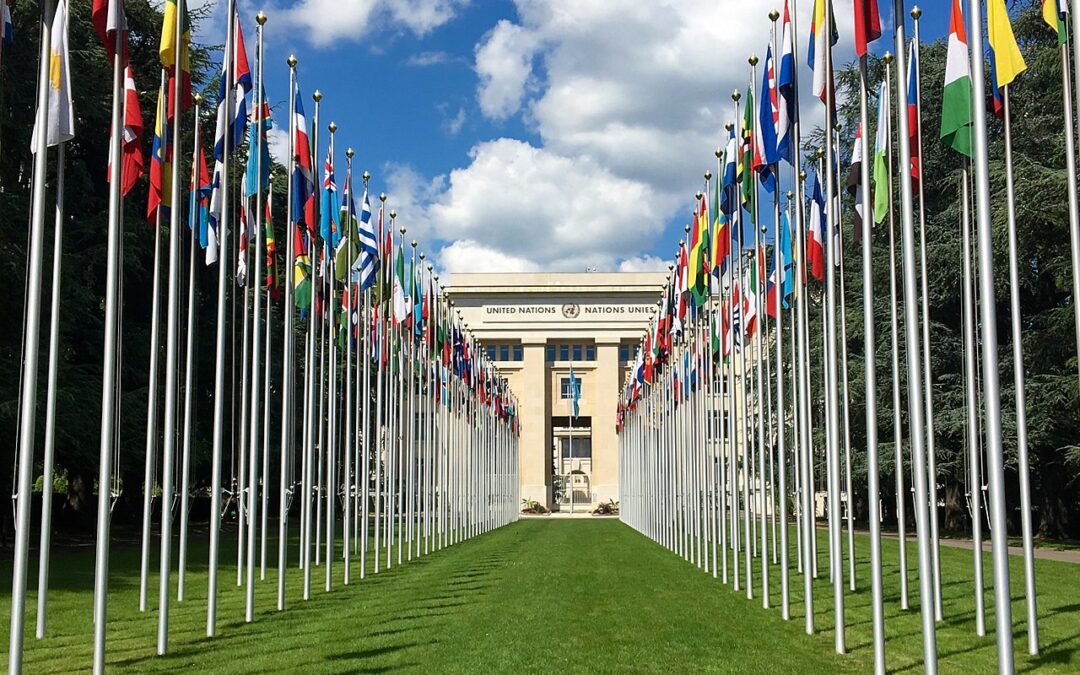
Today, the ICJ filed a submission to the Human Rights Council’s Working Group on the Universal Periodic Review in advance of its review of Turkey’s human rights record in January 2020.
In its submission, the ICJ considered:
- the situation with the independence of the judiciary in Turkey, during and after the state of emergency of 2016-2018;
- the lack of effective remedies for the mass dismissals in the public sector occurred in that period;
- the shortcomings in fair trial rights in the criminal justice system:
- the obstacles to the action of civil society;
- the lack of accountability for torture and enforced disappeareances; and
- provided information on the status of international human rights treaties ratified by Turkey.
Contact:
Massimo Frigo, ICJ Senior Legal Adviser, e: massimo.frigo(a)icj.org
Full submission in English (PDF) : Turkey-UPR-Advocacy-non-legal submissions-2019-ENG
Jul 5, 2019 | Advocacy, Non-legal submissions
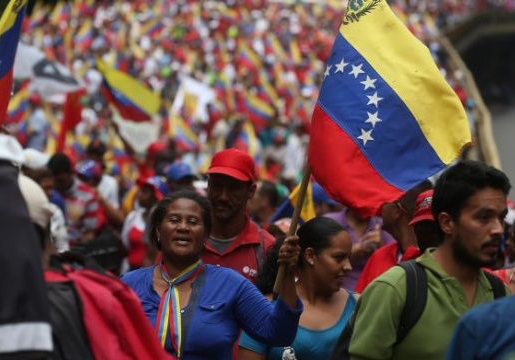
The ICJ today highlighted the role of the “National Constituent Assembly” in Venezuela in contributing to the destruction of the rule of law in the country, in an oral statement to the UN Human Rights Council.
The statement, delivered during an Enhanced Interactive Dialogue on the situation for human rights in Venezuela, in the presence of the UN High Commissioner for Human Rights, read as follows:
“Madame High Commissioner,
Next week the International Commission of Jurists (ICJ) will publish a detailed report on the “National Constituent Assembly” of Venezuela (NCA) mentioned briefly in your report (A/HRC/41/18, para 34).
The NCA was created unilaterally by the President, without popular endorsement through a referendum, in blatant violation of the Constitution.
As your report notes (footnote 26), the NCA has purported to act as a de facto Parliament. In this it has unlawfully usurped legislative powers clearly assigned by the Constitution to the already-existing National Assembly. Among other things, it has called early presidential elections and removed the Attorney General. It was the NCA that actually rescinded legislative immunity for National Assembly representatives, enabling their arrest and prosecution, after the Supreme Court purported to authorize it to do so (para 37).
Furthermore, as ICJ has extensively documented and your report recognizes, the Venezuelan judiciary has been deprived of its independence and impartiality (paras 56 and 76).[1] Lack of access to justice for widespread gross human rights violations by security forces is pervasive (paras 39 to 59, 77 to 79).
In this context, the NCA essentially operates as an unchecked instrument of the President, unilaterally modifying the legal system, declaring itself above the Constitution, and contributing to the destruction of the rule of law.
We therefore particularly welcome the recommendations in your report to restore the independence of the justice system and impartiality of the Attorney General (81(j)), to bring perpetrators of gross human rights violations to justice (81(c)), and for a renewed focus by the Council on accountability (para 83).
The ICJ further urges that the NCA must be abolished and the National Assembly allowed to operate normally with its full powers, if the rule of law is to have any chance of being restored in Venezuela.
We support calls for the Human Rights Council to establish a Commission of Inquiry or similar mechanism.
Thank you.”
[1] See, among other ICJ reports: Venezuela: The Sunset of the Rule of Law (2015); The Supreme Court of Justice of Venezuela: an Instrument of the Executive Branch (2017); and Achieving Justice for Gross Human Rights Violations in Venezuela (2017).
Jun 15, 2019 | News
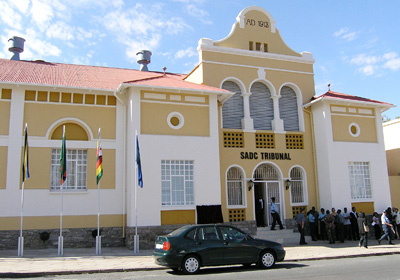
The ICJ welcomes the recent judgment of the Tanzanian High Court condemning the Tanzanian government’s actions leading to the suspension of the SADC Tribunal and the denuding of its crucial role in maintaining the rule of law and protecting human rights in the Southern African region.
Following on a decision of the South African Constitutional Court in December 2018, the decision brings increased scrutiny to the legality and legitimacy of the decision of the SADC Summit to effectively disband the SADC Tribunal in 2010 and thereby “eviscerate the possibility of the States ever being held to account for perceived human rights violations, non-adherence to the rule of law or undemocratic practices”.
“The Tanzanian court’s decision once again raises fundamental questions about the legality and legitimacy of the SADC Summit’s attempt to strip the SADC Tribunal of its powers, following on decisions relating to land reform in Zimbabwe that upset leaders of SADC states. The ICJ endorses the views of the Tanzanian and South African courts that all decisions taken by SADC States must comply with the SADC Treaty, the right of victims of human rights abuses to access justice and the rule of law,” said Arnold Tsunga, the ICJ’s Africa Director.
The Tanzanian Court’s decision is premised on the finding that the SADC Treaty is, in terms of the Vienna Convention on the Law of Treaties, binding on all SADC member States and obligations in terms of it must be performed in good faith by all executive officials.
Having set up and empowered the SADC Tribunal to adjudicate disputes in terms of the Treaty, the Court held that “State parties including Tanzania are obliged to give effect to the Tribunal, without which the existence of the Community itself remains doubtful”.
The Court likened the system of governance set out in the Treaty to a domestic doctrine of separation of powers, noting that the Tribunal is part of an intricate set of checks and balances set out in the Treaty.
The case was brought to Court by the Tanganyika Law Society in order to hold the Tanzanian government accountable to the Constitution, the SADC Treaty and “other international law human rights norms”.
The Law Society alleged that the Tanzanian government’s actions violate the right to access to justice and are therefore “inimical to the rule of law”.
The Court’s decision makes repeated reference to international human rights law norms including United Nations Basic Principles and Guidelines on the Right to a Remedy and Reparation, the Universal Declaration on Human Rights and the African Charter concluding that crucial commitments in terms of the standards set out in these documents were violated by the Tanzanian government.
The Court reasoned that in terms of international law the State is obliged to “ensure observance of [international human rights law principles] in the conduct of its international relations”.
This, crucially, meant that State parties to the SADC Treaty must, in their conduct pertaining to international relations “ensure protection of fundamental human rights of the individual” (emphasis in original).
The SADC Summit’s attempts to protect individuals from accessing the SADC Tribunal for the purposes of vindicating their rights therefore amounted to an unlawful encroachment on individuals’ rights in terms of domestic and international human rights law.
“The Court’s decision is a strong endorsement of the universality of international human rights principles as well as the need for strong checks and balances on power in all domestic, regional and international platforms established to ensure access to remedies for rights violations. The ICJ encourages the SADC leaders to individually and collectively take note of the decisions of the Tanzanian and South African courts and take immediate action to ensure full and effective operation of an independent SADC Tribunal capable of receiving and adjudicating individual complaints,” Tsunga added.
Contact:
Arnold Tsunga, ICJ Africa Director, t: +263777283249 ; e: arnold.tsunga(a)icj.org
Timothy Fish Hodgson, ICJ Legal Adviser, t: +27828719905 ; e: timothy.hodgson(a)icj.org