Nov 6, 2019 | News
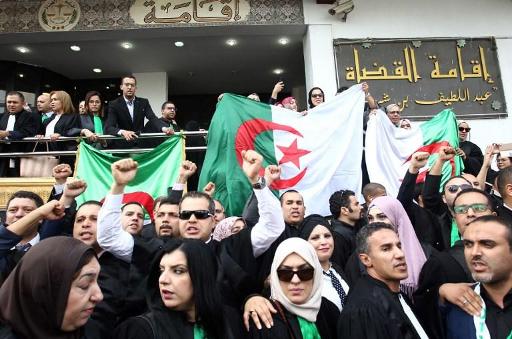
The ICJ today called on the Algerian authorities to reverse the decision of the Minister of Justice to transfer 2’998 judges, and instead ensure their right to security of tenure and protect the individual and institutional independence of the judiciary in the country.
The ICJ further called on the authorities to refrain from any unlawful or disproportionate use of force against the judges who are currently on strike in a protest against the Minister’s decision.
The call comes after security forces stormed the Oran’s Court of Appeal on 3 November 2019, using force against the judges to end the strike, and amidst the growing, legitimate demands for the establishment of the rule of law and the end the executive’s control over the judiciary.
“The Algerian authorities must end their interference in judicial affairs and ensure that all decisions pertaining to the management of the career of judges, including transfers, are taken by an independent High Judicial Council on the basis of objective criteria and transparent procedures,” said Said Benarbia, Director of ICJ’s Middle East and North Africa Programme.
Under Organic Law n° 04-12 on the High Judicial Council (HJC), the President and Vice-President of the HJC are respectively the Algerian President and the Minister of Justice. For this and other reasons the ICJ considers that the HJC as currently constituted is not independent of the executive, and consequently that the judiciary as a whole is both institutionally and in practice subordinated to the executive in contravention of international standards on judicial independence and impartiality.
“Instead of attacking judges who are seeking to defend the rule of law, the most urgent priority for Algerian authorities should be the reform of the HJC to ensure its full independence,” Benarbia added.
In 2018, the Human Rights Committee expressed, in its Concluding Observations on the fourth periodic report of Algeria, its concerns over the insufficient guarantees for judicial independence and the need to strengthen the independence and the powers of the HJC.
Contact:
Said Benarbia, Director of ICJ’s Middle East and North Africa Program, t: +41 22 979 38 17 ; e: said.benarbia(a)icj.org
Algeria-Judges strike-News-2019-ARA (Arabic version, in PDF)
Oct 16, 2019 | Multimedia items, News, Video clips
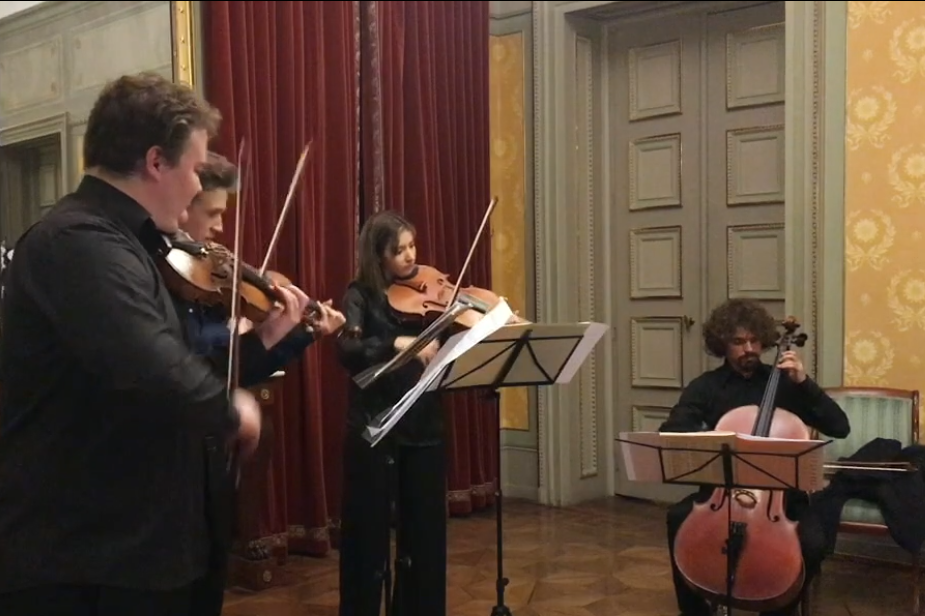
ICJ’s first ever fundraising gala took place on 14 October at the iconic setting of the Palais Eynard in Geneva.
Sami Kanaan, Counselor and former Mayor of the City of Geneva, which provided its generous support, opened the event by speaking of the importance of the ICJ cooperation with the local legal community.
Next, several speakers offered a few answers to the theme of the evening: ‘Geneva, the defense of the Rule of Law: what can I do?’.
Pierre de Preux, former Bâtonnier, explained the great value that can be brought to defending rule of law in the world by supporting the ICJ through missions, as he himself did in Tunisia in the 80s.
He was followed by ICJ Commissioners Sir Nicolas Bratza (former President of the European Court of Human Rights), who discussed backsliding on human rights in contemporary Europe; lawyer Reed Brody, who discussed his work in bringing powerful dictators to account for human rights atrocities; and Justice Martine Comte of France, who described her experience in leading ICJ missions in Central Asia.
The ICJ President Prof. Robert Goldman and ICJ Secretary General Sam Zarifi also addressed the attendees.
The exchange was then followed by an inspiring concert by the young virtuosi of the Menuhin Academy and a delicious Buffet cocktail provided by refugee Chefs Jena Hamza (Syrian Kurd) and Sritharan Tambithurai (Sri Lanka). All in all, a wonderful evening combining substance, beauty and friendship.
Watch the video here:
Oct 9, 2019 | News
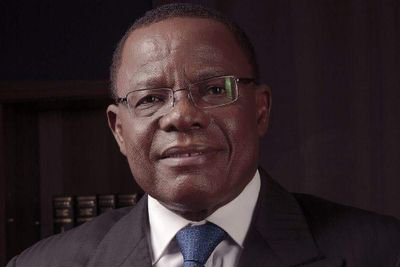
The ICJ today welcomed the release from detention and the dropping of charges against, of Maurice Kamto and other opposition figures.
The ICJ has called on Cameroonian authorities to ensure that they and others are able to exercise their human rights and fundamental freedoms without harassment or fear of arrest and prosecution.
The ICJ also called for the authorities to embark on wider legal and institutional reforms to facilitate respect for human rights and the rule of law in order to build genuine constitutional democracy in that country.
‘’Neither the arrest, nor detention nor prosecution of people for exercising their fundamental freedoms, including political dissent and peaceful opposition nor the trial of civilians before a military court was in compliance with Cameroon’s international legal obligations,” said Arnold Tsunga, ICJ’s Africa Regional Director in reaction to news of the release.
Maurice Kamto, a leading international jurist, former ICJ Commissioner, and presidential candidate of the Cameroon Renaissance Movement (MRC), was arrested on 28 January 2019 along with dozens of other opposition figures for protesting and challenging the results of the last Presidential elections held in October 2018.
They were facing trials before military courts, in contravention of their rights to a fair trial trial, on charges of ‘’insurrection, hostility to the motherland and rebellion’’ – charges which potentially carry the death penalty.
The detainees were released last weekend after Cameroon’s President Paul Biya’s tweet on 4 October 2019, that he had ordered the discontinuance of proceedings against them. The bringing and dropping charges should be in the remit of independent prosecutorial authorities, not the President.
Nonetheless, the ICJ stressed that the release of Maurice Kamto and the other leaders provides a welcome window of opportunity for Cameroonian authorities to begin an inclusive process of revamping the legal and constitutional framework to meet international standards.
The ICJ called on the Cameroonian authorities to desist further from applying the law and legal process to persecute or otherwise harass any person for the exercise of fundamental freedoms and from administering justice through military courts, which should be reserved for prosecution military personnel for military offences only.
The ICJ stressed that the release of Maurice Kamto and other opposition figures presents a unique opportunity for Cameroonian authorities to restore public confidence in the country’s democratic institutions by including all Cameroonians in the building of a society based on the rule of law.
Contact:
Arnold Tsunga, ICJ Africa Director, C: +27716405926, or +254 746 608 859 E: arnold.tsunga(a)icj.org
Solomon Ebobrah, Senior Legal Adviser, ICJ Africa, C: +234 8034927549; E: Solomon.ebobrah(a)icj.org

Sep 27, 2019 | News
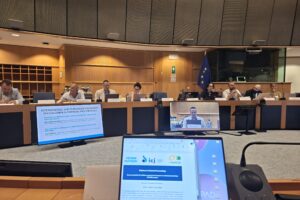
On 27 September, the Nederlands Juristen Comité voor de Mensenrechten (NJCM) and the ICJ held a a closed-door roundtable discussion in the Hague on investigative procedures and procedural rights in counter terrorism: implementing the EU Directive 2017/541 on combating terrorism. The discussion took place in the framework of the EU funded project “Judges Uniting to Stop Terrorism with International, Constitutional and European law (JUSTICE) project”.
Judges, prosecutors and lawyers from 11 EU countries shared their practices and experiences in the application of the investigative procedures and procedural rights related to the prosecution of the criminal offences enshrined in the EU Directive 2017/541 on combating terrorism within the different legal systems of the European Union (EU).
The discussion focused on investigative powers, evidence gathering, pre-trial detention, cross border cooperation and the European Arrest Warrant. These practices were assessed in light of international human rights law principles in order to identify best practices that could be promoted throughout the EU.
This is the second out of four roundtables organized within this project between April and November 2019 by the ICJ and partners.
See the agenda here.
Sep 25, 2019 | Events, News
The ICJ is organizing its first fundraising Gala concert on Monday 14 October at 7:30pm in the Palais Eynard, 4 rue de la Croix Rouge, Geneva. The event will support the ICJ and its fight for the defense of the Rule of Law in the world and marks the end of the series of events we organized for our 60th anniversary in the city of human rights.
The theme of our Gala will be: “Geneva, the Defense of the Rule of Law: What can I do?”
After a welcome from the Mayor of Geneva and an introduction from Me Pierre de Preux, former Bâtonnier of the Geneva Bar, ICJ Commissioners including Sir Nicolas Bratza (former President of the European Court of Human Rights), Dame Silvia Cartwright (former Judge and Governor General of New Zealand), Professor Bob Goldman (ICJ President and former President of the Inter-american Commission on Human Rights) and Ms Roberta Clarke (ICJ Executive Chair, UN Women’s Office for the Caribbean, UN Women’s Regional Office for Asia and the Pacific) will give concrete answers to this question.
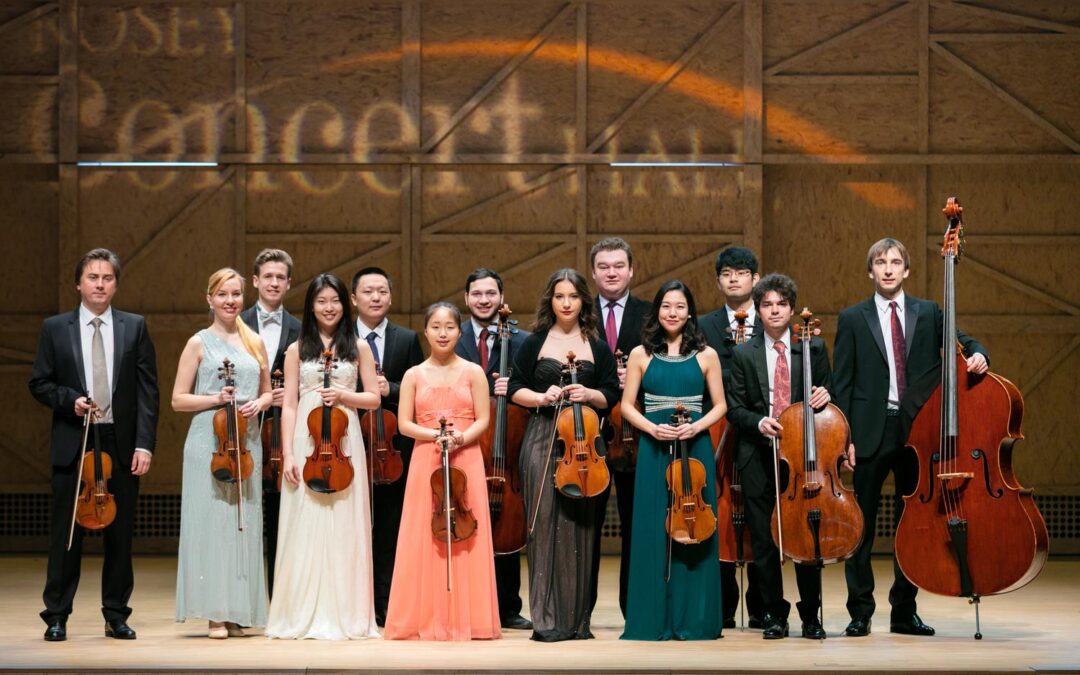
But the evening is also to enjoy a wonderful Concert of the ‘Soloists of the Menuhin Academy’ (photo) and the cocktail after that.
To reserve: Pascale.andris@icj.org
You cannot come but still want to make a donation: please click here
Download the invitation
Invitation Gala 14 Oct