Feb 5, 2020 | Advocacy, News, Open letters
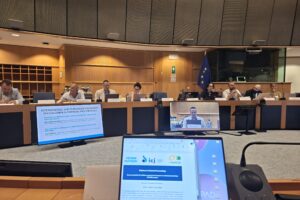
ICJ Commissioners and Honorary Members today denounced the rapidly escalating rule of law crisis in Poland, after a new law was passed that would result in harassment of judges upholding the independence of the judiciary.
A group of 44 ICJ Commissioners and Honorary Members, including senior judges, lawyers and legal scholars from around the world said in their statement “it is clear that the separation of powers, the independence of the judiciary, and the capacity of Polish judges to uphold the rule of law are now severely compromised. Judges’ freedom of expression, association and assembly are under immediate threat.”
The statement
The International Commission of Jurists (ICJ), its Centre for the Independence of Judges and Lawyers (CIJL) and the undersigned Commissioners and Honorary Members of the ICJ are alarmed at the rapidly escalating rule of law crisis in Poland.
It is clear that the separation of powers, the independence of the judiciary, and the capacity of Polish judges to uphold the rule of law are now severely compromised. Judges’ freedom of expression, association and assembly are under immediate threat.
The passing by the Sejm on 23 January of the amendments to the laws on the judiciary, and their signing into law on 4 February, means that judges will be prohibited from questioning the legitimacy or institutional independence of any Polish court, even where its members have been appointed through a politically controlled process, in violation of EU and international law. Judges will face disciplinary action for denying the validity of any judicial appointment.
This law is an attempt to prevent any Polish court from upholding the independence of the judiciary, in the face of repeated legislative and government attacks on judicial independence in recent years.
This is directly contrary to the obligations of judges under the EU treaties to apply EU law, and would therefore lead to violations of Poland’s EU law obligations. It would also lead to violations of Poland’s obligations under international human rights law, since it would require judges to act contrary to their duty to uphold the right to a fair hearing before an independent and impartial tribunal.
As the Venice Commission noted in its recent opinion on the amendments, they are clearly “designed to have a nullifying effect” on recent judgments and resolutions of the Court of Justice of the EU and the Polish Supreme Court, which have called into question the validity of recent judicial appointments. As such, they do severe damage to the rule of law in Poland.
These developments follow recent legislation which has politicised the National Council of the Judiciary (NCJ) and imposed executive control of the appointment process for judges of the Supreme Court, court presidents and other judges. A powerful new Extraordinary Chamber as well as a Disciplinary Chamber of the Supreme Court, appointed under this new system, has further entrenched political control of the judiciary.
The ICJ, its undersigned Commissioners and Honorary Members, applaud the continued resolute defence of the rule of law by sections of the Polish judiciary. This has been evident in the resolution of the Supreme Court (Civil, Criminal, Labour and Social Security Divisions) of 23 January which found that recent judicial appointments meant that some Polish courts were not sufficiently independent to be legitimately constituted.
We deplore the response by President Adrzej Duda in which he suggested that judges opposing the judicial reforms on the judiciary acted out of improper self-interest.
The undersigned ICJ Commissioners and Honorary Members affirm their solidarity with Polish judges, in particular those who are currently facing abusive disciplinary or criminal proceedings for carrying out their judicial functions in accordance with the principle of judicial independence, or for exercising their freedom of expression, association or assembly as a means to defend the rule of law.
We recall that international human rights law and international standards on the judiciary require all branches of government to respect the independence of the judiciary. Furthermore, they recognise that judges have rights to freedom of expression and association and that they have a particularly important role in contributing to discussions on issues of the functioning of the judicial system and the rule of law, especially in defending the independence of the judiciary.
We call on the international community to respond to the Polish rule of law crisis in a manner appropriate to the gravity of the situation, before the damage to the Polish legal system becomes further entrenched.
In particular, we call on the European Union to urgently advance proceedings concerning Poland under Article 7 TEU, in light of the clear breach of EU law and EU fundamental values entailed by the new law, in conjunction with previous reforms, and by the government’s open defiance of decisions of the Court of Justice of the EU and the Polish Supreme Court.
Poland-Commissioners-Statement-Advocacy-Open-Letter-2020-ENG, (full text with all signatories, PDF)

Dec 16, 2019 | Agendas, Events, News
Today begins in Ankara (Turkey) a one-day workshop for lawyers and CSO practitioners to discuss and brainstorm on an alternative Justice Reform Strategy.
This event is organized by ICJ, in cooperation with its partners Kapasite Geliştirme Derneği and Human Rights Joint Platform, as part of a EU co-financed project Rebuilding and Ensuring Access to justice with civil society in Turkey.
The workshop aims at discussing the key reforms proposed by the Government of Turkey in its Judicial Reform Strategy and provide with an assessment and an alternative plan for reform based on international standards and jurisprudence on access to justice and the independence of the judiciary.
The workshop will provide presentations on international standards on the judiciary as well as on access to justice for human rights violations. It will produce a ten point strategy document to propose reforms that will uphold the independence of the judiciary and access to justice in Turkey.
The project is funded by the European Instrument for Democracy and Human Rights (EIDHR) of the European Union.
Turkey-Workshop-Agenda-AltJRS-Ankara-2019-eng (download the agenda)
Dec 6, 2019 | News
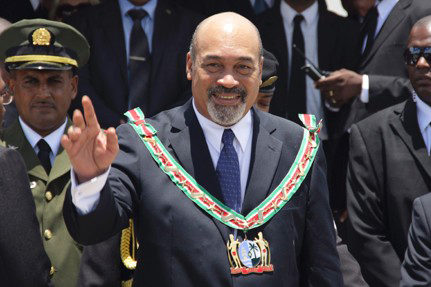
Today, the ICJ has taken note of the 29 November 2019 conviction by the military and civilian chambers of a Court Martial (“the Court”) in Suriname of President Desiré Delano Bouterse and acquittal of others for crimes under international law relating to events that had taken place in December 1982 in Suriname.
The Court imposed a 20-year sentence of imprisonment on Bouterse, albeit it did not order an arrest warrant to be issued against him.
Bouterse and his co-accused faced charges of torture and murder — by means of extra-judicial executions – of 15 people – lawyers, journalists, soldiers, businessmen, academics and a trade union leader – who had been openly critical of the regime at the time, following a military coup led by Bouterse.
Bouterse, who remains the country’s President, was abroad when the Court delivered its verdict; he returned to Suriname two days later.
The ICJ is concerned at apparent efforts to circumvent the Court’s verdict. Since his conviction, Bouterse has made statements amounting to a deliberate undermining of the judicial process and rule of law, such as calling on the court to “come and get me”.
The ICJ further takes note that there is a possibility of appeal and calls on all parties to respect the rule of law and to allow the legal system to run its course, in accordance with international fair trial standards, without further delays, threats or other forms of executive interference.
Background to the 29 November 2019 verdict
The trial against Bouterse and his alleged accomplices began in 2007. On 19 July 2010, Desiré Delano Bouterse was elected President of Suriname, taking up office on 12 August 2010. On 4 April 2012, the country’s Parliament adopted an amendment to the 1989 Amnesty Law in existence at the time, which had the effect of granting an amnesty to President Bouterse and others in relation to any wrongdoing in connection with the December 1982 events. This led to a decision by the Court to suspend the trial of Bouterse and his co-accused indefinitely pending the establishment of the constitutionality or otherwise of the 1989 Amnesty Law. As the ICJ noted in its report of 29 May 2012, which followed an ICJ mission to the country to observe the trial, there were a number of unresolved questions regarding the legality of the 1989 Amnesty Law, including its incompatibility with Suriname’s international law obligations.
Since its initial mission in 2012, the ICJ has frequently expressed concern at the persistent delays in the proceedings. Eventually, in June 2016, the Court declared the 1989 Amnesty Law unconstitutional, and ordered the proceedings’ resumption; however, delays continued to beset the proceedings. On 2 August 2016, the Inter-American Commission on Human Rights expressed its deep concern about the then ongoing delays in the resumption of the trial. Eventually, by early 2017, the Court decided to have the charges put to the accused and ordered the prosecutor to read them out in court.
Persistent efforts by Bouterse to use his authority to have the trial declared a threat to national security or a danger to the country’s economic stability were unsuccessful, and the trial resumed, albeit with continued delays, prompting the ICJ to issue a further statement in May 2017 calling for the resumption of the trial without further delay.
Eventually, in June 2017, the public prosecutor issued his full list of charges against President Bouterse, accompanied by a request of a sentence of imprisonment of no less than 20 years on conviction, thereby moving to the trial phase proper of the proceedings.
Download
Suriname-Bouterse case-news-press release-2019-DUT (PDF available in Dutch)

Dec 6, 2019 | News
The ICJ calls on the Polish authorities to put an immediate end to unjustified disciplinary proceedings initiated against judges, including Krystian Markiewicz, Chairperson of the Polish Judges’ Association “Iustitia”.
The ICJ considers that the disciplinary action against Judge Markiewicz’ was initiated because of his questioning of the Polish government’s “reforms” that have severely eroded the independence of the judiciary in Poland.
“The disciplinary action taken against Judge Markiewicz for his criticism of the government’s attack on judicial independence violates international standards on the independence of the judiciary and should be ended immediately”, said Róisín Pillay, Director of the ICJ Europe and Central Asia Programme.
“Judges have a right to freedom of expression and to form and take part in associations of judges. They have a particularly important role in speaking up to defend the rule of law and the independence of the judiciary, which is undermined by arbitrary disciplinary proceedings such as those against Judge Markiewicz”, she added.
By order of the Deputy Disciplinary Commissioner of the ordinary court judges, on 4 December, disciplinary proceedings alleging 55 instances of misconduct were initiated against Judge Krystian Markiewicz. These include: inciting disrespect for Poland’s legal order by questioning the independence and legality of the National Council of the Judiciary (NCJ), and the constitutionality of the Disciplinary Chamber of the Supreme Court; and calling for appeals to the Disciplinary Chamber to be suspended.
The disciplinary action against Judge Markiewicz comes within a week of the decision to suspend with immediate effect district Judge Paweł Juszczyszyn, who, in presiding over an appeal, questioned the impartiality of the judge who had delivered the original verdict as a result of being elected by the National Council for the Judiciary. On 1 December 2019, the Polish Judges’ Association Iustitia organized rallies in support of Judge Juszczyszyn.
The ICJ stresses that such actions taken against judges are inconsistent with the duties of all branches of the State to respect and protect the independence of the judiciary. The ICJ calls for Judge Juszczyszyn to be immediately re-instated in his post.
On 4 December 2019, the labour law chamber of the Supreme Court, in implementation of a recent ruling of the Court of Justice of the UE, held that the NCJ is not an impartial and independent body, and that the disciplinary chamber of the Supreme Court is not a “court” under EU or Polish law, thereby confirming the concerns raised by both Judge Juszczyszyn and Judge Markiewicz.
Background
The UN Basic Principles on the Independence of the Judiciary clarify that all governmental and other institutions must respect and observe the independence of the judiciary (Principle 1), and that judges must decide all matters before them impartially, on the basis of facts and in accordance with the law, without any restrictions, improper influences, inducements, pressures, threats or interferences, direct or indirect (Principle 2). Judges can be subject to suspension or removal only following fair procedures (Principle 17) and only for reasons of incapacity or behaviour that renders them unfit to discharge their duties (Principle 18).
In recent years, the Polish executive and legislative authorities have systematically undermined the independence of the judiciary in the country, including through laws that have sought to force the dismissal of judges by lowering the mandatory retirement age. In addition, they have brought the appointment of judges under political control by re-structuring the National Council of the Judiciary (NCJ), with a majority of its members selected by the Polish Parliament. (see ICJ statement)
This move has also politicized the Disciplinary Chamber of the Supreme Court, whose members are selected by the NCJ, and the disciplinary court of first instance. In October 2019, the European Commission referred Poland to the CJEU on the grounds that the new disciplinary regime for judges undermines their independence.
In June 2019, the Court of Justice of the European Union (CJEU) held that the Polish Law on the Supreme Court lowering the retirement age of judges of the Supreme Court and providing discretionary power to the President to allow a judge to remain in office following the mandatory retirement date was contrary to the principle of effective judicial protection and therefore in violation of EU law. In November 2019, the CJEU held that Poland violated the independence of the judiciary by lowering in 2017 the pension age of Polish judges and giving the power to maintain them in office to the Minister of Justice.
Dec 5, 2019 | Advocacy, Analysis briefs
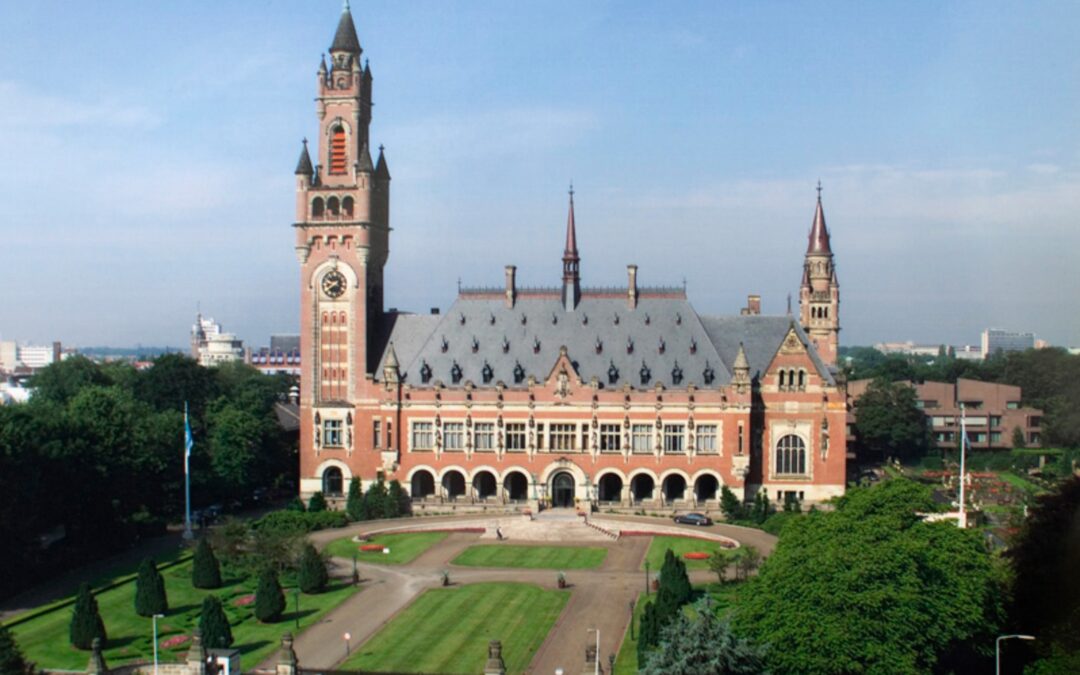
Today, the International Commission of Jurists published a legal briefing on the hearing on provisional measures to be held at the International Court of Justice between 10-12 December 2019 in the case of The Gambia v Myanmar.
Questions answered include:
- What allegations does The Gambia make against Myanmar?
- What provisional measures has The Gambia requested?
- What are provisional measures?
- What is the process for requesting provisional measures?
- What factors are taken into account on a request for provisional measures?
- If the Court indicates provisional measures, are they binding on the parties?
- What is Daw Aung San Suu Kyi’s role in the proceedings?
Download:
Myanmar-Provisional Measures Briefing-Advocacy-Analysis Brief-2019-ENG (English)
Myanmar-Provisional Measures Briefing-Advocacy-Analysis Brief-2019-BUR (Burmese)
Contact:
Kingsley Abbott, Senior Legal Adviser and Coordinator of the ICJ’s Global Accountability Initiative, kingsley.abbott(a)icj.org