Jun 4, 2020 | News
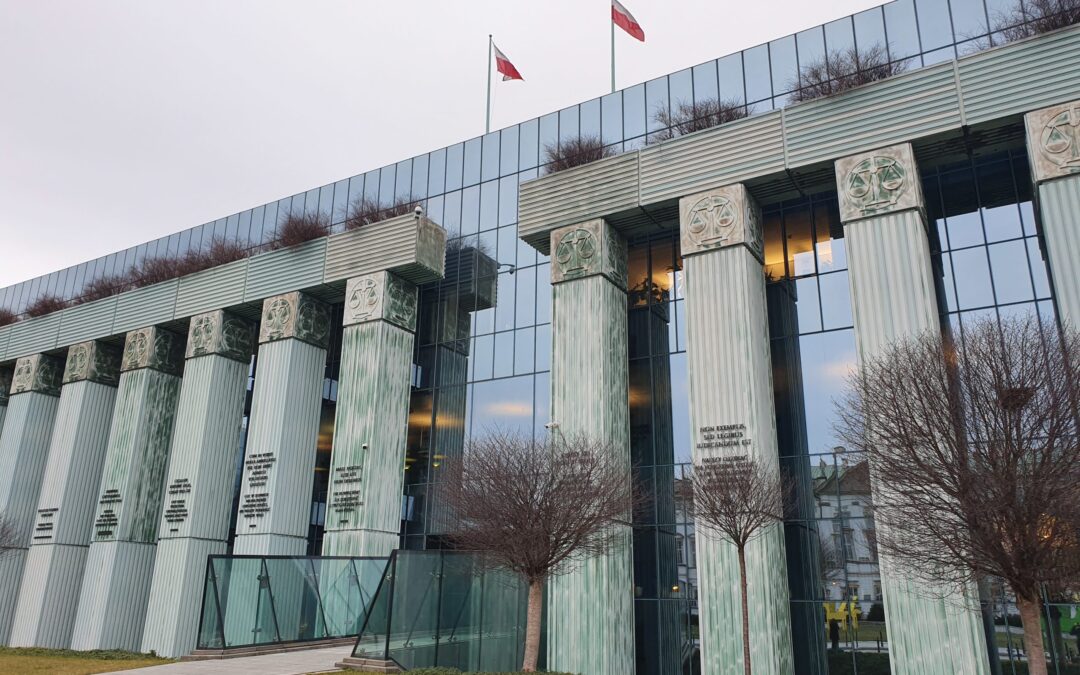
The ICJ today raised concern at the threat of criminal proceedings against Judge Igor Tuleya on charges arising from the judge’s independent exercise of his judicial functions. The ICJ called on the Disciplinary Chamber of the Supreme Court not to lift his immunity at its 9th June hearing.
Judge Tuleya faces prosecution for having allowed the presence of media in a sensitive case concerning the investigations on the 2017 budget vote in the Polish House of Representatives (Sejm) that took place without the presence of the opposition.
He has been charged with ‘failing to comply with his official duties and overstepping his powers’ for having allegedly disclosed a secret of the investigation to ‘unauthorized parties’.
The accusations stem from the initiative of the judge to allow media and the public in the courtroom while issuing his ruling. Usually rulings on investigations are issued behind closed doors in Poland but the criminal procedure code allows judges to make the hearing public “in the interest of justice”.
“Judge Tuleya should not face any criminal proceedings to begin with for his actions in delivering his ruling in public, which is in accordance with national law”, said Massimo Frigo, Senior Legal Adviser for the ICJ Europe and Central Asia Programme. “His immunity must be maintained and the ‘Muzzle Act’ that allowed for these abusive prosecutions should be immediately scrapped.”
These proceedings are the first case of implementation the draconian Act amending the Law on the Common Courts, the Law on the Supreme Court and Some Other Laws, signed into law on 4 February and widely known as the ‘Muzzle Act’, which gave competence to waive judicial immunity to the Disciplinary Chamber of the Supreme Court.
“As highlighted by the recent ruling of the EU Court of Justice, the Disciplinary Chamber of the Supreme Court is not independent and is open to undue influence or interference by political authorities. It should therefore not rule on issues pertaining to the disciplinary or criminal responsibility of judges, including a waiver of their immunity,” Massimo Frigo added.
Background
On 19 November, the Court of Justice of the European Union (CJEU) delivered a ruling in the case A.K. and others (C-585/18, C-624/18, C-625/18), on a preliminary question by the Supreme Court of Poland. The preliminary question asked whether the recently established Disciplinary and Extraordinary Chambers of the Supreme Court could be considered to be independent.
The CJEU ruled that a court cannot be considered independent “where the objective circumstances in which that court was formed, its characteristics and the means by which its members have been appointed are capable of giving rise to legitimate doubts, in the minds of subjects of the law, as to the imperviousness of that court to external factors, in particular, as to the direct or indirect influence of the legislature and the executive and its neutrality with respect to the interests before it and, thus, may lead to that court not being seen to be independent or impartial with the consequence of prejudicing the trust which justice in a democratic society must inspire in subjects of the law.”
Based on this ruling, the Labour, Criminal and Civil Chambers of the Supreme Court declared that the Disciplinary and Extraordinary Chambers of the Supreme Court were not properly constituted and independent.
According to the UN Basic Principles on the Independence of the Judiciary, judges are entitled to a fair hearing in all disciplinary proceedings (principle 17). In order for such a hearing to be fair, the decision-maker must be independent and impartial.
International and European standards on the independence of the judiciary provide that judges should have immunity from criminal prosecution for decisions taken in connection with their judicial functions in the absence of proof of malice, and any procedure for removing immunity must itself be independent (see for instance, UN Special Rapporteur on the Independence of Judges and Lawyers, paras 65-67 and 98; Council of Europe Committee of Ministers, para 68; Consultative Council of European Judges, para 20; ICJ Practitioners Guide no 13, pp. 27-30).
On 26 February 2020, the Polish Prosecutor’s Office requested a waiver of Judge Tuleya’s immunity in order to press criminal charges which might lead to imprisonment. The waiver will be examined on the 9 June 2020 by the Disciplinary Chamber of the Supreme Court appointed by the government.
In an open letter of 5 February 2020, 44 ICJ Commissioners and Honorary Members denounced the recent legislative changes adopted by the Polish government threatening the role and the rights of judges and denouncing the risks faced by legal practitioners when fighting for the rule of law. Two weeks later, the risks highlighted by the letter have become reality for an increasing number of Polish judges, including Judge Tuleya.
Contact:
Massimo Frigo, Senior Legal Adviser, Europe and Central Asia Programme, e: massimo.frigo(a)icj.org, t: +41 22 979 38 00
Apr 6, 2020 | Feature articles, Multimedia items, News, Video clips
As of 8:00am CET this morning, the Coronavirus COVID-19 Global Cases tracker by the Center for Systems Science and Engineering at Johns Hopkins University in the US recorded 169,049,480 confirmed cases of individuals who had contracted the COVID-19 disease in 192 countries, and 3,513,137 people who had succumbed to the virus. Read all the ICJ articles on the crisis.
Against this background, the aim of this blog is to highlight the necessity of ensuring the consistency of public health policies taken as part of the global responses to the COVID-19 pandemic with human rights law and standards.
As outlined in a prescient 2019 Lancet Commission report – The legal determinants of health: harnessing the power of law for global health and sustainable development – the law, and a firm commitment to the rule of law, play a critical role in the pursuit of global health with justice.
Ultimately, scientifically sound, evidence-based, human rights compliant, transparent and accountable public health policies and practices will also be more effective, as they will, in turn, elicit greater public support, including by prompting greater adherence to public health policy directives imposing restrictive measures on human rights.
As Michelle Bachelet, the UN High Commissioner for Human Rights recently affirmed, ‘COVID-19 is a test for our societies, and we are all learning and adapting as we respond to the virus. Human dignity and rights need to be front and centre in that effort, not an afterthought’.
China, where cases of COVID-19 were first documented, has been questioned from inside and outside for its response to the crisis, at first attempting to shut down information about the virus, leading to arrests and detentions. Outside China, while some COVID-19 health policies have been evidence-based, such as scaled-up, accurate testing for suspected cases, others are ineffective and overly broad, increasing stigmatization and misinformation.
Around the world, people of Asian descent have been subjected to xenophobia, stigmatization and racist attacks. Moreover, many States have now imposed extensive travel restrictions or even blanket travel bans; some have gone as far as using the COVID-19 pandemic as a pretext to promote their xenophobic and anti-asylum agenda and have now shut down their borders to refugee claimants, thereby flouting the right of anyone to seek asylum from persecution in other countries.
In a frontal attack against women’s human rights, in Texas and Ohio, the authorities have moved to ban healthcare providers from performing abortions in most circumstances – purporting to do so to respond to the global COVID-19 crisis. There is also a world of false information on COVID-19. For instance, Indonesia’s health minister suggested that Islamic prayers shielded people from the virus.
To foster scientifically accurate, human rights compliant global health responses – including to events such as the COVID-19 pandemic – it is crucial to enhance dialogue between the public health and human rights sectors. A good place to start framing a productive exchange in this respect is to take a close and simultaneous look at the International Health Regulations (IHR (2005)) – an agreement among 196 WHO Member States to work together for global health security – and to the Siracusa Principles on the Limitation and Derogation Provisions in the International Covenant on Civil and Political Rights (the Siracusa Principles), setting out criteria to determine the lawfulness of measures restricting or otherwise limiting human rights taken by States to respond to – among other things – public health emergencies.
International Health Regulations & Travel Restrictions
Article 3(1) of the IHR (2005), setting out the principles informing the regulations, recalls that, ‘[t]he implementation of these Regulations shall be with full respect for the dignity, human rights and fundamental freedoms of persons’. And, perhaps tellingly, in Article 32, concerning the treatment of travellers, the IHR proclaim, among other things, that, ‘[i]n implementing health measures under these Regulations, States Parties shall treat travellers with respect for their dignity, human rights and fundamental freedoms’.
Notwithstanding the express human rights obligations enshrined in the IHR, current public policy responses to the ongoing crisis – and even public discourses around those responses – make very few, if any, direct references to human rights and, in fact, seem to be oblivious to the impact that measures taken and/or considered in the response to COVID-19 have on human rights.
But the IHR, as noted in a recent piece by Roojin Habibi et al, restrict ‘the measures countries can implement when addressing public health risks to those measures that are supported by science, commensurate with the risks involved, and anchored in human rights. The intention of the IHR is that countries should not take needless measures that harm people or that disincentivise countries from reporting new risks to international public health authorities’.
Siracusa Principles
The 1985 Siracusa Principles provide a good basis to flesh out what a human rights compliant public health response to the COVID-19 pandemic must entail. They detail criteria – by now firmly enshrined in international human rights law and standards – to determine the lawfulness of State measures restrictive of human rights.
According to the Siracusa Principles, for instance, when a State invokes public health as a ground for limiting certain rights, its actions ‘must be specifically aimed at preventing disease or injury or providing care for the sick or injured’. Even in circumstances when it is undeniable that a public health emergency may threaten the life of a nation, the Siracusa Principles reaffirm the obligation of States to ensure that any public health response to such an emergency be rooted in and compatible with human rights law and standards. Importantly, the Principles provide further interpretive guidance to States, proclaiming that restrictions on human rights may be justifiable only when they are:
- provided for and carried out in accordance with the law;
- based on scientific evidence;
- directed toward a legitimate objective;
- strictly necessary in a democratic society;
- the least intrusive and restrictive means available;
- neither arbitrary nor discriminatory in application;
- of limited duration; and
- subject to review.
The final condition – that State action be subject to review – is critical. Analogous requirements can be seen in other areas of international law. In the asylum and refugee context, for example, detention guidelines promulgated by the United Nations High Commissioner for Refugees emphasize that confinement on health grounds beyond an initial medical check must be subject to judicial oversight. Similarly, the Human Rights Committee’s General Comment no. 35 makes clear that the International Covenant on Civil and Political Rights ‘entitles anyone who is deprived of liberty by arrest or detention’ to take their case before a court to decide on ‘the lawfulness of detention’, enshrining the principle of habeas corpus.
The General Comment adds that this right also applies to house arrest, as a form of deprivation of liberty. Of course, whether involuntary home confinement constitutes deprivation of liberty – entitling those subjected to such a measure to challenge the lawfulness of their detention before a court – is a question of fact, depending, in turn, on the degree of the physical confinement imposed. Voluntarily choosing to stay at home in response to State authorities’ exhortation to do so, on the other hand, does not constitute deprivation of liberty.
Furthermore, any State action must comply with the rule of law and should respect the separation of powers. Neither the executive nor public health authorities should be immune from having their actions legitimately scrutinized by other branches of the State, namely, the legislature and the judiciary. Checks and balances are necessary to ensure respect for human rights and for democratic legitimacy.
In conclusion, both the IHR (2005) and the Siracusa Principles remind us of the fact that State responses to global public health emergencies cannot be unfettered, and must comply with States’ human rights obligations. Public responses to health emergencies and human rights need not be in conflict – indeed, grounding States’ public health measures in the human rights framework provides the most effective way to advance global health with justice.
The Lancet Commission report suggests one way to further identify human rights and rule of law compliant measures in the current and future global public health policy response. The report calls for a partnership between ‘legal and health experts to create an independent standing commission on global health and the law’ that would propose ‘evidence-based legal interventions for addressing major global health challenges, reforms of the global health architecture and international law, and strategies to build and strengthen global and national health law capacities’.
We should heed that call.
(Article written by Sam Zarifi and Kate Powers)
Read also
Indonesia: trans women face discrimination in access to Covid-19 vaccines
Nepal: seeking a rights-based approach to healthcare
European Union and India: leaders should use meeting to demonstrate commitment to defending rights and combating Covid-19 pandemic
The unvaccinated: equality not charity in Southern Africa – new ICJ report
Indian government fails to protect right to life and health in second wave of COVID-19 Pandemic
Journalists and media platforms at increased risk in Cambodia, Thailand and Vietnam during the COVID-19 pandemic
Venezuela: lack of access to safe water aggravates the COVID-19 pandemic
Covid-19: applying human rights standards to ensure corporate accountability in the context of COVID-19 vaccine access
Vaccine patents: healthy or harmful?
ICJ calls on States to ensure human rights compliant access to COVID-19 vaccines (UN Statement)
Peru: the COVID-19 vaccine demands international and national solidarity
Harmonizing global health law and human rights law to develop rights-based approaches to global health emergencies
The ICJ and ZimRights ask for urgent intervention on access to COVID-19 vaccines from African Commission Mechanism
ICJ urges the UN Committee on Economic, Social and Cultural Rights to call on States to comply with their obligations to ensure equitable access to vaccines for all
The ICJ recommends that the African Union acknowledge COVID-19 vaccines are a “public good”
ICJ Covid-19 end of year compassion appeal
Indonesia: ICJ addresses open letter to COVID-19 Mitigation Task Force calling for special measures to protect women workers in its pandemic response
Women facing health risks and gender-based violence in Venezuela
Sri Lanka: Mahara prison killings must be properly investigated and urgent measures taken to protect detainees from COVID-19
COVID-19: ICJ publishes global guidance on the use of videoconferencing in judicial proceedings
Nepal: ICJ briefing paper outlines shortcomings in protecting the right to health during COVID-19 pandemic
Thailand: need to protect the right to health of the most marginalized highlighted in public seminar on human rights and the COVID-19 Pandemic
Sri Lanka: vulnerable groups pay the price for militarization of COVID-19 response
Lesotho: ICJ Webinar highlights COVID-19 adverse pandemic impacts on the right to equal education of children with disabilities
At UN, ICJ highlights human rights approach to COVID-19
New ICJ global report shows that the right to health must be central to State responses to COVID-19
Central Asia: ICJ calls on Central Asian States to ensure access to justice during the COVID-19 pandemic
Tajikistan: online workshop on access to justice in the times of COVID-19
India: ICJ Commissioner Justice Ajit Prakash Shah discusses the responsibility of the Courts in upholding human rights during COVID-19 pandemic
EU: the impact of COVID-19 on human rights of migrants and refugees
Israel: ensure full compliance with the International Covenant on Civil and Political Rights – new briefing paper
COVID-19: ICJ calls on African States to protect women from escalating sexual and gender based violence
ICJ briefing paper on the impact of anti-COVID-19 pandemic measures on access to justice in CIS countries
Facebook, Twitter and social media in times of COVID 19 and #BlackLivesMatter
Rights of judicial proceedings’ participants must be protected in Tunisia following COVID-19 lockdown
ICJ Covid-19 Emergency Appeal: donate now!
ICJ webinar highlights difficulties in responding to gender based violence during the Covid-19 pandemic (watch below)
The right to water in India and the COVID-19 crisis – ICJ Briefing Paper
In solidarity with the stateless
Kazakhstan: online conference on law and human rights during the COVID-19 pandemic
COVID-19 pandemic exposes India’s housing crisis – ICJ Briefing Paper
COVID-19: NGOs emphasize role of independent UN human rights experts
COVID-19: Myanmar’s ongoing Internet shutdown and hostilities threaten right to health
Judiciaries during COVID-19: South American experience
South Africa: ICJ calls on authorities immediately ensure the end of all evictions and protect the livelihoods of all
India on the brink of Hunger Crisis during COVID-19 Pandemic, warns ICJ Briefing Paper
Philippines: upholding human rights during a state of public health emergency
European Union: ICJ joins call for urgent EU response to Hungary’s COVID-19 emergency law
COVID-19: Indian authorities must act immediately to protect internal migrant workers stranded under intolerable conditions
Amid COVID-19 crisis, Polish parliament must reject regressive proposals on sexual and reproductive rights
Myanmar: Government must lift online restrictions in conflict-affected areas to ensure access to information during COVID-19 pandemic
ICJ joins in highlighting COVID-19 human rights issues at Human Rights Council
European governments must ensure safe and timely access to abortion care during the COVID-19 pandemic
Colombia: COVID-19 policies should include conflict-related measures, especially for human rights defenders
Cambodia: State of Emergency bill violates the rule of law
ICJ Guidance on the Courts and COVID-19
South Africa: authorities must work urgently to curb gender-based violence under lockdown
State measures to address COVID-19 must be gender responsive
COVID-19: the ICJ publishes a briefing paper on promoting non-citizens’ right to work in South Africa
New Zealand: unprecedented lockdown should be carefully monitored
Guatemala: the ICJ urges the Government to protect the rights of indigenous people against COVID-19
You can’t fight the virus when you live in poverty
COVID-19: Use of digital surveillance technologies must be human rights compliant
Southeast Asia: States must respect and protect rights in combating misinformation online relating to COVID-19
Turkey : ICJ urges extension of alternatives to detention for prison population amid COVID-19 crisis
COVID-19 pandemic: Zimbabwe must act urgently to protect the right to health of inhabitants
South Africa: authorities must take immediate measures to protect social and economic rights before nationwide lockdown commences
Thailand: measures under the Emergency Decree to address the COVID-19 outbreak must conform to international law
COVID-19: urgent measures must be taken by MENA governments to protect the prison population
Hungary : Parliament should not pass COVID-19 permanent emergency powers Bill
Read ICJ legal blogs on OpinioJuris
The COVID-19 measures impact on the rights of migrants and refugees in the EU: access to the right to seek asylum and reception and living conditions
The Right to Health in the Occupied Palestinian Territory during the COVID-19 Pandemic
The right to social security: navigating the narrow passage between virus suppression and economy resuscitation
A Radical Shift in Libyan and International Priorities is Necessary to Protect Health and Save Lives in Libya (+ Arabic version)
Gender Based Violence during the COVID-19 Pandemic and economic, social and cultural rights
The Right to Health of Venezuelans in Colombia: From Policy to Practice (Part 2)
The Right to Health of Venezuelans in Colombia: From Principle to Policy (Part 1)
COVID-19 Symposium: The Use of Criminal Sanctions in COVID-19 Responses – Enforcement of Public Health Measures, Part II
COVID-19 Symposium: The Use of Criminal Sanctions in COVID-19 Responses – Exposure and Transmission, Part I
COVID-19 Symposium: The Courts and Coronavirus (Part II)
COVID-19 Symposium: The Courts and Coronavirus (Part I)
COVID-19 Symposium: COVID-19 Responses and State Obligations Concerning the Right to Health (Part 2)
COVID-19 Symposium: COVID-19 Responses and State Obligations Concerning the Right to Health (Part 1)
Watch video interviews
Frederick Rawski, Director of ICJ’s Asia & Pacific Programme talks with ICJ Commissioner and former Chief Justice of the High Court of Delhi, Ajit Prakash Shah about the role of the Indian judiciary as “protector of Indian people” in the context of the Covid-19 epidemic.
ICJ Director of Media & Communications Olivier van Bogaert talks with ICJ President Robert Goldman about the COVID-19 situation in the USA and its impact on human right and the rule of law. They also discuss the killing of George Floyd.
ICJ Senior Legal Adviser Massimo Frigo (Europe Programme) talks with ICJ Vice-President Radmila Dragicevic Dicic about the COVID-19 situation in Serbia:
ICJ Senior Legal Adviser Massimo Frigo (Europe Programme) talks with prominent judge of the Tribunal of Milan, Martina Flamini about Italy, the European country that has been first hit by the COVID-19 pandemic.
ICJ Director of Media & Communications Olivier van Bogaert talks with ICJ Commissioner Belisário dos Santos Júnior about the COVID-19 pandemic in Brazil and the health, political and judicial crisis that it triggered.
ICJ Senior Legal Adviser Massimo Frigo (Europe Programme) talks with prominent human rights lawyer Zia Oloumi about France’s Rule of Law and Human Rights during COVID-19:
ICJ Communications Officer Shaazia Ebrahim talks with ICJ Legal Adviser Khanyo Farisè about the gendered impact of COVID-19 in Southern Africa.
ICJ Senior Legal Adviser Massimo Frigo (Europe Programme) talks about Poland with prominent human rights lawyer, Maria Ejchart-Dubois:
ICJ Senior Legal Adviser Massimo Frigo (Europe Programme) talks about Kazakhstan with ICJ Legal Consultant Dmitriy Nurumov.
ICJ Communications Officer Shaazia Ebrahim talks with ICJ Legal Adviser Tim Fish Hodgson about how COVID-19 has impacted socio-economic rights in South Africa:
ICJ Senior Legal Adviser Massimo Frigo (Europe Programme) talks about Uzbekistan with ICJ Legal Consultant Dilfuza Kurolova.
ICJ Senior Legal Adviser Massimo Frigo (Europe Programme) talks with Turkish lawyer and ICJ Legal Consultant Kerem Altiparmak:
ICJ Communications Officer Shaazia Ebrahim talks to ICJ Legal Adviser Justice Mavedzenge about COVID-19 and human rights issues in Zimbabwe:
ICJ Communications Officer Shaazia Ebrahim talks to Arnold Tsunga, Director of ICJ Africa Programme:
ICJ Senior Legal Adviser Massimo Frigo (Europe Programme) talks with Carolina Villadiego Burbano, ICJ Legal and Policy Adviser for Latin America, about COVID-19 and human rights issues in Colombia:
ICJ Commissioner Justice Kalyan Shreshta talks about the COVID-19 situation in Nepal:
Which answers from economic and social rights to the COVID-19 pandemic? ICJ Senior Legal Adviser Massimo Frigo (Europe Programme) talks with ICJ Legal Adviser Tim Fish Hodgson (Africa Programme)
Follow webinars
The ICJ brought together first responders from Asia and the Pacific, the Middle East and Africa to discuss how they were responding to #GBV during the #COVID19 pandemic.
Additional links
Nina Sun and ICJ Senior Legal Adviser Livio Zilli talk about Criminalization & COVID-19: Public Health and Human Rights Implications
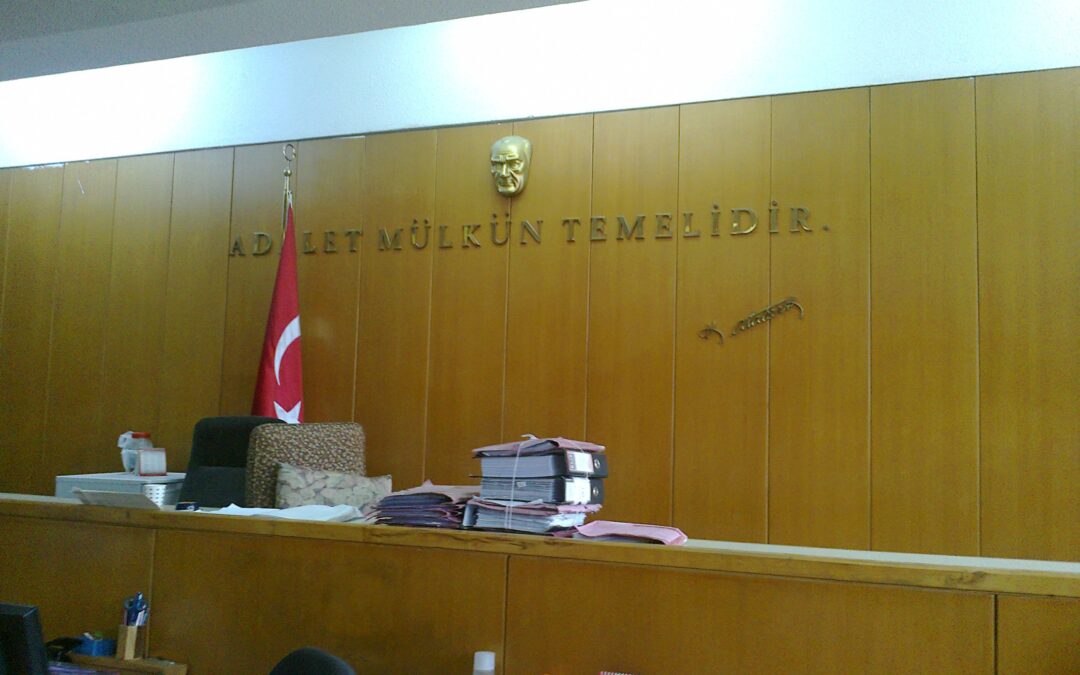
Feb 28, 2020 | News
The ICJ and the International Bar Association’s Human Rights Institute (IBAHRI) urge the Turkish Council of Judges and Prosecutors (CJP) to stop their investigation into the three judges of the Istanbul 30th Heavy Penal Court who, on 18 February 2020, acquitted the defendants in the Gezi Park trial due to a lack of evidence.
According to a statement from 30 Turkish bar associations, the sole reason for the investigation was the acquittal in the Gezi Park trial. The Council of Judges and Prosecutors, the body of self-governance of the judiciary, has the power to launch and take disciplinary action against judges, including disciplinary proceedings leading to removal from office.
“The launch of such an investigation is a further sign of the grave decline of the rule of law in Turkey”, said Massimo Frigo, Senior Legal Adviser for the ICJ Europe and Central Asia Programme “The disciplinary proceedings against these judges appear to be a direct interference in their decision-making power and will have a chilling effect on the independence of all members of the judiciary.”
“The role of the Council of Judges and Prosecutors should be to protect the independence of the judiciary – not to be an instrument of control and pressure against individual judges” said Massimo Frigo.
IBAHRI Co-Chair, the Hon Michael Kirby AC CMG, commented: “The IBAHRI and the ICJ jointly welcomed the acquittal of Osman Kavala and the other 15 defendants. Now, we condemn the re-arrest of Mr Kavala, continue to stand with the defendants, and call for Mr Kavala’s immediate release. We implore the Turkish Council of Judges and Prosecutors to reconsider the hugely damaging impact their inspection of the judges will have on the principles of judicial independence and the rights of lawyers, and to cease all action in this respect.”
The launch of this investigation occurred immediately after the acquittals in the Gezi trial, spurred by the vehement public protests by President Erdogan against the verdict.
30 Turkish Bar Associations have issued a statement calling for the resignation of the members of the Council of Judges and Prosecutors and considered this investigation as a violation of the principle of judicial independence under the Turkish Constitution.
Background
The defendants in the Gezi trial – with the exception of those not present in Turkey who will be tried separately – were acquitted on 18 February for lack of evidence. The ICJ and IBAHRI welcomed the acquittal after having observed all hearings of the trial. The very evening of the verdict, one of the defendants, Osman Kavala, was re-arrested on suspicion of “attempting to disrupt the constitutional order” connected to the failed coup attempt of 2016.
Osman Kavala has been in detention since 18 October 2017 pending trial on charges connected to the Gezi Park protests. The Gezi Park protests began in May 2013 as an effort by a group of environmentalists to save a park in central Istanbul from being rezoned, but soon grew into nationwide demonstrations. Police quelled the protest in Taksim Square with the use of tear gas and water cannons.
Contact:
Massimo Frigo, ICJ Senior Legal Adviser – e: massimo.frigo(a)icj.org – t: +41229793805