Sep 14, 2020 | News
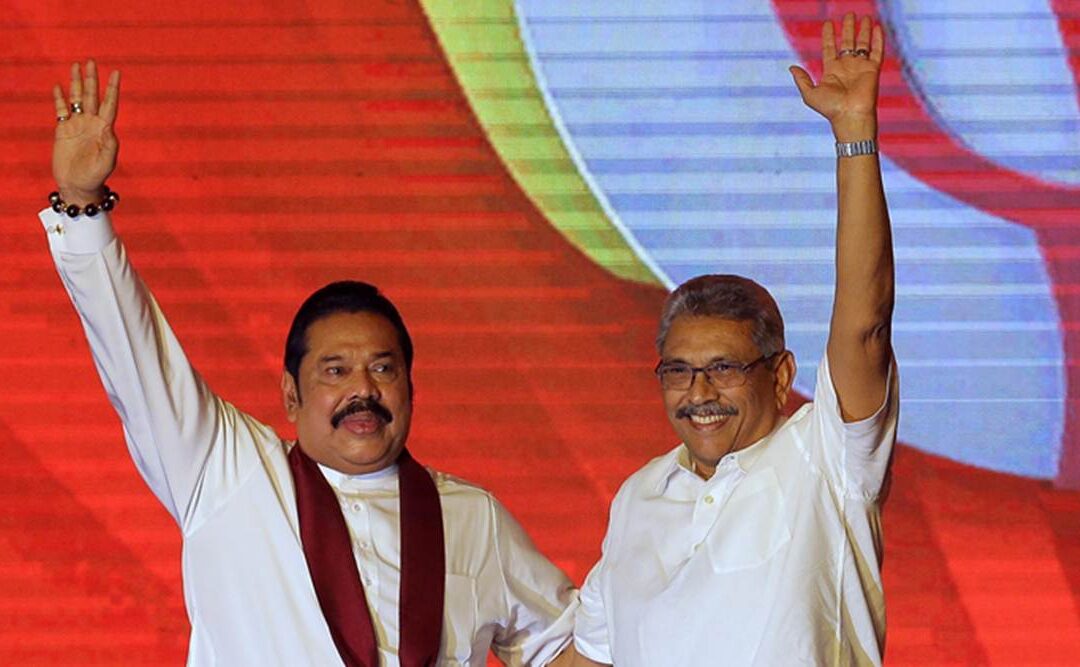
The Sri Lankan parliament should reject the Sri Lankan Government’s efforts to amend the country’s constitution to provide unfettered powers to the President while encroaching on the powers of the legislature and infringing upon the independence of the judiciary, said the ICJ today.
“The proposed 20th Amendment, which bestows an already powerful executive president with additional powers with no effective checks on him, essentially placing him above the law,” said Sam Zarifi, ICJ’s Secretary General. “These amendments would tilt the balance of State power heavily on the side of the executive and in particular on a single person.”
The proposed 20th Amendment to the Constitution bill rolls back most of the reforms brought about by the 19th Amendment to the Constitution, the passage of which the UN Human Rights Council welcomed as “promoting democratic governance and oversight of key institutions”.
The 19th amendment, adopted in 2015, had imposed certain limits to the Executive President’s authority and powers, including in respect of terms of the office of President, the capacity to dissolve Parliament and to fast-track legislation. It also removed the blanket immunity the President enjoyed from legal proceedings. Critically, it had established a Constitutional Council which restrained the President’s discretion in appointing key governmental actors including in the judiciary, the Attorney General and the Inspector General of Police.
The ICJ notes that the 20th amendment appears to reproduce much of the regressive features of the old 18th amendment, which the 19th amendment had been brought about to correct.
“Sri Lanka’s Executive branch has a poor record of respecting human rights and the rule of law, and the 19th Amendment was an effort to impose the checks and balances necessary for the rule of law,” said Sam Zarifi. “The constitutional changes being proposed would take the country back to the dark days of Executive impunity.”
“We are particularly concerned that these changes would undermine the independence of the judiciary, as the President would have unfettered discretion to appoint the superior judiciary, including the Chief Justice, the President and Judges of the Court of the Appeal, and to control the Judicial Service Commission,” said Sam Zarifi.
The JSC is the body entrusted with the power to appoint, promote, transfer exercise disciplinary control and dismiss judicial officers of the subordinate courts. The changes would also grant the President the power to nominate members of the Judicial Service Commission (JSC) other than its Chairman which is ex officio, the Chief Justice.
The UN Basic Principles on the Independence of the Judiciary states that “Any method of judicial selection shall safeguard against judicial appointments for improper motives.”
Under international standards and recommendations of the UN Special Rapporteur on the Independence of the Judiciary, appointments to the judiciary should not be vested solely with the executive.
A judicial appointment process which gives the President full discretion would inevitably result in the significant erosion of the independence and impartiality of the Sri Lankan judiciary.
Moreover, several checks placed on the President’s powers by the 19th Amendment have also been removed while giving him greater legal immunity. The President would also be granted sole power to appoint the cabinet, assign to himself any cabinet portfolio and been given unfettered discretion in relation to the appointment and dismissal of the Prime Minister. The President would also retain the power to dissolve the Parliament within one year.
Contact
For questions and clarifications: Osama Motiwala, Communications Officer – osama.motiwala(a)icj.org
Aug 7, 2020 | Advocacy, Agendas, News
On 6-7 August the ICJ co-hosted a symposium on threats to judicial independence in East and Southern Africa.
The event was held with the collaboration of the Africa Judges and Jurists Forum, the Kenyan Section of the International Commission of Jurists Kenya Section, Open Society Initiative for Southern Africa, Southern Africa Development Community Lawyers Association, Malawi Law Society, Pan African Lawyers Association, East Africa Lawyers Association and the American Bar Association.
Recent actions taken to undermine judicial independence in East and Southern Africa include proposed constitutional amendments, executive interference with the functioning of the Judicial Service Commissions and verbal as well as physical threats against judges.
Participants in the symposium included judges, lawyers, academics and civil society representative. ICJ Commissioner and former Chief Justice of Kenya Dr Willy Mutunga, and Professor Jill Ghai of Katiba Institute delivered the key note addresses.
Dr Willy Mutunga speaking to challenges of judicial independence in the political context of Kenya in his keynote address, said “I believe that the independence of the judiciary… is about the integrity of the judicial officers… Building peoples’ confidence in the judiciary and the judicial officers depends on the integrity of the institution and its judicial officers and staff.”
In her address, Professor Jill Ghai evaluated various ways in which independence of the judiciary is undermined, taking into account examples from various countries.
“We must not relent in letting the Executive know that we are watching whenever there are attempts to undermine the judiciary,” Ghai said in closing.
ICJ Secretary General Sam Zarifi that judicial independence was facing genuine threats, not just in Africa but throughout the world.
“The issue of judicial independence has been at the heart of the ICJ’s work for the last 70 years almost… We have been defending the rule of law and human rights. For both of those the independence of the judiciary is absolutely essential,” Zarifi said.
On the second day of the symposium, participants into four groups discussed the nature of challenges and weaknesses in the Executive-Judiciary relations, litigation as a strategy for protecting judicial independence, strategies for increasing social and political activism in defence of judicial independence, and the prospects and strategies for regional and international advocacy in the age of COVID-19 respectively.
In his closing remarks, outgoing ICJ Regional Director Arnold Tsunga flagged Malawi as a recent case study where the judiciary had demonstrated its independence when the Constitutional Court nullified the 2019 presidential election results, citing widespread irregularities.
Watch the proceedings of the symposium here:
Welcome and keynote address
Closing remarks
Contact:
Justice Mavedzenge (ICJ Legal Advisor) t: +27793889990 e: justice.mavedzenge(a)icj.org
Shaazia Ebrahim (ICJ Media Officer) t: +27716706719 e: shaazia.ebrahim(a)icj.org
Jul 22, 2020 | Advocacy, Cases, Legal submissions, News
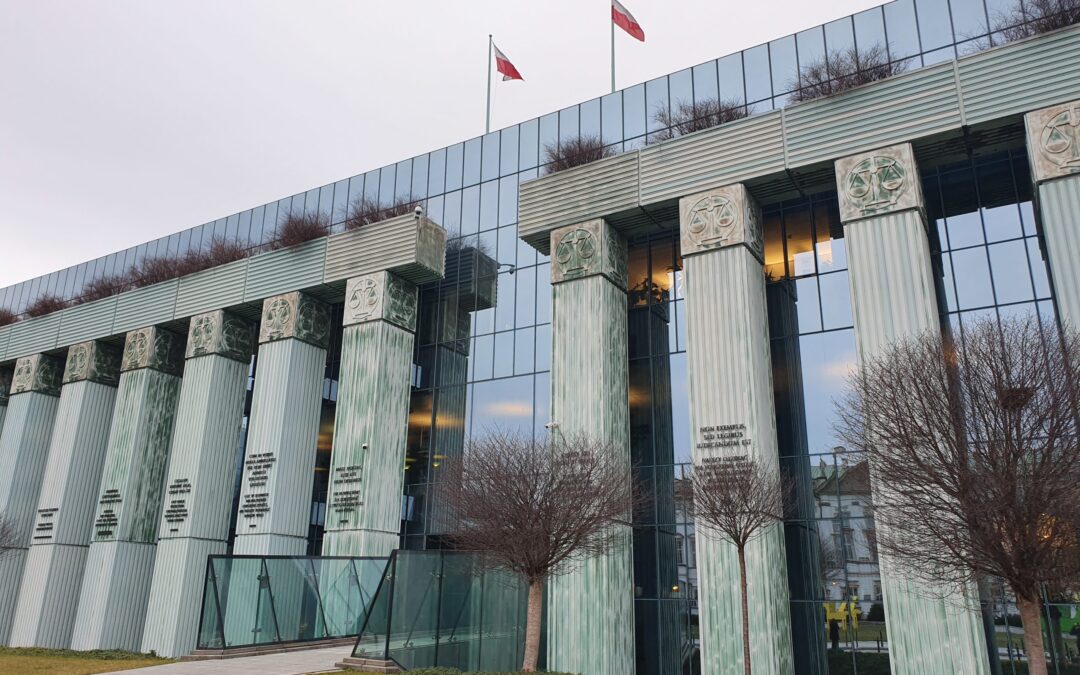
The ICJ and Amnesty International have submitted a joint third party intervention before the European Court of Human Rights in the case of Judges Mariusz Broda and Alina Bojara.
The case concerns the premature termination of their mandates as vice-presidents of the regional tribunal of Kielce in Poland. The two judges, that had been appointed to six-year terms in 2014, had their position revoked by the Minister of Justice in 2018.
The revocation was based on article 17.1 of the Law of 12 July 2017 modifying the Law on the Judicial System. This provision, presented and approved by the ruling Law and Justice Party (PiS), gave the Minister of Justice the power to revoke courts’ presidents and vice-presidents without justified grounds and with no possibility of appeal.
The two judges applied to the European Court of Human Rights alleging that they had been denied access to a tribunal to challenge the termination of their mandate .
In their third party intervention, the ICJ and Amnesty International analyze international standards on judicial independence, including as regards the role court presidents and vice-presidents, and the consequences of these standards for the right of access to court under Article 6.1 ECHR. The intervention also analyses the recent legislative and policy developments that have seriously undermined the independence of the Polish judiciary.
Read the full intervention here: Broda_v_Poland-AmicusCuriae-ICJ&AI-Cases-2020-ENG.
Jul 10, 2020 | Events, News
Today, the ICJ and the Human Rights Joint Platform (IHOP) are hosting an online conference to take stock of the current situation of access to justice and the rule of law in Turkey and discuss compliance with international standards and the Turkish Constitution.
The online conference features international and European experts and will address the shortcomings in accessing justice in the country both in terms of the capacity of the justice system to ensure the respect and protection of human rights and of the independence and effectiveness of the justice system itself.
The conference will take stock of the state of access to justice in Turkey after four years of extraordinary and worrisome events for the Rule of Law and human rights in the country. During this period, Turkey has experienced a severe deterioration in the rule of law. The state of emergency, in force between 2016 and 2018, has led to the cleansing of the judiciary and restricted the capacity of lawyers and civil society to act, and increasingly dramatically the arrests and trials of some of their members under spurious charges of terrorism, offences against the State, insult to the nation or its President, and hate speech crimes.
Many of the measures undertaken under the state of emergency included mass dismissal of public servants, judges and prosecutors without ensuring due process guarantees and the degradation of the justice system, depriving the judiciary of essential guarantees to ensure its independence from the political authorities.
The conference will address how these developments impacted the capacity of people in Turkey, and in particular those belonging to marginalised groups, to access justice for their human rights, and what should be done to ensure that such access exists and is effective.
As a result of the conference, a draft statement on the state of access to justice in Turkey will be issued to provide Turkish authorities with recommendations on how to ensure effective and independent access to justice for human rights protection.
Jun 5, 2020 | News
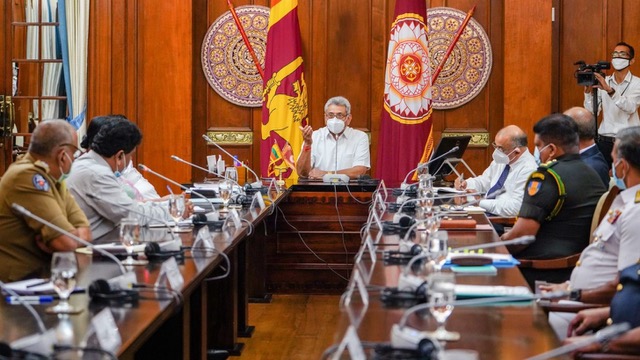
The ICJ today condemned the proclamation by the Sri Lankan president to establish a Presidential Task Force dominated by the security forces and called for the proclamation to be rescinded.
On June 2, 2020, Sri Lankan President Gotabaya Rajapaksa issued an extraordinary gazette establishing a 13-member “Presidential Task Force to build a Secure Country, Disciplined, Virtuous and Lawful Society.” The Task Force is composed entirely of military, intelligence and police officials. It is to be headed by Defence Secretary, Retired Major General Kamal Gunaratne.
“This Presidential Task Force constitutes another act of over-reach by a government seeking to take advantage of the COVID-19 pandemic to further expand its powers,” said Frederick Rawski, ICJ’s Regional Director for Asia and the Pacific. “Its mandate is overbroad, and it empowers its military and police membership – including alleged war criminals – at a time when strong, independent, civilian-led policy-making is what is needed.”
The Task Force is given a sweeping mandate which includes:
- “taking necessary immediate steps to curb the illegal activities of social groups which are violating the law”
- “taking measures for prevention of the drug menace…”
- “taking legal action against persons responsible for illegal and antisocial activities conducted in Sri Lanka while locating in other countries”
- “investigating and preventing any illegal and antisocial activities in and around prisons.”
The task force also has the power to “conduct investigations and to issue directions as may be necessary in connection with the functions entrusted to it.” This includes issuing instructions to government officials to comply with its directives or be reported to the President.
The ICJ raised concerns that the task force has not been established on proper legal foundations. It is apparently pursuant to the broad, but ill-defined presidential powers under Article 33 of the Constitution.
The ICJ said that the task force could effectively usurp the powers and functions normally reserved for civilian authorities, under rule of law principles and as established by the Constitution and relevant enabling legislations.
Article 42 (1) of the Constitution provides that the “Cabinet of Ministers shall be charged with the direction and control of the Government.” Law enforcement and public officials under the direction of the relevant Minister have been designated under existing laws to specifically address drug-related offences and any other illegal and/ or criminal activity that seemingly fall within the mandate of this Task Force. The independence of public officials will be compromised if they are compelled to report to a military-dominated body. The Gazette provides no detail on how this reporting process would operate, or the legal consequences of refusing to act as instructed.
“Few doubt that this task force will be used as another tool to suppress speech and target critics of the Sri Lankan government. It is disturbing that such a potentially consequential body has been formed pursuant to broad presidential powers, with no reference to judicial or parliamentary oversight,” said Rawski. “Vague and overbroad language such as ‘anti-social activities’ could effectively criminalize expression protected under international law. Such provisions are inconsistent with the rule of law and contravene the principle of legality.”
The task force’s military and police membership follows a pattern of recent military appointments to civil administrative positions by the incumbent President. The military personnel appointed include officials credibly accused of war crimes. Chairman Major General Kamal Gunaratne was the commander of the 53rd division and Major General Shavendra Silva was the commander of the 58th Division of the Sri Lankan Army. Both units were identified by multiple UN investigatory bodies as having been involved in the commission of serious crimes and human rights violations during the last stages of Sri Lanka’s decades-long armed conflict which ended in 2009.
The ICJ called upon President Gotabaya Rajapaksa to rescind the extraordinary gazette establishing the Presidential Task Force. The role of the military in public life must be strictly circumscribed and matters pertaining to civil administrcation should be executed by elected and public officials in respect of the rule of law and principles of democratic governance.
Contact
Frederick Rawski, ICJ’s Asia Pacific Regional Director, t: +66 2 619 84 77; e: frederick.rawski(a)icj.org