Mar 23, 2016 | Advocacy, Non-legal submissions
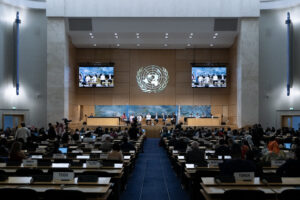
The ICJ today joined other NGOs in an oral statement to the UN Human Rights Council on the findings of the report of the OHCHR investigation mission on Libya.
It includes that violations of international law taking place throughout Libya “may amount to war crimes and other international crimes under international law.”
The statement continued as follows:
All sides to the conflict in Libya continue to perpetrate grave human rights violations and abuses. As highlighted by the UN High Commissioner for Human Rights, these violations continue to take place with “complete impunity” amid the collapse of the domestic justice system.
Unless genuine accountability is provided for these ongoing crimes the cycle of violence in Libya will continue, and the peace process will likely become no more than a well-intentioned piece of paper.
In this context, this Council has a duty to remain seized of the human rights situation in Libya, ensure continued monitoring of the situation and act to strengthen international accountability for crimes committed in Libya if the national system remains incapable of fulfilling this role. We are deeply concerned that the current resolution before this Council falls short of that standard.
Additionally, all UN member states should ensure that the International Criminal Court has the capacity to fulfill the mandate provided to it by the Security Council and begin fully fledged investigations into past and ongoing crimes committed in Libya.
As highlighted by civil society in a letter to this Council: “It is critical that all parties to the conflict are put on notice that their actions are being monitored and that accountability for serious crimes is a real prospect rather than an empty threat. Failure to do so will likely embolden those committing violations of international human rights and humanitarian law and will reinforce the endless cycle of impunity” in Libya.
The statement was on behalf of Cairo Institute for Human Rights Studies, CIVICUS, Human Rights Watch, International Commission of Jurists, FIDH, and OMCT.
Oct 1, 2015 | News
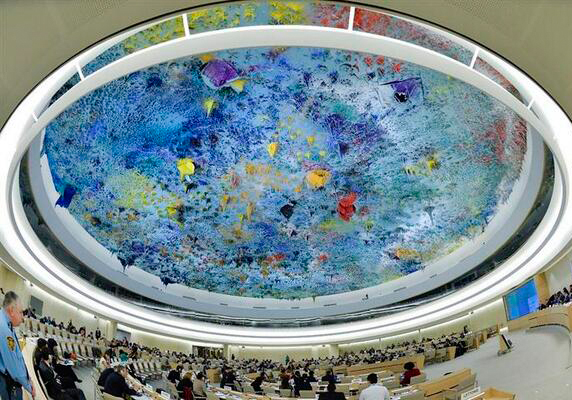
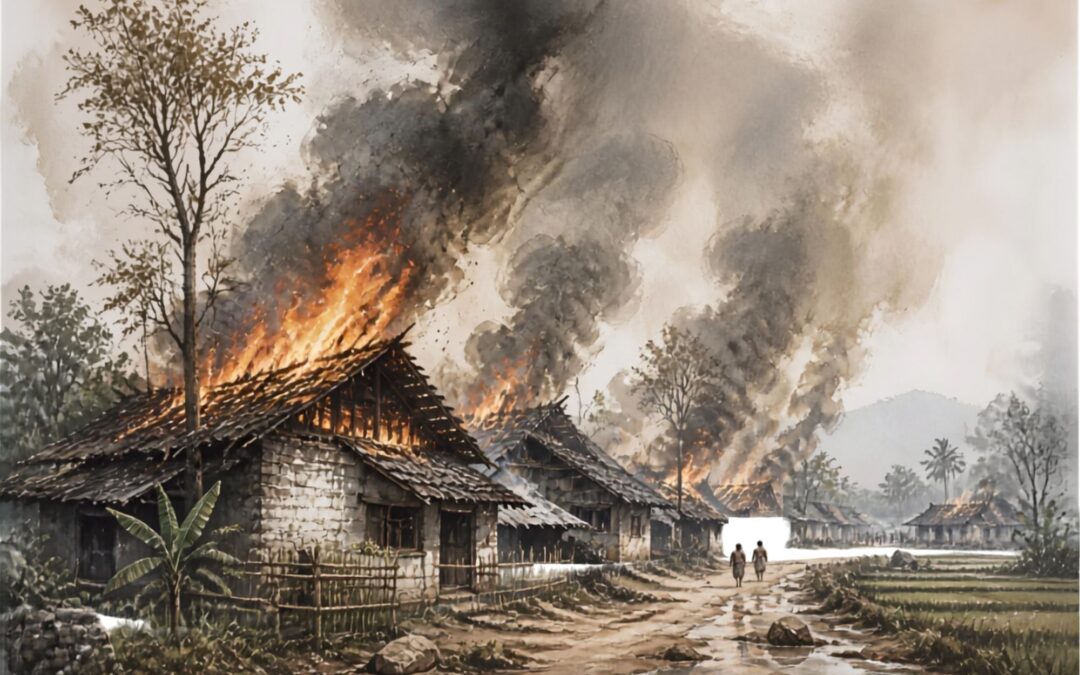
The ICJ today welcomed the adoption by the UN Human Rights Council of a further resolution on promoting reconciliation, accountability and human rights in Sri Lanka.
The resolution, co-sponsored for the first time by the Government of Sri Lanka (GOSL), is a historic step towards post-war justice, accountability and reconciliation.
The ICJ at the same time called on the GOSL to take genuine and prompt steps to deliver on the commitments and obligations reflected in the resolution, which was adopted by the UN Human Rights Council by consensus.
“Today’s resolution is a significant step towards achieving justice, accountability and reconciliation for the victims of Sri Lanka’s long and bloody civil war,” said Nikhil Narayan, ICJ’s senior legal adviser for South Asia.
“The shift in posture of the Sri Lankan Government in co-sponsoring the resolution marks a further welcome break from the Rajapakse regime. The Government must now demonstrate its political will by immediately launching concrete steps towards a genuine process of truth-seeking, justice and reconciliation,” he added.
The consensus resolution reflects certain key recommendations contained in the Report of the office of the UN High Commissioner for Human Rights (OHCHR) summarizing findings of the OHCHR Investigation on Sri Lanka (OISL), the ICJ notes.
The investigation and report was mandated by an earlier UN resolution on Sri Lanka, adopted in March 2014 over the strong objections of the Rajapakse government.
The report documents in vivid detail alleged serious violations and abuses of human rights and humanitarian law amounting to war crimes and crimes against humanity committed by both sides during the armed conflict in Sri Lanka, including extrajudicial killings, torture, enforced disappearances, forced recruitment, including of children, and sexual violence.
One of the most important recommendations of the High Commissioner for Human Rights called for an accountability process through a special judicial mechanism and prosecutor’s office that involves the full participation of international judges, prosecutors, lawyers and investigators.
Responding in part to this call, the resolution affirms the importance of participation of foreign judges, defence lawyers, prosecutors and investigators in an independent and impartial judicial mechanism to hold individuals accountable for human rights and humanitarian law violations, including those documented in the report.
The resolution also mandates further monitoring and reporting back to the Council on implementation of the accountability and other measures.
“The international community, through the UN Human Rights Council, the Office of the High Commissioner for Human Rights and Special Procedures, and other UN member states, must as the High Commissioner himself recommended, remain engaged through continued and sustained monitoring, assistance, support and fully integrated involvement of the international community to ensure full implementation of the resolution,” said Narayan.
Background:
The ICJ has worked with judiciaries, governments, civil society and victims around the world for decades to address impunity and victims’ right to remedy for violations of international human rights and humanitarian law, including in situations of transition.
In Sri Lanka, the ICJ has been documenting and reporting on a gradual erosion of judicial independence, impartiality and integrity under successive governments, and the resulting culture of impunity, for over thirty years.
The ICJ considers the International Criminal Court (ICC) to be the preferred mechanism for individual accountability where national authorities and courts lack the capacity or the willingness to genuinely investigate and prosecute all war crimes and crimes against humanity. In the absence of an ICC process, the ICJ’s extensive experience in Sri Lanka and elsewhere demonstrates that any credible and effective accountability process in Sri Lanka must involve, at a minimum, a majority of international judges, prosecutors and investigators.
The ICJ therefore advocated for and welcomed the resolution’s recognition of the need for international participation.
Since January 2015, when a new president was elected, the GOSL has undertaken a number of important steps to reverse the slide towards authoritarianism and the erosion of the rule of law and the culture of impunity experienced under the Rajapakse government, and restore democratic governance and build confidence towards reconciliation among Sri Lanka’s ethnic minorities, including by restoring the Constitutional Council through the passage of the 19th amendment to the Sri Lankan Constitution, and returning some tracts of military-occupied lands in the North and East.
However, after decades of war and distrust, and a history of promises undelivered, much work remains to be done to deliver justice to victims and their families, and to rebuild trust and confidence among Sri Lanka’s fractured ethnic minorities. Continued and sustained monitoring and engagement by the international community in ensuring the progress of the implementation of this resolution will be essential.
Equally importantly, today’s consensus resolution also reaffirmed the OHCHR’s recommendations on: the mandate and resources of the accountability mechanisms; legislating retroactive recognition of international crimes under national law; justice and security sector reform; repealing the Prevention of Terrorism Act (PTA); strengthening the Witness and Victim Protection Act; accession to the International Convention on the Protection of All Persons from Enforced Disappearances (CED), the Additional Protocols to the Geneva Convention, and the Rome Statute of the International Criminal Court; and continued monitoring of and technical support for implementation through the OHCHR and by the Council.
Contact
Nikhil Narayan, ICJ’s senior legal adviser for South Asia; t: +41 79 730 09 27; e: nikhil.narayan(a)icj.org
Jul 1, 2015 | Advocacy, Open letters
The statement has been endorsed by more than 100 civil society groups, including the ICJ, with representation in more than 25 African states, following Omar al-Bashir’s travel to South Africa from June 13-15.
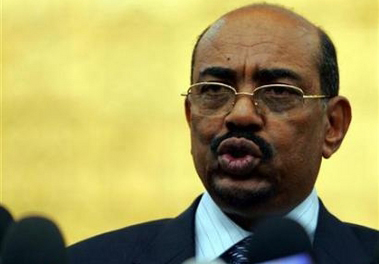
The declaration raises grave concern over South Africa’s flouting its domestic and international legal obligations in failing to arrest al-Bashir (photo), and applauds the efforts of Southern Africa Litigation Centre, which filed an application before South Africa’s courts to compel al-Bashir’s arrest.
The declaration is a strong testament to support for victims of grave crimes to have access to justice, for the ICC’s efforts to advance justice for crimes committed in Darfur, and for activism to ensure al-Bashir’s surrender to the ICC.
SouthAfrica-Civil Society Declaration on Bashir-Advocacy-Open letters-2015-ENG (full text in PDF)
Oct 1, 2013 | News
The ICJ denounces the death penalty handed down today by the International Crimes Tribunal (ICT) to Salauddin Quader Chowdhury, a member of the Bangladesh Nationalist Party, the main opposition party.
If carried out, the sentence would violate Bangladesh’s international law obligations to protect the right to life and freedom from cruel, inhuman, or degrading punishment, the ICJ states.
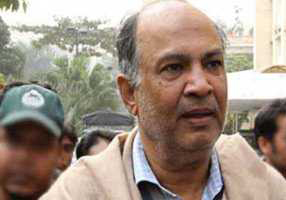
The International Crimes Tribunal convicted Chowdhury (photo) on nine of 23 charges, including murder and genocide, and sentenced him to death.
“The Bangladesh Tribunal is one of very few transitional justice mechanisms that have imposed the death penalty,” said Sam Zarifi, ICJ’s Asia-Pacific Director. “It is unfortunate that Bangladesh seeks to punish human rights violations by committing rights violations itself.”
The ICJ considers the death penalty in all cases to constitute a violation of the right to life and the right not to be subjected to cruel, inhuman or degrading punishment.
This is the seventh verdict delivered by the International Crimes Tribunal. Death sentences have been handed out in all but one case.
”Bangladeshi law as well as international human rights standards require that death penalty cases receive a fair and thorough review, so it is crucial that appellate review of these cases proceed properly, without undue political pressure or a timeline established by impending elections in or before January 2014,” Zarifi said.
“Those responsible for the horrific war crimes and crimes against humanity during Bangladesh’s war of liberation in 1971 should be brought to justice in processes that are fair, and seen to be fair, instead of being subjected to vengeance,” he added.
Contact
Sam Zarifi, ICJ Asia-Pacific Regional Director, (Bangkok), t:+66 807819002; email: sam.zarifi(a)icj.org

Feb 28, 2013 | News
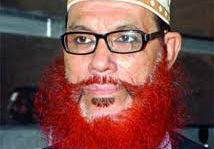 The death sentence handed down by the International Crimes Tribunal today against Delwar Hossain Sayeedi (photo) violates international standards of due process and fair trial, and, if carried out, would violate his right to life, says the ICJ.
“The ICJ wholly condemns the atrocities committed in Bangladesh’s war of liberation in 1971, notably the widespread and systematic use of rape as a form of torture and the unlawful killings. It is paramount that those responsible should be held accountable,” said Sam Zarifi, ICJ Asia Pacific Regional Director. “But even perpetrators of atrocities have rights. They should be brought to justice, not subjected to vengeance.”
Delwar Hossain Sayeedi, vice-president of the Jamaat-e-Islami party, was indicted on 3 October 2011 on 20 charges including genocide and crimes against humanity. He was arrested and brought before the War Crimes Tribunal for the first time on 2 November 2010. He was accused of working with the Al-Badr group during the independence struggle in the early 1970s.
The International Commission of Jurists opposes the death penalty as a violation of the right to life and a form of cruel and inhuman punishment. The United Nations General Assembly has called on all States to establish a moratorium on the death penalty with a view to universal abolition.
Today, crowds gathered outside the courthouse as the verdict was being read, demanding Delwar Hossain Sayeedi be sentenced to death for his role in the atrocities committed in the 1971 war of liberation. Earlier this month, widespread protests erupted across Bangladesh after the Tribunal imposed a life sentence on Abdul Qadar Mollah instead of the death penalty.
“The enormous demonstrations and the unfortunate violence that have accompanied each decision of the ICT demonstrate the passions still enflamed by the crimes of 1971. But it is in everyone’s interest to ensure that the rule of law and the path to justice are not subject to immediate political pressure,” Zarifi added. “The Government’s obligation to bring those responsible for the atrocities committed in 1971 to justice must not outweigh the presumption of innocence and the duty to ensure the security of all persons.”
The ICJ says that the International Crimes Tribunal does not adhere to international standards of a fair trial and due process.
According to the ICJ, there are serious procedure flaws at all stages: pre-trial release has been routinely and arbitrarily denied; witnesses have been abducted and intimidated; there have been credible allegations of collusion between the Government, prosecutors and judges.
On 14 February 2013, a draft amendment was tabled in Parliament, retroactively changing the International Criminal (Tribunals) Act 1973 to enable prosecutors to appeal a life sentence and seek the death penalty.
This amendment came after protests for a death sentence in the 5 February 2013 verdict against Abul Qadar Mollah.
As a State party to the International Covenant on Civil and Political Rights, Bangladesh is obligated to guarantee due process and fair trial rights to all suspects, even those accused of war crimes.
Such obligations include the right to an public hearing before a competent, independent and impartial tribunal; the right to be tried in one’s presence; the right to counsel and the right to a full defence; and the right not to be punished again for an offence for which there has already been a final conviction in accordance with the law.
“Failing to abide by minimum standards of due process will cast doubt on the Tribunal’s findings and undermine victims’ hard-fought battle for justice,” Zarifi said. “The Bangladesh Tribunal is one of very few transitional justice mechanisms that have imposed the death penalty.”
This verdict is the third issued by the tribunal. Earlier this month, Abdul Qader Mollah, the assistant secretary-general of the Jamaat-e-Islami was found guilty and sentenced to life imprisonment for committing crimes against humanity during the 1971 liberation war.
On 21 January, Abul Kalam Azad, a former leading member of the Jamaat-e-Islami party, was tried and convicted in absentia and sentenced to death for crimes committed during Bangladesh’s war of liberation in 1971. He was convicted on six counts of a crime against humanity and one count of genocide.
The government established the Bangladesh International Crimes Tribunal in 2010, after amending the International Crimes (Tribunals) Act 1973. The International Crimes Tribunal has jurisdiction to try crimes against humanity, crimes against peace, genocide, violations of the Geneva conventions and any other crimes under international law.
The ICJ supports the right of victims to seek truth and justice for the atrocities committed in the 1971 Liberation War.
However, any such process must adhere to international human rights standards, including full guarantees for a fair trial.
CONTACT:
Sam Zarifi, ICJ Asia-Pacific Regional Director, t: +66 26198477; email: sam.zarifi(at)icj.org
Sheila Varadan, ICJ Legal Advisor, South Asia Programme, t: +66 857200723; email: sheila.varadan(at)icj.org