Feb 17, 2021 | Advocacy, Non-legal submissions
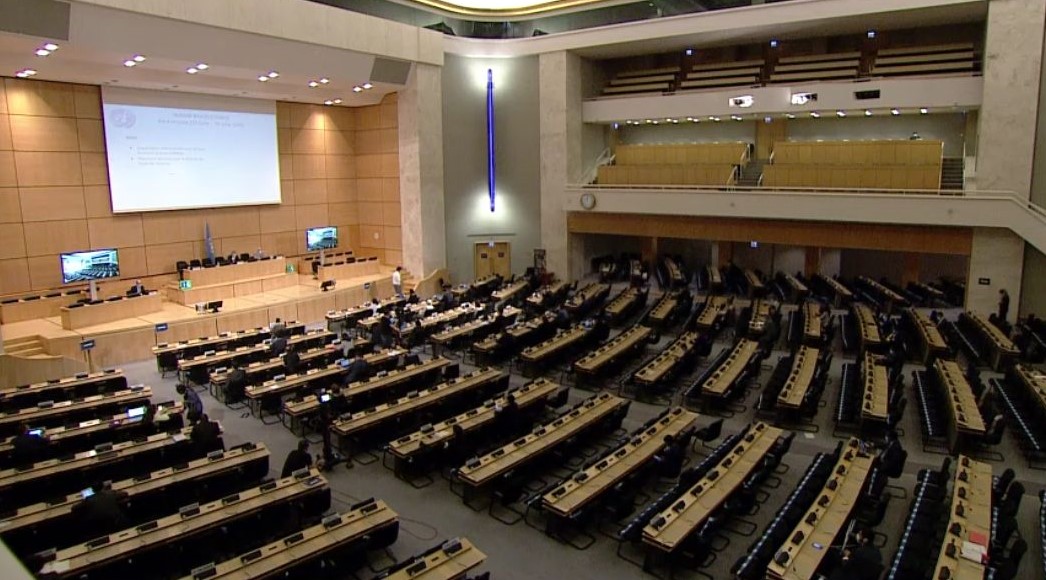
The ICJ, together with ARTICLE 19, today addressed the Advisory Committee of the UN Human Rights Council on its work on “negative effects of terrorism on the enjoyment of human rights”. They called on the Committee as it finalizes its report to resist attempts to deviate from the human rights focus at the core of its mandate.
The joint statement read as follows:
“The International Commission of Jurists (ICJ) and ARTICLE 19 welcome the opportunity to engage in this discussion of the draft report on the negative effects of terrorism on human rights.
Given that we have not been able to review the current draft report, we must reiterate our call previously stated during the 24th session to consider the broader context into which this report will be delivered.
We ask the Committee to maintain its focus on the primary objectives of preventing and addressing human rights violations resulting from counter-terrorism measures, and promoting and ensuring protection of the human rights of victims of terrorism. This has been the longstanding focus of the Human Rights Council, despite the efforts of a few states to divert its attention away from core human rights concerns.
Any report addressing the “negative effects of terrorism” should maintain this focus, consolidating the extensive work already done in this regard by successive Special Rapporteurs and other UN and regional entities, as collected in the compilation published by the ICJ in 2019.
The report must not enable the diversion of precious attention and resources to more diffuse questions of impacts of a macro-economic or similar character, in respect of which a human rights-based approach has little to add in terms of concrete recommendations or guidance to States.
The ICJ and ARTICLE 19 share and endorse the positions set out in the recent report of the Special Rapporteur to the UN Human Rights Council as they relate to the effects of terrorism on the promotion and protection of human rights (UN Doc. A/HRC/46/36).
We agree with the Special Rapporteur’s observation that “reflection on the enjoyment of economic, social and cultural rights in the terrorism and counter-terrorism arenas has been understated” (para. 32).
As the Special Rapporteur has stated, however, “there is no legal basis to view the State as primary victim of terrorism through the economic costs that may be experienced from acts of terrorism”.
Two principles, in this respect, should be reinforced: individuals and peoples are the primary rights holders under human rights law, and States have to carry out the legal obligations prescribed by international human rights law. Any confusion or suggestions otherwise may serve to undermine human rights law.
We agree with the Special Rapporteur that the lack of precise definition in terrorism and counter-terrorism and the blurring of lines between counter-terrorism and international humanitarian law will have a pernicious effect and will seriously tarnish human rights protection.
As highlighted before, we also concur that any work on effects of terrorism must be centred on the human rights of victims of terrorism, on the duty under international human rights law of all States to prevent, protect, investigate and redress any abuse to human rights.
We urge the Advisory Committee to include a clear recommendation to the Council that the exclusive focus of the Council’s work remain on violations in countering terrorism and a human-rights based approach to victims of terrorism.
We call on the Committee to recommend against the Council entering into more diffuse macroeconomic issues.
We urge you to affirm that the existing and longstanding normative and institutional framework on counter-terrorism and human rights is already sufficient to address relevant impacts of terrorism from a human rights perspective.
Thank you.”
For further information contact:
Massimo Frigo, ICJ UN Representative, massimo.frigo@icj.org – +41797499949
Anna Oosterlinck, Head of UN, ARTICLE 19, annaoosterlinck@article19.org
Feb 12, 2021 | Advocacy, Non-legal submissions
The ICJ today addressed an emergency Special Session of the UN Human Rights Council on Myanmar, outlining violations to human rights and the rule of law occurring in the country since the coup d’état of 1 February.
The Special Session is expected to adopt a resolution to address “The human rights implications of the crisis in Myanmar.”
The ICJ statement read as follows:
“Madame President,
The International Commission of Jurists condemns the Myanmar military’s unlawful seizure of authority and the unconstitutional declaration of a state of emergency on 1 February.
These actions defy core rule of law principles and provide an illegitimate basis for the suspension and erosion of human rights.
Nearly 200 people, including human rights defenders, have been arbitrarily detained, some in unknown locations. Security forces have used excessive force against peaceful protesters, causing serious injuries.
Regulations imposed pursuant to the state of emergency grant military forces nearly complete impunity. Furthermore, these regulations suspend crucial judicial remedies for violations of rights, such as the writ of habeas corpus.
Judges, including from the Supreme Court, have been illegally removed and replaced, undermining the independence of an already embattled judiciary.
The military takeover further endangers the already grave situation of the Rohingya community.
The ICJ calls on the Human Rights Council to urge the military to immediately return authority to the civilian government and allow immediate access to the Special Rapporteur on Myanmar and other special procedures, the OHCHR, and the Independent Investigative Mechanism for Myanmar, whose mandate includes investigating all serious human rights violations.
Member States should take necessary measures to ensure truth, justice and accountability for crimes under international law, including by supporting all relevant accountability mechanisms.
Thank you.”
Feb 5, 2021 | Advocacy, Non-legal submissions
Today, the ICJ and other human rights NGOs have written to UN Member States to call for a renewal of the mandate of the UN Commission on Human Rights in South Sudan.
The joint letter highlights the existing remaining concern on the human rights situaion in South Sudan and provide with key recommendation for its functioning.
Find the joint letter here: SouthSudan-UN-JointLetter-Advocacy-NonLegal-2021-ENG
Contact:
Massimo Frigo, ICJ UN Representative, e: massimo.frigo(a)icj.org, t: +41797499949
Oct 13, 2020 | Advocacy, News, Non-legal submissions
On 12 October 2020, the ICJ made a submission to the Human Rights Council’s Working Group on the Universal Periodic Review in advance of the Human Rights Council’s review of Singapore in May 2021.
In its submission, the ICJ expressed concern about the following issues:
(i) Freedom of expression online;
(ii) The death penalty;
(iii) Corporal punishment; and
(iv) International human rights instruments.
The ICJ further called upon the Human Rights Council and the Working Group on the Universal Periodic Review to recommend that Singapore ensure, in law and in practice, the right to freedom of expression online, the right to life and the absolute prohibition against cruel, inhuman or degrading treatment or punishment; and become a party to core international human rights instruments, including the International Covenant on Economic, Social and Cultural Rights, the International Covenant on Civil and Political Rights, the Convention Against Torture and Other Cruel, Inhuman or Degrading Treatment or Punishment, the International Convention on the Protection of the Rights of All Migrant Workers and Members of Their Families and the International Convention for the Protection of All Persons from Enforced Disappearance, as well as the existing Optional Protocols to some of these treaties.
The submission is available in PDF here.
Oct 5, 2020 | Advocacy, Non-legal submissions
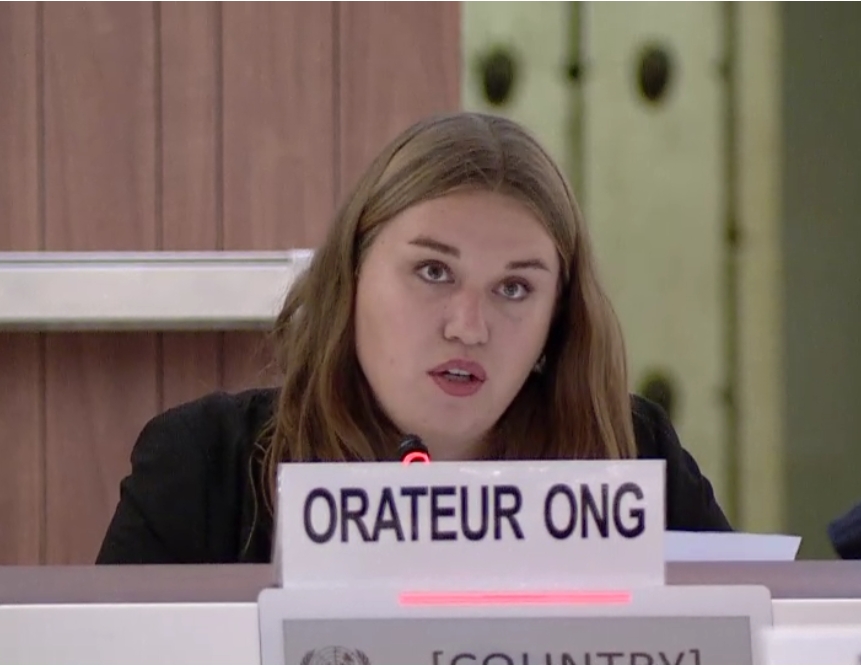
The ICJ today highlighted the need for accountability for crimes under international law in Libya, and concerns for the independence of lawyers in Ukraine, at the UN Human Rights Council in Geneva.
The oral statement, delivered in the general debate on technical cooperation and capacity building, read as follows:
“Madame President,
The International Commission of Jurists (ICJ) welcomes the oral updates on Ukraine and Libya.
Technical assistance and capacity building objectives in Libya can only be achieved if the protection of human rights, entrenchment of the rule of law and pursuit of accountability are prioritized.
States should support the Fact-Finding Mission by extending its reporting mandate, increasing contributions to the UN budget necessary to establish the Mission’s secretariat, and fully cooperating with it.
States should also support the Berlin Process working groups, ensuring that the political and accountability pillars work in unison and making meaningful commitments to implement their recommendations.
Across all of Ukraine, lawyers continue to be associated with their clients and may face consequences for representing them by private individuals and also through abuse of legal proceedings. High-profile cases bear risks for independent lawyers who choose to diligently represent their clients.
The decline in security of lawyers in and outside of courts, and the problem of threats, harassment, and attacks against lawyers, should be addressed as a matter of priority, including through technical cooperation. Measures should be taken to build the capacity of law enforcement agencies and court security personnel to ensure that lawyers and others involved in court proceedings can work in an atmosphere free from intimidation, harassment, and improper interference.
Thank you.”