Mar 2, 2021 | News
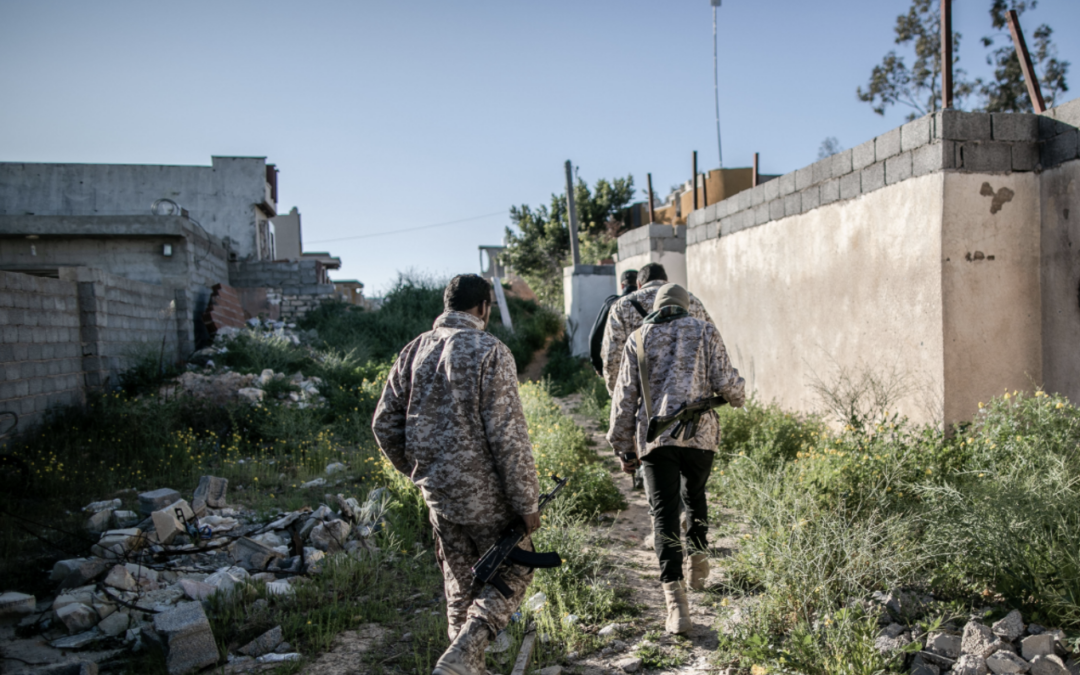
Justice and accountability in Libya can only be achieved if activists and lawyers fully engage with and support the UN Independent Fact-Finding Mission on Libya (FFM) in documenting and collecting evidence of serious violations in the country, the ICJ said today.
To facilitate such engagement, the ICJ’s Question and Answer (Q&A) published today provides guidance for Libyan and international civil society actors on:
- the role and mandate of the FFM;
- the FFM’s relationship with other accountability mechanisms, such as the International Criminal Court (ICC);
- what the FFM may be expected to achieve; and
- how to engage with the FFM.
“The success of the FFM’s mandate rests largely on its ability to establish the facts about and collect evidence of violations and abuses of international human rights and humanitarian law perpetrated in Libya.”
“We urge lawyers, activists and civil society actors to fully support the FFM in achieving these objectives and bringing about the accountability that has so far eluded Libya.”
– Said Benarbia, the ICJ’s MENA Programme Director.
The FFM was established by the UN Human Rights Council on 22 June 2020 through resolution 43/39. Its mandate includes:
- Establishing facts and circumstances of the human rights situation throughout Libya;
- Collecting and reviewing relevant information;
- Documenting alleged violations and abuses of international human rights law and international humanitarian law, including any gendered dimensions of such violations and abuses; and
- Preserving evidence with a view to ensuring that perpetrators be held accountable.
While the FFM cannot conduct criminal investigations or prosecute individuals, the evidence preserved may be used by Libyan judicial authorities, the ICC, and third countries exercising universal jurisdiction.
The FFM has issued a call for submissions of relevant information and materials, the deadline for which is 30 June 2021.
Contact
Said Benarbia, Director, ICJ Middle East and North Africa Programme; t: +41 22 979 3817, e: said.benarbia(a)icj.org
Vito Todeschini, Legal Adviser, ICJ Middle East and North Africa Programme; t: +216 53 334 679, e: vito.todeschini(a)icj.org
Asser Khattab, Research and Communications Officer, ICJ Middle East and North Africa Programme; e: Asser.Khattab(a)icj.org
Download
Q&A on the UN International Fact-Finding Mission in English and Arabic.
Press Release in English and Arabic.
Feb 25, 2021 | Advocacy, Non-legal submissions
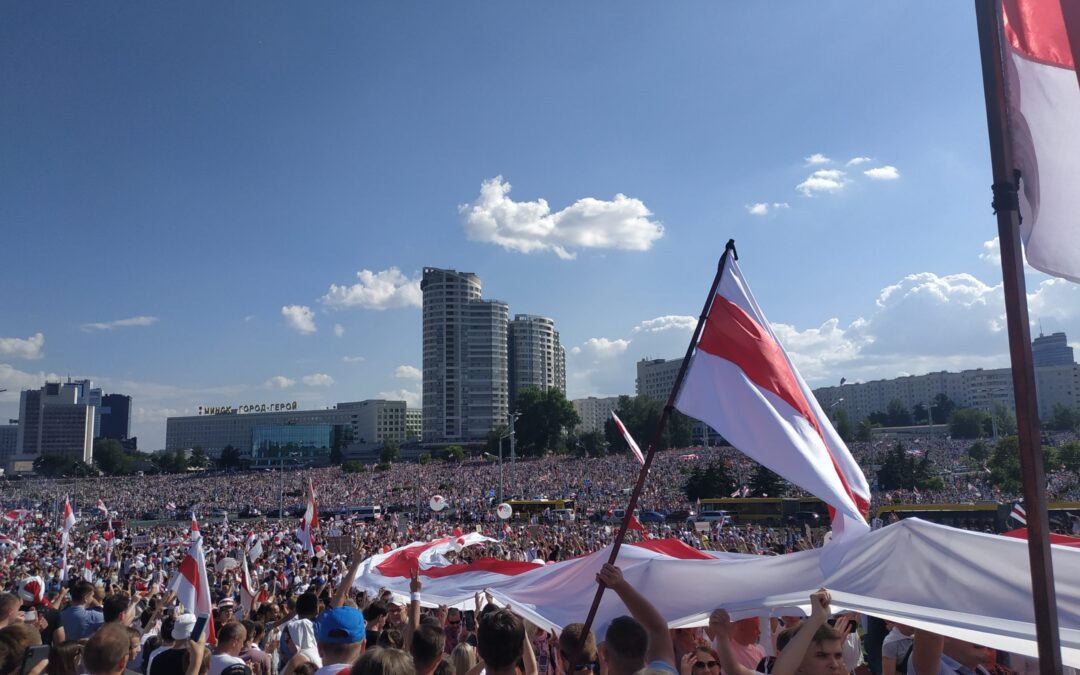
The ICJ today addressed the UN Human Rights Council in the Enhanced Interactive Dialogue on the Report of the Office of the High Commissioner for Human Rights on the situation of human rights in Belarus in the context of the 2020 presidential election.
The statement reads as follows:
“Madam President,
The International Commission of Jurists welcomes the High Commissioner’s report on the situation of human rights in Belarus (A/HRC/46/4).
The ICJ stresses the need to address the systemic issues underlying unfair trial, arbitrary detention, torture, other ill-treatment and enforced disappearance in Belarus. In particular, it is crucial to ensure an independent judiciary and bar association.
Without comprehensive reforms to these institutions, there is little prospect of fair trial, or of effective remedies or accountability for the widespread human rights violations occurring after the 2020 election.
The ICJ is alarmed at recent arrests and disbarments of lawyers in connection with the protests. Disbarred lawyers include Aleksandr Pylchenko as well as Liudmila Kazak, the fourth lawyer of Maria Kolesnikova, a detained opposition figure, to have suffered consequences as a result of their professional activities. Furthermore, criminal cases have been initiated against lawyers Ilya Saley and Maxim Znak.
We call on the Human Rights Council to establish a mechanism to collect and preserve evidence, identify perpetrators, and support accountability for gross human rights violations in Belarus.
The Council should further call on Belarus to
- promptly and fully implement the High Commissioner’s recommendations;
- co-operate with and facilitate access of the Special Rapporteur to the country;
- uphold the independence of judges and lawyers, in accordance with international law and standards.
I thank you.”
Contact:
Massimo Frigo, ICJ UN Representative, e: massimo.frigo(a)icj.org, t: +41797499949
Feb 25, 2021 | Advocacy, Non-legal submissions
The ICJ today addressed the UN Human Rights Council in the Interactive Dialogue on the Report of the Office of the High Commissioner for Human Rights on Promoting reconciliation, accountability and human rights in Sri Lanka.
The statement reads as follows:
“Madam President,
The ICJ welcomes the comprehensive OHCHR report on Sri Lanka.
We share OHCHR’s observation that domestic initiatives for accountability have repeatedly failed to produce results, ‘more deeply entrenching impunity, and exacerbating victims’ distrust in the system.’ [A/HRC/46/20, pp. 52]
The ICJ has continuously observed that Sri Lanka’s incapacity and unwillingness to pursue accountability for crimes under international law is deep-rooted and longstanding.
The extensive militarization of civilian functions, the reversal of constitutional safeguards, the obstruction of the rare cases of domestic criminal accountability and the deteriorating human rights situation all point to a systemic culture of impunity that will only worsen in the years to come.
Sri Lanka’s failure to establish a hybrid accountability mechanism in the five years since the adoption of Resolution 30/1 demonstrates a complete lack of political will to hold perpetrators accountable. The rights of the victims of human rights violations cannot be ignored any longer.
The ICJ endorses all of OHCHR’s recommendations, particularly the call for international and external accountability processes, whether before the ICC or through the exercise of universal jurisdiction by other States.
We further call for enhanced monitoring and reporting on the ground situation and for the establishment of a mechanism for the collection and preservation of evidence for future prosecution.
Madam High Commissioner, how can OHCHR ensure that the victims’ call for accountability is effectively fulfilled?
I thank you.”
Contact:
Massimo Frigo, ICJ UN Representative, e: massimo.frigo(a)icj.org, t: +41797499949
Feb 22, 2021 | News
The ICJ has joined 21 other organizations to urge the Member States of the Human Rights Council to pass a strong resolution at the 46th Session, affirming an international commitment to protect human rights and justice in Sri Lanka.The letter reads:
To the Member States of the Human Rights Council
We, the undersigned organizations, urge the Member States of the Human Rights Council to pass a strong resolution at the 46th Session, affirming an international commitment to protect human rights and justice in Sri Lanka, with a particular focus on victims. The deteriorating human rights and accountability context in Sri Lanka is documented in detail in the High Commissioner for Human Rights’ damning January 2021 report as well as a joint assessment released by ten UN Special Procedures mandates earlier this month. The High Commissioner highlighted that “nearly 12 years on from the end of the war, domestic initiatives for accountability and reconciliation have repeatedly failed to produce results.” Just as concerning, the High Commissioner stressed the emergence of “early warning signs of a deteriorating human rights situation and a significant heightened risk of future violations.” Given the Government of Sri Lanka’s failure to comply with the State’s human rights obligations and implement agreed-upon accountability efforts and the need for urgent preventative action, it is essential that a new resolution detail immediate, concrete, and independent international efforts, including enhancing monitoring by the Office of the UN High Commissioner for Human Rights (OHCHR), creating an independent international mechanism to collect and preserve evidence of past and ongoing violations and abuses, and prioritizing support to civil society initiatives.
Multiple UN bodies and dozens of civil society organizations have documented grave human rights violations and abuses in Sri Lanka. The 26-year war between the Government and the Liberation Tigers of Tamil Eelam (LTTE) witnessed serious violations – including allegations of war crimes and crimes against humanity – by both parties. The toll on civilians was particularly high in the final stage of the conflict, when tens of thousands of Tamil civilians were killed, primarily by Government forces’ shelling of “No Fire Zones.” Following the end of the war, the country remained over-militarized and human rights abuses continued, including extrajudicial killings, enforced disappearances, arbitrary detention, torture, sexual violence, and harassment and persecution of journalists, activists, and government critics. Sri Lanka’s Tamil and Muslim populations have disproportionately suffered from these continuing violations and abuses, as they face institutionalized discrimination and higher levels of targeted state-sponsored violence.
Sri Lanka’s domestic accountability efforts have failed. As noted by the High Commissioner, numerous commissions of inquiry established by successive governments have “failed to credibly establish the truth and ensure accountability” and domestic investigations have failed to bring “a single emblematic case . . . to a successful conclusion or conviction.” Furthermore, despite co-sponsoring HRC Resolution 30/1 in 2015, which provided a comprehensive roadmap of measures to ensure justice and accountability, the Government of Sri Lanka “remains in a state of denial about the past, with truth-seeking efforts aborted and the highest State officials refusing to make any acknowledgment of past crimes.” The High Commissioner highlighted how “the failure to deal with the past continues to have devastating effects on tens of thousands of survivors.”
In the past year, prospects for domestic justice and accountability efforts in Sri Lanka have dimmed entirely. Gotabaya Rajapaksa – the former Secretary to the Ministry of Defense who oversaw the brutal end to Sri Lanka’s war – was elected President in November 2019. As one of its first acts on the international stage, the new Rajapaksa administration announced its withdrawal from HRC Resolution 30/1, part of a series of steps that led the High Commissioner to conclude that “[t]he Government has now demonstrated its inability and unwillingness to pursue a meaningful path towards accountability for international crimes and serious human rights violations.” The Government has also “proactively obstructed or sought to stop ongoing investigations and criminal trials to prevent accountability for past crimes,” promoted credibly accused war criminals, increased militarization of civilian institutions, reversed Constitutional safeguards, increasingly employed and promoted majoritarian and exclusionary rhetoric, increased surveillance and obstruction of civil society, and exacerbated human rights concerns.
In a joint assessment released earlier this month, ten UN Special Procedures mandates echoed the High Commissioner’s concern that the human rights and accountability context had further regressed in Sri Lanka, concluding, “[t]here is little hope that any domestic accountability measures will progress or achieve any degree of credibility.” They emphasized the “extremely disheartening” fact that their conclusions echo those of UN experts in 2009, who found “impunity has been allowed to go unabated throughout Sri Lanka. The fear of reprisals against victims and witnesses, together with a lack of effective investigations and prosecutions, has led to a circle of impunity that must be broken.” We share the High Commissioner’s and Special Procedures’ concerns that continued reliance on the Government of Sri Lanka to improve human rights and accountability will prove futile and dangerous. As both history and recent events in Sri Lanka have shown, if left unchecked, the Government will be emboldened to continue its abuses and further entrench impunity.
Given Sri Lanka’s long history of violations and failed domestic efforts to advance justice, and the warning signs of increased future abuses, it is critical that the Human Rights Council pass a strong resolution affirming its commitment to meaningful justice and accountability for serious human rights violations and abuses and crimes under international law in Sri Lanka. We join the High Commissioner and Special Procedures mandates in calling on Member States to pass a new resolution that strengthens the High Commissioner’s monitoring and reporting on Sri Lanka, prioritizes support to civil society initiatives assisting victims and their families, and establishes and supports a dedicated capacity to collect and preserve evidence. The dedicated capacity should come in the form of an independent international investigative mechanism. We also join the High Commissioner’s call for Member States to pursue alternative avenues for accountability and justice, including “taking steps towards the referral of the situation in Sri Lanka to the International Criminal Court,” the pursuit of “investigation and prosecution of international crimes” in national courts using extraterritorial and universal jurisdiction, and the imposition of targeted sanctions, including asset freezes and travel bans against State officials accused of grave human rights violations.
A strong resolution with concrete action by the Human Rights Council and UN human rights bodies will not only signal to the Government of Sri Lanka that continuing impunity and abuses are not acceptable, but will also affirm for survivors that the United Nations is committed to securing justice for the harms they experienced.
The text of the letter and the list of signatories is available here.
Feb 17, 2021 | Advocacy, Non-legal submissions
The ICJ, together with ARTICLE 19, today addressed the Advisory Committee of the UN Human Rights Council on its work on “negative effects of terrorism on the enjoyment of human rights”. They called on the Committee as it finalizes its report to resist attempts to deviate from the human rights focus at the core of its mandate.
The joint statement read as follows:
“The International Commission of Jurists (ICJ) and ARTICLE 19 welcome the opportunity to engage in this discussion of the draft report on the negative effects of terrorism on human rights.
Given that we have not been able to review the current draft report, we must reiterate our call previously stated during the 24th session to consider the broader context into which this report will be delivered.
We ask the Committee to maintain its focus on the primary objectives of preventing and addressing human rights violations resulting from counter-terrorism measures, and promoting and ensuring protection of the human rights of victims of terrorism. This has been the longstanding focus of the Human Rights Council, despite the efforts of a few states to divert its attention away from core human rights concerns.
Any report addressing the “negative effects of terrorism” should maintain this focus, consolidating the extensive work already done in this regard by successive Special Rapporteurs and other UN and regional entities, as collected in the compilation published by the ICJ in 2019.
The report must not enable the diversion of precious attention and resources to more diffuse questions of impacts of a macro-economic or similar character, in respect of which a human rights-based approach has little to add in terms of concrete recommendations or guidance to States.
The ICJ and ARTICLE 19 share and endorse the positions set out in the recent report of the Special Rapporteur to the UN Human Rights Council as they relate to the effects of terrorism on the promotion and protection of human rights (UN Doc. A/HRC/46/36).
We agree with the Special Rapporteur’s observation that “reflection on the enjoyment of economic, social and cultural rights in the terrorism and counter-terrorism arenas has been understated” (para. 32).
As the Special Rapporteur has stated, however, “there is no legal basis to view the State as primary victim of terrorism through the economic costs that may be experienced from acts of terrorism”.
Two principles, in this respect, should be reinforced: individuals and peoples are the primary rights holders under human rights law, and States have to carry out the legal obligations prescribed by international human rights law. Any confusion or suggestions otherwise may serve to undermine human rights law.
We agree with the Special Rapporteur that the lack of precise definition in terrorism and counter-terrorism and the blurring of lines between counter-terrorism and international humanitarian law will have a pernicious effect and will seriously tarnish human rights protection.
As highlighted before, we also concur that any work on effects of terrorism must be centred on the human rights of victims of terrorism, on the duty under international human rights law of all States to prevent, protect, investigate and redress any abuse to human rights.
We urge the Advisory Committee to include a clear recommendation to the Council that the exclusive focus of the Council’s work remain on violations in countering terrorism and a human-rights based approach to victims of terrorism.
We call on the Committee to recommend against the Council entering into more diffuse macroeconomic issues.
We urge you to affirm that the existing and longstanding normative and institutional framework on counter-terrorism and human rights is already sufficient to address relevant impacts of terrorism from a human rights perspective.
Thank you.”
For further information contact:
Massimo Frigo, ICJ UN Representative, massimo.frigo@icj.org – +41797499949
Anna Oosterlinck, Head of UN, ARTICLE 19, annaoosterlinck@article19.org