Feb 12, 2021 | Advocacy, Non-legal submissions
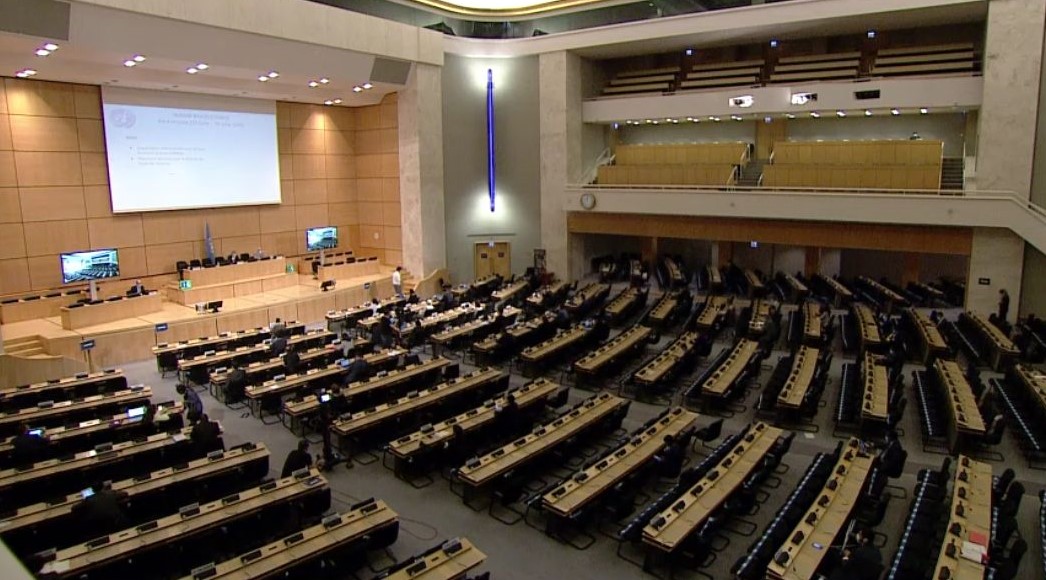
The ICJ today addressed an emergency Special Session of the UN Human Rights Council on Myanmar, outlining violations to human rights and the rule of law occurring in the country since the coup d’état of 1 February.
The Special Session is expected to adopt a resolution to address “The human rights implications of the crisis in Myanmar.”
The ICJ statement read as follows:
“Madame President,
The International Commission of Jurists condemns the Myanmar military’s unlawful seizure of authority and the unconstitutional declaration of a state of emergency on 1 February.
These actions defy core rule of law principles and provide an illegitimate basis for the suspension and erosion of human rights.
Nearly 200 people, including human rights defenders, have been arbitrarily detained, some in unknown locations. Security forces have used excessive force against peaceful protesters, causing serious injuries.
Regulations imposed pursuant to the state of emergency grant military forces nearly complete impunity. Furthermore, these regulations suspend crucial judicial remedies for violations of rights, such as the writ of habeas corpus.
Judges, including from the Supreme Court, have been illegally removed and replaced, undermining the independence of an already embattled judiciary.
The military takeover further endangers the already grave situation of the Rohingya community.
The ICJ calls on the Human Rights Council to urge the military to immediately return authority to the civilian government and allow immediate access to the Special Rapporteur on Myanmar and other special procedures, the OHCHR, and the Independent Investigative Mechanism for Myanmar, whose mandate includes investigating all serious human rights violations.
Member States should take necessary measures to ensure truth, justice and accountability for crimes under international law, including by supporting all relevant accountability mechanisms.
Thank you.”
Feb 5, 2021 | Advocacy, Non-legal submissions
Today, the ICJ and other human rights NGOs have written to UN Member States to call for a renewal of the mandate of the UN Commission on Human Rights in South Sudan.
The joint letter highlights the existing remaining concern on the human rights situaion in South Sudan and provide with key recommendation for its functioning.
Find the joint letter here: SouthSudan-UN-JointLetter-Advocacy-NonLegal-2021-ENG
Contact:
Massimo Frigo, ICJ UN Representative, e: massimo.frigo(a)icj.org, t: +41797499949
Oct 13, 2020 | Advocacy, News, Non-legal submissions
On 12 October 2020, the ICJ made a submission to the Human Rights Council’s Working Group on the Universal Periodic Review in advance of the Human Rights Council’s review of Singapore in May 2021.
In its submission, the ICJ expressed concern about the following issues:
(i) Freedom of expression online;
(ii) The death penalty;
(iii) Corporal punishment; and
(iv) International human rights instruments.
The ICJ further called upon the Human Rights Council and the Working Group on the Universal Periodic Review to recommend that Singapore ensure, in law and in practice, the right to freedom of expression online, the right to life and the absolute prohibition against cruel, inhuman or degrading treatment or punishment; and become a party to core international human rights instruments, including the International Covenant on Economic, Social and Cultural Rights, the International Covenant on Civil and Political Rights, the Convention Against Torture and Other Cruel, Inhuman or Degrading Treatment or Punishment, the International Convention on the Protection of the Rights of All Migrant Workers and Members of Their Families and the International Convention for the Protection of All Persons from Enforced Disappearance, as well as the existing Optional Protocols to some of these treaties.
The submission is available in PDF here.
Oct 5, 2020 | Advocacy, Non-legal submissions
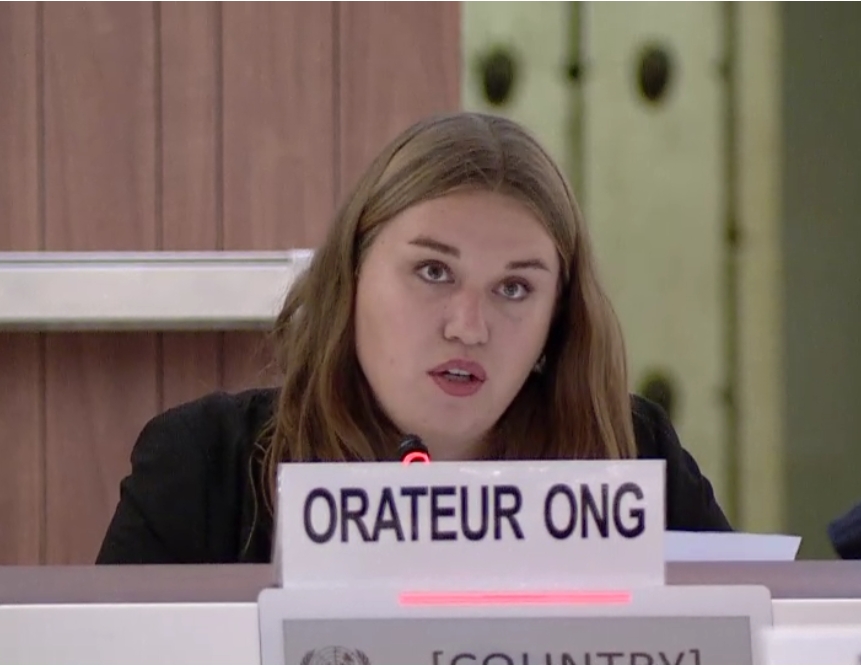
The ICJ today highlighted the need for accountability for crimes under international law in Libya, and concerns for the independence of lawyers in Ukraine, at the UN Human Rights Council in Geneva.
The oral statement, delivered in the general debate on technical cooperation and capacity building, read as follows:
“Madame President,
The International Commission of Jurists (ICJ) welcomes the oral updates on Ukraine and Libya.
Technical assistance and capacity building objectives in Libya can only be achieved if the protection of human rights, entrenchment of the rule of law and pursuit of accountability are prioritized.
States should support the Fact-Finding Mission by extending its reporting mandate, increasing contributions to the UN budget necessary to establish the Mission’s secretariat, and fully cooperating with it.
States should also support the Berlin Process working groups, ensuring that the political and accountability pillars work in unison and making meaningful commitments to implement their recommendations.
Across all of Ukraine, lawyers continue to be associated with their clients and may face consequences for representing them by private individuals and also through abuse of legal proceedings. High-profile cases bear risks for independent lawyers who choose to diligently represent their clients.
The decline in security of lawyers in and outside of courts, and the problem of threats, harassment, and attacks against lawyers, should be addressed as a matter of priority, including through technical cooperation. Measures should be taken to build the capacity of law enforcement agencies and court security personnel to ensure that lawyers and others involved in court proceedings can work in an atmosphere free from intimidation, harassment, and improper interference.
Thank you.”
Oct 5, 2020 | Advocacy, Non-legal submissions
The ICJ today joined other NGOs in expressing concern that the Human Rights Council is poised to fail to adequately respond to the human rights crisis in the Philippines, and urging stronger action.
The statement, which was delivered by the World Organization against Torture (OMCT) on behalf of the group of NGOs in a general debate on item 10, read as follows:
“On behalf of 15 organisations, including colleagues in the Philippines, we are deeply disappointed that the draft Item 10 resolution on the Philippines fails to reflect the gravity of the situation, including as documented in the OHCHR report.
Colleagues from the Philippines have tirelessly advocated for an international investigation, at great personal risk. The thousands of victims of killings and other violations and their families continue to be deprived of justice.
This is a collective failure by the States at this Council. We are shocked by the lack of support for a more robust response.
We acknowledge the rationale presented for constructive engagement with the Government of the Philippines. However, an approach based purely on technical cooperation and capacity-building has no realistic prospect of meaningful impact with a government that denies the true scale and severity of the human rights violations, has publicly endorsed the policy of killings, avoids independent investigations, and continues to crack down on civil society.
Despite the shortcomings of the resolution, it at least keeps the situation on the agenda for the next two years and allows for robust reporting by the OHCHR on the situation – including the implementation, or lack thereof, of OHCHR report recommendations. The Council must follow developments closely and be ready to launch an independent investigation if the killings and the crackdown on civil society do not immediately end and prosecution of perpetrators is not pursued.
I thank you.”
- Alyansa Tigil Mina (ATM)
- Amnesty International
- Asian Forum for Human Rights and Development (FORUM-ASIA)
- CIVICUS
- Ecumenical Voice for Human Rights and Peace in the Philippines (EcuVoice)
- Franciscans International
- Harm Reduction International
- Human Rights Watch
- iDefend
- International Commission of Jurists (ICJ)
- International Federation for Human Rights (FIDH)
- International Service for Human Rights (ISHR)
- KARAPATAN
- Philippine Alliance of Human Rights Advocate (PAHRA)
- World Organisation Against Torture (OMCT)