Mar 10, 2017 | Advocacy, Non-legal submissions
The ICJ made a joint statement on the report of the Open-ended intergovernmental Working Group on Transnational Corporations and Other Business Enterprises.
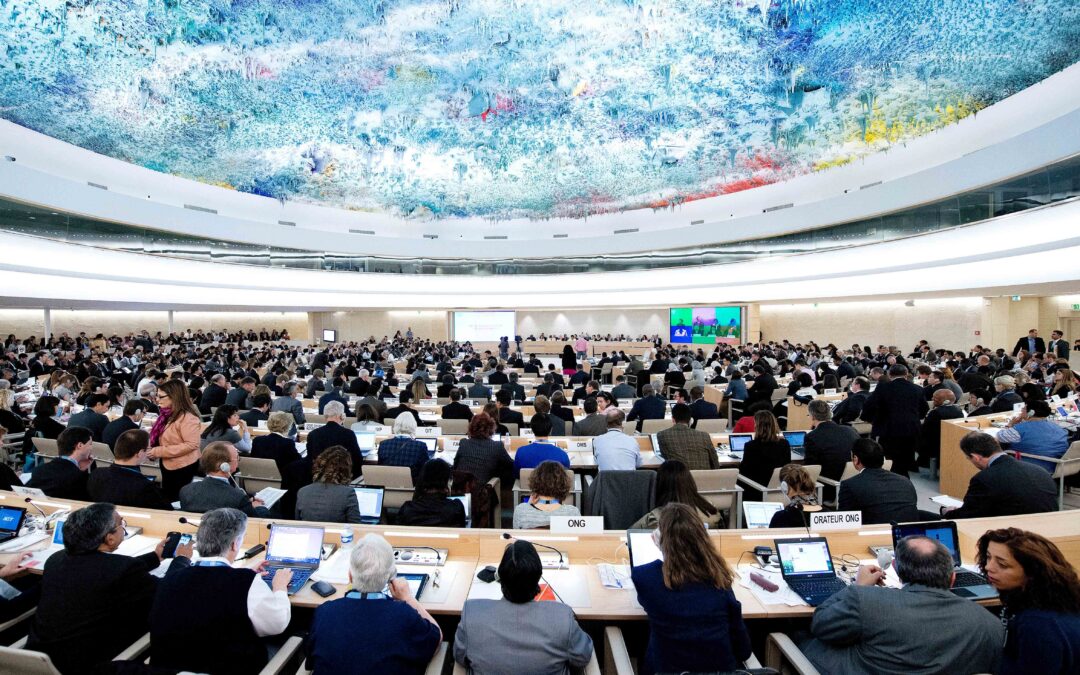
The intervention was made at the United Nations Human Rights Council on behalf of Franciscans International, International Commission of Jurists, Colombian Commission of Jurists and the International Federation of Human Rights Leagues (FIDH). All are members of the civil society coalition: “Treaty Alliance”.
The statement read as follows:
Our organizations welcome the report on the second session of the Open-ended Intergovernmental Working Group on Transnational Corporations and Other Business Enterprises with respect to human rights.
We are encouraged by the growing participation of States and other stakeholders in interesting and constructive discussions but remain concerned by the failure of some States to truly engage constructively with the process.
Civil society groups documented in these years countless cases of business involvement in human rights abuses. This demonstrates that existing mechanisms could be useful but are not sufficient and that a new binding instrument at the global level is needed.
The treaty should address all business enterprises and give States the tools to tackle the particular challenges posed by transnational corporations, providing the necessary protection to victims of human rights abuses, including Human Rights defenders who are targeted for their work and opinion.
Access to effective remedy and reparations remain problematic at the domestic and cross-border levels. In order to achieve the effective protection of human rights from business related abuses, the treaty should build on and go beyond existing international human rights standards and instruments.
We call on the Chair-Rapporteur to present a draft elements paper in accordance with the mandate of the Open ended Working Group. This paper should be as detailed as possible and reflect the discussions of the first two sessions, in order to facilitate the start of meaningful negotiations at the third session in October 2017.
We urge all stakeholders, especially States, to engage in constructive and substantive discussions on the content and scope of this instrument in the perspective of the third session.
The statement can be downloaded in PDF format here: HRC34-Joint Statement-IGWG Transnational Corporations-Advocacy 2017
Mar 8, 2017 | Events, News
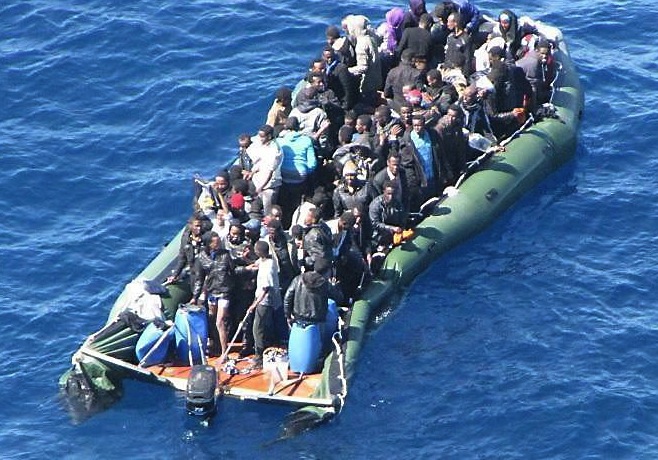
During March to April 2017 the ICJ conducted consultations on draft Principles and Guidelines on the role of judges and lawyers in relation to large movements of refugees and migrants.
The initial consultation meeting took place in Geneva on Thursday, 9 March 2017, 15:00 – 16:30 at the Palais des Nations, Room XXI.
At this side event the ICJ presented and received feedback from States and civil society on draft ICJ Principles on the Role of Judges and Lawyers in relation to Large Movements of Refugees and Migrants.
The Principles were developed by the ICJ on the basis of consultations with senior judges, lawyers, and legal scholars working in the field of international refugee and migration law. The ICJ published the final version of the Principles, together with commentary, in May 2017.
The Principles seek to help judges and lawyers, as well as legislators and other government officials, better secure human rights and the rule of law in the context of large movements of refugees and migrants. They are intended to complement existing relevant legal and other international instruments, as well as the Principles and practical guidance on the protection of the human rights of migrants in vulnerable situations within large and/or mixed movements being developed by the OHCHR.
The final version of the Principles is available here.
More information about the earlier consultations and overall process of development of the Principles is available here.
Mar 7, 2017 | Advocacy, Non-legal submissions
Today at the UN Human Rights Council the ICJ expressed concerns about violence and other wrongs against children in times of armed conflict and peacetime.
The ICJ statement was delivered during an interactive dialogue with the Special Representatives of the Secretary General on Violence against Children and for Children and Armed Conflict.
The ICJ thanked the Special Representatives for their annual reports (Violence against Children UN doc.A/HRC/34/45-ENG and Children and Armed Conflict UN doc.A/HRC/34/44-ENG) and then continued as follows:
We welcome the renewed commitment of States, via the Sustainable Development Goals (in particular SDG 5.2 and 5.3 and SDG 16.2 and 16.3), to eliminating violence against children and ensuring access to justice for everyone by 2030.
However, as the Special Representative for Violence against Children’s report noted, we must ensure that protecting children from violence is not simply an ideal but is realized in practice.
The ICJ is concerned about systemic problems where States agree in principle to protect children from violence but disagree on fundamental definitions of ‘children’ and ‘violence’.
We agree with the Special Representative for Children and Armed Conflict’s assessment that States must close any legal lacunae that fail to implement the almost universally accepted definition of ‘child’ as everyone below the age of 18.
We ask that all forms of violence against children be condemned even where some violent practices, such as child marriage or female genital mutilation, were once considered culturally acceptable.
We welcome efforts undertaken to prevent violence against children and protect children in armed conflict to ensure their human rights are protected.
However, rights protections are meaningless without accountability and so we would like to ask which measures should be put in place to eradicate impunity and ensure access to justice for children who have suffered violence and other wrongs in times of armed conflict and otherwise?
The statement can be downloaded in PDF format here: HRC34-OralStatement-violence against children+children armed conflict-Advocacy-2017
Dec 14, 2016 | Advocacy, Non-legal submissions
The ICJ today joined other NGOs in calling on the UN Human Rights Council to take bold and decisive action to address the grave situation in South Sudan.
The statement, made during a Special Session of the Human Rights Council, convened on an urgent basis to discuss the situation in South Sudan, underscores the negative consequences of continuing impunity and lack of accountability, and calls among other things for the Human Rights Council resolution to be adopted that would:
· Support a strengthened mandate and capacity of the UN Commission on Human Rights in South Sudan to investigate serious violations of human rights and humanitarian law and identify alleged perpetrators, with a special focus on sexual and gender based crimes.
· Request that the report of the UN Commission is transmitted to the UN Security Council for consideration and further action.
· Urge that all states encourage further concrete action to prevent a further escalation of violence and conflict, and to deter and address these on-going violations of international human rights and humanitarian law at the UN Security Council, including sanctions and the imposition of a comprehensive arms embargo.
· Urge the African Union to take immediate steps to establish the hybrid court for South Sudan provided for in the 2015 peace agreement.
The Human Rights Council ultimately adopted, without a vote (i.e. by consensus), a resolution that includes many of these elements (final text not yet available).
The full statement can be downloaded in PDF format here: un-jointstatementsouthsudan-advocacy-2016
It was delivered by Human Rights Watch on behalf of:
- Amnesty International
- Association for Human Rights in Ethiopia
- Defend Defenders
- Human Rights Watch
- Humanity United
- International Commission of Jurists
- International Refugee Rights Initiative
- International Service for Human Rights
- National Coalition of Human Rights Defenders Uganda
- Pan-African Human Rights Defenders Network
- South Sudan Human Rights Defenders Network
Sep 28, 2016 | Advocacy, Non-legal submissions
The ICJ today delivered an oral statement to the UN Human Rights Council, during the interactive dialogue with the Special Rapporteur on the situation of human rights in Cambodia.The ICJ welcomed the report of the Special Rapporteur on the situation of human rights in Cambodia, before continuing as follows:
The ICJ concurs with the Special Rapporteur’s observation that “democratic space has been reduced in Cambodia through the application of a range of laws … and the restriction of a range of legitimate activities of non-governmental and civil society organizations.”
Since 2014, Cambodia has adopted laws inconsistent with its international human rights obligations, including undermining the independence of the judiciary, and unduly restricting the work of civil society.
Human rights defenders increasingly face retaliation for their legitimate work, shrinking civil society space.
Last week, the ICJ observed the criminal trial of Ny Chakrya, Deputy Secretary-General of the National Election Committee and former Head of Human Rights Section and Legal Aid at a leading NGO, ADHOC. He was convicted of crimes, including criminal defamation, for raising allegations of human rights violations. Ny Chakrya and four staff-members of ADHOC, all of whom are in detention, also face another investigation with all the hallmarks of being politically motivated.
Indeed, numerous members of the political opposition and human rights defenders are in exile, face legal proceedings, or have been convicted, in cases that also appear to be politically motivated.
Further, the investigation into the July 2016 killing of leading human rights defender, Kem Ley, lacks transparency.
We very much welcome the spotlight the Special Rapporteur placed on such cases by naming them here today.
2016 marks 25 years since the Paris Peace Agreements under which Cambodia undertook to “ensure respect for and observance of human rights and fundamental freedoms in Cambodia.”
We urge Cambodia, the signatories to the Paris Peace Agreements, the Special Rapporteur on Cambodia, the Office of the High Commissioner for Human Rights, and the Human Rights Council, to work to ensure these Agreements are given full effect – particularly as Cambodia prepares for local and national elections scheduled for 2017 and 2018.
The statement may be downloaded in PDF format here: hrc33-srcambodia-2016