Mar 12, 2020 | Advocacy, Non-legal submissions
At the UN, the ICJ today highlighted the need for Kazakhstan to ensure the independence of the legal profession and the judiciary, in particular by ending the arbitrary disbarment of lawyers.
The statement, delivered during the adoption of the outcome of the Universal Periodic Review of Kazakhstan by the Human Rights Council in Geneva. The statement read as follows:
“The International Commission of Jurists (ICJ) welcomes the acceptance by Kazakhstan of the recommendations by Denmark (138.83), France (139.85), Mexico (139.86) and Austria (139.113) to uphold the rule of law and to protect the independence of the legal profession and the judiciary.
The ICJ however regrets that Kazakhstan only noted and did not explicitly support the recommendation by Czechia to “take immediate measures to ensure the effective protection of lawyers, media workers, bloggers and human rights defenders against any form of harassment” (139.114).
Furthermore, based on ICJ research, we regret to report that Kazakhstan’s assertion that the accepted recommendations are “in the process of implementation” (A/HRC/43/10/Add.1, para. 4) is simply not correct.
On the contrary, the ICJ considers that the independence of the legal profession is being actively undermined in the country.
The ICJ expresses particular concern at disbarment proceedings initiated by the Ministry of Justice, including the recent disbarment of Amanzhol Mukhamediarov and Yerlan Gazymzhanov.[1]
Finally, the situation is exacerbated by a Law on Advokatura that does not require the Bar Association’s authorisation to initiate disbarment proceedings.
To actually implement the recommendations accepted by Kazakhstan, ICJ calls on Kazakh authorities to stop all harassment of lawyers through disciplinary proceedings, readmit the lawyers unduly disbarred and reform its Law on Advokatura in line with international standards on independence of the legal profession.”
[1] See ICJ statement at https://www.icj.org/kazakhstan-disbarment-of-erlan-gazymzhanov-and-amanzhol-mukhamediarov-undermines-the-independence-of-the-legal-profession-icj-says/ .
Jul 17, 2019 | Advocacy, News, Non-legal submissions
Today, the ICJ filed a submission to the Human Rights Council’s Working Group on the Universal Periodic Review in advance of its review of Turkey’s human rights record in January 2020.
In its submission, the ICJ considered:
- the situation with the independence of the judiciary in Turkey, during and after the state of emergency of 2016-2018;
- the lack of effective remedies for the mass dismissals in the public sector occurred in that period;
- the shortcomings in fair trial rights in the criminal justice system:
- the obstacles to the action of civil society;
- the lack of accountability for torture and enforced disappeareances; and
- provided information on the status of international human rights treaties ratified by Turkey.
Contact:
Massimo Frigo, ICJ Senior Legal Adviser, e: massimo.frigo(a)icj.org
Full submission in English (PDF) : Turkey-UPR-Advocacy-non-legal submissions-2019-ENG
Dec 15, 2018 | Agendas, Events
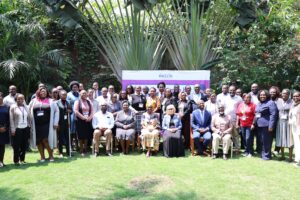
Today begins in Ankara (Turkey) a one-day workshop for lawyers and CSO practitioners on the use and strategies of UPR mechanisms.
This event is organized by ICJ, in cooperation with its partners Kapasite Geliştirme Derneği and Human Rights Joint Platform, as part a/the EU co-financed project Rebuilding and Ensuring Access to justice with civil society in Turkey.
20 lawyers and civil society practitioners are taking part in the workshop on 15 December in Ankara.
The workshop aims at discussing the functioning of the Universal Periodic Review of the UN Human Rights Council in which all States undergo periodically a peer-review of their human rights situation by other States. Turkey is set for its third cycle of examination in 2019
The main thematic areas to be discussed will be access to justice in Turkey, the situation of the judiciary and the rule of law, and the protection of womens’ rights.
The project is funded by the European Instrument for Democracy and Human Rights (EIDHR) of the European Union.
Turkey-Training-Agenda-UPR-Ankara-2018-tur (download the agenda in Turkish)
Turkey-Training-Agenda-UPR-Ankara-2018-eng (download the agenda in English)
Jun 29, 2018 | Advocacy, Non-legal submissions
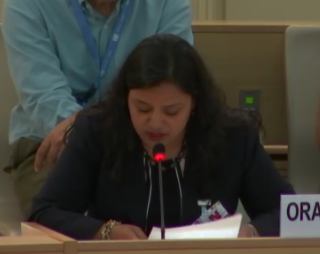
The ICJ today highlighted Nepal’s failure to implement recommendations accepted under its Universal Periodic Review, at the United Nations.The statement was made during General Debate on the Universal Periodic Review, at the UN Human Rights Council in Geneva. The statement read as follows:
“The UPR can help ensure that States comply with international human rights standards, but only if accepted recommendations are in fact implemented. Lack of follow-up on States’ implementation after adoption of UPR outcomes allows States to disregard their UPR commitments, undermining the mechanism, as is illustrated by the example of Nepal.
More than two years after its last review, the Government has still not implemented accepted recommendations related to transitional justice and accountability for past human rights violations.
Of particular concern is the continuing failure of the Government to establish credible transitional justice mechanisms to effectively address past human rights violations.
The Truth and Reconciliation Commission and Commission on Investigation of Disappeared Persons continue to fall short of international standards, both in constitution and operation.
The recently published draft bill on transitional justice provides for short-term community service as an alternative punishment for perpetrators convicted of international crimes, including torture and enforced disappearance. Such manifestly inadequate punishment would constitute a form of impunity.
Furthermore, the establishment of a special court under the bill will not be effective unless crimes such as torture, enforced disappearance, war crimes and crimes against humanity are criminalized in national law in accordance with international standards.
The ICJ urges the Council to adopt measures to ensure effective implementation of accepted UPR recommendations.”
Jun 29, 2018 | Advocacy, Non-legal submissions
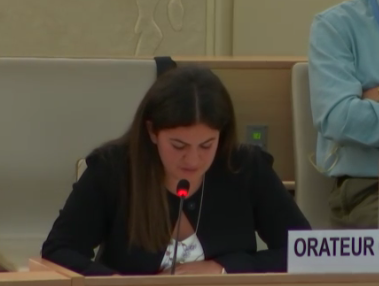
The ICJ today raised concerns for the independence of the judiciary in Serbia, in a statement to the United Nations.
The statement was delivered during the discussion of the outcome of the Universal Periodic Review (UPR) of Serbia, at the UN Human Rights Council in Geneva.
It read as follows:
“The International Commission of Jurists (ICJ) congratulates Serbia on the completion of its Third Cycle Universal Periodic Review.
The ICJ welcomes the acceptance by Serbia of all recommendations to strengthen the rule of law and judicial independence, including by limiting political influence over judicial appointments (Norway, 6.1; Sweden, 6.2; France, 6.3; Australia, 6.20; Germany, 6.22; Morocco, 6.23; Estonia, 6.24; Republic of Korea, 6.25; Singapore, 6.26; Canada, 6.27).
The ICJ regrets, however, that constitutional amendments currently under discussion in Serbia run counter to these recommendations.
The amendments would empower the National Assembly to determine appointments and dismissals of judges of the Constitutional Court, as well as for half of the members of the High Judicial Council, five members of the High Prosecutorial Council, the Supreme Public Prosecutor and public prosecutors.
The independence and autonomy of the Constitutional Court, High Judicial Council and State Prosecutorial Council, would be better secured by reducing or eliminating the role of political bodies such as the National Assembly, particularly as regards dismissals.
The ICJ stresses that the judiciary and the prosecution service must exercise their functions free from direct or indirect external influences, threats or interferences, including from the legislative and executive powers.
While welcoming reforms for life tenure of judges and deputy prosecutors, the ICJ urges Serbia to implement the accepted recommendations by precluding involvement of the National Assembly in the appointment and dismissal of judges, court presidents, public prosecutors, and deputy public prosecutors.”