Aug 21, 2012 | News
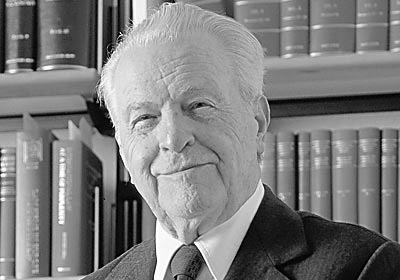 It is with great sadness that the International Commission of Jurists received the news of the passing of Dr. Jean-Flavien Lalive. He was one of the pillars of our organisation in its early days.
Dr. Lalive was involved in the work of the ICJ for over fifty years. As the Secretary-General from 1958 to 1961, Dr. Lalive played a vital role in establishing our organization in the international human rights community. He is especially noted for bringing the ICJ closer to the United Nations, both in terms of the organization’s political relationships and our physical location. Under his leadership, the ICJ gave more pronounced support for the international standards and enforcement procedures advocated by the UN. He was also responsible for moving the ICJ Secretariat’s headquarters from The Hague to Geneva, where it remains to this day.
While at the ICJ, Dr. Lalive continued to direct the organization’s efforts towards the search for universal procedural and substantive safeguards required for the proper administration of justice, while seeking to encompass the world’s different legal traditions. At the ICJ’s Congress in New Delhi in 1959, Dr. Lalive helped to define principles of the Rule of Law and Human Rights. The Declaration of Delhi, in particular, was to prove a seminal instrument in shaping the Rule of Law, with its conception of the Rule of Law as “a dynamic concept for the expansion and fulfillment of which jurists are primarily responsible and which should employed…to safeguard and advance [human] rights.”
Dr. Lalive later served as an Honorary Member of the ICJ, supporting the work of our organization at conferences and missions over many decades.
Dr. Lalive was an outstanding jurist and an exceptional advocate for human rights and the Rule of Law. He will be truly missed both by our organization and the wider human rights community.
Aug 21, 2012 | Advocacy, Non-legal submissions
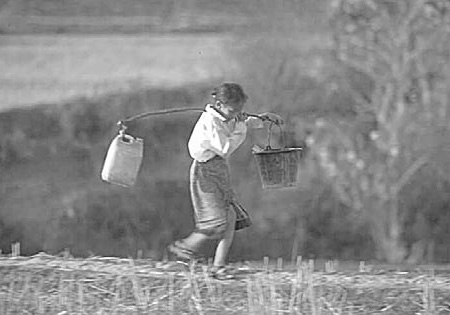 The ICJ welcomes the report of the Special Rapporteur on the rights to water and sanitation, on the linkages between violations of human rights and the challenge of stigma, in relation to water, sanitation and hygiene.
Aug 20, 2012 | News
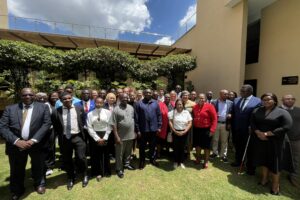
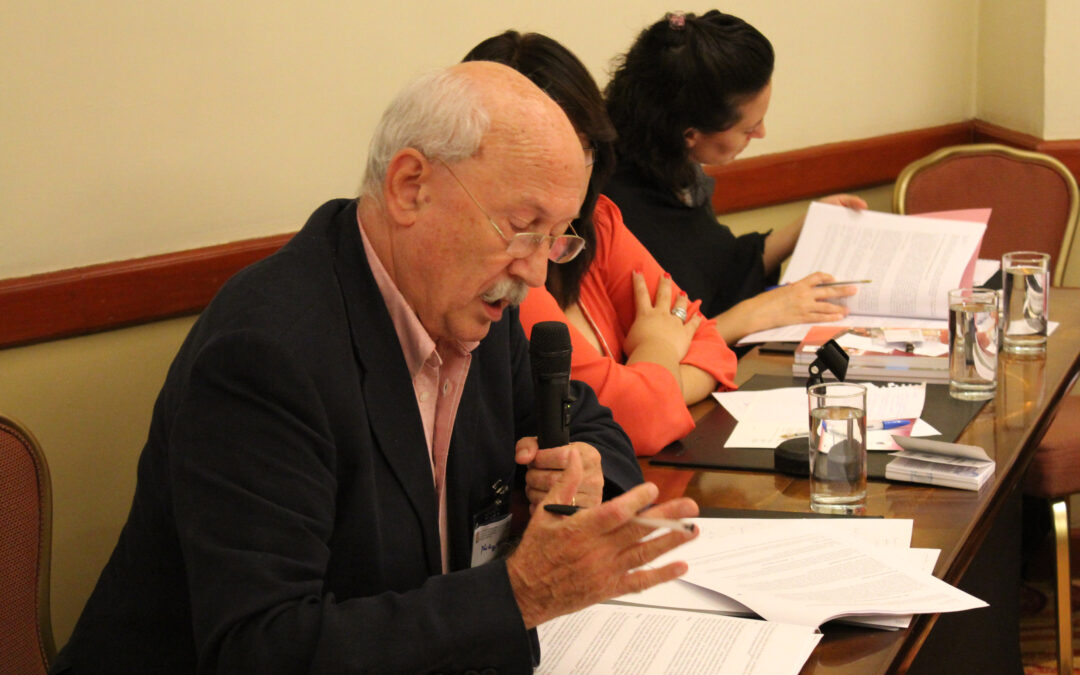
With the support of ICJ Commissioner Justice Philippe Texier, the ESCR Programme and the Central America Regional Office organized a two-day workshop in San Salvador on August 16 and 17, 2012.
A group of 25 representatives of human rights and development NGOs as well as trade unions, lawyers and academic experts participated in a first consultation on access to justice for victims of violations of economic, social and cultural rights.
The discussions tackled obstacles and advances in the field of access to justice with regard to the legal and institutional frameworks, as well as in the administration of justice and material issues.
Coming from very different backgrounds, the participants valued the opportunity to work together and share their experience related to economic, social and cultural rights (ESCR) of a variety of rights-holders and their attempts to seek justice.
This first consultation and workshop will be followed by other activities in the course of the national project.
Background of the workshop
With national projects such as the one in El Salvador, the ICJ programme on Economic, Social and Cultural Rights aims at contributing to improve accountability for human rights violations and access to justice for all, including for victims of threats against and violations of economic, social and cultural rights.
The ICJ has embarked on research processes at national level to identify obstacles and opportunities for access to justice, as well as on consultation and collaboration processes with national allies to define strategies to address gaps.
Depending on the needs identified, the ICJ will support the implementation of recommendations and steps that includes trainings and legal interventions.
Aug 17, 2012 | News
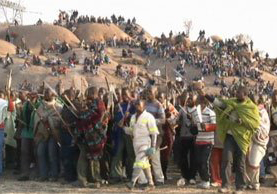 The ICJ has observed with deep concern the tragic and violent events that took place at the Lonmin mines since 10 august 2012, when miners embarked on a collective action for an increase in wages.The lives that have been lost during this short period bring to the fore various issues concerning the realization of economic and social rights, including the sensitive issue of business and human rights. Poverty, lack of employment and many other socio-economic issues sometimes lead to frustrations, which in turn manifest themselves in violence.

Aug 14, 2012 | Advocacy, Non-legal submissions
 The ICJ made a written submission and presented several oral statements during the second session of the open-ended intergovernmental working group (IGWG).From 13 to 17 August 2012, the second session of the open-ended intergovernmental working group (IGWG) to consider the possibility of an international regulatory framework on the regulation, monitoring and oversight of the activities of private military and security companies (PMSCs) was held in Geneva, pursuant to the mandate given to the IGWG under Human Rights Council resolution 15/26 (2010). The ICJ was amongst a small number of NGOs participating in this second session.