Jun 16, 2021 | Advocacy, News
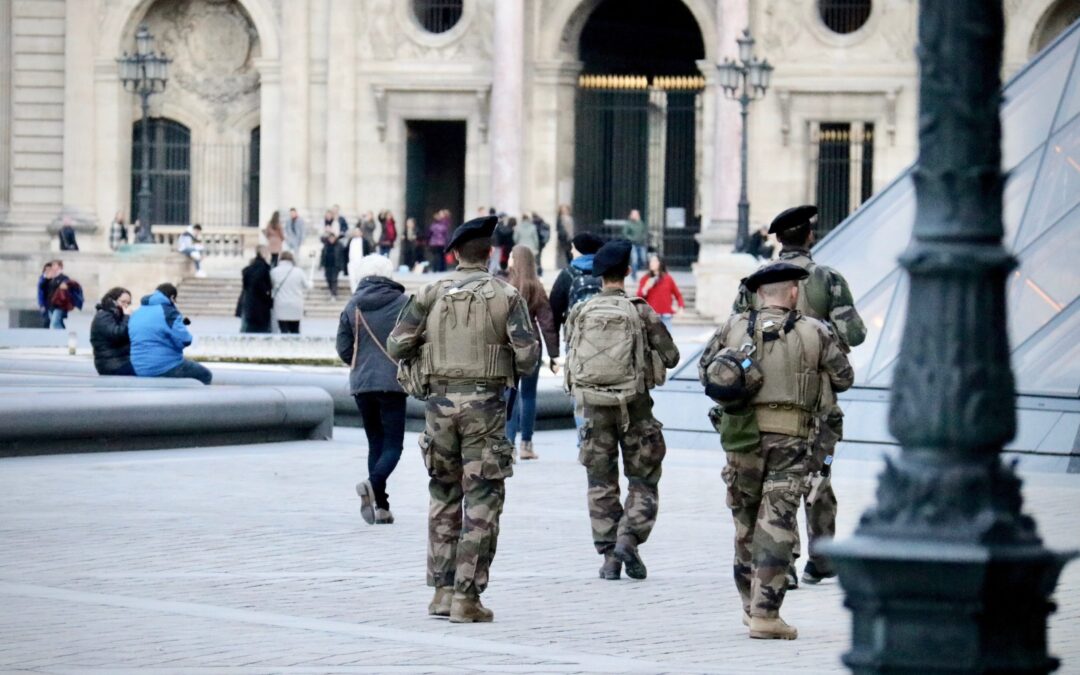
Four years after the EU Directive on Combating Terrorism came into force, more effort is needed to ensure it is implemented in accordance with human rights law obligations, Amnesty International, the International Commission of Jurists (ICJ), the International Federation for Human Rights (FIDH), the European Centre for Not-for-Profit Law (ECNL) and the European Network against Racism (ENAR) said today. The organizations called for the European Commission’s review of the Directive’s implementation to prioritize scrutiny of its impact on human rights.
In assessing the value of the Directive on Combating Terrorism (Directive 2017/541) in the Member States, the European Commission must scrutinize how it has affected the human rights of victims, suspects, as well as the wider community and civil society, the organizations said.
The Directive, enacted in 2017 after an expedited legislative process, criminalizes a wide range of conduct related to terrorism. The Directive establishes an overly broad definition of terrorism and requires states to include in their criminal law offences that are often not closely linked to the perpetration of a terrorist act. These include offences of travel for the purpose of terrorism, participation in a terrorist group, and public provocation to commit acts of terrorism. Because the terms of the offences are so widely drawn, safeguards in national law and practice are essential to ensure that they are not applied where there is no clear link to a principal offence of terrorism and/or no intent to contribute to such a principal offence, to prevent arbitrary application, including action based on racial prejudices of perceived dangerousness.
However, the organizations are concerned that EU member states are applying national laws on counter-terrorism in ways that unnecessarily or disproportionately limit the exercise of human rights, including freedom of expression and association, and freedom of religion or belief, and that discriminate against some ethnic or religious groups, in particular Muslims.
The implementation of the Directive by member states is now being reviewed by the European Commission, including through a consultation process, which concludes today.
As the review of the Directive is taken forward, the organizations urge the European Commission to consider in particular:
- Whether and how the Directive can help to ensure effective accountability for internationally recognized crimes and the right to effective remedy and reparation for victims of terrorism, both within and outside of the EU;
- To what extent national authorities have applied international, EU, as well as domestic human rights law in their transposition and implementation of the Directive;
- What safeguards have been or should be introduced to prevent human rights violations in practice in the implementation of the Directive, in particular regarding freedom of expression, association, peaceful assembly, rights to respect for private and family life, freedom of religion or belief, freedom of movement and rights to political participation;
- How the right to a fair trial and the right to liberty are being upheld in the implementation of the Directive’s offences within the member states’ justice systems, and what measures are needed to strengthen protection for these rights;
- What safeguards have been or should be introduced to protect against the discriminatory application or impact of the Directive;
- Whether civil society, including those representing victims of terrorism and groups affected by counter-terrorism measures, have been meaningfully consulted in the implementation of the Directive.
Background
The EU Directive on Combating Terrorism (Directive 2017/541) came into force in April 2017 and was required to be transposed into member state law by September 2018.
The Commission is due to report to the European Parliament on the added value of the Directive, and whether it is fit for purpose, including on its impact on fundamental rights in October 2021.
Several of the NGOs have made submissions to the EU Consultation as part of its review.
The Fundamental Rights Agency is currently also working on a report on the impact of the EU Counter-terrorism Directive on human rights across the EU.
For further commentary on the Directive and on counter-terrorism and human rights in Europe, see:
ICJ, Counter-Terrorism and human rights in the courts: guidance for judges, prosecutors and lawyers on the application of EU Directive 2017/541 on Combatting Terrorism https://www.icj.org/eu-guidance-on-judicial-application-of-the-eu-counter-terrorism-directive/
ENAR, research on the impact of counter-terrorism and counter-radicalisation policies and measures: https://www.enar-eu.org/ENAR-research-on-the-impact-of-counter-terrorism-and-counter-radicalisation
ECNL, Civic space in the era of securitized Covid-19 responses, https://ecnl.org/publications/civic-space-era-securitised-covid-19-responses
Download the statement here: EU combating directive statement_160621_ENG-2021
Jun 15, 2021 | Human Rights Council, News, Work with the UN
To the Permanent Representatives of Member and Observer States of the United Nations Human Rights Council,
Excellencies,
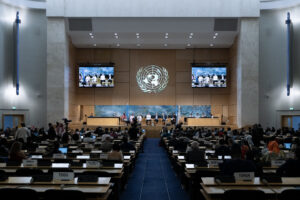
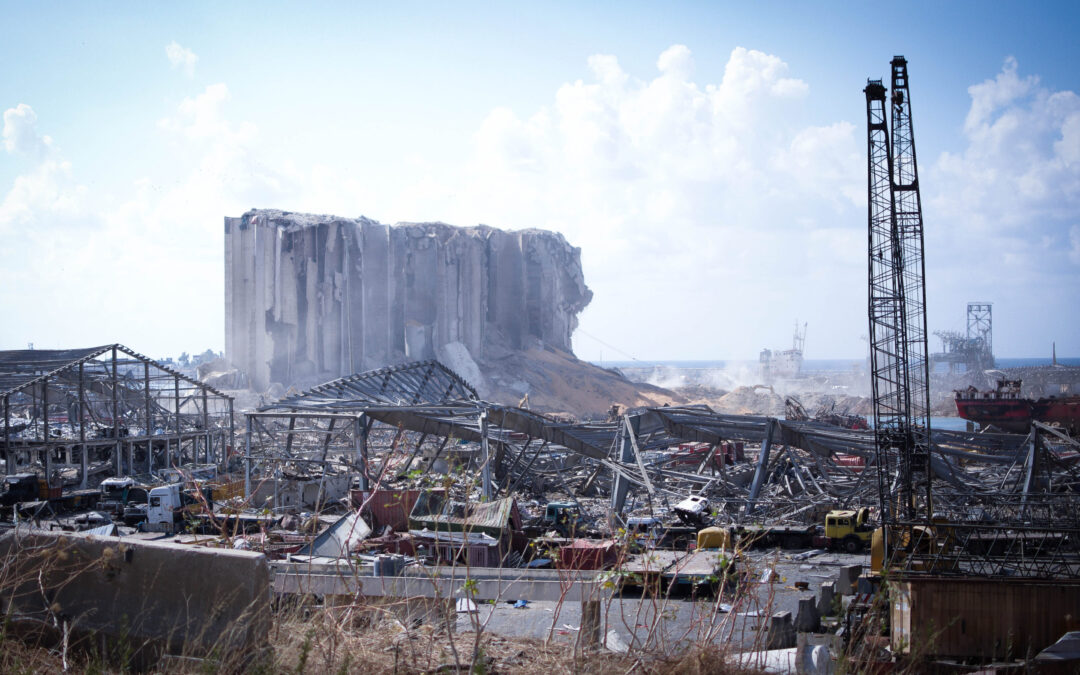
We, the undersigned Lebanese and international organizations, individuals, survivors, and families of the victims are writing to request your support in the establishment of an international, independent, and impartial investigative mission, such as a one-year fact-finding mission, into the Beirut port explosion of August 4, 2020. We urge you to support this initiative by adopting a resolution establishing such a mission at the Human Rights Council.
هذه الرسالة متاحة باللغة العربية أيضاً
On August 4, 2020, one of the largest non-nuclear explosions in history decimated the port and damaged over half the city. The Beirut port explosion killed 217 people, including nationals of Lebanon, Syria, Egypt, Bangladesh, Philippines, Pakistan, the Netherlands, Canada, Germany, France, Australia, and the United States. It wounded 7,000 people, of whom 150 acquired a physical disability, caused untold psychological harm, and damaged 77,000 apartments, forcibly displacing over 300,000 people. At least three children between the ages of two and 15 lost their lives. Thirty-one children required hospitalization, 1,000 children were injured, and 80,000 children were left without a home. The explosion affected 163 public and private schools and rendered half of Beirut’s healthcare centers nonfunctional, and it impacted 56% of the private businesses in Beirut. According to the World Bank, the explosion caused an estimated US$3.8-4.6 billion in material damage.
The right to life is an inalienable and autonomous right, enshrined in the International Covenant on Civil and Political Rights (ICCPR) (article 6), which Lebanon ratified in 1972. The Human Rights Committee, which interprets the ICCPR, has stated that states must respect and ensure the right to life against deprivations caused by persons or entities, even if their conduct is not attributable to the state. The Committee further states that the deprivation of life involves an “intentional or otherwise foreseeable and preventable life-terminating harm or injury, caused by an act or omission.” States are required to enact a “protective legal framework which includes criminal prohibitions on all manifestations of violence…that are likely to result in a deprivation of life, such as intentional and negligent homicide.”
The facts as currently known suggest that the storage of more than 2,700 tons of ammonium nitrate alongside other flammable or explosive materials, such as fireworks, in a poorly secured hangar in the middle of a busy commercial and residential area of a densely populated capital city likely created an unreasonable risk to life.
Since the explosion, a number of official documents were leaked to the press, including official correspondence and court documents that indicate customs, port, judicial, and government officials as well as military and security authorities had been warned about the dangerous stockpile of potentially explosive chemicals at the port on multiple occasions since 2013.
Further, the Human Rights Committee General Comment No. 36 on article 6 states: “The duty to protect by law the right to life also requires States parties to organize all State organs and governance structures through which public authority is exercised in a manner consistent with the need to respect and ensure the right to life, including by establishing by law adequate institutions and procedures for preventing deprivation of life, investigating and prosecuting potential cases of unlawful deprivation of life, meting out punishment and providing full reparation.” The investigations into violations of the right to life must be “independent, impartial, prompt, thorough, effective, credible, and transparent,” and they should explore “the legal responsibility of superior officials with regard to violations of the right to life committed by their subordinates.”
The impact and aftermath of the explosion also likely violated Lebanon’s international human rights obligations to guarantee the rights to education and to an adequate standard of living, including the rights to food, housing, health, and property. More notably, Lebanon can only uphold its obligation to provide effective remedy to the victims on the basis of a credible, effective, and impartial investigation whose findings would then be the basis for any effective remedy plan.
In August, 30 UN experts publicly laid out benchmarks, based on international human rights standards, for a credible inquiry into the August 4, 2020, blast at Beirut’s port, noting that it should be “protected from undue influence,” “integrate a gender lens,” “grant victims and their relatives effective access to the investigative process,” and “be given a strong and broad mandate to effectively probe any systemic failures of the Lebanese authorities.”
The domestic investigation into the Beirut blast has failed to meet those international standards. The ten months since the blast have been marked by the authorities’ obstruction, evasion, and delay. Human Rights Watch, Amnesty International, Legal Action Worldwide, Legal Agenda, and the International Commission of Jurists have documented a range of procedural and systemic flaws in the domestic investigation that render it incapable of credibly delivering justice, including flagrant political interference, immunity for high-level political officials, lack of respect for fair trial standards, and due process violations.
Victims of the blast and their relatives have been vocal in calling for an international investigation, expressing their lack of faith in domestic mechanisms. They claim that the steps taken by the Lebanese authorities so far are wholly inadequate as they rely on flawed processes that are neither independent nor impartial. This raises serious concerns regarding the Lebanese authorities’ ability and willingness to guarantee victims’ rights to truth, justice, and remedy, considering the decades-long culture of impunity in the country and the scale of the tragedy.
As we approach the one-year anniversary of the explosion, the case for such an international investigation has only strengthened. The Human Rights Council has the opportunity to assist Lebanon to meet its human rights obligations by conducting an investigative or fact-finding mission into the blast to identify whether conduct by the state caused or contributed to the unlawful deaths, and what steps need to be taken to ensure an effective remedy to victims.
The independent investigative mission should identify human rights violations arising from the Lebanese state’s failure to protect the right to life, in particular whether there were:
- Failures in the obligation to protect the right to life that led to the explosion at Beirut’s port on August 4, 2020, including failures to ensure the safe storage or removal of a large quantity of highly combustible and potentially explosive material;
- Failures in the investigation of the blast that would constitute a violation of the right to remedy pursuant to the rights to life.
The independent investigative mission should report on the human rights violated by the explosion, failures by the Lebanese authorities, and make recommendations to Lebanon and the international community on steps that are needed both to remedy the violations and to ensure that these do not occur in the future.
The Beirut blast was not an isolated or idiosyncratic incident. In the weeks following the explosion, two fires broke out at the port in scenes reminiscent of the fire that resulted in the Beirut blast, terrorizing the public. In February 2021, a German firm tasked with removing tons of hazardous chemicals left in Beirut’s port for decades warned that what they found amounted to “a second Beirut bomb.” If these substances caught fire, Beirut would have been “wiped out”, the interim port chief said.
It is time for the Human Rights Council to step in, heeding the calls of the families of the victims and the Lebanese people for accountability, the rule of law, and protection of human rights. The Beirut blast was a tragedy of historic proportions, arising from failure to protect the most basic of rights – the right to life – and its impact will be felt for far longer than it takes to physically rebuild the city. The truth of what happened on August 4, 2020, is a cornerstone in redressing and rebuilding after the devastation of that day.
The thousands of individuals who have had their lives upended and the hundreds of thousands of individuals who have seen their capital city disfigured in a most irrevocable way deserve nothing less.
List of signatories:
Organizations:
Access Center for Human Rights (Wousoul)
Accountability Now
ALEF – Act for Human Rights
Amnesty International
Anti-Racism Movement
Arab NGO Network for Development
Arab Reform Initiative
Basmeh & Zeitooneh
Baytna
Cairo Institute for Human Rights Studies (CIHRS)
Centre d’accès pour les droits de l’homme (ACHR)
Committee of the Families of the Kidnapped and Disappeared in Lebanon
Dawlaty
Gherbal Initiative
Gulf Centre for Human Rights
Helem
Human Life Foundation for Development and Relief (Yemen)
Human Rights Research League
Human Rights Solidarity (HRS)-Geneva
Human Rights Watch (HRW)
Human Rights Without Frontiers (HRWF)
Impunity Watch
International Commission of Jurists
Justice and Equality for Lebanon
Justice for Lebanon
Khaddit Beirut
Kulluna Irada
Lebanese-Swiss Association
Legal Action Worldwide
Legal Agenda
Liqaa Teshrin
Mada Network
Media Association for Peace (MAP)
Meghterbin Mejtemiin (United Diaspora)
Mwatana for Human Rights
National Youth for Lebanon Movement
PAX (Netherlands)
Peace Track Initiative
Project on Middle East Democracy (POMED)
Refugees=Partners Project
Samir Kassir Foundation
SEEDS for Legal Initiatives
Syrian Center for Media and Freedom of Expression – SCM
The Alternative Press Syndicate Group
The Foundation for Human Rights and Freedoms and Humanitarian Relief (IHH)
The International Center for Transitional Justice
The Lebanese Center for Human Rights (CLDH)
The Lebanese Diaspora Network (TLDN)
Tunisian League of Human Rights defense (LTDH)
UMAM Documentation & Research
Individuals:
Christophe Abi-Nassif – Lebanon Program Director, Middle East Institute
Nasser Saidi – President Nasser Saidi & Associates; Former Lebanese Minister of Economy & Industry
Randa Slim – Senior Fellow and Director of the Conflict Resolution and Track II Dialogues Program at the Middle East Institute
Survivors and Families of the Victims:
Alexandre Ibrahimcha, lost his mother Marion Hochar Ibrahimcha
Anthony, Chadia, Ava and Uma Naoum
Antoine Kassab, lost his father
Aya Arze Salloum
Carine Farran Sacy
Carine Tohme
Carine Zaatar
Carole Akiki
Cecilia and Pierre Assouad
Cedric el Adm, lost his sister
Charbel Moarbes
Charles Nehme, lost his father
Cybele Asmar lost her aunt Diane Dib
Fouad Rahme, lost his father
Georges Zaarour, lost his brother
Jean-Marc Matta
Jihad Nehme
Joanna Dagher Hayek
Karine Makhlouf, lost her mother
Karine Mattar
Laura Khoury
Lyna Comaty
Mireille el Khoury, lost her son
Myrna Mezher Helou, lost her mother
Nadine Khazen, lost her mother
Nicolas and Vera Fayad
Nicolas Dahan
Olga Kavran
Patrice Cannan, lost his brother
Patricia Haddad, lost her mother
Paul and Tracy Naggear, lost their daughter Alexandra Naggear
Reina Sfeir
Rénié Jreissati
Rima Malek
Rony Mecattaf
Sara Jaafar
Sarah Copland, lost her son Isaac Oehlers
Tania Daou Alam, lost her husband
Tony Najm, lost his mother
Vartan Papazian, lost his daughter-in-law
Vicky Zwein
Zeina Sfeir
Families of the following firefighters:
Charbel Hetty
Charbel Karam
Elie Khouzamy
Joe Akiki
Joe Andoun
Joe bou Saab
Joe Noun
Joseph Merhy
Joseph Roukoz
Misal Hawwa
Najib Hetty
Ralph Mellehy
Ramy Kaaky
Sahar Fares
Contact:
Said Benarbia, Director of the ICJ’s Middle East and North Africa programme, email: said.benarbia@icj.org phone number: +41 79 878 35 46
Asser Khattab, Research and Communications Officer at the ICJ’s Middle East and North Africa programme, email: Asser.khattab(a)icj.org
Jun 4, 2021 | News
(Istanbul, June 4, 2021) – The Council of Europe should insist that Turkey comply immediately with judgments from the European Court of Human Rights (ECtHR), or face infringement proceedings, a group of leading nongovernmental organizations working on human rights in Turkey said today.
An upcoming Council of Europe Committee of Ministers meeting on June 7-9, 2021, will review the Turkish government’s failure to implement two leading ECtHR judgments that ordered the immediate release of the human rights defender Osman Kavala and the Kurdish politician Selahattin Demirtaş. Human Rights Watch, the International Commission of Jurists, and the Turkey Human Rights Litigation Support Project urged the committee to use all available measures to require Turkey to rectify its flagrant non-compliance with its obligations, the court judgments, and the committee’s decisions on this matter.
“The Committee of Ministers should be using every means it has to push Turkey to implement the Kavala and Demirtaş judgments,” said Aisling Reidy, senior legal adviser at Human Rights Watch. “That means that the committee should be prepared to trigger infringement proceedings against Turkey if it persists with its defiance of the European Court’s binding judgment in favor of Kavala, and to call for the immediate release of Demirtaş with a commitment to escalate measures if it does not happen.”
The three groups repeated their March 2021 call for the committee to commence infringement proceedings against Turkey for flouting its decisions requesting Kavala’s release and urged the committee to issue a second decision for Demirtaş’s immediate release. The committee should also make clear that if Demirtaş is not released, it will take further action at its September session.
The ECtHR ruled on December 10, 2019, that by holding Kavala in pretrial detention since November 2017 and prosecuting him on the basis of his human rights activities, the Turkish authorities had “pursued an ulterior purpose, namely to silence him as a human rights defender.”
Similarly, the ECtHR ruled on December 22, 2020, that by holding Demirtaş in pretrial detention since November 2016 and prosecuting him for his activities and speeches protected under the European Convention on Human Rights (ECHR), the Turkish authorities had pursued an ulterior purpose of preventing him from carrying out his political activities, depriving voters of their elected representative, and “stifling pluralism and limiting freedom of political debate: the very core of the concept of a democratic society.”
In both cases, the Court found that by using detention for political ends, Turkey had violated the right to liberty and other rights, and had misused the discretion given to governments to impose limitations on rights for illegitimate purposes (articles 5 and 18 of the ECHR respectively). The Court took the rare step of ordering their immediate release.
Despite the fact that the landmark judgments are legally binding, the Turkish authorities have snubbed the Strasbourg court and ignored the Committee of Ministers’ decisions calling for the men’s release.
“Turkish prosecutors and judges have sought to circumvent the authority of the European Court by adopting the tactic of opening new criminal proceedings against Kavala and Demirtaş based on the reclassification of the same facts,” said Helen Duffy of the Turkey Human Rights Litigation Support Project “This cynical non-compliance with the court’s judgments requires a robust response from the Committee of Ministers.”
On May 21 when the retrial of Kavala for his alleged role in the 2013 Gezi Park protests opened, Turkish authorities merged that case with another concerning his alleged involvement in the 2016 coup attempt and espionage. The Istanbul 30th Assize Court hearing the case extended his detention. The next hearing against Kavala is scheduled for August 6.
In Demirtaş’s case, Ankara 22nd Assize Court on April 19 merged an existing case against him with a new case before it despite the fact that it involved the same or similar facts, which the European Court had held consisted of peaceful political speeches and activities protected under the ECHR. In the new case, the facts used as the evidence have been reclassified under different charges.
The indictment now charges Demirtaş and 107 co-defendants with crimes that include attempting to undermine the unity and territorial integrity of the state, murder, and robbery, all on the basis of tweets and political speeches they made in the period before deadly protests that took place in southeast Turkey from October 6-8, 2014. Demirtaş’s co-defendants include current and former members of parliament from the Peoples’ Democratic Party (HDP). The first hearing of the merged cases against Demirtaş took place on April 26. The next hearing is scheduled for June 14.
Read the full press release here: Turkey Flouts European Court Judgments_press release_2021_ENG
Jun 3, 2021 | News, Uncategorized
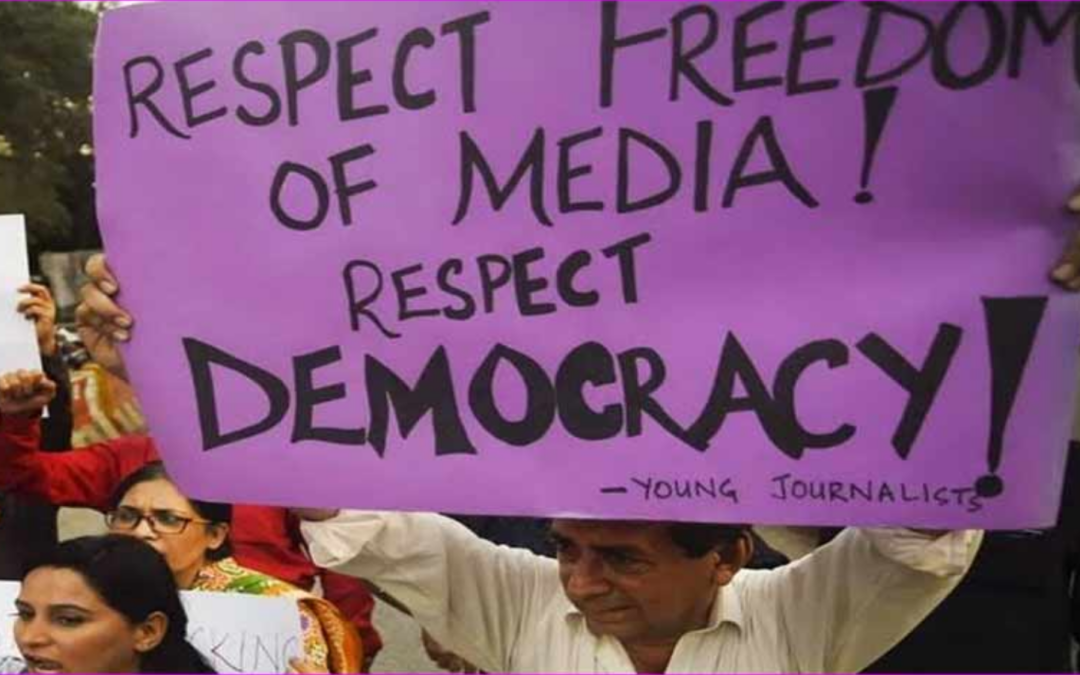
A recent series of attacks and growing pressure on journalists who criticize the Pakistan government is a cause for serious concern, Human Rights Watch, Amnesty International and the ICJ said today. Those suspected of criminal responsibility should be promptly and fairly prosecuted.
The Pakistan government should conduct prompt, impartial and effective investigations into the recent number of attacks on journalists. The government should rescind official policies that protect the authorities from criticism and instead promote space for public debate and free expression, in the face of threats from extremist groups and government officials.
“The frequency and audacity with which journalists are being attacked in Pakistan is appalling,” said Brad Adams, Asia director at Human Rights Watch. “The Pakistani authorities should bring those responsible for these attacks to justice and ensure that all journalists can do their jobs without fear of intimidation or reprisals.”
On May 25, 2021, Asad Ali Toor, a journalist, was assaulted by three unidentified men who forcibly entered his apartment in Islamabad. They bound and gagged Toor and severely beat him. Toor said that they identified themselves as being from a security agency, interrogated him about the “source of his funds,” and took away his cell phone and other electronic devices. The government ordered an investigation into the incident. In September 2020, the authorities charged Toor with sedition for comments made on social media “maligning state institutions.” A court later dismissed the charges.
On April 20, an unidentified assailant shot and wounded Absar Alam, a television journalist, outside his house in Islamabad. Alam has been a prominent critic of the government. In September 2020, the authorities charged Alam with sedition and “high treason” for using “derogatory language” about the government on social media.
On July 21, 2020, an unidentified assailant abducted another journalist, Matiullah Jan, in Islamabad the day before he was to appear before the Supreme Court for allegedly “using derogatory/contemptuous language and maligning the institution of judiciary.” Jan was released after a few hours. He alleged the abduction was an attempt to intimidate him. A criminal case was registered for Jan’s abduction, but, no suspects have been arrested.
“It is disturbing to see the space for dissent and providing information of public importance rapidly shrink in Pakistan, with journalists as well as human rights defenders particularly at risk of censorship, physical violence, and arbitrary detention,” said Sam Zarifi, secretary general of the ICJ.
Pakistani journalists have long faced serious obstacles to their work, including harassment, intimidation, assault, arbitrary arrest and detention, abduction, and death. As these threats have escalated, Pakistani authorities have also increasingly pressured editors and media owners to shut down critical voices. On May 29, the news channel, Geo, “suspended” Hamid Mir, one of Pakistan’s best-known television talk show hosts, after Mir spoke at a protest in solidarity with Asad Toor.
Other media outlets have come under pressure from authorities not to criticize government institutions or the judiciary. In several cases in recent years, government regulatory agencies blocked cable operators and television channels that had aired critical programs. In 2020, Pakistan ranked ninth on the Committee to Protect Journalist’s annual Global Impunity Index, with at least 15 unsolved killings of journalist since 2010.
In July 2020, the Pakistan Electronic Media Regulatory Authority (PEMRA) ordered 24NewsHD, a television news channel, off the air indefinitely for the alleged “illegal transmission of news and current affairs content.” Journalists and opposition activists alleged that the channel was being punished for airing criticism of the government.
In August 2020, a group of leading women journalists issued a statement condemning a “well-defined and coordinated campaign” of social media attacks, including death and rape threats against women journalists and commentators whose reporting has been critical of the government.
“If the authorities are committed to uphold their human rights obligations, they must take decisive steps against censorship, harassment and violence against journalists,” said Dinushika Dissanayake, South Asia deputy regional director at Amnesty International. “For that, continued impunity must be dismantled.”
Contact
In Brussels, for Human Rights Watch, Patricia Gossman: +32-472-982-925; or +1-347-322-8638 (WhatsApp); or gossmap@hrw.org. Twitter: @pagossman
In Geneva, for the International Commission of Jurists, ICJ Asia-Pacific Communications Officer, asiapacific(a)icj.org
In London, for Amnesty International, Michael Parsons: michael.parsons@amnesty.org