India: FCRA Amendment 2020 will undermine the work of Civil Society
Today the ICJ condemned the adoption by both Houses of Parliament of the Indian Foreign Contribution (Regulation) Amendment Bill 2020 (FCRA 2020).

Today the ICJ condemned the adoption by both Houses of Parliament of the Indian Foreign Contribution (Regulation) Amendment Bill 2020 (FCRA 2020).
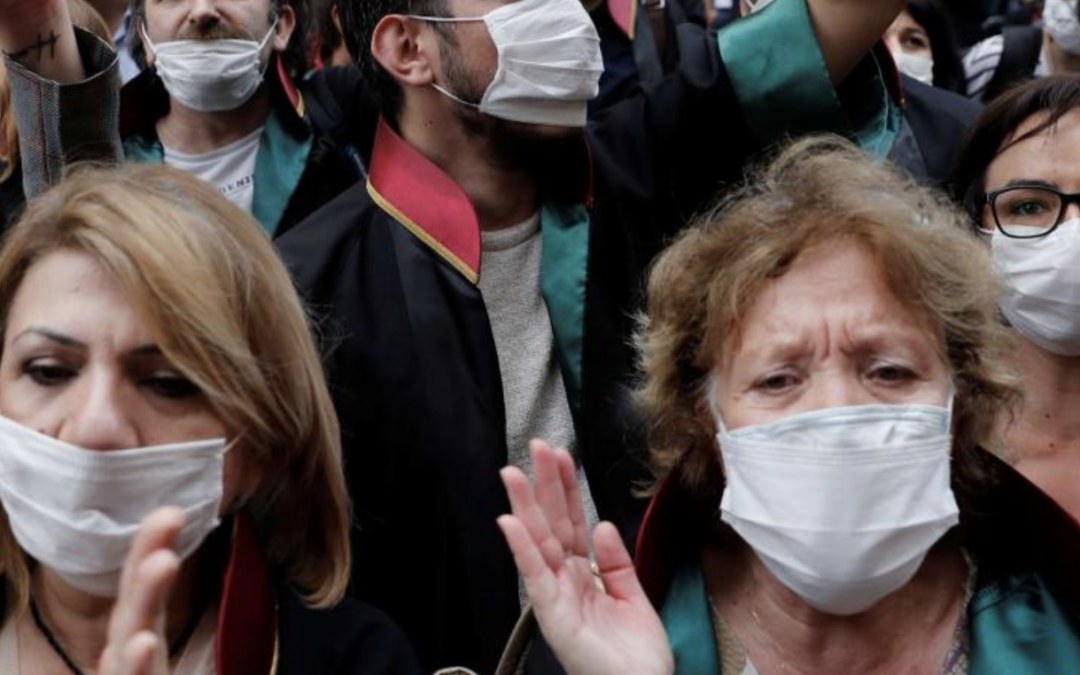
The ICJ called today on the Public Prosecutor Office of Istanbul to drop criminal charges and investigations against the President and Board Members of the Istanbul Bar Association for having publicly displayed a photograph of lawyer Ebru Timtik, who died following a hunger strike while in detention.
“These charges have been brought as a direct result of the lawyers’ exercise of their freedom of expression,” said Massimo Frigo, Senior Legal Adviser with the ICJ Europe and Central Asia Programme. “ They should be dropped immediately.”
On 21 September, the Chief Public Prosecutor’s Office of Istanbul notified to the 11 members of the board of the Istanbul Bar Association, including its President Mehmet Durakoğlu, that they were under criminal investigation.
The charges are not yet known but it is confirmed that the investigation concerns their hanging of a large picture of lawyer Ebru Timtik out of the window of the Istanbul Bar Association’s headquarters.
Lawyer Ebru Timtik died last 27 August on the 238th day of her hunger strike, while in detention on remand. She was a lawyer in the Progressive Lawyers Association and was under trialto answer to the unfounded accusation of being a member of a terrorist organisation. She undertook the hunger strike to protest against these accusations, which are often used in Turkey to silence political opposition and human rights defenders.
Following the bar association’s display of Ebru Timtik’s photograph, Minister of Interior Süleyman Soylu targeted the İstanbul Bar, saying, “I strongly condemn the ones who hung the photograph of a terrorist organization member on the İstanbul Bar Association.” Minister of Justice Abdulhamit Gül also said, “It is unacceptable that the bar association has become a backyard for illegal and marginal structures.” President Erdoğan also stated in the opening speech of the new legal year that “In the next period, we will do what is necessary to cut the bloody road extending from being attorneys to terrorists.”
“It is particularly worrying that these investigations were triggered after statements by the Minister of the Interior and the President, besmirching the legitimate work of lawyers and bar associations as linked to ‘terrorism,” added Massimo Frigo.
International standards
The UN Basic Principles on the Role of Lawyers state:
18. Lawyers shall not be identified with their clients or their clients’ causes as a result of discharging their functions.
23. Lawyers like other citizens are entitled to freedom of expression, belief, association and assembly. In particular, they shall have the right to take part in public discussion of matters concerning the law, the administration of justice and the promotion and protection of human rights and to join or form local, national or international organizations and attend their meetings, without suffering professional restrictions by reason of their lawful action or their membership in a lawful organization. In exercising these rights, lawyers shall always conduct themselves in accordance with the law and the recognized standards and ethics of the legal profession.
24. Lawyers shall be entitled to form and join self-governing professional associations to represent their interests, promote their continuing education and training and protect their professional integrity. The executive body of the professional associations shall be elected by its members and shall exercise its functions without external interference.
Contact
Massimo Frigo, Senior Legal Adviser, e: massimo.frigo(a)icj.org, t: +41797499949; twitter: @maxfrigo
At the interactive dialogue with the Working Group on Enforced and Involunatary Disapparances during the UN Human Rights Council in Geneva, the ICJ has called on Tajikistan and Turkey to comply with the recommendations by the Working Group and to end practices of abduction and forced return.
The Chair of the Working Group on Enforced and Involuntary Disapperances in his replies to the questions pressed Turkey to implement the recommendations of the Working Group’s report.
The oral statement read as follows:
Mr Vice-President
The International Commission of Jurists (ICJ) welcomes the report by the Working Group on the follow up of its recommendations on its visit to Turkey (A/HRC/45/13/Add.4) and shares its concerns at the lack of implementation by the Turkish authorities and at the State-sponsored practice of “abductions and forced returns” (para 8). The ICJ agrees with the Working Group that a critical factor that fosters impunity in Turkey is “the lack of judicial independence and impartiality” (para 17).
The ICJ also welcomes the Working Group’s report on Tajikistan (A/HRC/45/13/Add.1). The ICJ shares its concern at the forcible return of Tajikistan nationals to the country, involving enforced disappearances (para 53), the harassment of lawyers (para 9) including the lengthy imprisonment of Buzurgmehr Yorov and Nuriddin Makhkamov, the obstruction of lawyers’ access to detainees, and inadequate judicial review of detention (para 47).
The ICJ urges both countries to fully implement the recommendations of the Working Group and particularly:
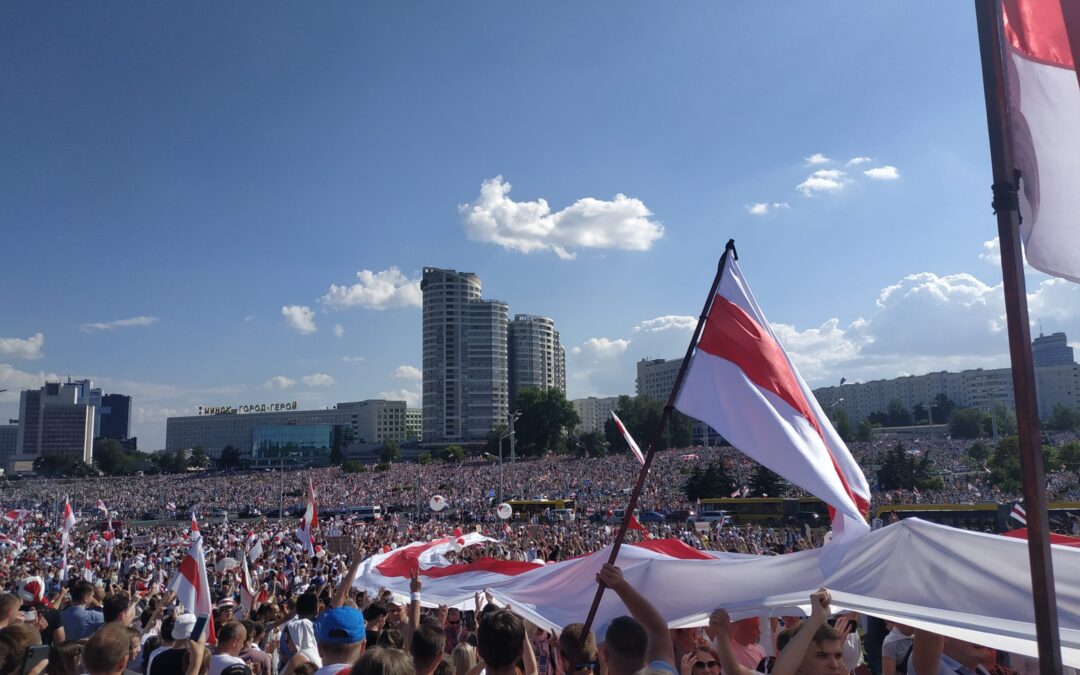
At a special session of the UN Human Rights Council in Geneva, the ICJ and IBAHRI have called on Belarus to comply with its international human rights obligations, including by releasing those arbitrarily detained and ceasing abusive prosecutions as well as harassment of lawyers.
The oral statement read as follows:
“Madame President,
The International Commission of Jurists (ICJ) and the International Bar Association’s Human Rights Institute (IBAHRI) are concerned at the continuing human rights violations in Belarus following the Presidential election. Widespread arbitrary arrests, police violence against peaceful protesters, torture and other ill-treatment of detainees and allegations of enforced disappearances, violate Belarus’s international law obligations, and require accountability.
Our organizations are particularly concerned about reports that these violations are accompanied by widespread denial of detainees’ access to a lawyer. Lawyers face harassment and obstacles in carrying out their professional duties.
We highlight the recent arrests and detention of two prominent lawyers, Ilya Salei and Maxim Znak, on politically motivated charges on 9 September 2020. According to official information, the lawyers are charged with the crime of “calls for actions aimed at causing harm to the national security of the Republic of Belarus”.
We urge the Council to call on Belarus to:
Thank you”
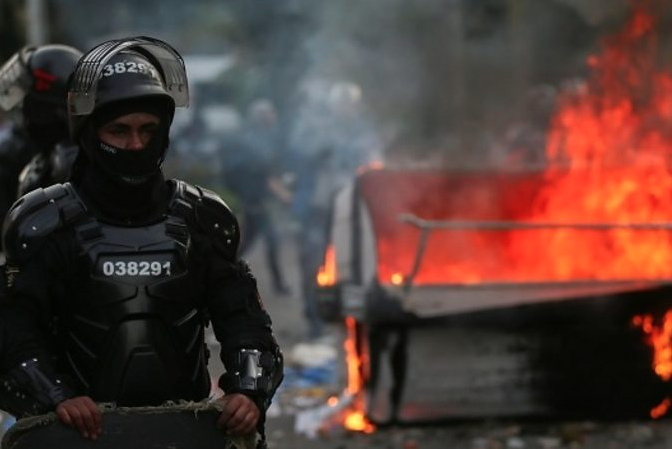
Today, the ICJ called upon the responsible authorities to ensure that prompt, transparent, thorough, impartial and effective investigations are carried out of allegations of extrajudicial killings and other serious human rights violations by the Colombian police during recent street protests.
The ICJ stressed that any official responsible should be prosecuted and brought to justice and victims of any violations be provided an effective remedy and reparation.
From 9 September to 10 September 2020, mass protests against serious human rights violations by Colombian police took place in Bogota, following the death of Javier Ordóñez. Ordoñez died in police custody after he had been subjected to severe ill-treatment, including by prolonged taser shock.
The protests were met with acts of unlawful, unnecessary and disproportionate use of force by police. The protests left 13 people dead, and more than 200 injured.
The incidents have been condemned by the Inter-American Commission on Human Rights (IACHR), which pointed to allegations of unlawful detention and ill-treatment of persons arrested following the demonstrations. The UN High Commissioner for Human Rights has also expressed concern at the allegations the use of excessive force during the protests.
According to witness accounts, police opened fire against people who were protesting peacefully. Some of the victims killed were said to be people who had not taken part in the protests and died due to stray bullets. Some videos of police conduct have been circulated on social media.
Similarly, Bogota Mayor, Claudia López Hernández, has affirmed that she had handed over videos of police shooting indiscriminately against people during the protests to the Office of the Attorney General and other authorities. In addition, she shared part of the videos on her Twitter account.
The ICJ recalls that under international standards governing the use of force by law enforcement officials, lethal force may never be used unless strictly necessary to protect life.
The ICJ stresses that investigations must be impartial and the need for investigators to be independent of the police. Equally important, the investigations must take place within the civilian rather than the military justice system.
The ICJ is also concerned at the threats received by human rights lawyers who have been working working to document possible human rights violations during the protests.
Background
The protests were triggered by the death of Javier Ordoñez, who died at a police facility (Comando de Acción Inmediata, CAI), on the early morning of 9 September.
A video shows that before being transferred to the facility, Ordoñez was repeatedly shocked by policemen with a stun gun while on the ground and did not represent any threat to life or safety the police or other persons. Initial results of the investigation, including the autopsy report, indicate that Ordoñez was hit in the head, neck, shoulders, and chest inside the police facility.
On 11 September 2020, the Police and the Ministry of Defence offered an “apology” for any violation of the law that may have been committed by the police, without acknowledging any specific wrongdoing.
Subsequently, on 16 September, the Minister of Defence recognized that Javier Ordóñez was murdered by the police. Although he stated that the Police respect peaceful protests, he also said the protests of September 9 and 10 were a massive and systematic attack against the police.
Along the same lines, on 13 September 2020, the office of the Mayor of Bogotá held a ceremony of “forgiveness and reconciliation”. The ceremony had the participation of some of the victims, who demanded justice.
On 17 September 2020, the Office of the Attorney General filed arrest warrants against two policemen involved in the murder of Ordóñez. The warrants have been granted by a judge. Both policemen had been arrested.
In accordance with Colombia’s obligations under the International Covenant on Civil and Political Rights, investigations “must always be independent, impartial, prompt, thorough, effective, credible and transparent”.
The UN Basic Principles on the Use of Force and Firearms by Law Enforcement Officials require that any the use of force is exceptional, necessary, and proportional and that lethal force may only be used when strictly necessary to protect life.
Colombia has been recently facing a significant increase in serious human right violations and abuses, including unlawful killings. For example, since the Peace Agreement was signed in November 2016, there has been an upward trend in the killings, death threats, and harassments against human rights defenders.
As of December 2019, the UN Verification Mission in Colombia verified 303 killings of human rights defenders and social leaders since the signature of the Peace Agreement. So far, during 2020, the Office of the United Nations High Commissioner for Human Rights in Colombia has documented 47 killings of human rights defenders and is reviewing other potential 44 cases.
Contact:
Carolina Villadiego, Legal and Policy Adviser, Latin America. Email: carolina.villadiego(a)icj.org
Rocío Quintero M, Legal Adviser, Latin America. Email: rocio.quintero(a)icj.org
 South Sudan: Extend UN Investigations Amid Deteriorating Human Rights Crisis
 Nepal: Publish Reports on Violent Crackdowns on Protests
 EU: ICJ publishes strategic litigation guide on children and immigration detention
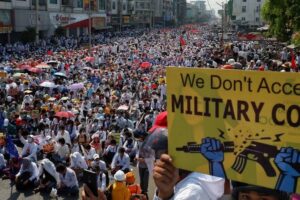 Myanmar: Five years after the coup “justice system” remains an instrument of repression