Feb 22, 2021 | Advocacy, News
On 13 and 20 February 2021, the ICJ, jointly with Centre for Civil and Political Rights (CCPR Centre), held two consultative sessions on international law and standards relating to the right to freedom of expression, peaceful assembly and the use of force in law enforcement operations.
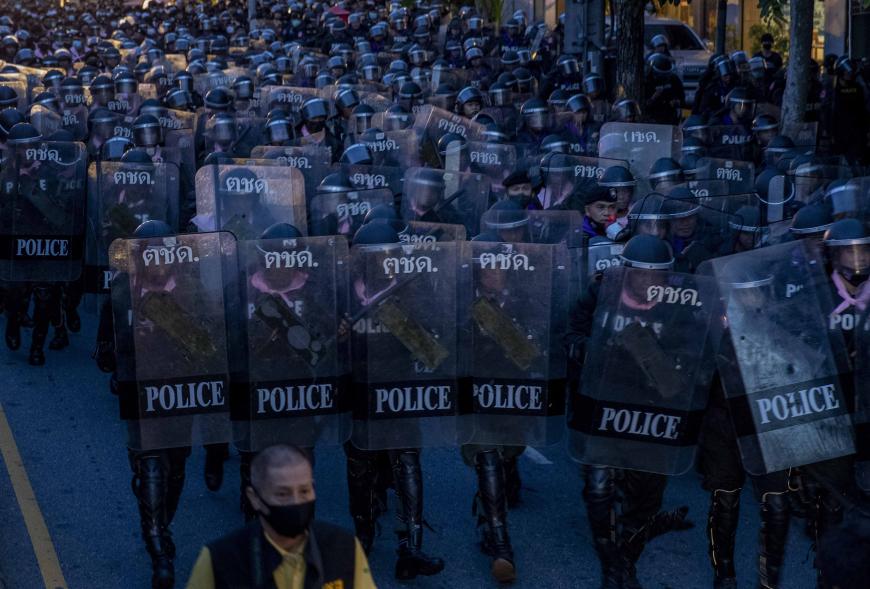
The discussions took place against the backdrop of recent widescale protests in Thailand, in which people exercising the rights to peaceful assembly and freedom of expression were met with sometimes unlawful force by security units.
Twenty-five Thai and international lawyers, civil society representatives and academics attended both discussion sessions, some participants in person and others online.
The 13 February session focused on relevant international law and standards relating to the rights to freedom of expression, peaceful assembly and the use of force in law enforcement operations, including the International Covenant on Civil and Political Rights (ICCPR), to which Thailand is a party, The sessions were led by Daisuke Shirane, CCPR Centre Asia Pacific Coordinator; Badar Farrukh, OHCHR Regional Office for South-East Asia Human Rights Officer; and Chonlathan Supphaiboonlerd, ICJ Associate Legal Adviser.
Participants considered the exercise in practice of the rights to freedom of expression and information, rights that have recently been unduly restricted in Thailand. Such restrictions were said to have resulted in violations of the rights of individuals who increasingly rely on online platforms, particularly social media platforms such as Facebook and Twitter, to share information on the protests and to express their opinions on the reform movement.
The session included a Q&A session with Christof Heyns, former member of the UN Human Rights Committee and Special Rapporteur on summary, arbitrary and extrajudicial executions. The discussion focused on the scope of the right of peaceful assembly, COVID-19 related restrictions, the State’s duty to facilitate peaceful assembly, and the international legal requirements of legality, necessity and proportionality on State’s response against the protesters.
In the 20 February consultation, Aram Song, attorney of the MINBYUN-Lawyers for a Democratic Society from South Korea, shared with the participant his experiences representing victims of human rights violations arising from police responses to protesters. He discussed the unlawful use of force and the constitutionality of regulations and ordinance that restricting the right to expression and peaceful assembly in the courts. Thereafter, Gayoon Baek, Chief Secretary of the Truth and Reconciliation Commission of the Republic of Korea, gave her views on how to conduct advocacy through international human rights mechanisms to ensure the right to freedom of expression and peaceful assembly.
This workshop is part of the ICJ’s ongoing efforts to bring existing Thai laws in compliance with international laws and standards that regulating the right to freedom of expression and peaceful assembly.
Further reading
Thailand: ICJ co-hosts round-table on right to peaceful assembly
Feb 19, 2021 | News
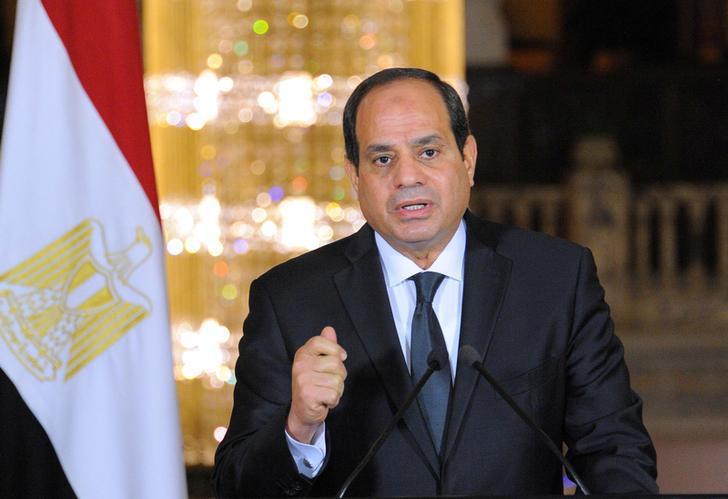
The Egyptian authorities’ targeting of families in Egypt of activists and human rights defenders living abroad has been escalating, demonstrating a clear pattern of intimidation and harassment, 22 Egyptian, regional, and international organizations said today.
Since August 2020, the authorities have targeted the families of four critics who live in the United States, as well as one in Turkey, one in Germany, and one in the United Kingdom.
These cases are among dozens reported in recent years. The authorities try to intimidate critics with unlawful home raids, arbitrary arrests, enforced disappearances, and prolonged detention of family members without trial or charges.
“The Egyptian families of dissidents abroad have been increasingly caught in President al-Sisi’s government web of oppression,” said Joe Stork, deputy Middle East and North Africa director at Human Rights Watch. “President al-Sisi should immediately rein in his security forces and end these hostage-like arrests.”
On February 13, 2021, the authorities raided the homes of six members of the extended family of Mohamed Soltan, a US-based human rights advocate. Soltan, the director of the Freedom Initiative, an independent human rights group, and two other sources with direct knowledge of the arrests told Human Rights Watch that security agents arrested two of his cousins, Mostafa Soltan and Khairi Soltan, at their homes in the Menoufiya governorate. The two sources also said security authorities arrested a third relative of Soltan’s, Mahmoud Yousri al-Naggar.
Officers told another cousin to turn himself in once a cast on his broken leg was removed. Three of Soltan’s other cousins whom officers wanted to arrest were not at home during the raids; their families were told that the cousins were wanted by the National Security Agency. Those detained were interrogated mainly about Mohamed Soltan and his activities. On the evening of February 17, authorities released Mostafa and Khairi, following their detention and interrogation by National Security officers, the two sources said.
Security agents had previously arrested five of the six targeted cousins in June 2020 and detained them without trial until shortly before Joe Biden won the US presidential election in November. Soltan has been a prominent target of Egyptian government and pro-government media defamation campaigns because of his human rights work, most recently because of his organization’s support for the establishment of the Egypt Human Rights Caucus in the US House of Representatives.
The authorities disappeared Soltan’s already-jailed father, Salah Soltan, on June 15, 2020, when officers escorted him from Wadi al-Natrun prison to an unknown destination. Since that time, the authorities have refused to provide his family and lawyers information about his whereabouts. Soltan said that Egyptian intelligence agents in Washington, DC have harassed him with “bump-ins” at the local mall, at a Freedom Initiative’s Egypt advocacy event, which Human Rights Watch and the Project on Middle East Democracy co-sponsored in March 2019, and with threatening phone calls, telling him that he should “be careful” for his father’s sake. Soltan said he reported all incidents to the US authorities and his lawyers immediately.
Aly Hussein Mahdy, a University of Illinois at Chicago graduate student and video blogger with over 400,000 followers on Facebook, was ridiculed by a pro-government TV outlet on January 17. Between January 28 and February 2, National Security officers raided the homes of several of his family members in Alexandria and arrested his father, uncle, and cousin because of his videos, Mahdy told Human Rights Watch.
“They raided the home at dawn,” Mahdy said in a Facebook video on February 11. “They took my father from his wife and my younger siblings, terrifying them. They messed up the whole house and stole everything they found.” He told Human Rights Watch that his family has not been able to learn the whereabouts of the three family members arrested.
Download
Egypt-Arrests-Joint-Press-Release-2021-ENG (full statement in English)
Egypt-Arrests-Joint-Press-Release-2021-ARA (full statement in Arabic)
Contact
Asser Khattab, Research and Communications’ Officer, ICJ Middle East and North Africa Programme, e: asser.khattab(a)icj.org
Feb 18, 2021 | News
The ICJ and more than 70 other non-governmental organisations, faith-based groups, and academic institutions urge the Biden Administration to engage constructively with the International Criminal Court (ICC).
The statement reads:
The undersigned organizations urge the Biden Administration to engage constructively with the International Criminal Court (ICC). The U.S. government’s support for the ICC could help secure justice for victims in situations from Myanmar to Darfur, just as it helped facilitate the February 4 historic conviction of a former leader of an armed rebel group for war crimes and crimes against humanity in northern Uganda.
There is an immediate need to act to reset U.S. policy regarding the ICC. Most urgently, we are alarmed by recent calls for the U.S. government to maintain or even expand the sanctions put into place by the Trump administration in June 2020 currently targeting the court’s work.
These actions were an unprecedented attack on the court’s mandate to deliver justice and the rule of law globally, an abuse of the U.S. government’s financial powers, and a betrayal of the U.S. legacy in establishing institutions of international justice. They were also an attack on those who engage with the court, including human rights defenders and victims. These extraordinary measures have put the U.S. at odds with many of its closest allies. They also have been challenged on constitutional grounds domestically.
Keeping in place the executive order authorizing sanctions would be inconsistent with the new administration’s laudable commitments to respecting the rule of law and pursuing multilateral cooperation in support of U.S. interests. It would also transform a shameful but temporary action into a standing license for other governments to attack multilateral institutions when they disagree with those bodies’ actions.
We call upon the U.S. government to rescind Executive Order 13928 and all sanctions measures against ICC officials at the earliest possible opportunity. We appeal for constructive engagement with the ICC and we urge the Biden administration and members of Congress to support that approach.
Download
USA-Biden-Joint-Statement-2021-ENG (Full statement with list of organizations)
Contact
Kingsley Abbott, ICJ Director, Global Redress and Accountability; e: kingsley.abbott(a)icj.org
Feb 18, 2021 | Advocacy, News, Publications
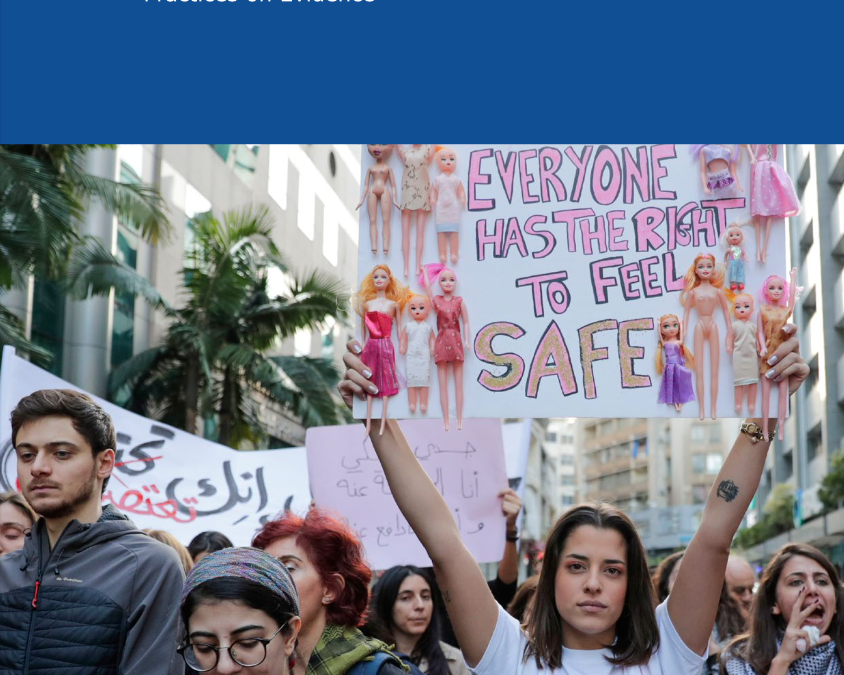
In a memorandum released today, the ICJ published guidance and recommendations aimed at assisting Lebanon’s criminal justice actors in addressing significant gaps in evidentiary rules, practice and procedures undermining the investigation, prosecution and adjudication of sexual and gender-based violence (SGBV) crimes in the country.
The 42-page memorandum, Sexual and Gender-based Violence Offences in Lebanon: Principles and Recommended Practices on Evidence (available in English and Arabic), aims to advance accountability and justice for SGBV, and is especially designed for investigators, prosecutors, judges and forensic practitioners.
“Criminal justice actors are indispensable to eradicating harmful practices and curbing entrenched impunity for SGBV in Lebanon,” said Said Benarbia, Director of the ICJ’s Middle East and North Africa Programme.
“Rather than buying into false, stereotyped narratives that impugn survivors’ credibility and call into question their sexual history, the criminal justice system must adopt and enforce gender-sensitive, victim-centric evidence-gathering procedures that put the well-being of SGBV survivors at the forefront.”
The memorandum provides criminal justice actors with guidance and recommendations on the identification, gathering, storing, admissibility, exclusion and evaluation of evidence in SGBV cases, as well as on their immediate applicability in practice, pending consolidation and reform of Lebanon’s existing legal framework and procedures for the investigation, prosecution and adjudication of SGBV offences.
“Lebanon’s legal framework fosters and perpetuates a systematic denial of effective legal protection and access to justice for women survivors of SGBV,” said Benarbia. “The justice system must counter harmful gender stereotypes and attitudes rooted in patriarchy, which continue to undermine survivors’ right to effective remedies.”
The memorandum’s release is particularly timely given the escalation of SGBV witnessed since the outbreak of the COVID-19 pandemic.
The memorandum builds on previous research undertaken by the ICJ in this area, including Gender-based violence in Lebanon: Inadequate Framework, Ineffective Remedies and Accountability for Sexual and Gender-based Violence in Lebanon: Guidance and Recommendations for Criminal Justice Actors.
Download
Lebanon-GBV-Memorandum-2021-ENG (Memorandum in English)
Lebanon-GBV-Memorandum-2021-ARA (Memorandum in Arabic)
Lebanon-GBV-Web-Story-2021-ARA (Web story in Arabic)
Lebanon-GBV-Web-Story-2021-ENG (Web story in English)
Contact:
Said Benarbia, Director, ICJ Middle East and North Africa Programme, t: +41-22-979-3817; e: said.benarbia(a)icj.org
Asser Khattab, Research and Communications’ Officer, ICJ Middle East and North Africa Programme, e: asser.khattab(a)icj.org
Feb 17, 2021 | Advocacy, Non-legal submissions
The ICJ, together with ARTICLE 19, today addressed the Advisory Committee of the UN Human Rights Council on its work on “negative effects of terrorism on the enjoyment of human rights”. They called on the Committee as it finalizes its report to resist attempts to deviate from the human rights focus at the core of its mandate.
The joint statement read as follows:
“The International Commission of Jurists (ICJ) and ARTICLE 19 welcome the opportunity to engage in this discussion of the draft report on the negative effects of terrorism on human rights.
Given that we have not been able to review the current draft report, we must reiterate our call previously stated during the 24th session to consider the broader context into which this report will be delivered.
We ask the Committee to maintain its focus on the primary objectives of preventing and addressing human rights violations resulting from counter-terrorism measures, and promoting and ensuring protection of the human rights of victims of terrorism. This has been the longstanding focus of the Human Rights Council, despite the efforts of a few states to divert its attention away from core human rights concerns.
Any report addressing the “negative effects of terrorism” should maintain this focus, consolidating the extensive work already done in this regard by successive Special Rapporteurs and other UN and regional entities, as collected in the compilation published by the ICJ in 2019.
The report must not enable the diversion of precious attention and resources to more diffuse questions of impacts of a macro-economic or similar character, in respect of which a human rights-based approach has little to add in terms of concrete recommendations or guidance to States.
The ICJ and ARTICLE 19 share and endorse the positions set out in the recent report of the Special Rapporteur to the UN Human Rights Council as they relate to the effects of terrorism on the promotion and protection of human rights (UN Doc. A/HRC/46/36).
We agree with the Special Rapporteur’s observation that “reflection on the enjoyment of economic, social and cultural rights in the terrorism and counter-terrorism arenas has been understated” (para. 32).
As the Special Rapporteur has stated, however, “there is no legal basis to view the State as primary victim of terrorism through the economic costs that may be experienced from acts of terrorism”.
Two principles, in this respect, should be reinforced: individuals and peoples are the primary rights holders under human rights law, and States have to carry out the legal obligations prescribed by international human rights law. Any confusion or suggestions otherwise may serve to undermine human rights law.
We agree with the Special Rapporteur that the lack of precise definition in terrorism and counter-terrorism and the blurring of lines between counter-terrorism and international humanitarian law will have a pernicious effect and will seriously tarnish human rights protection.
As highlighted before, we also concur that any work on effects of terrorism must be centred on the human rights of victims of terrorism, on the duty under international human rights law of all States to prevent, protect, investigate and redress any abuse to human rights.
We urge the Advisory Committee to include a clear recommendation to the Council that the exclusive focus of the Council’s work remain on violations in countering terrorism and a human-rights based approach to victims of terrorism.
We call on the Committee to recommend against the Council entering into more diffuse macroeconomic issues.
We urge you to affirm that the existing and longstanding normative and institutional framework on counter-terrorism and human rights is already sufficient to address relevant impacts of terrorism from a human rights perspective.
Thank you.”
For further information contact:
Massimo Frigo, ICJ UN Representative, massimo.frigo@icj.org – +41797499949
Anna Oosterlinck, Head of UN, ARTICLE 19, annaoosterlinck@article19.org