Aug 30, 2019 | News
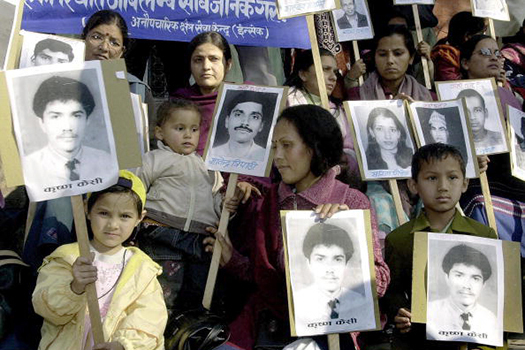
On the occasion of the International Day of the Victims of Enforced Disappearances, Advocacy Forum-Nepal, the Terai Human Rights Defenders Alliance (THRD), and the ICJ voiced their concern about the Government’s failure to provide justice for the victims of the country’s decade-long armed conflict, including victims of enforced disappearance.
The organizations also remembered the victims of enforced disappearances in Nepal and recognized the unceasing efforts of victims and their families and others advocating and campaigning for truth and justice for serious human rights violations in Nepal for over a decade.
Nepal faced a protracted internal armed conflict from 1996 to 2006. In the decade-long conflict, serious human rights violations and abuses were committed by both sides: the Government, including the Royal Nepal Army; and the Communist Party of Nepal (Maoist). Approximately 1,300 people were “disappeared” during the conflict. The fate of many of “disappeared” is yet to be known.
The Comprehensive Peace Agreement (CPA) put an end to the conflict on 21 November 2006, with both sides agreeing to hold perpetrators of human rights violations and abuses accountable and provide access to effective remedies and reparation to victims, including a commitment to publicize the fate or whereabouts of “disappeared”. However, nearly 13 years after the signing of the Comprehensive Peace Agreement in November 2006, these promises remain unfulfilled.
The Truth and Reconciliation Commission and Commission on Investigation of Disappeared Persons, both established in February 2015, have failed to resolve the many thousands of complaints brought to them by victims and their families, and have yet to publicize their findings. Furthermore, in 2015, the Supreme Court ruled the 2014 Act creating the legal framework for the Commissions to be unconstitutional, due in part to the inclusion of provisions that could be used to grant amnesty to perpetrators. In February 2019, the tenure of the commissions was extended to 2020, but the terms of the commissioners expired on 13 April 2019. As of August 2019, no formal replacements had been announced, though a committee to recommend appointments has been established. The ICJ and other organizations have called for a suspension of the current appointment process until amendments to the legal framework are made, and a more consultative and transparent process is initiated.
Nepal has also enacted a new Penal Code, with effect from August 2018. For the first time, the Penal Code recognized enforced disappearance as a distinct crime. While the intent behind this measure is commendable, the law does not meet Nepal’s obligations concerning crimes under international law. In particular, the definition of enforced disappearance falls short of international standards; the crime of enforced disappearance is not absolutely prohibited; provisions related to superior and command responsibility are inadequate; and the penalties for enforced disappearance are inconsistent with international standards. The provisions will apply retroactively to the more than 1,300 conflict era cases.
The organizations urged the Government of Nepal to:
- Amend the 2014 Transitional Justice Act to ensure it is consistent with international human rights standards and Supreme Court rulings, including removing amnesty for perpetrators;
- Revise the criminal code to bring it in line with international standards. At the minimum, this should include:
- amending the definition of enforced disappearances to bring it in line with Nepal’s international obligations and the Convention on the Protection of All Persons from Enforced Disappearance (CED)
- revising the penalty provisions in the Criminal Code Bill to comply with relevant provisions of the CED and other international law and standards
- removing the statute of limitations for enforced disappearance cases
- Ratify International Convention for the Protection of All Persons from Enforced Disappearances;
- Publicize the findings of the CIEDP; and
- Ensure that in Nepal’s legal system, the victims of enforced disappearance, including family members of “disappeared” persons, have the right to obtain reparation and prompt, fair and adequate compensation; and they can effectively exercise that right in practice.
Contact:
For the ICJ: Frederick Rawski, ICJ Asia-Pacific Director, t: +66 64 478 1121; e: frederick.rawski(a)icj.org
Background:
The International Day of the Victims of Enforced Disappearances falls on 30 August every year. Nepal is bound by international legal obligations under the International Covenant on Civil and Political Rights (ICCPR) and Convention against Torture and Other Cruel, Inhuman or Degrading Treatment or Punishment (CAT) – both of which it has acceded to – to investigate, prosecute, punish and provide remedies and reparation for the crimes of torture, other acts of ill-treatment, and enforced disappearance.
Nepal-International Day Enforced Disappearances-Press releases-2019-NEP (Story in Nepali)
Aug 27, 2019 | News
The ICJ welcomes yesterday’s ratification by Uzbekistan of the CIS Convention on Legal Assistance and Legal Relations in Civil, Family and Criminal Matters 2002, also called the Chisinau Convention. The law on ratification was signed by President Shavkat Mirziyoyev.
The ICJ calls on the Uzbek authorities to take measures to make the Convention’s protective guarantees effective.
“This is a major step forward by Uzbekistan to get its extradition system up to standard with the rest of the world”, said Massimo Frigo, ICJ Senior Legal Adviser. “. “Its ratification of this treaty considerably steps up human rights guarantees in extradition.”
The Chisinau Convention enshrines several human rights guarantees to protect against extraditions that may breach the human rights of the transferred person, including the prohibition to transfer persons where they risk the death penalty or torture or cruel, inhuman and degrading treatment.
“The ratification of the Convention is a very important first step. An effective implementation of these guarantees in the legal and law enforcement systems is necessary now.” said Dmitry Nurumov, ICJ Central Asia Legal Consultant.
Background
Last May, the ICJ held, together with the General Prosecutor’s Office of Uzbekistan, UNODC Regional Office for Central Asia and the Regional Office for Central Asia of OHCHR, a regional and a national seminar on comparative practices in extradition in the CIS and European legal systems, including with regard to human rights guarantees in these procedures.
In 2017, the ICJ issued a report documenting the shortcomings in the Russian Federation, Central Asia and European countries in their extradition systems and other transfer procedures.
The ratification by Uzbekistan of the Chisinau Convention meets part of the recommendations formulated by the ICJ in these occasions.
Contact:
Massimo Frigo, Senior Legal Adviser, e: massimo.frigo(a)icj.org , t: +41229793805
Aug 22, 2019 | Advocacy, News
Today, the ICJ joined 10 other international and Venezuelan human rights organizations to call the United Nations Human Rights Council to establish a Commission of Inquiry (COI) on human rights in Venezuela in its upcoming session in September.
The ICJ considers that an independent COI is necessary given the Venezuelan authorities have been unable or unwilling to pursue effective domestic accountability and the judicial and prosecutorial mechanisms lack independence and impartiality.
In recent years, the ICJ has documented in several reports the lack of judicial independence, the lack of accountability for those allegedly responsible for gross human rights violations, the abuse and misuse of the military jurisdiction, and wide ranging breakdown in the functioning of the rule of law.
The United Nations High Commissioner for Human Rights in her 2019 report has similarly stressed that wide ranging human rights violations had occurred in Venezuela evidenced by the excessive use of force by security forces, attacks on freedom of expression, arbitrary detention and extrajudicial killings, dismantling of checks and balances, and deprivations constituting violations of the right to food and health. In addition, a panel of independent international experts mandated by the Secretary General of the Organization of American States (OAS), mentioned in 2018 “that reasonable grounds exist to believe that crimes against humanity have been committed in Venezuela”.
Commissions of Inquiry have been effectively established by the UN Human Rights Council to assess serious situations of human rights in several countries where there is a need to ensure proper human rights fact finding and ultimately accountability for widespread or systematic human rights violations. These include COIs for Syria, North Korea, Burundi, Yemen, Libya and Eritrea.
The ICJ and the other organizations have emphasized that the Commission of Inquiry that could be established for Venezuela “should be mandated to investigate reports of violations of international human rights law in Venezuela, including but not limited to violations associated with torture and inhuman treatment, arbitrary detention, discrimination, violations of freedom of expression, violations of the right to life and enforced disappearances, as well as violations of the rights to health and food. It should be tasked with establishing the facts and circumstances of violations committed since at least 2014, mapping out patterns of violations and identifying those responsible and, where possible, the chain of command, with a view to contributing to full accountability for all violations including those that constitute crimes under international law (…)”.
Download:
Venezuela-COI final-Advocacy-2019-ENG (full Q&A document prepared by all 11 organizations in PDF)
Aug 19, 2019 | Advocacy, Cases, Legal submissions
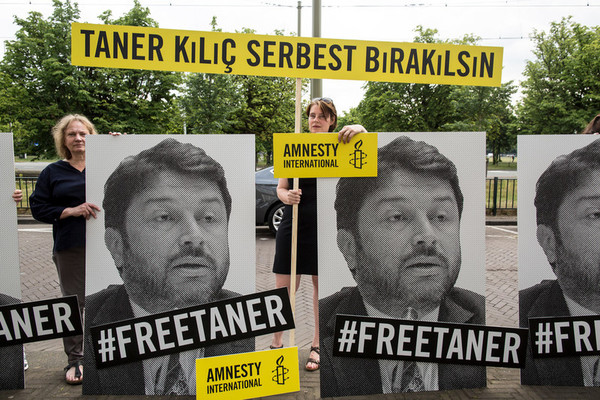
The International Commission of Jurists, the Turkey Human Rights Litigation Support Project and Human Rights Watch have jointly intervened before the European Court of Human Rights in the case of Taner Kiliç, former Chair of the Board of Amnesty International Turkey.
Taner Kiliç is a Turkish human rights defenders. He had been Chair of the Board of Amnesty International Turkey since 2014.
He was arrested on 6 June 2017 on reportedly unsubstantiated charges of “membership of a terrorist organisation” and was released on bail on 15 August 2018 after having spent 14 months in detention.
His case before the European Court of Human Rights challenges the lawfulness of his pre-trial and on remand detention, the violations of his right to judicial review of his detention, and of his freedom of expression and association, considering his arrest linked to his work as leader of a NGO.
As the interveners have written to the Court, this case epitomises some of the most fundamental human rights challenges in Turkey today.
These involve widely documented restrictions on freedom of expression, association, and assembly of human rights defenders (HRDs) and rapidly closing civil society space.
The interveners have submitted observations on:
- the factual context in respect of the situation facing HRDs in Turkey;
- international standards governing obligations towards HRDs of relevance to the Court’s interpretation of the European Convention on Human Rights, including the limits prescribed by Article 18;
- key principles necessary for a rule of law approach to the application of the criminal law, against the legal and practical pattern of excessive resort to criminal law against HRDs in Turkey today.
Turkey-ECtHR-icj&others-Kilic-Advocacy-legal submission-2019-ENG (download the third party intervention)
Photo credit: Amnesty International
Jul 31, 2019 | News, Publications, Reports, Thematic reports
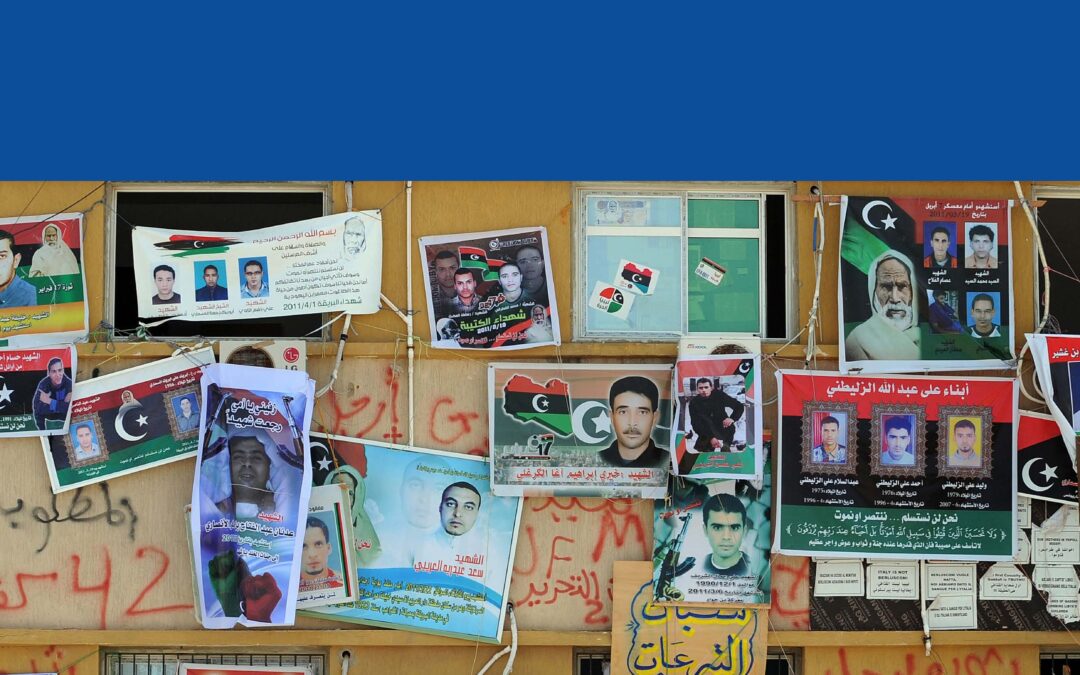
In a report released today on Libya’s criminal justice system, the ICJ said the United Nations, international actors and States must prioritize accountability for crimes under international law in their engagement with Libya.
This includes the establishment of a Commission of Inquiry or similar mechanism to document and report on gross human rights violations and to collect and preserve evidence of crimes for future criminal proceedings.
“The Libyan criminal justice system needs comprehensive reform to dismantle the structural impunity that prevails in the country,” said Said Benarbia, the ICJ’s MENA Programme Director.
“Rather than assuming the system is capable of ensuring justice for the egregious human rights violations and abuses still being perpetrated in Libya, international actors should establish a mechanism to monitor, report on and address these violations and prioritize human rights in any agreement with Libyan authorities,” he added.
The report Accountability for Serious Crimes under International Law in Libya: an Assessment of the Criminal Justice System finds that investigations and prosecutions of crimes under international law have been limited to a handful of cases and that future cases are unlikely meet international standards necessary to ensure fair and effective justice, in particular the rights to liberty and a fair trial and the prohibition on torture and ill-treatment.
Fragmentation in Libyan executive and legislative bodies, with the internationally recognized government unable to control significant parts of the territory, has weakened political structures and led to a precarious security situation that impedes the effective functioning of the judiciary, which has remained largely unified.
“Accountability efforts in Libya are hindered by cycles of violence, weak and ineffective law enforcement agencies, the arbitrary exercise of policing and detention powers by armed groups, and a web of amnesties, immunities and defences that shield perpetrators from justice,” said Kate Vigneswaran, the ICJ’s MENA Programme Senior Legal Adviser.
“Victims should not have to wait any longer for these obstacles to be removed and justice delivered. Peace and justice in Libya can only be achieved if the rule of law is fully established,” she added.
Since 2011, crimes under international law and other gross human rights violations, including torture and ill-treatment, enforced disappearance, enslavement and rape, have been committed by State and non-State actors on a widespread scale, including against thousands of migrants, refugees and asylum seekers arbitrarily detained.
“The recent upsurge in conflict and related commission of direct and indiscriminate attacks against civilians and mass displacement of the population makes tackling the climate of impunity vital for combating the commission of crimes,” said Benarbia.
To this end, States should fully support International Criminal Court efforts to conduct Libya-related investigations and prosecutions, including with a view to enforcing arrest warrants and bringing alleged perpetrators before the court for trial.
In her address to the Human Rights Council on 24 June, High Commissioner for Human Rights Michelle Bachelet stated that “Libya is not a port of safe return” and that “[t]he international community must come together to support pathways to sustainable peace in the country.”
Key recommendations for international actors, including UN bodies and States, include:
- The United Nations Human Rights Council should establish a Commission of Inquiry or similar mechanism, with a mandate to monitor, document, establish the facts and report on gross human rights violations in Libya, including with a view to collecting and preserving evidence of crimes under international law for future criminal proceedings before national or international courts;
- States should exercise universal jurisdiction to investigate and prosecute crimes under international law committed in Libya, including when the perpetrator is within their territory or otherwise under their jurisdiction;
- States should fully cooperate with and adequately resource the ICC to enhance its capacity to conduct its investigations and prosecutions, enforce related arrest warrants, and bring alleged perpetrators to account; and
- States and UN actors should refrain from entering into or implementing agreements with Libyan authorities, including in relation to the detention of migrants, refugees and asylum seekers and the provision of arms, where it is reasonably foreseeable that violations of rights under international law might occur.
Contact:
Said Benarbia, Director, ICJ Middle East and North Africa Programme, t: +41-22-979-3817; e: said.benarbia(a)icj.org
Kate Vigneswaran, Senior Legal Adviser, ICJ Middle East and North Africa Programme, t: +31-62-489-4664; e: kate.vigneswaran(a)icj.org
Libya-Accountability report launch-News-Press releases-2019-ENG (full story, in English, PDF)
Libya-Accountability serious crimes-Publications-Reports-Thematic reports-2019-ENG (full report in English, PDF)
Libya-Accountability report launch-News-Press releases-2019-ARA (full story in Arabic, in PDF)
Libya-Accountability serious crimes-Publications-Reports-Thematic reports-2019-ARA (full report in Arabic, PDF)