Oct 1, 2018 | Advocacy, Non-legal submissions
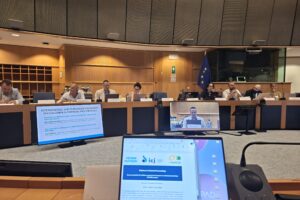
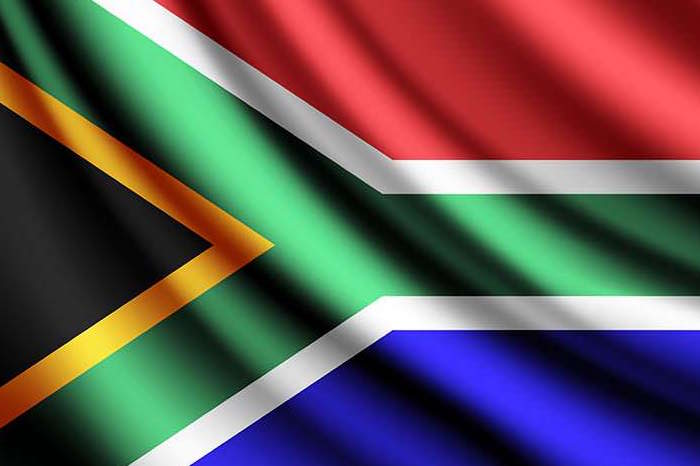
Today, the ICJ makes a submission to the UN Committee on Economic, Social and Cultural Rights in advance of Committee’s examination of South Africa’s initial periodic report under the International Covenant on Economic, Social and Cultural Rights.
South Africa ratified the Covenant in 2015. This is the first time that the Committee has the opportunity to review a report from South Africa on the implementation of its Covenant obligations.
The ICJ’s oral submissions will focus on the rights to work and an adequate standard of living.
The ICJ’s full written submissions also include emphasis on the rights to education, work and housing of persons with disabilities and recommend that the Committee recommend that the Government of South Africa make time-bound commitments to participative processes leading to:
1. The full domestication of Covenant in South African law
2. A comprehensive review of South Africa’s domestic laws and policies on ESC rights to ensure that they are implemented consistently with South Africa’s obligations in terms of the Covenant; and
3. The ratification of Optional Protocol to the International Covenant on Economic, Social and Cultural Rights.
In a joint statement with other civil society organizations, ICJ Legal Adviser Timothy Fish Hodgson said: “Unlike the South African Constitution, the International Covenant on Economic, Social and Cultural Rights contains a right to work. By ratifying the Covenant in 2015, the government has made a legally binding commitment to progressively eliminate unemployment and ensure that all work – whether in the formal or informal sector – is decent work.”
“As a result, for example, “both the level of the national minimum wage and measures taken by the government to combat South Africa’s 37.2% unemployment rate, should be evaluated in terms of the rights to work and the right to an adequate standard of living,” he added.
The ICJ’s oral submission is available here: South Africa-South Africa Review-Advocacy-Non Legal Submission-2018-ENG
The ICJ’s full written submissions are available here
The South African government’s full report to the Committee is available here
A live stream for the Committee’s proceedings is available here
Oct 1, 2018 | Advocacy, Non-legal submissions
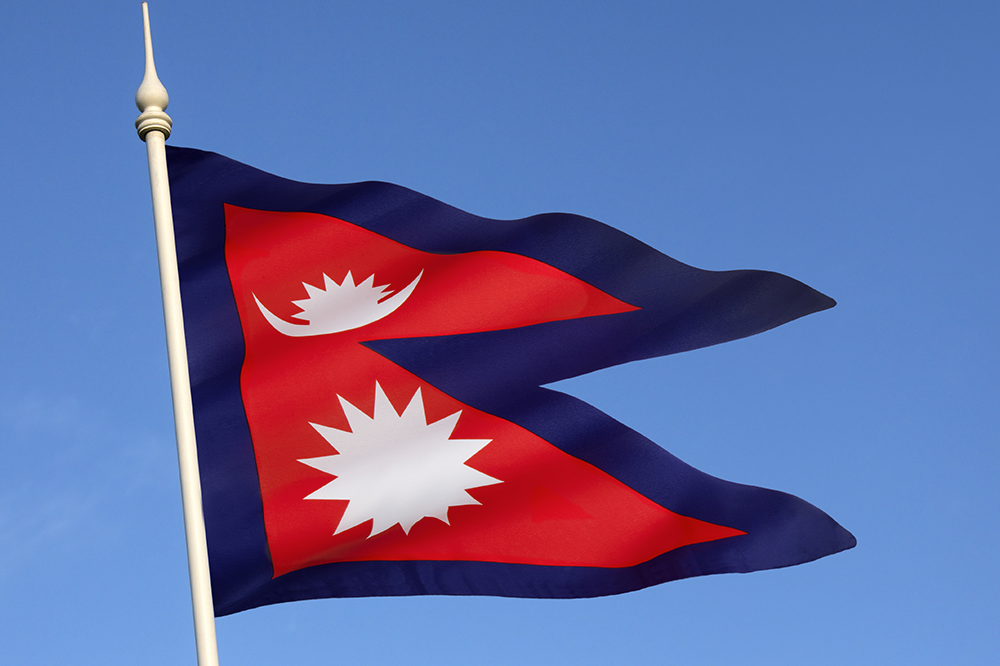
Today, the International Commission of Jurists made a submission to the Committee on the Elimination of Discrimination against Women (CEDAW Committee) in view of its forthcoming review of Nepal’s implementation of and compliance with its obligations under CEDAW in light of the State party’s sixth periodic report under Article 18 of the Convention.
In its submission, the ICJ focused on the transitional justice processes in the country, and noted that the Government of Nepal has failed to effectively address human rights violations experienced by women during the armed conflict that ended in 2006.
The submission highlighted the failure of the authorities to ensure criminal accountability for serious crimes, including rape and other forms of sexual violence during the conflict, and to ensure effective and meaningful participation by women in political and public life.
In its submissions the ICJ urged the authorities of Nepal to implement a number of recommendations with a view to ensuring that the above-mentioned concerns be effectively addressed in a manner that complies with the country’s obligations under the CEDAW and other relevant international human rights law and standards.
The ICJ’s full submission is available here: Nepal-CEDAW Report on Nepal-Advocacy-Non Legal Submission-2018-ENG
Oct 1, 2018 | News
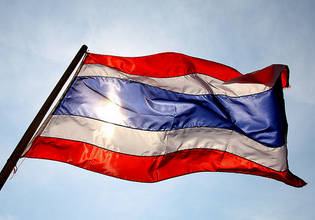
The ICJ expressed disappointment regarding Friday’s ruling by Thailand’s Administrative Court dismissing a case filed against the Royal Thai Police (RTP) for unjustified restriction of the freedom of peaceful assembly and freedom of expression, and again called on Thailand to lift its ban on political gatherings and fully reinstate fundamental freedoms in Thailand.
On 28 September 2018, the Administrative Court dismissed a case filed by the organizers of a “We Walk Friendship March” (‘We Walk march’) against the RTP and six policemen for restricting the march on the basis that it was in violation of Head of NCPO Order No. 3/2558 (2015) (‘HNCPO Order 3’).
The Administrative Court referred to the Thai Constitution, the Public Assembly Act B.E. 2558 (2015), the International Covenant on Civil and Political Rights (ICCPR) to which Thailand is a State party, and HNCPO Order 3, in deciding that the march was a public assembly. Its decision clarified that the case had to be dismissed as the RTP’s actions had complied with the Public Assembly Act.
“It is astonishing that more than four years after the coup, HNCPO Order 3 and other repressive laws, orders and announcements which restrict fundamental freedoms remain in place,” said Kingsley Abbott, Senior Legal Adviser at the ICJ.
“The Administrative Court missed a critical opportunity to deliver an opinion that the ban on political gatherings should be lifted and that all laws, orders and announcements that are inconsistent with Thailand’s international human rights obligations should be amended or revoked immediately to reinstate all fundamental freedoms in Thailand,” added Abbott.
The march, which went ahead peacefully, aimed to bring attention to the need in Thailand for universal healthcare services, policies guaranteeing food security, laws that would not violate human rights, and public participation in the development of the Constitution.
Contact
Kingsley Abbott, ICJ Senior Legal Adviser, email: kingsley.abbott(a)icj.org
The ICJ’s full statement in English is available here: Thailand-Ban on Political Gatherings-News-Web Story-2018-ENG
The ICJ’s full statement in Thai is available here: Thailand-Ban on Political Gatherings-News-Web- Story-2018-THA
Sep 27, 2018 | News
Today’s decision by the UN Human Rights Council to create an ‘independent mechanism’ to collect evidence of crimes in Myanmar, is a significant step toward accountability for gross human rights violations, the ICJ said.
“The creation of this evidence-gathering mechanism is a welcome concrete step towards justice,” said Matt Pollard, Senior Legal Adviser for the ICJ.
“But this is a stopgap measure, effectively creating a prosecutor without a court, that only underscores the urgent need for the Security Council to refer the entire situation to the International Criminal Court, which was created for precisely such circumstances,” he added.
The Council’s decision follows on conclusions and recommendations by the Independent International Fact-Finding Mission on Myanmar (FFM).
The FFM’s 444-page full report described large-scale patterns of grave human rights violations against minority groups in the country, particularly in Rakhine, Kachin and Shan States.
It also highlighted the need for criminal investigations and prosecutions for crimes under international law, something the FFM concluded that national courts and commissions within Myanmar could not deliver.
“National justice institutions within Myanmar lack the independence, capacity and often also the will to hold perpetrators of human rights violations to account, particularly when members of security forces are involved. The latest government-established inquiry in Rakhine State also seems designed to deter and delay justice,” Pollard said.
The Human Rights Council resolution did not create a new international court or tribunal.
Evidence held by the independent mechanism could be made available to international or national proceedings, whether at the International Criminal Court (ICC) or another ad hoc international tribunal, or to national prosecutors asserting jurisdiction over the crimes under universal jurisdiction or other grounds.
While there is no realistic prospect of effective national prosecutions within Myanmar in the near future, evidence held by the mechanism could also be available in future should national institutions eventually become sufficiently impartial, independent, competent, and capable to do so.
A preliminary examination of the situation of Rohingyas, being conducted by the ICC, may also lead to criminal proceedings but will likely be limited to those crimes that have partially occurred within Bangladesh, such as the crime against humanity of deportation.
Bangladesh is a State Party to the Rome Statute of the ICC whilst Myanmar is not.
The Security Council also has authority to refer the entire situation to the International Criminal Court.
“The Myanmar government should stop denying the truth and should work with the international community, and particularly the United Nations, to improve the horrific conditions facing the Rohingya and other ethnic minorities whose rights have been violated so brutally by the security forces, as documented by the Fact Finding Mission,” Pollard said.
“Myanmar’s international partners, including neighbours like India, China, and members of the Association of Southeast Asian Nations (ASEAN), should exercise their influence to help ensure that Myanmar addresses this serious threat to the stability of the country and the region, by ensuring respect, protection and fulfillment of the full range of civil, cultural, economic, political and social rights of the affected minorities,” he added.
The Council resolution makes several other substantive recommendations, including a call on the Government of Myanmar to review the 1982 Citizenship Law, and a recommendation for the United Nations to conduct an inquiry into its involvement in Myanmar since 2011.
Contact:
Matt Pollard, ICJ Senior Legal Adviser (Geneva), e: matt.pollard@icj.org, +41 79 246 54 75.
Frederick Rawski, ICJ Asia Pacific Regional Director (Bangkok), e: frederick.rawski@icj.org
Read also:
Why an IIIM and Security Council referral are needed despite the ICC ruling relating to Bangladesh (13 September 2018)
Government’s Commission of Inquiry cannot deliver justice or accountability (7 September 2018)
ICJ releases Q & A on crime of genocide (27 August 2018)
Myanmar: reverse laws and practices that perpetuate military impunity (16 January 2018)
Summary report of the Fact Finding Mission (12 September 2018)
Full report of the Fact Finding Mission (published 18 September 2018)
Text of the Resolution (unofficial version tabled in advance of the vote)
Myanmar-IIIM statement-Advocacy-2018-BUR (Full story in Burmese)
Sep 21, 2018 | Advocacy, News, Non-legal submissions
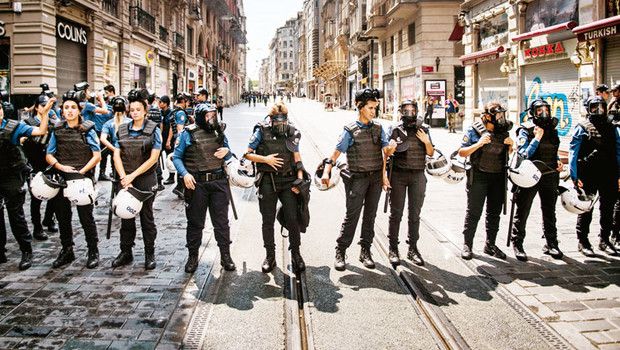
The ICJ wrote today to the Council of Europe’s Commissioner for Human Rights, Dunja Mijatović, to request action against the decision by Turkish authorities to ban entrance to Galatasaray square in Istanbul (Turkey) to a collective of mothers of disappeared persons called “Saturday Mothers”.
On 25 August 2018 , the Sub-Governorship of Beyoğlu District of İstanbul announced the prohibition of gatherings for assembly of any type of demonstrations in Galatasaray Square in Istanbul, the square where the Saturday Mothers have gathered every Saturday since 1995 to 1998 and since 2009 until 2018.
On the 700th week of their peaceful protests, the Saturday Mothers and their supporters congregated in Galatasaray Square at midday to once again raise awareness of the need for those responsible to be held accountable for the extrajudicial killings and enforced disappearances following their time in State custody in the 1990s. The police used tear gas to stop the protest and arrested 47 people. All were released by Saturday evening.
Senior officers of the Turkish authorities have even issued statements accusing the Saturday Mothers of being abused by or in collusion with terrorist organisations.
The ICJ wrote to the European Commissioner for Human Rights, that it “considers this situation to be at odds with Turkey’s obligations under international human rights law, in particular of the right to peaceful assembly under article 11 of the European Convention on Human Rights and article 21 of the International Covenant on Civil and Political Rights.”
The ICJ further added that “given the consistent record and presence of the Saturday Mothers in Galatasaray Square throughout the years, it is hard to see how the restriction on their right to peaceful assembly could in any way be necessary and proportionate to a legitimate purpose. It is clear that no prior warning for the gathering was needed for security reasons in light of its regular occurrence at least since its resumption in 2009, i.e. nine years ago. Furthermore, the demonstration took place on a pedestrian area where cars are not allowed.”
ICJ-Letter-SaturdayMothers-CoEComm-Turkey-2018-ENG (download the letter)