Upholding the freedom of assembly and association of LGBTI persons

Upholding the freedom of assembly and association of LGBTI persons

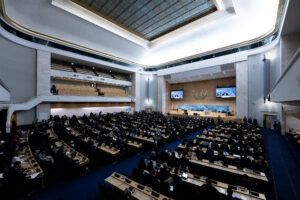
The ICJ, together with the International Lesbian and Gay Association (ILGA) and on behalf of ARC International, today delivered an oral statement to the Human Rights Council during an interactive dialogue with the UN Special Rapporteur on peaceful assembly and association.

The report of the Special Rapporteur addressed challenges faced by groups at risk, including lesbian, gay, bisexual, transgender and intersex persons.

The statement welcomed the report by the Special Rapporteur.

It referred to the Nigerian Same Sex Marriage (Prohibition) Act (which in fact criminalizes a much broader range of human rights-protected activities than its title would necessarily suggest), Uganda’s Anti-Homosexuality Act, and Ukraine’s draft law on “propaganda of homosexual relations”. All of these laws impede freedom of peaceful assembly of LGBTI persons. The Nigerian law also interferes with freedom of association, as it bans registration, funding and activities of “gay” organizations.

It also referred to Russia’s ban on “propaganda of non-traditional sexual relations”.

It emphasised the detrimental impact of such laws on the work of LGBTI human rights defenders and the activities of health care providers. It stressed that laws directly targeting the freedom of peaceful assembly or association of LGBTI individuals solely because of their sexual orientation or gender identity are inconsistent with international human rights law.

UN-HRC26-AssociationLGBTI-OralStatement-advocay-non legal submission-2014 (full text in pdf)

The report of the Special Rapporteur is available here.

ICJ participation in discussion on challenges in addressing violence against women

ICJ participation in discussion on challenges in addressing violence against women

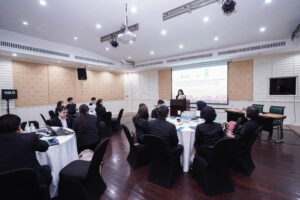
The ICJ’s Senior Legal Adviser on women’s human rights participated in a panel discussion on ‘Gains, gaps and challenges in addressing violence against women’, convened on 10 June 2014 in the margins of the Human Rights Council’s 26th regular session in Geneva.

The event was co-sponsored by the Office of the High Commissioner for Human Rights (OHCHR) and the Permanent Missions of Canada and Chile and was moderated by Jane Connors, Chief of the OHCHR Special Procedures Branch. Panelists included Rashida Manjoo, Special Rapporteur on violence against women; Her Excellency Elisa Goldberg, Ambassador of Canada; Her Excellency Marta Maurás Peréz, Ambassador of Chile; and Leah Hoctor, ICJ Senior Legal Adviser.

The ICJ’s intervention focussed on remaining challenges, including the lack of prompt and effective investigations into allegations of violence against women (VAW); systemic failures in some States’ implementation of their due diligence obligations; and a series of disconnects at the international level pertaining to the link between VAW and other forms of discrimination and rights violations that women face, the lack of a holistic conceptualisation and treatment of VAW, and the insufficient integration of legal and normative progress in the discussions and approach of international fora.

Joint NGO statement for the annual meeting of Treaty Body Chairpersons

Joint NGO statement for the annual meeting of Treaty Body Chairpersons

The ICJ joined other non-governmental organisations in issuing a joint statement ahead of the 2014 annual treaty body chairpersons meeting, to be held on 24-27 June 2014.

The statement, made by NGOs that regularly contribute to the work of the treaty bodies, broadly welcomed the outcome of the UN General Assembly process to strengthen the treaty bodies. It, in particular, highlights a number of priority areas for consideration by treaty body chairpersons as critical to implementation of the General Assembly resolution and the ongoing process of strengthening the UN treaty bodies.

UNTBs-AnnualChairpersonsMeeting-JointStatement-Non-LegalSubmission-2014 (download full statement in PDF)

Proposed Arab Court of Human Rights: an empty vessel without substantial changes to the draft statute

Proposed Arab Court of Human Rights: an empty vessel without substantial changes to the draft statute

30 Human rights groups, including the ICJ have signed a statement calling upon the League of Arab State’s (LAS) member States to substantially revise the draft statute of the Arab Court of Human Rights (the Arab Court).

The LAS should also ensure the full accordance of the Arab Court with international human rights law and standards, including obligations assumed by LAS member States, the statement says.

In addition, the human rights groups strongly condemn the fact that both the LAS and the expert committee went about their drafting exercise without consulting with any civil society groups, despite their vast expertise in relevant issues, or any other stakeholders, despite several requests from civil society organizations to engage in the process.

The full text can be downloaded below in English and Arabic:

MENA-Arab Court Statement-news-web story-2014

MENA-Arab Court Statement-news-web story-2014-ara


Translate »