Dec 14, 2013 | News
The ICJ today urged the Lao PDR government to reverse its inaction in determining the fate of community activist Sombath Somphone, who was allegedly subjected to enforced disappearance a year ago.
In a legal memorandum on the one-year anniversary of Sombath’s enforced disappearance, the ICJ called on the Lao authorities to fulfill their country’s obligations under international law and carry out a thorough and impartial investigation into his whereabouts.
It also said the government must cooperate with regional and international human rights mechanisms, particularly the ASEAN Intergovernmental Commission on Human Rights (AICHR) and the UN Working Group on Enforced and Involuntary Disappearances.
“It is deplorable that one year after Sombath Somphone was abducted after being stopped by traffic police, the public prosecutor has yet to institute formal
or criminal proceedings into his disappearance’’, said Sam Zarifi, ICJ Asia-Pacific regional director.
“The government of the Lao People’s Democratic Republic must immediately take effective measure to ensure animpartial and thorough investigation and bring justice to those responsible for crimes against Sombath Somphone,” he added.
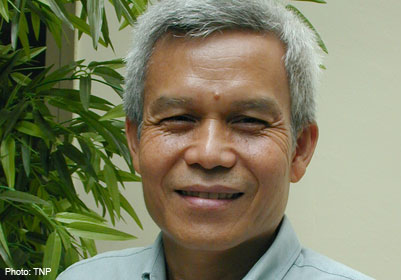
Sixty-two-year old Sombath Somphone, Lao PDR’s most prominent community development advocate and a Ramon Magsaysay Award winner, was last seen on December 15, 2013, on a road in the capital Vientiane.
Closed circuit Television (CCTV) footage showed him being stopped at a police checkpoint, exiting his vehicle, getting into another vehicle with unidentified men and being driven away. He has not been seen since.
The Lao PDR government has denied any involvement in Sombath Somphone’s abduction. But reports released by police reveal a wholly inadequate investigation that lacks any credible explanation as to his fate or whereabouts.
In January this year, the ICJ called on the AICHR to play a proactive role in the case and to use the opportunity to address issues of enforced and involuntary disappearances in the region. To date, the AICHR has yet to take any meaningful action.
If the AICHR is to have any meaning, it must fulfill its mandate under Article 4, paragraph 1.11 of its Terms of Reference and develop a common position and strategy for tackling the widespread impunity of all acts of enforced disappearances in ASEAN, the legal memorandum said.
“An effective investigation, conducted in accordance with international standards, is essential in order that family members of Sombath Somphone and the public as a whole may discover the truth about his fate and whereabouts, and bring justice and reparation,’’ said Zarifi.
Background
Sombath Somphone is the founder and former director of the Participatory Development Training Center (PADETC), a non-governmental organization that supports holistic education and youth development as well as promoting eco-friendly technologies and micro-enterprises.
In October 2012, Sombath assisted the Lao government and non-governmental organizations convene an Asia-Europe People’s Forum (AEPF). The event was widely attended, drawing 948 participants from Lao PDR as well as other Asian countries.
It was the first time groups publicly criticized human rights abuses in Lao PDR, a Communist-run Southeast Asian country bordering Thailand, Cambodia, Vietnam, Myanmar and China.
The legal memorandum also covers the right of a family member to the right to information in such cases of enforced disappearances pursuant to both international standards as well as domestic laws in Lao PDR.
Recommendations
The key recommendations in the legal memorandum include:
(a) The public prosecutor, to launch a credible, prompt, thorough, impartial and effective investigation into the fate and whereabouts of Sombath Somphone. In the event that the public prosecutor fails to do so, an independent and credible authority should be established to undertake prompt, thorough and impartial investigation, consistent with international standards, into the alleged enforced disappearance as well as allegations of arbitrary detention, torture or ill-treatment;
(b) In furtherance of this investigation, the investigating authority should immediately seek and accept assistance from foreign experts on analysis of forensic evidence; and
(c) The investigating authority should provide relevant material and conclusions from any investigation to Sombath Somphone’s wife, to the extent compatible with the prosecution of the case.
CONTACT:
Sam Zarifi, ICJ Asia-Pacific Regional Director, (Bangkok), t:+66 807819002, e-mail: sam.zarifi(a)icj.org
Craig Knowles, ICJ Media & Communications, (Bangkok), t:+66 819077653, e-mail: craig.knowles(a)icj.org
Lao-Legal Memorandum-annex on the case of Sombath Somphone-advocay-2013 (download in pdf)
Dec 6, 2013 | News
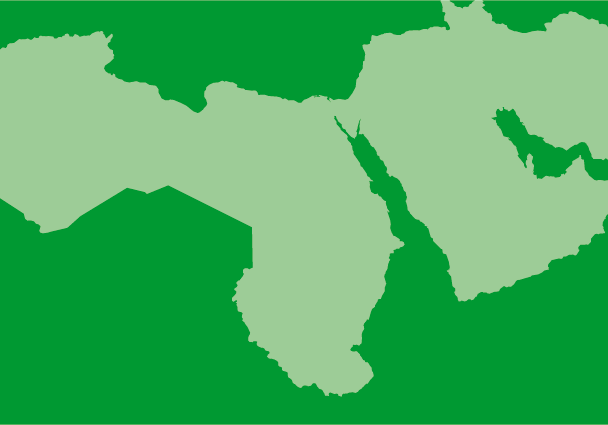
The ICJ and Amnesty International expressed concern over the trial of Mohamed Belbouri before the criminal court of Oran in Algeria. The next hearing of the trial is held on Monday 9 December.
Belbouri, aged 29, stands as the sole accused in the murder of Professor Ahmed Kerroumi, an Algerian political activist. Kerroumi was killed in April 2011, shortly after meeting with the UN Special Rapporteur on freedom of expression, Frank La Rue, in Algeria.
The ICJ and Amnesty International call on the Algerian authorities to ensure the right of Kerroumi’s family members to know the truth about his killing and to criminally hold the perpetrator(s) to account in line with international fair trial standards.
The two organizations are concerned that the Belbouri trial has failed to meet these standards, including the right of the accused to be presumed innocent and to defence.
The two organizations are further concerned by allegations that acts of torture and other ill-treatment were inflicted on Belbouri during his interrogation in police facilities between 12 and 17 May 2011, apparently aiming to make him “confess” to the killing of Kerroumi.
Belbouri says he was beaten on the head, face, stomach and feet, electrocuted, made to sit on his knees for hours with a chair on his head, and threatened that his relatives would be ill-treated if he did not “confess”.
“Algerian authorities must respect and ensure the right of Belbouri to a fair hearing before an independent and impartial tribunal and in full compliance with international fair trial standards,” said Wilder Tayler, ICJ Secretary General.
“The authorities must also ensure that all reports of torture and other ill-treatment of Belbouri are thoroughly and impartially investigated, and that any statement alleged to have been obtained as a result of torture or other ill-treatment is not admitted as evidence by the court,” Tayler added.
Lawyers representing the accused and the family of Professor Kerroumi have both said that the trial was marred by irregularities.
These include the court’s refusal to allow the defence to call and cross-examine witnesses, including the forensic expert who performed the autopsy on Ahmed Kerroumi’s body, and to challenge and test evidence put forward by the prosecution.
“Justice would not be served by sentencing – possibly to death – a man who has claimed his innocence all along when they are so many doubts about the seriousness of the investigation,” said Philip Luther, Middle East and North Africa Director at Amnesty International.
Contact:
Said Benarbia, ICJ Senior Legal Adviser of the Middle East and North Africa Programme, tel: 41 22 979 38 1, e-mail: said.benarbia(a)icj.org
Dec 6, 2013 | News
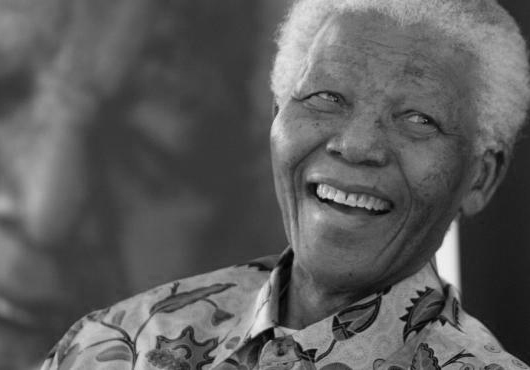
The ICJ mourns with the rest of the world the passing on of former President Nelson Mandela.
He was a beacon of hope, justice and peace in the world and will be sorely missed. His life will remain a source of inspiration for our work in pursuit of justice, peace, tolerance and respect for human rights in the world.
Dec 6, 2013 | News
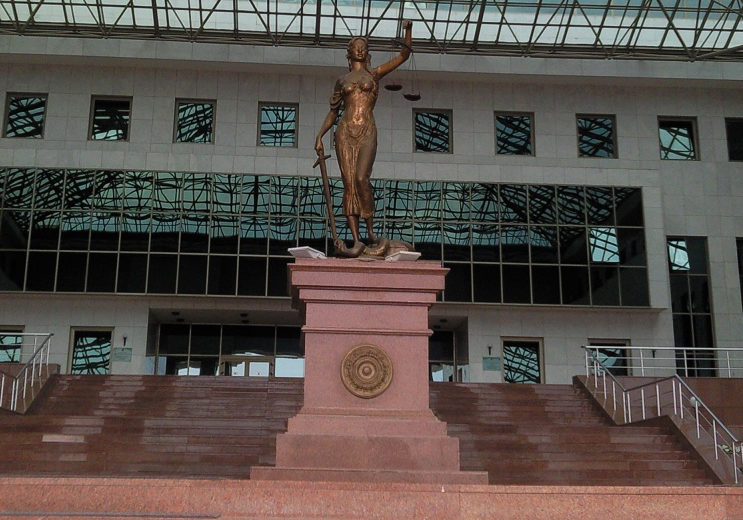
On 6 December, the ICJ concluded a trial observation mission to Kazakhstan on the case of the disbarment of lawyer Polina Zhukova.
Lawyers Lyubov Agushevich and Polina Zhukova were disbarred following disciplinary proceedings initiated by the Ministry of Justice regarding their defence of a client in court proceedings.
The alleged misconduct, which lead to the disbarment of the lawyers, included inter alia a statement of innocence of their client, submitting motions to the court, submitting requests for recusals, one lawyer “putting a question which she knew the answer to”, reading a page out of the case file, and filing a motion for an examination of the witnesses who attended the hearing.
These actions were interpreted by the presiding judge in the criminal case in which the lawyers represented the defendant as violations of professional ethics, and were later used as grounds for the termination of their licenses to practice law.
ICJ observers, Justice Ketil Lund, an ICJ Commissioner and a former Justice of the Supreme Court of Norway, and Zulfikor Zamonov, a lawyer from Tajikistan, observed the Supreme Court appeal hearing in the case on 5 December.
The Supreme Court upheld the motion of lawyer Zhukova to resume proceedings in her case and reconsider the issue of the lawfulness of her disbarment.
“The ICJ welcomes the decision to review the case against the lawyer and will continue following the case,” said Temur Shakirov, Legal Adviser of the ICJ Europe Programme.
Read also:
Disbarment proceedings against lawyers in Kazakhstan
Disciplinary action against lawyers in CIS countries: analysis of international law and standards
Contact:
Róisín Pillay, Director, ICJ Europe Programme, roisin.pillay(a)icj.org
Temur Shakirov, LegalAdviser, ICJ Europe Programme, temur.shakirov(a)icj.org