Thailand: Exchange of best practices from Latin America on litigating enforced disappearance cases

Thailand: Exchange of best practices from Latin America on litigating enforced disappearance cases

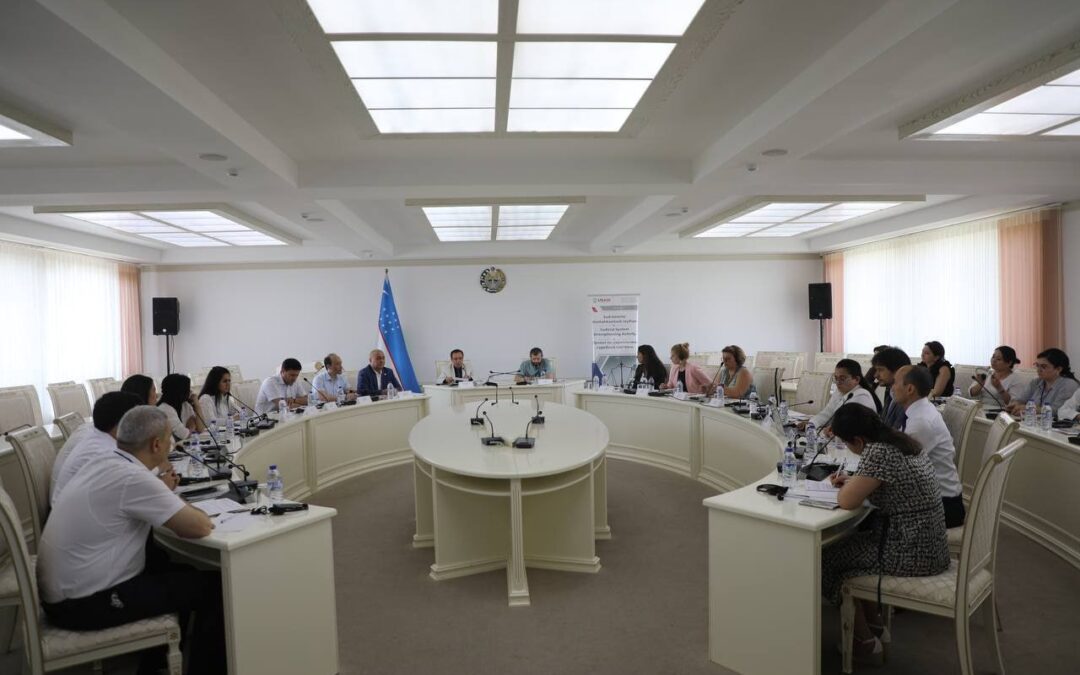
On 29 November 2023, the ICJ co-hosted a dialogue among Thai lawyers, academics, and Santiago A. Canton, Secretary General of the ICJ to exchange best practices from Latin America, specifically focusing on insights from the Inter-American Court of Human Rights and domestic courts in the region – to address ongoing challenges in litigating cases involving suspected enforced disappearances within Thai courts.

The Dialogue involved challenges encountered in litigating cases of enforced disappearances, particularly in terms of accessing, collecting, and admitting evidence within Thai courts. These challenges are notably complex, especially when the crimes have occurred beyond Thailand’s borders.

Additionally, participants discussed the difficulties related to establishing the responsibility of individuals for these serious crimes and how courts have handled evidence submitted in previous enforced disappearance cases. This included instances where evidence, such as telecommunications, as well as various forensic evidence like biological evidence and DNA evidence, was dismissed, and the failure to identify the perpetrator in cases where the victims’ bodies or remains could not be located.

“The crime of enforced disappearance completely eradicates any trace of the victim, with no acknowledgment by the authorities and no effective investigation. The requirement to locate the disappeared individuals’ bodies and remains contradicts the very nature of the crime of enforced disappearance,” said Santiago A. Canton, Secretary General of the ICJ.

While highlighting that the criteria for evaluating evidence within the Inter-American Court of Human Rights (IACtHR) are less formal compared to domestic criminal legal systems, Canton noted IACtHR’s jurisprudence relevant to the admissibility of circumstantial and indicative evidence, which was particularly instructive as enforced disappearances typically involve deliberate attempts by state officials to destroy direct evidence, aimed at securing impunity.

“The standard of proof in the Inter-American Court of Human Rights allows lawyers, under certain circumstances, to only establish a demonstrable ‘practice’ of enforced disappearances at the time of a specific case. When combined with circumstantial evidence, this can result in a judicial presumption of enforced disappearance,” said Canton.

Participants also discussed the ‘continuous nature’ of enforced disappearance crimes, which are recognized under Thai law and enable cases from the past, where the fate and whereabouts of victims remained unknown, to be prosecutable before the court, notwithstanding the fundamental principle of non-retroactivity.

Closing remarks by Angkhana Neelapaijit, a Member of the UN Working Group on Enforced or Involuntary Disappearances, whose husband Somchai Neelapaijit was a victim of enforced disappearance, detailed the role of the Working Group and the steps taken globally to address the crime.

Background

More than 20 Thai experts, lawyers, and academics, who represent or have experience researching cases of enforced disappearances in Thailand, participated in the discussion.

Thailand’s Act on Prevention and Suppression of Torture and Enforced Disappearance became effective in February 2023. However, its implementation has been slow. The majority of cases involving suspected torture, ill-treatment, and enforced disappearances are still in the investigation phase, and not yet moved into the adjudication phase. Limited information about its progress has been made available to the public.

Prior to the enactment of this new law, only two cases of apparent enforced disappearances reached Thai courts: the case of prominent Muslim lawyer Somchai Neelapaijit and Karen activist Pholachi ‘Billy’ Rakchongcharoen. Unfortunately, these cases concluded with limited success, mainly due to challenges surrounding the evidence submitted to the court.

Contact

Sanhawan Srisod, ICJ Associate International Legal Adviser, e: sanhawan.srisod@icj.org

Further reading

Thailand: a report on the criminal trial and investigation of the enforced disappearance of the Thai human rights lawyer, Somchai Neelapaichit

Ten Years Without Truth: Somchai Neelapaijit and Enforced Disappearances in Thailand

Indonesia: ICJ asks court to ensure that defamation and “false information” laws not be used to silence and criminalize human rights defenders

Indonesia: ICJ asks court to ensure that defamation and “false information” laws not be used to silence and criminalize human rights defenders

The International Commission of Jurists (ICJ), in an amicus curiae brief submitted today, has requested the East Jakarta District Court to give effect to Indonesia’s international legal obligations concerning freedom of expression and information in their adjudication of a case concerning criminal charges against two human rights defenders, Haris Azhar and Fatia Maulidiyanti.

Israel/OPT: Joint Support for Call for a Conference of High Contracting Parties to the Fourth Geneva Convention 1949

Israel/OPT: Joint Support for Call for a Conference of High Contracting Parties to the Fourth Geneva Convention 1949

In light of credible allegations of ongoing violations of international humanitarian law arising from the protracted armed conflict in Israel and the Occupied Palestinian Territory, in particular in the Gaza Strip, the International Commission of Jurists (ICJ), Amnesty International (AI), and Human Rights Watch (HRW) support the call by a number of High Contracting Parties to the 1949 Geneva Conventions addressed to Switzerland, in its capacity as the depository of the four Geneva Conventions, to convene an urgent Conference of High Contracting Parties to the Geneva Convention Relative to the Protection of Civilian Persons in Time of War of 12 August 1949 (“the Fourth Geneva Convention”).

This call is based on Common Article 1 to the four Geneva Conventions, which states that “The High Contracting Parties undertake to respect and to ensure respect for the present Convention in all circumstances”. Underscoring the continued relevance of this body of law, the ICJ, AI, and HRW recall operative paragraph 1 of the UN Security Council Resolution 2712 on the situation in the Middle East, including the Palestinian question, of 15 November 2023 demanding “that all parties comply with their obligations under international law, including international humanitarian law, notably with regard to the protection of civilians, especially children.” In the same vein, our organisations recall operative paragraph 2 of the UN General Assembly, entitled Protection of civilians and upholding legal and humanitarian obligations, of 26 October 2023 demanding “that all parties immediately and fully comply with their obligations under international law, including international humanitarian law and international human rights law, particularly in regard to the protection of civilians and civilian objects, as well as the protection of humanitarian personnel, persons hors de combat, and humanitarian facilities and assets”.

The ICJ, AI, and HRW call on all High Contracting Parties to uphold the fundamental principle of international law that treaties must be executed in good faith, and fulfil their obligations under Common Article 1 “to ensure respect” for the Fourth Geneva Convention by participating in the Conference and acting collectively to prevent further violations of international humanitarian law in the Occupied Palestinian Territory and Israel.

The ICJ, AI, and HRW consider that in the circumstances currently prevailing in Israel and the Occupied Palestinian Territory, including, in particular, the Gaza Strip, ensuring respect for international humanitarian law requires, at a minimum, a suspension of arms transfers to the parties to the conflict; ensuring accountability for serious violations of international humanitarian law; supporting and cooperating with the Independent International Commission of Inquiry on the Occupied Palestinian Territory, including East Jerusalem, and Israel, and with the International Criminal Court’s ongoing Palestine investigation; and supporting other pathways to accountability including through the principle of universal jurisdiction.


Contact:

Said Benarbia, Director, ICJ Middle East and North Africa Programme, email: said.benarbia@icj.org

Katherine Iliopoulos, Legal Adviser, ICJ Middle East and North Africa Programme, email: katherine.iliopoulos@icj.org


Translate »