Jun 15, 2020 | Multimedia, Noticias
Como parte de las actividades que la CIJ adelanta en relación con la crisis generada por el COVID-19, se encuentra el monitoreo sobre la protección y garantía de los derechos de las mujeres. Al respecto, informes de todas partes del mundo indican un aumento en los casos de violencia domestica y nuevos problemas para acceder a la justicia.
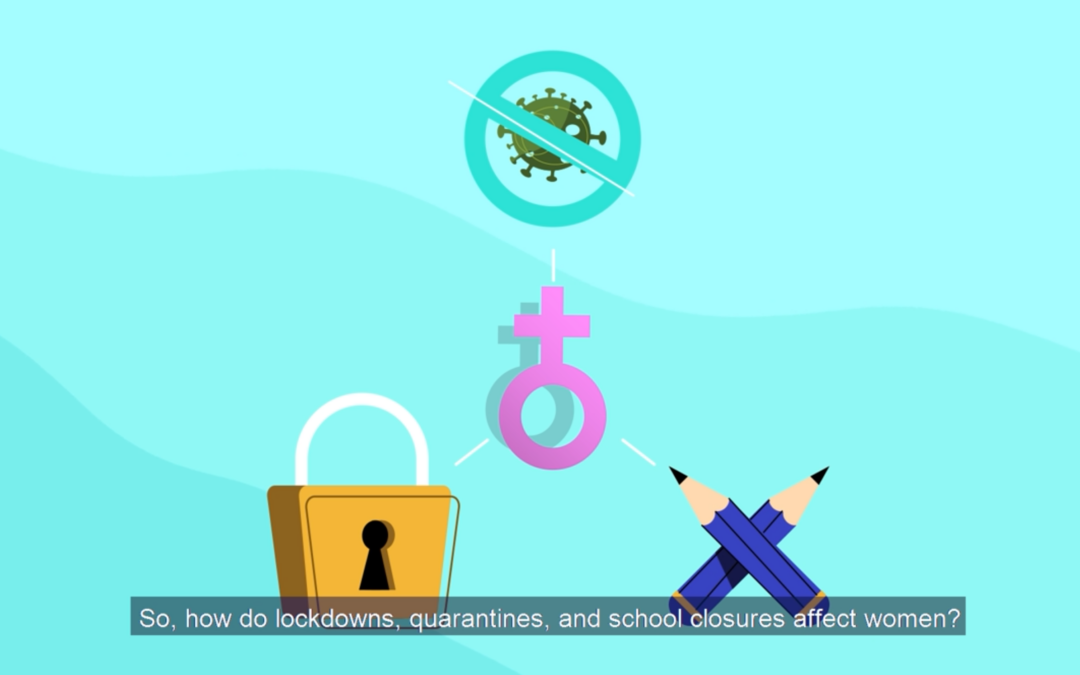
En consideración a ello, los equipos de la CIJ en África y en Asia trabajaron juntos para realizar una animación sobre el impacto que las medidas de aislamiento y similares han tenido en los derechos de las mujeres.
La animación también ofrece sugerencias a los Estados sobre las medidas que se pueden adoptar para proteger los derechos de las mujeres. En particular, se llama la atención a los Estados sobre la importancia de adoptar un enfoque de género en sus políticas.
La animación fue lanzada en inglés durante un webinar, el 26 de mayo de 2020. Durante el webinar, mujeres defensoras de derechos humanos de Asia, África y el Medio Oriente discutieron sobre el impacto que las medidas impuestas para contener el avance del virus han tenido en los derechos de las mujeres.
Contacto:
Shaazia Ebrahim, Oficial de comunicaciones (CIJ Africa), Correo electrónico: shaazia.ebrahim(a)icj.org
Nov 26, 2019 | News
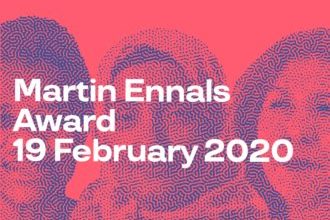
Three exceptional women – Huda Al-Sarari, Norma Ledezma and Sizani Ngubane – are the finalists for the 2020 Martin Ennals Award, a demonstration of the leading position now occupied by women in the defence of human rights. The ICJ is member of the MEA Jury.
In Yemen, Huda Al-Sarari has exposed and challenged the existence of secret prisons and many cases of torture.
In Mexico, Norma Ledezma is fighting against femicides and disappearances.
In South Africa, Sizani Ngubane is fighting for access for women to education and to land.
Three women nominated: a first
Each year, the Martin Ennals Award rewards human rights defenders from around the world who distinguish themselves by their strong commitment to promoting human rights – often at the risk of their own lives.
In 2020, for the first time the Jury nominated three women who defend the fundamental rights of their communities in sensitive contexts.
“The Martin Ennals Foundation is proud to recognize the courageous work of three women. For the 2020 edition, our Jury’s choice reflects the ever-greater global impetus of individuals – whatever their gender – who are committed to respect for human rights and women’s rights in particular,” said Isabel de Sola, Director of the Martin Ennals Foundation.
“The finalists for the 2020 Martin Ennals Award work on different continents, but all three have in common their resilience, determination, a tremendous rigour and, finally, the positive and concrete impact of their work,” added Hans Thoolen, Chairman of the Jury.
In Yemen, where the conflict has been ongoing since 2005, Huda Al-Sarari, a Yemeni lawyer, unveiled the existence of several secret detention centres where the worst violations of human rights were committed: torture, disappearances or even extrajudicial executions.
In South Africa, women face discrimination, the worst expression of which is widespread gender violence. In rural communities, they frequently have their land expropriated and are deprived of access to education and justice. Sizani Ngubane founded an organization of more than 50,000 women from rural areas in her country and has fought successfully for over 40 years for the recognition of their rights.
In Mexico, the civil population is paying a high price for the weakness of the rule of law which is underpins widespread violence and impunity. Women are the primary victims, with more than 3,500 femicides committed each year. Norma Ledezma, who is the mother of one of the victims, puts all her energy into supporting families seeking access to justice in the state of Chihuahua.
The finalists were selected by a jury made up of representatives of ten of the world’s leading human rights organizations: the ICJ, Amnesty International, Human Rights Watch, Human Rights First, International Federation for Human Rights, World Organisation Against Torture, Front Line Defenders, EWDE Germany, International Service for Human Rights and HURIDOCS.
The 2020 Martin Ennals Award will be given to one of the three finalists on 19 February 2020 at a livestreamed public ceremony. The event is hosted by the City of Geneva which, as part of its commitment to human rights, is a longstanding supporter of the Award.
Contact
Olivier van Bogaert, Director Media & Communications, ICJ representative in the MEA Jury, t: +41 22 979 38 08 ; e: olivier.vanbogaert(a)icj.org
Chloé Bitton, Communications Manager, Martin Ennals Foundation, t +41 22 809 49 25 e: cbitton(a)martinennalsaward.org
Universal-MEA2020bios-News-2019-ENG (full bios of finalists, in PDF)
Universal-MEA2020bios-News-2019-ARA (full story and bios of finalists in Arabic, PDF)
Aug 22, 2019 | Advocacy, News
Today, the ICJ joined 10 other international and Venezuelan human rights organizations to call the United Nations Human Rights Council to establish a Commission of Inquiry (COI) on human rights in Venezuela in its upcoming session in September.
The ICJ considers that an independent COI is necessary given the Venezuelan authorities have been unable or unwilling to pursue effective domestic accountability and the judicial and prosecutorial mechanisms lack independence and impartiality.
In recent years, the ICJ has documented in several reports the lack of judicial independence, the lack of accountability for those allegedly responsible for gross human rights violations, the abuse and misuse of the military jurisdiction, and wide ranging breakdown in the functioning of the rule of law.
The United Nations High Commissioner for Human Rights in her 2019 report has similarly stressed that wide ranging human rights violations had occurred in Venezuela evidenced by the excessive use of force by security forces, attacks on freedom of expression, arbitrary detention and extrajudicial killings, dismantling of checks and balances, and deprivations constituting violations of the right to food and health. In addition, a panel of independent international experts mandated by the Secretary General of the Organization of American States (OAS), mentioned in 2018 “that reasonable grounds exist to believe that crimes against humanity have been committed in Venezuela”.
Commissions of Inquiry have been effectively established by the UN Human Rights Council to assess serious situations of human rights in several countries where there is a need to ensure proper human rights fact finding and ultimately accountability for widespread or systematic human rights violations. These include COIs for Syria, North Korea, Burundi, Yemen, Libya and Eritrea.
The ICJ and the other organizations have emphasized that the Commission of Inquiry that could be established for Venezuela “should be mandated to investigate reports of violations of international human rights law in Venezuela, including but not limited to violations associated with torture and inhuman treatment, arbitrary detention, discrimination, violations of freedom of expression, violations of the right to life and enforced disappearances, as well as violations of the rights to health and food. It should be tasked with establishing the facts and circumstances of violations committed since at least 2014, mapping out patterns of violations and identifying those responsible and, where possible, the chain of command, with a view to contributing to full accountability for all violations including those that constitute crimes under international law (…)”.
Download:
Venezuela-COI final-Advocacy-2019-ENG (full Q&A document prepared by all 11 organizations in PDF)
Mar 20, 2019 | Advocacy, Non-legal submissions
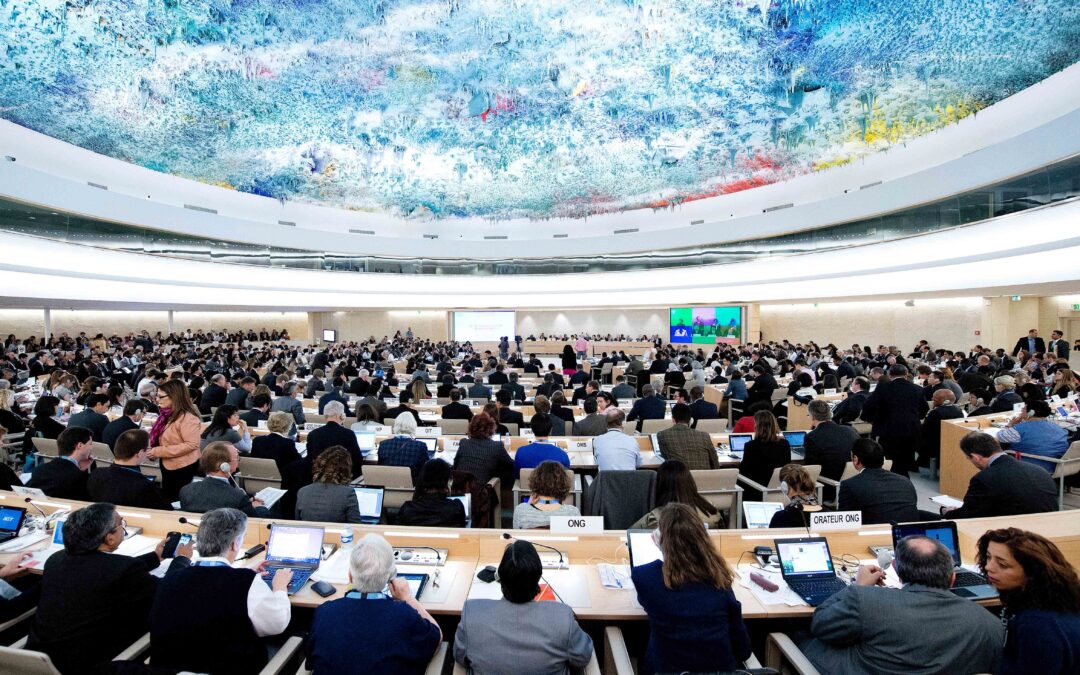
The ICJ today joined other NGOs in addressing the UN Human Rights Council session in Geneva, on the situation for human rights in Guatemala.
The statement, delivered by Franciscans International on behalf also of ICJ and other NGOs, read as follows (translation of Spanish original):
“We welcome the High Commissioner’s Report concerning the activities of her Office in Guatemala. We share the concerns and recommendations in the report, especially those related to the indigenous peoples, migrants and legislative initiatives that would impact in the full enjoyment of human rights.
As it was highlighted in the report, we are also concerned by the current discussions on the initiative to reform the National Reconciliation Law. This reform would give amnesty to those who committed serious crimes during the armed conflict, including those who have already been convicted. This puts at risk not only the fulfillment of the state’s obligations to end impunity, but also the security and access to justice of hundreds of victims and witnesses. Guatemala should dismiss immediately the initiative and refrain from promoting any other initiative that would promote impunity.
Additionally, the political and social tensions are intensifying towards the upcoming elections, and the inclusion of various groups, especially indigenous peoples, is at risk. Currently there is a low participation and representation of indigenous peoples in the political scene of the country. Out of 178 seats in the Congress, only 18 are occupied by Mayans (from which only two are women). The State must guarantee free participation, without intimidation or threats, of indigenous peoples running for different positions.
Lastly, the regional human rights situation of migrants is aggravating and the response by Guatemala, as evidenced in the last months, shows the lack of an effective policy to deal not only with migrants in transit, but also to create conditions to prevent forced migration of Guatemalans.
We thank the work that the Office of the High Commissioner for Human Rights has done, and we stress the importance of its activities in the country.”
The full statement may be downloaded in English and the original Spanish, in PDF format, here: HRC40-OralStatement-GDitem2-Guatemala-2019-EN-ESP
Feb 13, 2019 | Advocacy, Non-legal submissions
The ICJ has opened a call for written submissions on the misuse of criminal law in the areas of sexuality, reproduction, drug use and HIV.
In 2016 the UN Secretary General called for the removal of punitive laws, policies and practices that violate human rights, stating that the misuse of criminal law often negatively impacts on health and human rights, particularly in areas of sexuality, reproduction, sex work, drug use and HIV.
Recognizing a need for greater guidance to achieve such law reform, ICJ is seeking inputs for the development of principles to address the detrimental impact on health, equality and human rights of criminalization with a focus on sexuality, reproduction, drug use and HIV.
This is an important opportunity for civil society, academics, law makers, human rights experts, community groups and persons affected by the relevant criminal laws, to provide input, including on the effect of such criminal laws, when and how criminal law should be used, what reforms are needed and what role criminal law should play in the relevant areas.
A background paper providing further information is annexed to the call for written submissions.
The deadline for submissions is the 31st of March 2019.
These submissions will feed into the development of a set of principles to address the detrimental impact on health, equality and human rights of criminalization with a focus on select conduct in the areas of sexuality, reproduction, drug use and HIV.
Please send your submissions, as well as any questions or clarifications, to decrimconsultation@icj.org
CallforSubmission-DecriminalizationProject-ICJ-2019-2-eng (download the call in English)
CallforSubmission-DecriminalizationProject-ICJ-2019-2-fra (download the call in French)
CallforSubmission-DecriminalizationProject-ICJ-2019-2-esp (download the call in Spanish)
CallforSubmission-DecriminalizationProject-ICJ-2019-2-rus (download the call in Russian)