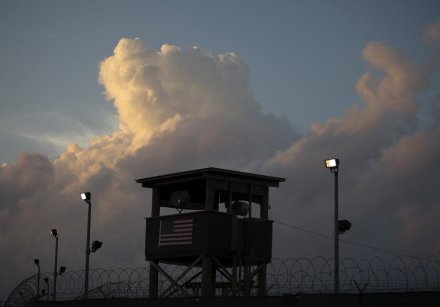
The ICJ, Amnesty and independent experts Eugene R. Fidell, Elizabeth L. Hillman, Nancy Duff Campbell, made a submission for the Universal Periodic Review (UPR) of the United States on the failure of the US military justice system to comply with the State’s international human rights obligations.
The ICJ has delivered an oral statement on the independence of judges, prosecutors and lawyers in Venezuela, at the UN Human Rights Council in Geneva.
Referencing its report, Strengthening the Rule of Law in Venezuela, the ICJ discussed the failure by Venezuelan authorities to respect institutional guarantees for the independence and impartiality of the judiciary and prosecutors, as well as undue interference with individual judges, prosecutors and the legal profession. The ICJ highlighted the lack of security of tenure for most judges and virtually all prosecutors in Venezuela, and how the insecurity is amplified by cases of reprisal such as against Judge María Lourdes Afiuni Mora.
The ICJ urged Venezuelan authorities to take concrete measures to restore the rule of law and ensure the protection of human rights in Venezuela, in meaningful dialogue with civil society, and for other states to encourage Venezuela to do so.
The ICJ today made an oral statement at the UN Human Rights Council, in the interactive dialogue with the Special Rapporteur on the independence of judges and lawyers, responding to her report on her visit to the Russian Federation.
The UN Committee on Economic, Social and Cultural Rights has just finalized its review of El Salvador, one of the State parties under examination during the 52nd session of the Committee held between the 28 April and 23 May 2014.
The ICJ and others argue that Spain should assume jurisdiction, as the US has allowed for impunity of top officials who facilitated torture.
The ICJ joined the Center for Constitutional Rights, the European Centre for Constitutional and Human Rights and other leading organizations and scholars, arguing that the Spanish Supreme Court should reopen the investigations for participation in or aiding and abetting torture and other human rights abuses against six senior legal officials of the Bush Administration.
The brief argues that Spain should exercise jurisdiction under Spanish law because the US itself has failed to carry out any meaningful investigations and prosecutions against the officials, who are alleged to have provided legal authorisation for torture practices against “war on terror” detainees.
The officials are David Addington (former Counsel to, and Chief of Staff for, former Vice President Cheney): Jay S. Bybee (former Assistant Attorney General, Office of Legal Counsel (OLC), U.S. Department of Justice (DOJ); Douglas Feith (former Under Secretary of Defense for Policy, Department of Defense (DOD); Alberto R. Gonzales (former Counsel to former President George W. Bush, and former Attorney General of the United States); William J Haynes (former General Counsel, DOD); and John Yoo (former Deputy Assistant Attorney General, OLC, DOJ).
In an interactive dialogue with representatives of its government, the ICJ called on Brazil to bring its legislation and practice in full compliance with its obligation to consult with indigenous peoples. Watch the webcast.
The ICJ also urged Brazil to expedite steps towards ratification of the Optional Protocol to the International Covenant on Economic, Social and Cultural Rights, the International Convention for the Protection of the Rights of All Migrant Workers and ILO Convention 189 on the protection of domestic workers.
The ICJ delivered its statement today during the adoption by the UN Human Rights Council of the Universal Periodic Review outcome document on Brazil, during the course of the 21st regular session of the Council.
🍪 We use cookies on our website to improve your experience. By clicking "Accept all", you consent to the use of all the cookies. If you'd like to control which cookies we use, please visit "Cookie settings". To find out more, read our privacy policy and cookie policy.
Functional
Always active
The technical storage or access is strictly necessary for the legitimate purpose of enabling the use of a specific service explicitly requested by the subscriber or user, or for the sole purpose of carrying out the transmission of a communication over an electronic communications network.
Preferences
The technical storage or access is necessary for the legitimate purpose of storing preferences that are not requested by the subscriber or user.
Statistics
The technical storage or access that is used exclusively for statistical purposes.The technical storage or access that is used exclusively for anonymous statistical purposes. Without a subpoena, voluntary compliance on the part of your Internet Service Provider, or additional records from a third party, information stored or retrieved for this purpose alone cannot usually be used to identify you.
Marketing
The technical storage or access is required to create user profiles to send advertising, or to track the user on a website or across several websites for similar marketing purposes.