May 12, 2020 | Advocacy, Non-legal submissions
The ICJ has written to the Commissioner for Human Rights and the Rapporteurs on Turkey of the Parliamentary Assembly to alert them to the continued detention of Selahattin Demirtaş and Osman Kavala despite rulings by the European Court of Human Rights.
The International Commission of Jurists recalled that in both the Demirtaş and Kavala cases the European Court of Human Rights, in finding a violation of article 18 ECHR, determined that the detention of the applicants had been ordered in pursuance of an ulterior purpose than those allowed by article 5.1 ECHR.
That purpose was silencing of human rights and other activists, stifling pluralism and limiting freedom of political debate and utilizing pre-trial detention as a method of arbitrary punishment.
The Turkish government is however not releasing the applicants on the ground that the Chamber judgments have not yet become final.
Meanwhile, the authorities have initiated new investigations against both Demirtas and Kavala, and issued new detention orders on similar though not identical charges as those reviewed in the Court’s judgments, with the apparent intent not to implement the ECtHR judgments.
The ICJ considers that these developments may be seen as integral to the ulterior purpose identified by the Court in its Kavala and Demirtaş decisions. Under these conditions, both Kavala and Demirtaş may expect their arbitrary detention to be continued for an unlimited period of time through arrest orders based on fabricated investigations.
The ICJ further reiterated the importance of enabling access to alternatives to detention for all pre-trial detainees who may be at risk because of COVID-19 if they do not pose a current threat to public safety, regardless of the nature of the offences with which they have been charged. It stressed that, since Mr. Demirtaş and Kavala, along with many politicians and human rights defenders accused of security related offences in Turkey, do not pose a threat to public safety, they should be released as soon as possible.
ICJ-Letter-DemirtasKavala-PACERapporteurs-2020-eng (download the letter to the PACE Rapporteurs)
ICJ-Letter-KavalaDemirtas-CommissionerHR-2020-eng (download the letter to the Commissioner for Human Rights)
May 6, 2020 | Advocacy, News, Publications
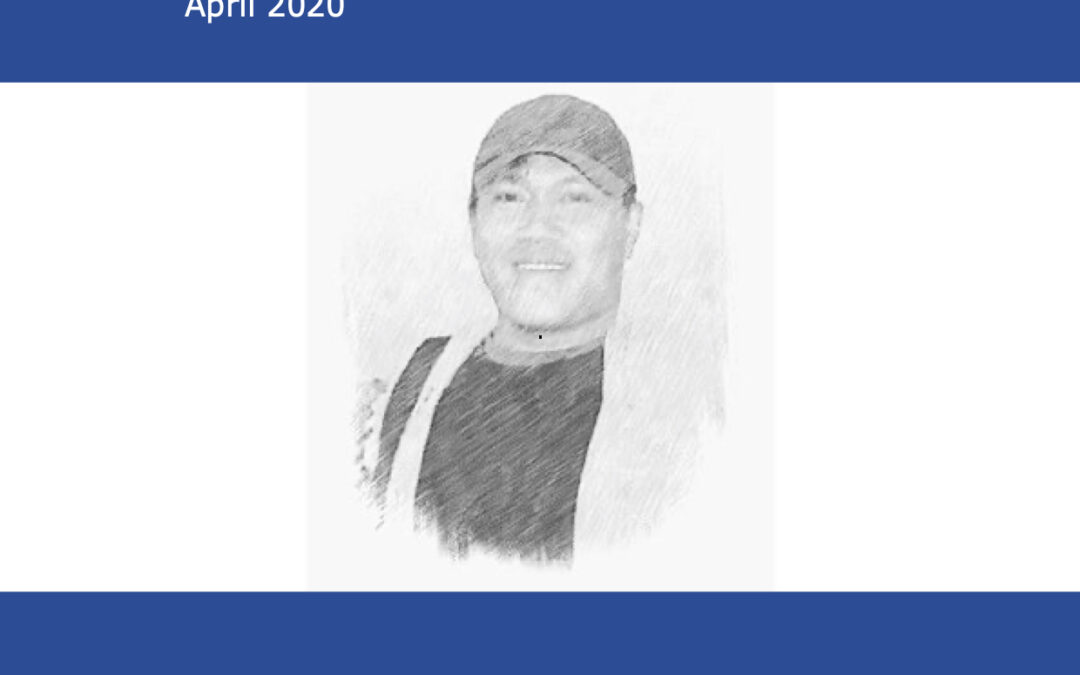
In a report published today, the ICJ called on the police and prosecutorial authorities in Myanmar to re-open the investigation into the death of journalist Ko Par Gyi in military custody in September 2014.
The report documented the many barriers that have prevented justice from being served in this case, as well as other cases of gross human rights violations in Myanmar.
The ICJ called on the Union Parliament to repeal or amend the 1959 Defence Services Act and other legislation that effectively provides immunity to military personnel accused of serious crimes. These and other barriers have been described at length in the ICJ’s 2018 report on Achieving Justice for Gross Human Rights Violations.
“More than three years ago, the police abruptly ended their formal inquiry into the killing of Ko Par Gyi, without providing any justifiable legal rationale for its closure,” said Frederick Rawski, ICJ Asia Pacific Director. “In the intervening years, we have seen what happens when this culture of military impunity goes unaddressed.”
In the report, An unlawful killing: How Ko Par Gyi’s death highlights barriers to justice in Myanmar, the ICJ evaluated the various investigations into the death and identified three key obstacles to justice in the case:
- the existence and operation of national laws like the 1959 Defence Services Act that shield security forces from public criminal prosecutions, serving to deny victims and their families the right to truth about violations;
- sub-standard investigative practices that are vulnerable to political pressure and lacked independence, and simultaneous, separate and uncoordinated investigations that resulted in an unsystematic and ineffective approach to investigating the case; and
- a lack of transparency that denied the family their right to access information concerning the violations and accountability processes.
Ko Par Gyi was detained by police in Mon State and transferred to military detention on 30 September 2014. He died four days later in military custody. A deeply flawed inquiry carried out in military courts, pursuant to the 1959 Defence Services Act, resulted in the acquittal of the soldiers allegedly involved. Those same provisions are commonly used to transfer cases involving military personnel from civilian to military court. Under international standards, military courts should not be used to try military personnel or others for gross human rights violations and crimes under international law.
“It is no surprise that an international investigative mechanism has been established to look into alleged serious human rights violations in Rakhine and elsewhere in Myanmar,” said Rawski. “Myanmar’s legal framework does not provide adequate safeguards to ensure independent investigation into and prosecution of serious human rights violations. What happened to Ko Par Gyi’s case illustrates that all too clearly.”
The UN Human Rights Council has established an Independent Investigative Mechanism for Myanmar (IIMM) to collect evidence and prepare files for criminal prosecution of the most serious international crimes and violations of international law committed in Myanmar since 2011.
Key recommendations in the report include:
- To the Executive and the Union Parliament: amend the 1959 Defense Services Act to align it with democratic principles, the constitutional guarantee of equal legal protection, and the State’s international law obligation to protect the right to life, including by prosecuting serious violations.
- To the Tatmadaw: apply standards and procedures in military courts that conform to international law, ensure all crimes perpetrated against civilians are tried in the civilian judicial system, and reform rules of engagement to explicitly instruct soldiers to protect life, consistent with international law.
- To the Myanmar Police Force and the Union Attorney General’s Office: align investigative procedures and practices with international law and standards.
- To the Myanmar National Human Rights Commission: take an active and broad interpretation of the MNHRC mandate to address serious human rights violations including those which have gone before courts.
- To UN Member States and international organizations: ensure any organizational support to security forces is contingent on and enables demonstrable commitments to prevent and punish violations by its members.
This report was produced as part of the ICJ’s Global Accountability Initiative, which aims at combatting impunity and promoting redress for gross human rights violations around the world through the entrenchment of the rule of law
Download
An unlawful killing: How Ko Par Gyi’s death highlights barriers to justice in Myanmar in English and Burmese.
Press statement with additional background information on Ko Par Gyi in English and Burmese.
Contact:
Frederick Rawski, ICJ Asia Pacific Regional Director, (Bangkok), t:+66 64 4781121, e: frederick.rawski@icj.org
Kingsley Abbott, Coordinator of the ICJ’s Global Accountability Initiative, t: +66 94 470 1345; e: kingsley.abbott(a)icj.org
May 1, 2020 | Advocacy
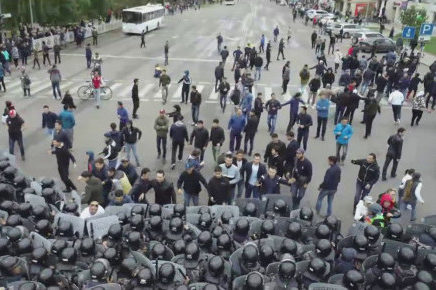
The ICJ, the International Bar Association’s Human Rights Institute (IBAHRI), and the Centre for Civil and Political Rights (CCPR Centre) today published a legal opinion by ICJ Commissioner Professor Sarah Cleveland, on compliance of Kazakhstan’s Draft Law on the Procedure for Organising and Holding Peaceful Assemblies, with the Republic of Kazakhstan’s international human rights obligations.
“Excessive restrictions on freedom of peaceful assembly in Kazakhstan have been of significant concern to the UN Human Rights Committee, the Venice Commission of the Council of Europe, and other human rights bodies for many years,” said Sarah Cleveland.
“Kazakhstan now has an important opportunity to bring its law into compliance with its international human rights obligations, but the draft law currently being considered does not achieve this.”
The Opinion finds that the proposed legislation includes of number of restrictions on freedom of assembly that are fundamentally contrary to Kazakhstan’s human rights obligations, including (1) excessive notification and approval requirements; (2) excessive authority to ban an assembly; (3) a prohibition on spontaneous assemblies; (4) restriction of assemblies to specific locations; (5) preferential treatment for assemblies organized by the government; (6) a prohibition against foreigners, refugees, stateless persons from organizing or participating in assemblies, (7) excessive obligations on organizers and participants; and (8) excessive sanctions for organizers and participants. The timing and process for adopting a law that so fundamentally impacts domestic compliance with core human rights obligations itself raises serious human rights concerns, given the limited ability of civil society organizations and the general public to participate in a robust public debate regarding the law during the quarantine.
In light of these serious human rights concerns, the IBAHRI, the ICJ and the CCPR Centre urge the Senate and/or the President of the Republic of Kazakhstan to halt consideration of the Draft Law, and to seek guidance from the OSCE/ODIHR Panel of Experts on Freedom of Assembly and Association, the Office of UN High Commissioner on Human Rights, and/or the Venice Commission regarding how the current law on freedom of peaceful assembly might be revised consistent with Kazakhstan’s international human rights obligations.
Kazakhstan-Assembly Law Opinion-Advocacy-2020-ENG (full text in PDF)
May 1, 2020 | Advocacy, News
The ICJ today condemned the recent decisions of the governments of the Republic of Benin and Côte d’Ivoire to withdraw their respective declarations that gave individuals and nongovernmental organizations the right to directly bring cases of human rights violations against those States, before the African Court on Human and Peoples Rights.
The ICJ called on the authorities of both States to reconsider and rescind these decisions.
Coming after a similar withdrawal by Tanzania in November 2019, these withdrawal decisions serve to deprive the inhabitants of these countries access to a judicial remedy at the regional level for human rights violations, and undermine the effective of the African regional human rights system.
The ICJ stressed that withdrawal decisions serve to undermine Aspiration 3 of the African Union’s AGENDA 2063, by which the AU aims at “[a]n Africa of good governance, democracy, respect for human rights, justice and the rule of law.”
Both States have offered vague and unsubstantiated rationales for their decisions, but their actions follow their dissatisfaction with the outcomes of particular cases against them. Responses of this kind are effectively an attack on the independence of the Court and can serve to undermine the integrity of the Court itself.
The ICJ recalls that in February 2020, the Executive Council of the African Union called on African States to accede to the Protocol Establishing the African Court and to make the declaration required under article 34(6) of the Protocol. These decisions of the governments of Benin and Côte d’Ivoire to withdraw their article 34(6) declarations fly in the face of this call by the Executive Council of the African Union and greatly threaten the progress that has been made towards protection of human rights in Africa.
Background
Article 34(6) of the Protocol to the African Charter on Human and Peoples’ Rights establishing the African Court on Human and Peoples’ Rights requires that State Parties to the Protocol make a separate declaration in order to allow direct access to individuals and non-governmental organizations to bring cases against them before the African Human Rights Court. Benin which deposited its declaration on 8 February 2016 announced its withdrawal of the declaration on 23 April 2020. Benin claimed that its decision is based ‘dysfunctions and slip-ups’ it has increasingly observed in the work of the African Human Rights Court, allegedly resulting in the Court’s increasing departure from its mandate and core area of competence. Benin cited the earlier withdrawals of Rwanda and Tanzania as further justification for its decision.
Côte d’Ivoire, which deposited its declaration on 23 July 2013 and announced its withdrawal on 29 April 2020, says that its decision was based on what it considers to be ‘the serious and intolerable actions that the African Court has allowed itself’ and which ‘not only undermines the sovereignty of the state of Côte d’Ivoire … but are also likely to cause serious disruption to the internal legal order of states’.
Contact:
Arnold Tsunga, ICJ Africa Director, C: +27716405926, or +254 746 608 859 E: arnold.tsunga@icj.org
Solomon Ebobrah, Senior Legal Advisor, ICJ Africa, C: +234 8034927549; E: Solomon.ebobrah@icj.org
Full text, in PDF: Ivory-Coast-Statement-Advocacy-ENG-2020
Apr 30, 2020 | Advocacy, Non-legal submissions
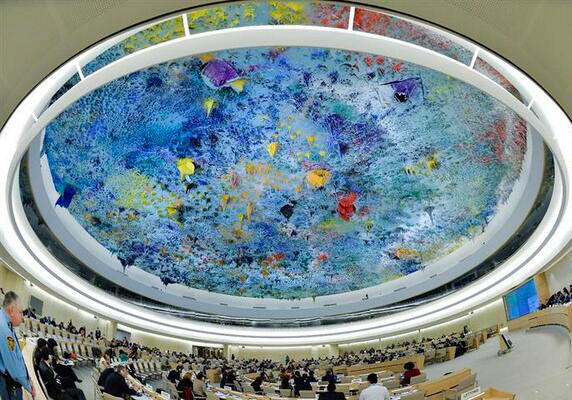
The ICJ has joined other NGOs in highlighting the contribution of independent UN human rights experts in ensuring that measures against COVID-19 are consistent with human rights.
The statement, delivered by Amnesty International on behalf of the group of NGOs in an informal online meeting of the UN Human Rights Council, read as follows:
“We thank the Coordination Committee for the update on the work undertaken by the Special Procedures to date to highlight the human rights impacts of the COVID-19 pandemic.
As States undertake extraordinary measures to curb the spread of COVID-19, we recognize the good faith efforts of many States to effectively protect the right to life, the right to health and other human rights as well as the well-being of their populations, and to curb the spread of COVID-19. States must ensure that quality health services and goods necessary for prevention and care are accessible, available and affordable for all. Health workers and other front-line workers should be provided with adequate protective equipment, information, training and psycho-social support. Key health services, including sexual and reproductive health information and services, should be confirmed as essential services and their provision guaranteed.
We also recognize that in other contexts, States have used emergency powers to enact repressive measures that do not comply with the principles of legality, proportionality and necessity and that may have the effect or intention of suppressing criticism and minimizing dissent.
In this regard, we take heart at the Special Procedures statement that “[t]he COVID-19 crisis cannot be solved with public health and emergency measures only; all other human rights must be addressed too“.[1] We particularly value the vast and interconnected responses by the Special Procedures highlighting the wide-ranging effects of the pandemic itself, as well as of measures taken by states in the name of responding to the global health crisis.
The Special Procedures have addressed the impact on economic, social and cultural rights, such as the rights to health, housing, water and sanitation, food, work, social security, education, healthy environment and adequate standard of living, and to equality and non-discrimination as cross-cutting rights.
The Special Procedures have also highlighted the increased risks of people with underlying health conditions, older people, people who are homeless or in inadequate housing, people living in poverty, persons with disabilities, LGBTI people, children, migrants, refugees and asylum-seekers, people living in refugee or IDP camps, and people deprived of liberty. They have also highlighted the effects on women and girls, calling for responses to consider factors such as their “sex, gender, age, disability, ethnic origin, and immigration or residence status among others“.[2]
We also welcome the various tools that have been developed by some mandate holders, such as the COVID-19 Freedom Tracker, the Dispatches, video messages and guidelines in addition to the vast number of press releases.[3] Making these tools readily accessible to all stakeholders is critical, as is considering ways to receive feedback and share learnings about their application. We encourage the Special Procedures to continue to deepen their analyses of state responses, including through reports to the Human Rights Council and the General Assembly, and to offer guidance, through the tools mentioned, to states on how to respond to the crisis in a human rights compliant manner.
Last but not least, we urge UN member states to cooperate fully with the Special Procedures. While country visits are suspended for the time being, this should not be used as an excuse not to co-operate. We call on states to respond in a timely manner to communications from the Special Procedures and to seek technical and expert advice from relevant mandate holders in relation to draft legislation to ensure that these are in line with states’ obligations to respect, protect and fulfil all human rights.”
The statement was joined by the following organisations:
- Amnesty International
- Asian Forum for Human Rights and Development (FORUM-ASIA)
- Centro de Estudios Legales y Sociales (CELS)
- CIVICUS: World Alliance for Citizen Participation
- Conectas Direitos Humanos
- DefendDefenders (East and Horn of Africa Human Rights Defenders Project)
- Human Rights Law Centre
- Human Rights Watch
- ILGA World – The International Lesbian, Gay, Bisexual, Trans and Intersex Association (International Lesbian and Gay Association)
- International Commission of Jurists
- International Service for Human Rights
[1] https://www.ohchr.org/EN/NewsEvents/Pages/DisplayNews.aspx?NewsID=25746&LangID=E
[2] https://www.ohchr.org/EN/HRBodies/SP/Pages/News.aspx
[3] https://www.ohchr.org/EN/HRBodies/SP/Pages/COVID-19-and-Special-Procedures.aspx
Apr 29, 2020 | Advocacy, News, Op-eds
An opinion piece by Carolina Villadiego Burbano, ICJ Legal and Policy Adviser for Latin America.
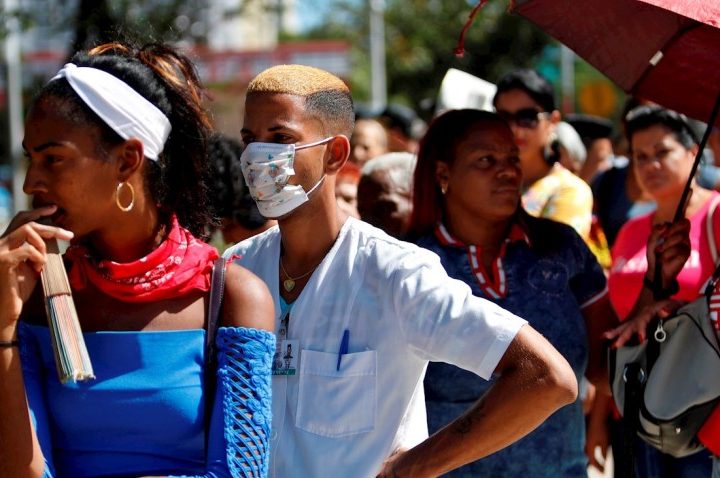
Several Latin American governments have adopted exceptional emergency measures to face the COVID-19 health crisis. The measures, motivated by policies with the objctive of urgently protecting people’s health, have been accompanied by restrictions to personal freedoms (i.e. quarantines, isolations).
Judiciaries have also adopted specific measures too to protect the right to health of persons involved in proceedings while providing services for guaranteeing access to justice during the emergency. They have reduced physical operations; adopted social distancing measures in courts; postponed proceedings; authorized remote work for judges and administrative officers; incorporated urgent mechanisms to guarantee fundamental rights and allowed the use of technology.
Judiciaries fulfil different roles under international humans rights law and, as a recent ICJ briefing note recalls, these roles remain as or even more important during the pandemic. Those roles include guaranteeing individual rights, including the right to a fair trial, freedom from arbitrary detention, freedom from torture and other ill-treatment and the right to an effective remedy. In addition, the responsibility of the judiciary is to securing the rule of law more generally by reviewing the government’s decisions during the emergency.
This blog illustrates measures adopted by South American judiciaries and some preliminary and personal reflections on some of the factors to be considered in assessing their proportionality and effectiveness.
Specific measures to protect health while guaranteeing access to justice
Brazil’s National Council of Justice has recommended to judges several measures that could reduce epidemiological risks, such as reassessing pre-trial detentions. This review could include revoking pretrial detentions when detainees were pregnant women or were under pretrial detention for more than 90 days.
Chile’s Supreme Court has established criteria for judges and other personnel to work remotely, and for holding specific hearings by videoconference with previous coordination with the parties and by ensuring due process guarantees. Also, instructions have been given to prioritize cases linked to the sanitary emergency and related to the protection of rights of persons in vulnerable conditions.
Colombia’s Judicial Council postponed proceedings except for urgent ones, such as those essential for the protection of fundamental rights (tutela), habeas corpus, constitutional and legal control of the emergency governmental decrees, decisions regarding persons deprived of liberty and protective measures related to domestic violence cases. The judiciary has published email addresses where urgent applications could be made electronically and allowed the use of videoconferencing and remote work for judges.
Ecuador’s Judicial Council has allowed remote working by judges, and videoconference hearings have been adopted for crimes committed in flagrante delicto. Judicial proceedings have been postponed, except for urgent cases, such as for crimes committed in flagrante delicto, domestic violence, juvenile justice and prisoners’ guarantees. The Supreme Court and the Constitutional Court has defined rules applicable to the procedures under their jurisdiction.
Peru’s Executive Council of the Judiciary postponed proceedings and established that some judges should work physically at courts on urgent proceedings, such as those related to rights of detainees, domestic violence and payment of parental support. Some remote work has also been allowed.
Other judiciaries have adopted similar measures. Provincial judiciaries from Argentina and judges from Bolivia have held hearings through videoconferences. Paraguay’s judiciary identified urgent matters for which it would provide services.
Judiciaries, right to an effective remedy and access to justice: what next?
More than one month after those judicial measures were adopted it is important to reflect on their proportionality and their effectiveness. It is also important to envision a middle-term plan to deal with the consequences of postponement of proceedings and the likely increase of judicial workload when restrictions end. I suggest three sets of issues that could be considered as a starting point for such reflection by Latin American judiciaries, civil society and international bodies and agencies:
- Effects on the protection of the right to health and on rights of judges and court personnel
- There should be a review of the measures adopted to guarantee in-person services, especially analyzing if adequate health standards have been guaranteed for all persons participating in proceedings. There has been some criticism that protective measures have been insufficient and sometimes they were only available for judges and courts’ administrative staff.
- There should be an assessment with judges and other personnel, whether the remote work complied with health-work standards. It is crucial to review the conditions of persons working remotely, in particular in relation to information technology, and if work schedules have been flexible when judges/personnel were caring for children or dependent adults.
- There should be a review as to whether there has been a disproportionate effect in the workload of female judges or other female personnel while working remotely, caring for children and performing domestic activities.
- General considerations with a human rights approach
The following questions might be considered:
- Review whether judicial proceedings continue to be accessible wherever necessary to guarantee the right to an effective remedy regarding human rights, and to otherwise ensure judicial review of the lawfulness of governmental decisions. The Inter-American Commission on Human Rights has established that “appropriate legal proceedings to ensure the full exercise of rights and freedoms” should not be suspended.
- Review whether judicial measures that guarantee the right to an effective remedy are accessible for all persons in a country, especially for those in a situation of vulnerability or risk.
- Establish priorities and policies for cases related to persons or groups in conditions of particular risk (e.g. detainees, migrants, refugees), and for persons without access to technology.
- Review if hearings held by videoconferences guaranteed parties’ rights, such as due process, right to defense, right to call and confront evidence, and right to consult confidentially with one’s lawyer.
- Assess whether the security protocols used by the remote work and videoconferencing technologies, ensure that sensitive, confidential or otherwise private information, is adequately protected.
- Adopt transparency policies and adopt public assessment of the measures adopted, so individuals can exercise control and oversight of these measures as they affect defendants, parties, lawyers and the general public.
- Medium-term plan for Judiciaries
- Judiciaries should develop a medium-term plan soon to guarantee the right to an effective remedy to address the adverse human rights effects that COVID-19 has brought and may continue to generate. The plan should be public and should consider the possible increase of workload due to postponement of proceedings and impacts on specific rights, such as health, work, water and sanitation and food. It could consider deploying teams of emergency judges to provide access to an effective remedy for these rights and the use of adaptive case management tools.
- Judiciaries should develop a strategy to ensure that cases of human rights violations that constitute crimes under international law, enforced disappearances, extrajudicial killings, torture and ill-treatment, are not indefinitely delayed, cancelled or otherwise compromised. Such impediments must not be allowed to result in impunity of perpetrators or pose obstacles to ensuring that victims receive complete information regarding the advance of their cases.
The COVID-19 pandemic has modified judiciaries’ methods of work. As they adopted specific measures to protect the health of persons as well as to provide judicial remedies, it is important to review their measures with a human rights approach. It is also critical that judiciaries themselves analyze their practices and adopt changes when necessary. The Inter-American Commission of Human Rights and the UN Special Rapporteur on the Independence of Judges and Lawyers should continue to specifically monitor these measures and report on them.
In PDF: Latin-America-Judiciaries-During-COVID-OpEd-2020-ENG