Dec 5, 2017 | Advocacy, Non-legal submissions
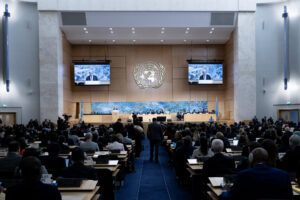
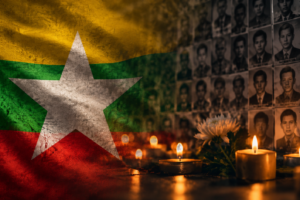
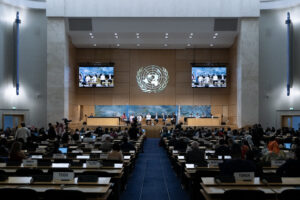
The ICJ today addressed an emergency Special Session of the UN Human Rights Council on Myanmar, outlining key requirements for the protection of the Rohingya minority, including safe and voluntary return of refugees.The Special Session is expected to adopt a resolution to address “The human rights situation of the minority Rohingya Muslim population and other minorities in the Rakhine State of Myanmar.”
The ICJ statement read as follows:
“It is encouraging that the Governments of Bangladesh and Myanmar have recognized the right of displaced Rohingya to return to their places of residence.
However, any provisions for return must comply with international law, including as regards non-refoulement. Effective guarantees that all displaced persons will be able to return to their place of prior residence in a safe, dignified, voluntary and sustainable manner, without discrimination, are essential.
Rohingya refugees must also be provided with alternatives to return, including the option of seeking international protection. Anything short of this would amount to their forcible return and thus violate the non-refoulement principle.
It is of the utmost urgency that the gross and systematic violations that have given rise to the forced displacement are immediately brought to an end and that measures are taken to prevent their recurrence, including by holding perpetrators responsible.
No-one may be forcibly returned to the current circumstances that prevail in Rakhine State, and voluntary returns will only ultimately take place if and when refugees are satisfied they are not returning to further violations in Myanmar.
Any provisions for restrictions on freedom of movement upon return are also of concern, particularly given past experience, with internment camps housing tens of thousands of Muslims displaced in 2012 still in place. Such restrictions elsewhere in Rakhine State contribute to violations of, among other things, the human rights to life, to health, to food, to education and to livelihoods.
To ensure that the rights of refugees are respected and protected, Bangladesh and Myanmar should immediately seek to ensure that UNHCR is involved, and its guidance followed, in any discussion of repatriation processes.
The Government of Myanmar must cooperate with the UN-mandated Fact Finding Mission to independently establish facts and provide a proper foundation for effective responses to human rights violations and humanitarian crises in Rakhine State, as well as in Shan and Kachin States, whose populations also face related patterns of human rights violations by military and security forces.”
The Council adopted a resolution at the end of the session, which reflects many of the concerns raised by the ICJ and others: A_HRC_S_27_L1
Nov 20, 2017 | Advocacy
The ICJ, with 35 other human rights organizations, today called on members and observers of the UN Human Rights Council to convene a special session on the deteriorating human rights situation in Myanmar.
In open letter to member and observer States of the Human Rights Council, delegations are urged to support holding a special session of the Council against the backdrop of serious reports of human rights violations, including crimes against humanity, committed by Myanmar security forces in northern Rakhine state.
The letter also sets out key elements that should be included in the text of a resolution adopted by the Human Rights Council at such a session, considering action that should be taken by the Government of Myanmar, as well as by neighbouring and other States and by human rights mechanisms.
The ICJ on the same day released a briefing note, entitled Questions & Answers on Human Rights Law in Rakhine State, clarifying national and international law and standards applicable to the crisis.
Myanmar Joint Civil Society Letter 20 November 2017 (download open letter in PDF format)
For a copy of the ICJ’s Q&A briefing, go to ‘Myanmar: rule of law must drive responses to Rohingya crisis’
Oct 16, 2017 | Advocacy
The ICJ, Amnesty International and Human Rights Watch are urging Pakistan to take immediate steps towards meeting “the highest standards in the promotion and protection of human rights,” following the country’s election to the Human Rights Council.
Today, the UN General Assembly selected 15 states to serve as members of the UN Human Rights Council from January 2018 to December 2020.
From the Asia-Pacific region, Nepal, Qatar, Afghanistan and Pakistan were selected out of five candidates.
To secure the UN Human Rights Council membership, Pakistan pledged its commitment to the promotion and protection of human rights.
However, the pledge failed to address directly many of the most serious human rights issues facing Pakistan, including enforced disappearances, the use of the death penalty, blasphemy laws, the country’s use of military courts, women’s rights including the right to education, and threats to the work of human rights defenders, lawyers and journalists.
According to UN General Assembly Resolution 60/251, “members elected to the Council shall uphold the highest standards in the promotion and protection of human rights.” The Resolution also provides that, “when electing members of the Council, Member States shall take into account the contribution of candidates to the promotion and protection of human rights and their voluntary pledges and commitments made thereto.”
Pakistan’s abuses have been highlighted by various national and international human rights organizations, UN treaty-monitoring bodies, and special procedures of the UN Human Rights Council.
Pakistan has affirmed in its election pledge that it is “firmly resolved to uphold, promote and safeguard universal human rights and fundamental freedoms for all.”
Given the pressing human rights issues in the country, the ICJ, Amnesty International, and Human Rights Watch urge Pakistan to take the necessary action to fulfill these responsibilities.
Contact
Frederick Rawski (Bangkok), ICJ Asia Pacific Regional Director, e: frederick.rawski(a)icj.org
Reema Omer (London), ICJ International Legal Adviser, South Asia t: +447889565691; e: reema.omer(a)icj.org
Download
The full statement with additional information: Pakistan-ElectiontoHRC-Advocacy-2017-ENG (in PDF)
Sep 27, 2017 | Advocacy, Non-legal submissions
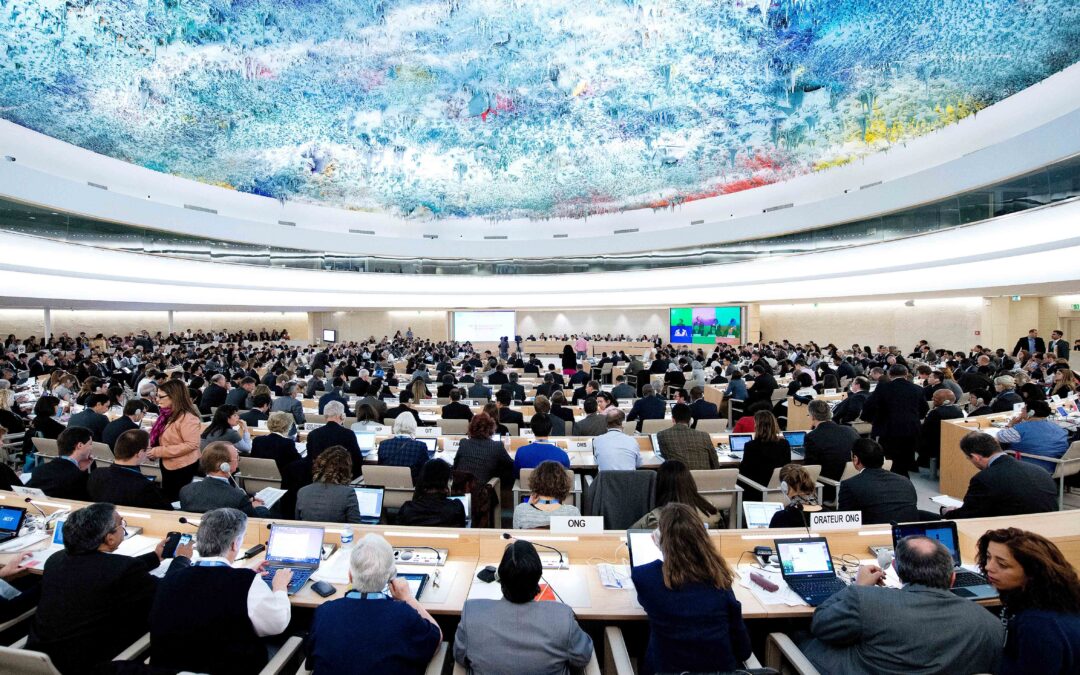
The ICJ today highlighted a sharp deterioration in the situation for human rights and the rule of law, in a statement to the UN Human Rights Council in Geneva.
The statement was delivered during the interactive dialogue with the Special Rapporteur on the situation of human rights in Cambodia, and read as follows:
“The International Commission of Jurists (ICJ) welcomes the report of the Special Rapporteur (UN Doc A/HRC/36/61) and strongly supports the renewal of her mandate.
Monitoring and action by the international community has seldom been more important for Cambodia since the Paris Peace Accords were signed in 1991.
Civil society, independent media and the political opposition are under sustained attack in what appears to be a carefully orchestrated effort to silence dissenting voices in the lead up to national elections in July 2018. Vague legal provisions in for instance the Law on Associations and Non-Governmental Organizations (LANGO) and the Law on Political Parties, are being weaponized to this end.
Human rights defenders and others, including the “ADHOC 4”, Ny Chakrya, Tep Vanny, Hun Vannak, Doem Kundy, and the President of the opposition party, Kem Sokha, face criminal charges with all the hallmarks of being politically motivated.
Prosecutors and judges lack independence and impartiality, and investigations routinely fall short of international standards, as in the case of the killing of political commentator Kem Ley.
Seeking to justify its actions, Cambodia frequently invokes the principle of the rule of law.
The ICJ, a global organisation of judges and lawyers, has worked for the rule of law for more than sixty years. The rule of law does not simply mean that laws exist and are enforced, but requires among other things: equal application of the law without discrimination, including due to political or other opinion, and ensuring that laws are only adopted and applied consistent with international human rights law.
What is happening in Cambodia today has nothing to do with the rule of law.
The ICJ would therefore ask the Special Rapporteur what further recommendations she has towards seeing the rule of law, as properly understood, truly reign in Cambodia.”
The Human Rights Council is expected to adopt a new resolution on Cambodia later this week. The ICJ and other non-governmental organisations have called for it to include additional monitoring and additional opportunities to discussion the situation at the Human Rights Council, before national elections scheduled for July 2018.
Sep 22, 2017 | Advocacy, Non-legal submissions
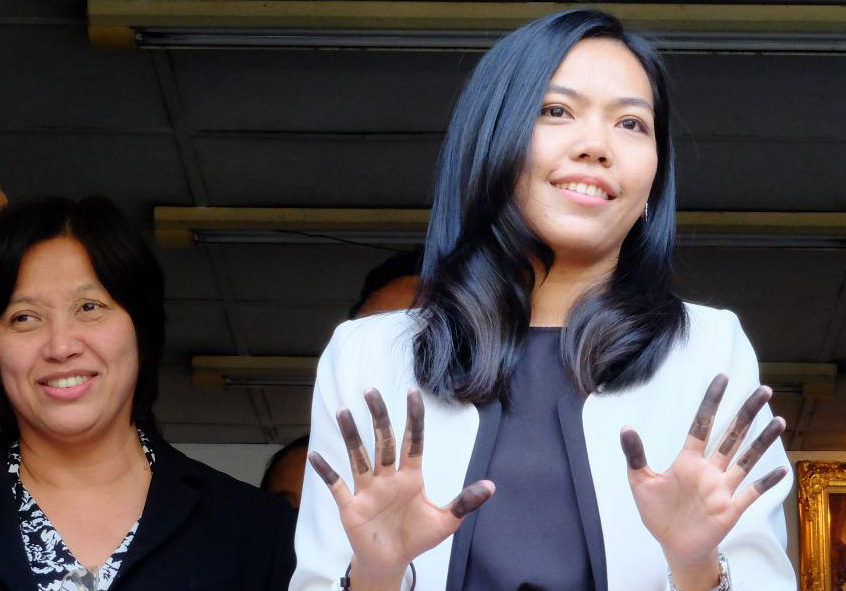
Addressing the UN Human Rights Council, the ICJ today urged Thailand to end criminal proceedings against lawyer Sirikan “June” Charoensiri, that are based on her professional activities as a human rights defender and lawyer.
The statement came during general debate at the Human Rights Council on, among other things, the report compiling cases of individual complaints that have been raised by the Special Procedures (independent experts) appointed by the Council. The statement read as follows:
“Among the many cases covered by the Communications Report of Special Procedures (A/HRC/36/25) is that of Thailand lawyer and human rights defender, Sirikan “June” Charoensiri. She was charged with sedition and other offences for actions taken, in her professional role, to protect human rights. With other lawyers, she had observed and provided legal assistance to participants in a peaceful protest.
In April, four Special Rapporteurs sent a joint communication (AL THA 2/2017) to Thailand about her case, and the related issues of restrictions on fundamental freedoms put in place following the military coup of May 2014, and prosecution of civilians in military courts.
Thailand’s response to the communication (No.52101/483) attempts to justify the charges against her by, among other things, appearing to associate her with the persons to which she and her colleagues were providing legal aid.
Principle 18 of the UN Basic Principles on the Role of Lawyers states that, “lawyers shall not be identified with their clients or their clients’ causes as a result of discharging their functions.”
The International Commission of Jurists considers that the case against Ms Charoensiri is incompatible with these and other international human rights standards. The ICJ calls upon Thailand ensure the legal proceedings against Ms Charoensiri are ended, and that measures are taken to end and prevent similar cases against other human rights defenders in the country.”
Exercising its right of reply to the statement, the delegation of Thailand, while appearing to accept that Ms Charoensiri is a human rights defender and lawyer, asserted that she had not been charged in her capacity as a lawyer or human rights defender, but due to the possibility that she was a principal or co-perpetrator of an offence, which the delegation said was based on unspecified information from the Royal Thai Police. The delegation affirmed that the Thai government attaches high priority to the protection of human rights defenders, and referred to several initiatives the delegation said were currently being prepared in this regard.
More detail from ICJ about the case is available by clicking here.
Details of the Special Procedures’ action on the case is available in the database of communications, by clicking here.
Sep 21, 2017 | Advocacy, Non-legal submissions
Speaking at the UN today, the ICJ called on India to reconsider its refusal to accept recommendations for decriminalisation of consensusal same-sex relations, abolition of the death penalty, and ensuring accountability for human rights violations.
The oral statement was made during the consideration by the UN Human Rights Council of the outcome of India’s Universal Periodic Review (UPR) process. It read as follows:
“The International Commission of Jurists (ICJ) regrets that India has not supported recommendations related to decriminalizing consensual same-sex relations, abolishing the death penalty, and combatting impunity for serious human rights violations.
The ICJ has documented how by allowing the criminalization of consensual same-sex relations, section 377 of the Indian Penal Code has facilitated numerous human rights violations, including violations of the principle of non-discrimination and the rights to equality before the law and equal protection of the law, liberty and security of person, freedom of expression, health, and privacy. Section 377 has also perpetuated homophobic and transphobic attitudes in India, leading to discrimination and violence against LGBT individuals.
The Government has also failed to take steps to combat impunity for serious human rights violations such as extrajudicial killings, enforced disappearances, and torture and other ill treatment, which are facilitated by laws such as the Armed Forces Special Powers Act (AFSPA) and other national security and public safety legislation. Despite repeated commitments to do so, India has also not enacted legislation to recognize torture as a distinct, autonomous offence in its penal code.
The ICJ therefore urges the Government to reconsider, accept and implement UPR recommendations to:
- Decriminalize consensual same-sex sexual relations (161.71, 161.76, 161.77, 161.78, 161.79);
- Enact legislation consistent with the Supreme Court’s recognition of the rights of transgender persons and international human rights standards (161.80);
- Repeal AFSPA and other state and central level laws that similarly violate international human rights law (161.97, 161.248, 161.249);
- Become a party to the CAT; OPCAT; the Second OP to the ICCPR; the ICPPED and other international instruments (161.13, 161.15, 161.29, 161.30, 161.31); and
- Establish a moratorium on the use of the death penalty, with a view towards its abolition (161.104 – 161.115).”