Jan 20, 2016 | News
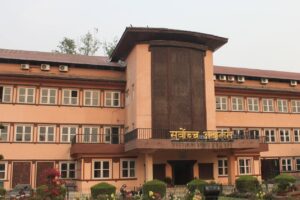
The Indonesian government’s efforts to counter and punish attacks such as the deadly assault in central Jakarta last week can only succeed if they strengthen respect for rights and rule of law, said the ICJ today.
Indonesia’s National Counterterrorism Agency (BNPT) and the State Intelligence Agency (BIN) claimed that they lacked sufficient authority under the country’s existing Anti-Terrorism Law to stop the attacks.
Eight people were killed in an attack by armed men in central Jakarta on 14 January.
“Plans discussed by Indonesian authorities to amend the 2003 Anti-Terrorism Law to make it ‘more effective’ in addressing terrorist threats mostly focus on weakening hard-won protections for suspects and the rule of law,” said Emerlynne Gil, ICJ’s Senior Legal Adviser for Southeast Asia.
“In order to help the Indonesian government meet its obligation to protect its people from acts of terrorism, experience from around the world and Indonesia’s Suharto era shows that security can only be achieved through justice,” she added.
The head of the National Police, Gen. Badrodin Haiti, said that the Anti-Terrorism Law prevents police from prosecuting Indonesians returning home after allegedly serving as combatants in Syria.
One of the proposals is to give intelligence officers the authority to make arrests under the Anti-Terrorism Law.
“Giving intelligence officers the authority to make arrests will likely lead to an increase in violations of human rights,” said Gil.
“The roles of intelligence and of law enforcement are fundamentally different and need to remain separate,” she added.
The ICJ pointed out that there were not enough safeguards under Indonesia’s laws, specifically the State Intelligence Law, to ensure the accountability of the intelligence agency or its officers.
Another proposal is that authorities be given the power to arrest anyone they see as having a “strong indication” to be planning acts of terrorism.
The ICJ, however, observes that this proposal appears to allow Indonesian authorities to avoid judicial oversight so that it would be easier for them to arrest any person, irrespective of whether there is sufficient evidence of criminal activity or an intent to prosecute.
This proposal also appears to allow authorities to detain and interrogate persons suspected of involvement in terrorist acts with a view to gaining intelligence information without necessarily contemplating the filing of criminal charges.
As ICJ’s Eminent Jurists Panel on Terrorism, Counter-terrorism, and Human Rights has underscored, the practice of arrest and detention for the sole purpose of intelligence gathering may mean the arrest and detention of those “who are not necessarily criminal suspects, but who are also believed to have information that will ‘substantially’ assist the collection of intelligence relating to terrorism.” Detaining people for the sole purpose of intelligence gathering in the absence of evidence of criminal activities is a form of arbitrary detention.
Such a practice can also lead to secret or unacknowledged detention, which under international law constitutes enforced disappearance and is absolutely prohibited, the Geneva-based organization adds.
“The obligation to protect human rights and keep people safe from acts of terrorism are not at opposing poles,” said Gil. “They are complimentary and mutually reinforcing duties of protection incumbent on the State.”
“In fact, protecting human rights can be an effective shield in defending societies from acts of terrorism,” she added.
All measures to counter terrorism must strictly comply with obligations Indonesia has under international law.
Contact:
Emerlynne Gil, Senior International Legal Adviser of ICJ for Southeast Asia, t: +66 840923575 ; e: emerlynne.gil@icj.org
Background:
Indonesia’s Anti-Terrorism Law requires judicial approval to arrest a suspect in a terrorism case. Under the law, authorities may arrest any person “strongly suspected of committing a crime of terrorism on the basis of sufficient initial evidence.”
The Chairperson or Deputy Chairperson of a District Court determines whether sufficient initial evidence exists or has been obtained by authorities.
Under article 42 of Indonesia’s State Intelligence Law, the accountability of intelligence operations of the State Intelligence Agency is in principle ensured through a written report on these operations submitted to the President of Indonesia.
This provision has been criticized for failing to provide sufficient accountability, as the presidency is firmly within the Executive branch and lacks capacity to investigate and prosecute in the ordinary criminal justice system.
Furthermore, article 24 of the State Intelligence Law provides that the State has the obligation to give “protection” to all intelligence personnel when carrying out their intelligence duties and functions. Such protection is extended to their family members.
The law does not define “protection” and hence may be construed as the State being obliged to grant immunity to intelligence personnel and their family members from criminal prosecution or civil liability.
Dec 22, 2015 | News
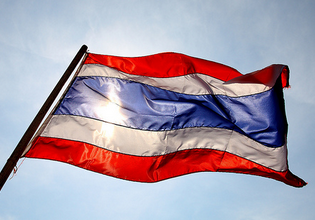
The upcoming Supreme Court verdict in the case of Somchai Neelapaijit is an important test of Thailand’s treatment of cases of enforced disappearance, the ICJ said today.
The Supreme Court is expected to rule on whether the Court of Appeal was correct in overturning the conviction of one police officer for coercion and upholding the acquittals of four other police officers, and whether Somchai Neelapaijit’s family should be permitted to participate in the proceedings as plaintiffs.
The case concerns the 2005 trial of five police officers for coercion and gang-robbery after Somchai Neelapaijit, a leading Thai lawyer and human rights defender, was last seen on 12 March 2004 being pushed into a car by several men in Bangkok.
In March 2014, the ICJ published a report in Thai and English, which summarises the history of the case and provides a background to the upcoming decision, which will be delivered in Bangkok on 29 December 2015.
“This decision is an important milestone in the long and torturous history of this case,” said Sam Zarifi, the ICJ’s Regional Director for Asia and the Pacific.
“But whatever the result, Thailand must not waver from its repeated commitments to promptly and effectively investigate this enforced disappearance, to seek to identify those responsible and bring them to justice, and to provide the family with full remedies and reparation,” he added.
The police never charged the five police officers with more serious crimes – despite the statements of numerous officials, including past Prime Minister Thaksin Shinawatra, expressing certainty about his death – as Somchai Neelapaijit’s body or remains were never found.
The Department of Special Investigations (DSI), often described as the FBI of Thailand, is still conducting an investigation into his fate or whereabouts.
Angkhana Neelapaijit, Somchai Neelapaijit’s wife and now Commissioner of the Thai Human Rights Commission, told the ICJ: “Ensuring that all victims of enforced disappearance have their rights fully recognised by the Thai courts is equally important to me as seeking justice in my own case. My long battle through Thailand’s justice system has shown me Thailand’s laws are currently inadequate to deal with cases of enforced disappearance and that significant reforms are needed before the rights of victims are fully recognized.”
Contacts
Sam Zarifi, Regional Director, Asia-Paicific Programme, sam.zarifi(a)icj.org, +66 (0) 80 781 900
Kingsley Abbott, International Legal Adviser for Southeast Asia, Asia-Pacific Programme, kingsley.abbott(a)icj.org, +66 (0) 94 470 1345
Additional information:
On 11 December 2015, the ICJ published an English version of its Practitioners Guide “Enforced Disappearance and Extrajudicial Execution: Investigation and Sanction”, originally published in Spanish in March 2015.
Thailand-Somchai Verdict-News-Press releases-2015-ENG (full text, in PDF)

Dec 17, 2015 | News
The decision of the High Court of Singapore ordering blogger Roy Ngerng to pay damages to Prime Minister Lee Hsien Loong following a civil defamation suit brought in 2014 constitutes a major blow for freedom of expression in the country, said the ICJ today.
In a judgment released on 17 December 2015, the High Court ordered Roy Ngerng to pay SG$100,000 in general damages (approximately US$70,667) and SG$50,000 (approximately US$35,330) in aggravated damages.
This decision comes approximately six months after a three-day hearing on assessment of damages took place.
“Under international standards, individuals must not be the target of defamation actions over comments made about public figures, particularly where the subject matter is of public interest,” said Sam Zarifi, ICJ’s Regional Director for Asia and the Pacific.
“This decision sends a clear message that the people of Singapore are not in fact free to express their opinions about matters of public interest,” he added.
This suit against Roy Ngerng was brought by Prime Minister Lee who argued that Roy Ngerng, in his blog, suggested that the Prime Minister bore responsibility for criminal misappropriation of the Central Provident Fund (CPF), the social security savings plan of the citizens of Singapore.
In a summary judgment delivered in November 2014, the High Court found Roy Ngerng liable for defaming the Prime Minister. Roy Ngerng was later ordered by the court to pay Prime Minister Lee SG$29,000 (approximately US$22,300) for the legal fees and related expenses incurred pertaining the application for the summary judgment. Roy Ngerng did not appeal the High Court’s decision.
“The government’s ongoing use of defamation proceedings to silence critics is a deplorable practice that undermines the rule of law. It is very concerning to see measures imposed in the region that cast a chilling effect on freedom of expression of activists and human rights defenders,” said Zarifi.
The findings in this decision are inconsistent with international standards on freedom of opinion and expression that establish that pecuniary awards should be conferred only when non-pecuniary remedies, including apology, rectification and clarification are insufficient.
Background:
Roy Ngerng maintains a blog called The Heart Truths to discuss social issues. Many of the posts on his blog advocate for more transparency in the management of the Central Provident Fund.
On 15 May 2014, Ngerng published the allegedly defamatory post on his blog. A few days later, he was asked by the Prime Minister’s lawyers to take down the post, apologize and make a written offer of damages and costs, which Ngerng did within the following five days.
Despite these actions, the Prime Minister proceeded to sue the blogger for defamation. Prime Minister Lee later applied to the High Court to enter interlocutory judgment for damages to be assessed. The court ruled in his favor.
The hearing on the assessment of damages took place from 1-3 July 2015. At the end of the hearing, the High Court directed the parties to file written submissions to address issues that were raised during the three-day hearing.
In June 2015, the ICJ submitted a legal opinion to the High Court in support of certain aspects of the defendant’s position.
Contact:
Emerlynne Gil, ICJ’s Senior International Legal Adviser for Southeast Asia, t: +668 4092 3575 ;
e: emerlynne.gil(a)icj.org
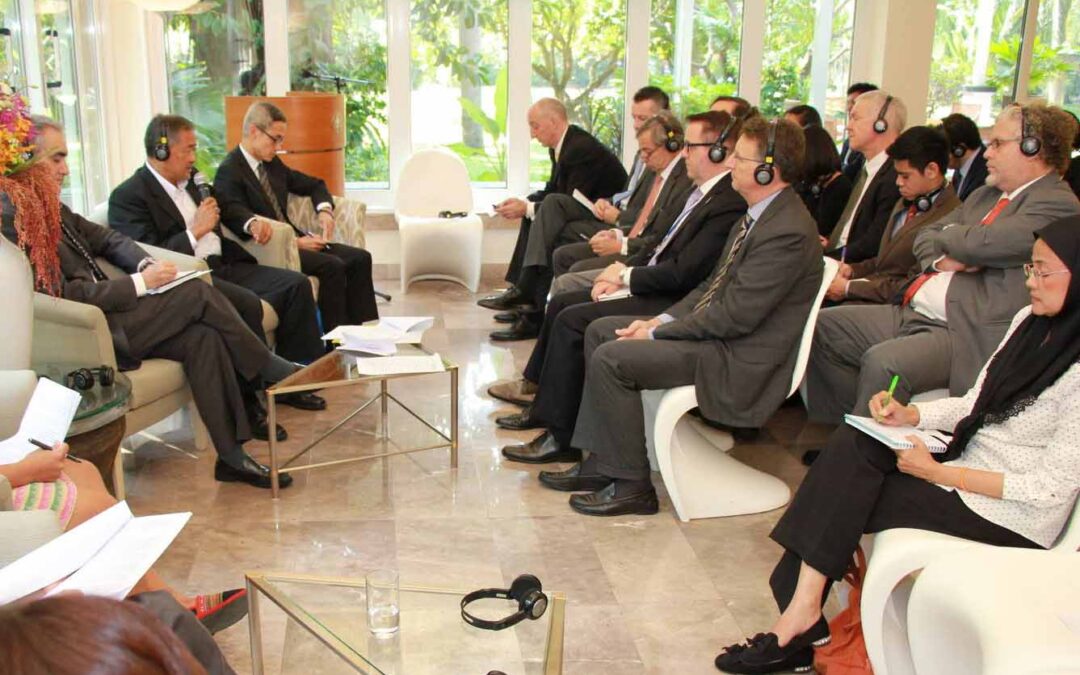
Dec 10, 2015 | News
The Ambassador of the Federal Republic of Germany to Thailand and the ICJ held an event at the German Residence in Bangkok to mark Human Rights Day.
In his welcome speech, the Ambassador, Peter Prügel, stressed the importance of the protection of universal human rights which are essential for peace, long-term stability and sustainable development worldwide and referred to Germany’s long-standing support of the ICJ and its partners in Thailand.
Angkhana Neelapaijit, newly appointed Commissioner of Thailand’s National Human Rights Commission, respected human rights defender and victim of enforced disappearance then spoke about her new role and the human rights challenges currently facing Thailand.
A panel discussion on the prevailing human rights situation in Thailand then followed, which touched on a range of topics including the situation in deep South, community rights, migrants and refugees, the current legal framework, freedom of expression and assembly, the requirement to protect human rights defenders under international law and the upcoming Universal Periodic Review of Thailand by the Human Rights Council in 2016.
The panelists were:
- ICJ Commissioner, Professor Emeritus Vitit Muntarbhorn, Law Faculty, Chulalongkorn University;
- Sitthipong Chantarawirod, Chairperson of Muslim Attorney Centre Foundation;
- Pranom Somwong, Representative of Protection International Thailand;
- Somchai Homlaor, Chairperson of Cross Cultural Foundation; and
- Yaowalak Anuphan, Head of Thai Lawyers for Human Rights.
Approximately 100 members of Thailand’s civil society, the diplomatic community, the National Human Rights Commission, affected communities, academia, the United Nations, and Thailand’s Ministry of Foreign Affairs attended the event.

Dec 3, 2015 | News
The ICJ condemned the passage of the National Security Council bill by Malaysia’s House of Representatives today. The passage of the bill underlines the need to establish reforms in the lawmaking processes in the country, the Geneva-based organization says.
The ICJ calls on the Government of Malaysia to undertake these reforms immediately.
The bill, hastily tabled at the House of Representatives on 1 December 2015 by the Government, was passed by a vote of 107 in favour and 77 against the proposal.
Members of the ruling party, Barisan Nasional, voted overwhelmingly in its favor.
The vote took place despite repeated calls from Malaysian civil society, opposition lawmakers, and human rights advocates to delay consideration to allow for extensive debate and adequate consultations on the draft legislation.
The ICJ deplored the manner in which the government steamrolled the bill to passage.
“The same rushed maneuvers occurred when the Prevention of Terrorism Act (POTA) and amendments of the Sedition Act were hastily passed in parliament earlier this year,” observed Emerlynne Gil, ICJ’s Senior International Legal Adviser for Southeast Asia.
“There seems to be a disturbing pattern of avoiding deliberative care on legislation that is both addressed to serious security concerns that have the greatest implications for human rights,” she added.
The ICJ considers that the poorly conceived legislation gives overbroad powers to the Prime Minister and the security forces which is inconsistent with the rule of law and could lead to serious human rights violations
The bill establishes a National Security Council (NSC) that will be the central authority in the government on matters pertaining to national security.
The NSC will be headed by the Prime Minister and composed of the Deputy Prime Minister, Minister of Defence, Minister of Home Affairs, Minister of Communication and Multimedia, Chief Secretary, the Commander of the Armed Forces, and Inspector-General of Police.
Under the bill, the Prime Minister is granted the power to declare any part of Malaysia as a “security area” if it is found by the NSC that such area is under serious threat from any person or entity that could harm the general public, the economy, infrastructure or other national interests.
Any part of the country may be declared a “security area” by the Prime Minister for up to six months and the declaration may be renewed an infinite number of times.
A Director of Operations is also to be appointed to oversee the operations over the “security areas”.
The specific powers of the Director of Operations are left vague, but they are overbroad and therefore prone to abuse.
They apparently include authority to prevent any person from entering these “security areas”, to transfer persons out of these areas, to impose curfews, and at least temporarily, to take possession of any property necessary in the interest of national security or for the accommodation of the security team.
The security team under the Director of Operations will have the power to conduct warrantless arrests and warrantless searches and seizures.
There are no processes specified by which affected persons may challenge such actions, either before a court or administrative body, nor are there other procedural safeguards.
Any members of the security team would be authorized to “use any amount of force against a person or entity to the extent that is reasonable and necessary within the circumstances to protect national security”.
The ICJ notes that under international law, lethal force may only be used to the extent strictly necessary to protect life.
Finally, the draft law provides immunity from any legal proceeding for members of the NSC, the Director of Operations, the security team, and other government staff involved in the administration of the “security area” for carrying out their duties and functions under the law.
There is no exception even in cases involving serious violations of human rights and crimes under international law, for which immunity is not permitted.
“The wide ranging powers conferred to members of the NSC and the security team clearly lack any form of safeguards and will inevitably lead to arbitrary exercise of authority, in contravention of the rule of law. This bill could very likely be used to further restrict freedom of expression and opinion and other rights in the country,” said Emerlynne Gil.
Vague and overbroad language in laws are inconsistent with the rule of law, contravening the principle of legality, the ICJ says.
This poses particular hazards in respect of national security legislation.
The bill will now need to be passed by the Senate and thereafter, the Malaysian King will have to assent to it so that it becomes law.
The ICJ expects the bill to be passed by the Senate and assented to by the King without thorough deliberations.
Nevertheless, it still calls on both the Senate and the King to reject the present draft, with a view to returning it the House to make necessary reforms in line with the rule of law.
Contact:
Emerlynne Gil, ICJ Senior Legal Adviser (Bangkok), t: +66840923575, e: emerlynne.gil(a)icj.org

Dec 3, 2015 | News
The Indian government should support a comprehensive law guaranteeing equal rights and non-discrimination to transgender persons, consistent with India’s international human rights obligations, the ICJ said today.
This law must be developed and passed after adequate consultation with the transgender community in India, the Geneva-based organization added.
“The transgender community in India has faced stigma, discrimination and violence for years,” said Sam Zarifi, ICJ’s Asia-Pacific Director. “It is time for the Indian Parliament to pass comprehensive anti-discrimination legislation as an essential first step towards guaranteeing the transgender community’s internationally recognized, and constitutionally protected, human rights.”
Earlier this year, the Rajya Sabha (Upper House of the Indian Parliament) passed the Rights of Transgender Persons Bill, 2014, a private member’s Bill, that is, a bill introduced by a Member of Parliament rather than the Government.
The Bill guaranteed a wide range of rights to transgender individuals, including the right to be free from discrimination, the right to life and personal liberty, the right to protection from abuse, violence and exploitation, as well as equality in educational opportunities, employment, social security, and health care.
The Lok Sabha (Lower house of the Indian Parliament) will discuss a revised version of this Bill in the current session. The Government’s Ministry of Social Justice and Empowerment is reportedly developing its own draft.
“Any transgender rights legislation must fully comply with India’s international human rights obligations,” Zarifi added. “An essential element of this is that the Indian government must ensure that the transgender community participates in, and is meaningfully consulted on, the new law’s provisions.”
India has ratified several international instruments, including the International Covenant on Civil and Political Rights, the International Covenant on Economic, Social and Cultural Rights and the Convention on the Elimination of all forms of Discrimination against Women. They prohibit discrimination and guarantee full equality for everyone, including transgender people.
Successive pronouncements by international bodies, including the UN, have affirmed that these rights apply to transgender persons.
The Yogyakarta Principles – which reflect the specific application of international human rights law in the context of sexual orientation and gender identity – recognize transgender people’s human rights, including the right to equality before the law, equal protection of the law and the principle of non-discrimination, as well as the right to self-defined sexual orientation and gender identity, the right to expression, to privacy, to health, to housing, to education, and the right to participate in policies affecting one’s welfare.
India’s transgender rights Bill should respect, protect and fulfill this range of rights. It should also ensure that the definition of who constitutes a transgender person, as well as the process of determining this, is consistent with international standards, the ICJ said.
In 2014, in the case of National Legal Services Authority v Union of India (NALSA), the Indian Supreme Court recognized transgender persons’ right to self-identification and to the legal recognition of their gender identity. However, a year after the Supreme Court’s judgment, its directions are yet to be effectively implemented, making the passage of a comprehensive bill on transgender persons’ human rights all the more crucial. At the same time, the legislative process culminating in the adoption of the legislation needs to be adequately consultative.
“A comprehensive transgender rights bill is long overdue in India,” Zarifi said. “It is crucial that the Indian government take advantage of the current political momentum to reaffirm the rights of transgender persons, and pass a strong and progressive law.”
Contact:
Sanhita Ambast, ICJ International Legal Adviser (Delhi), t: +91 9810962193; e: Sanhita.ambast(a)icj.org
Background
A report by India’s Ministry of Social Justice and Empowerment – Report of the Expert Committee on the Issues relating to Transgender Persons –has acknowledged the range and impact of discrimination faced by the transgender community in India.
It makes note of the stigma, discrimination and violence they face from their families, communities, and state institutions, including the police. It also highlights the difficulties faced by them in accessing services like housing and education.
In the NALSA case, the Supreme Court found that discrimination faced by the transgender community in India violated the rights to equality, non-discrimination, free speech and expression, and life in the Indian constitution. The Court gave specific directions to address this discrimination.
It also noted that the absence of “suitable legislation protecting the rights of the members of the transgender community” has resulted in their facing discrimination in various areas. A clarification petition, filed by the government, regarding this case is currently pending at the Supreme Court.
Following the Supreme Court’s 2013 NALSA judgment, several states have put in place progressive policies to address the discrimination faced by transgender groups.
However, the implementation of this judgment is far from adequate, and a lot more needs to be done.
A 2011 Report of the United Nations High Commissioner for Human Rights has recommended that states “Enact comprehensive anti-discrimination legislation that includes discrimination on grounds of sexual orientation and gender identity among prohibited grounds and recognizes intersecting forms of discrimination”.
It also asked states to “Facilitate legal recognition of the preferred gender of transgender persons”.
In its 2015 report, the United Nations High Commissioner for Human Rights recommended that anti-discrimination legislation should “include[s] sexual orientation and gender identity among prohibited grounds, and also protect[s] intersex persons from discrimination” and that “LGBT and intersex persons and organizations [should be] consulted with regard to legislation and policies that have an impact on their rights”.