Oct 6, 2012 | News
The promotion of colonel Raju Basnet is a slap in the face for the victims of Nepal’s protracted civil war, ICJ and other human rights groups said today.
The Nepali cabinet’s decided on October 4, 2012, to promote colonel Raju Basnet to the rank of brigadier general. Human Rights Watch, Amnesty International, and the International Commission of Jurists say the United Nations and the Nepali National Human Rights Commission compiled credible evidence of systematic enforced disappearances and torture at Bhairabnath Battalion headquarters in Kathmandu under the command of the colonel Raju Basnet in 2003.
On the basis of this evidence, in 2007 Nepal’s Supreme Court ordered an independent investigation and prosecution of these human rights violations. That order includes allegations that Basnet personally committed acts of torture.
“Nepal’s cabinet has thrown the entire idea of holding soldiers accountable for abuses out the door,” said Brad Adams, Asia director at Human Rights Watch. “This cynical and reprehensible decision seriously undermines respect for human rights and contradicts Nepal’s assurances to the international community that it would hold those implicated in wartime crimes to account.”
Basnet’s promotion occurred under the leadership of the United Communist Party of Nepal – Maoist (UCPN-M). During the war, the UCPN-M was itself responsible for enforced disappearances, torture, and unlawful killings, and has not had to answer for a single wartime violation, the groups said. Agni Sapkota, a UCPN-M member, was appointed to a cabinet position even as he was under a court-ordered police investigation for his involvement in a 2005 unlawful killing.
“Despite years of promises, the Maoists and the army have shown themselves united in one crucial aspect: contempt for the notion of accountability for criminal acts and victims’ rights to justice, truth, and reparation,” said Polly Truscott, Amnesty International’s South Asia director.
International law applicable in Nepal obligates the government to investigate and prosecute serious violations of international human rights and humanitarian law. Consistent with international legal principles, officials implicated in serious offenses should be removed or suspended pending completion of full investigations, with full respect for their due process rights.
The Nepali Supreme Court in an August decision directed the government to put in place appropriate legislation and guidelines to ensure that security officials are vetted before they are appointed or promoted to high-level positions.
“With the promotion of Basnet, the denial of justice and accountability has essentially turned into government policy,” said Sam Zarifi, Asia director at the International Commission of Jurists. “This decision is basically the current Nepali government saying it does not care about the rule of law, does not care about its own Supreme Court directives, and indeed, does not care about the best interests of its own citizens. This promotion is a signal to all perpetrators that power trumps justice.”
The rights groups called on the international community to urge the Nepali government to revoke its decision.
“Nepali civil society, with support from the UN and the international community, has spent years seeking to promote justice and accountability,” Adams said. “By promoting Col. Basnet, the government has sent a clear signal to the Nepali people and the country’s international supporters that it not committed to these same goals.”
For more information, please contact:
In Kathmandu, for ICJ, Govinda Sharma: +977-985-106-1167
In Bangkok, for ICJ Asia-Pacific, Sam Zarifi: +66-807-819-002

Oct 2, 2012 | News
 The Jury of the Martin Ennals Award for Human Rights Defenders (MEA) selected the Venerable Luon Sovath as the 2012 Martin Ennals Award winner. The Prize winner was announced at a ceremony in Geneva.
The Venerable Luon Sovath, a Buddhist monk from Siem Reap, Cambodia witnessed his family and fellow villagers being forcibly evicted from their homes in 2009. Since then he has been a strong advocate against forced evictions, which remove families from their homes, often violently and little or no compensation.
Despite threats to his person, of arrest and disrobing, the Venerable Sovath, a non-violent Buddhist monk, uses videos, poems and songs to defend the right to housing. His advocacy touches powerful economic interests. The threats against the Venerable Sovath are very real.
Venerable Sovath was selected from among three final Nominees (see video presentation at the end of this article). Also nominated was Nasrin Sotoudeh, an Iranian Lawyer serving a 6 year prison sentence in Iran for her Human Rights work. She is known particularly for her work on behalf of women and children’s rights, especially juveniles facing execution. The third nominee is the Bahrain Center for Human Rights, who report widely on human rights abuses in Bahrain. Many of their key staff are currently imprisoned for their work.
The New Chair of the Martin Ennals Foundation, Micheline Calmy-Rey, the former Swiss President and Foreign Minister said: “This year’s novel format with three nominees made the Jury’s decision particularly difficult. As a Buddhist monk, Venerable Sovath has managed to raise wider attention to the issue of forced evictions in Cambodia”
The Martin Ennals Award for Human Rights Defenders (MEA) is a unique collaboration among ten of the world’s leading human rights organizations to give protection to human rights defenders worldwide.
The Jury is composed of the following NGOs: Amnesty International, Human Rights Watch, Human Rights First, International Federation for Human Rights, World Organisation Against Torture, Front Line, International Commission of Jurists, German Diakonie, International Service for Human Rights and HURIDOCS.
Previous laureates : Kasha Jacqueline Nabagesera (2011) Muhannad Al-Hassani, Syria, Emad Baghi, Iran; Mutabar Tadjibaeva, Uzbekistan; Pierre Claver Mbonimpa, Burundi and Rajan Hoole-Kopalasingham Sritharan, Sri Lanka; Akbar Ganji, Iran and Arnold Tsunga, Zimbabwe; Aktham Naisse, Syria; Lida Yusupova, Russia; Alirio Uribe Muñoz, Colombia; Jacqueline Moudeina, Chad; Peace Brigades International; Immaculée Birhaheka, DR Congo; Natasha Kandic, Yugoslavia; Eyad El Sarraj, Palestine; Samuel Ruiz, Mexico; Clement Nwankwo, Nigeria; Asma Jahangir, Pakistan; Harry Wu, China.
Patrons of the Martin Ennals Award: Asma Jahangir, Barbara Hendricks, José Ramos-Horta, Adama Dieng, Leandro Despouy, Louise Arbour, Robert Fulghum, Irene Khan, Theo van Boven and Werner Lottje†.
Contact: Michael Khambatta, t: +41 79 474 8208; e-mail: khambatta(at)martinennalsaward.org or visit www.martinennalsaward.org
Video presentation of the three nominees: Luon Sovath (Cambodia), Nasrin Sotoudeh (Iran), Bahrain Center for Human Rights (Bahrain)

Sep 18, 2012 | News
Probe, don’t promote, alleged human rights abuser Kuber Singh Rana, Human Rights Watch and the ICJ said today.
Aug 22, 2012 | News
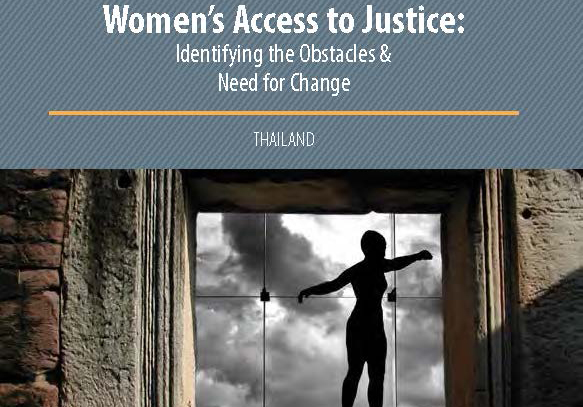 In a new report released today, the ICJ and Justice for Peace Foundation (JPF) call for a series of changes in law, practice, approach and behaviour to address the justice needs of women across Thailand.
Jun 28, 2012 | News, Reports, Thematic reports
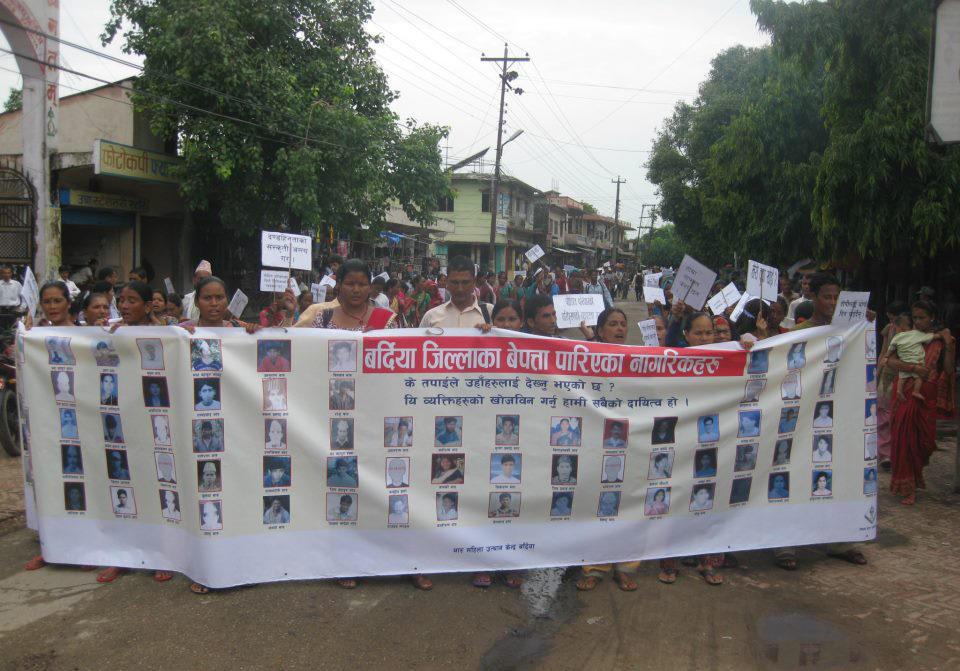
Nepal has avoided its obligation to provide justice for serious human rights violations over the past 20 years by relying on ineffective commissions of inquiry instead of using the criminal justice system, a new ICJ report says.
Jun 28, 2012 | Events
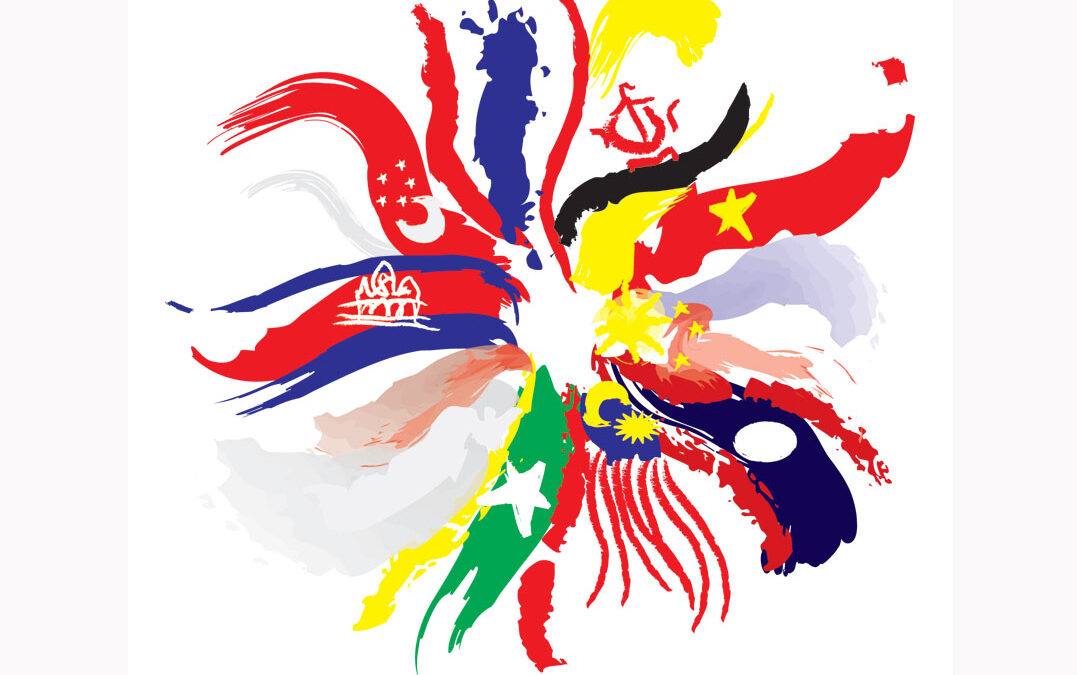
On Tuesday 3 July from 13h-15h in room XI, the ICJ is co-sponsoring a parallel event on the ASEAN human rights declaration, along with other human rights groups.This event will provide delegations and civil society with a forum to discuss the production of the ASEAN declaration being developed by the ASEAN Intergovernmental Commission on Human Rights. Expert panellists include Mr Yap Swee Seng, FORUM-ASIA Executive Director, Mr Ian Seiderman, ICJ Legal and Policy Director, and Ms Kulachada Chaipipat, Southeast Asian Press Alliance. Attendance is open to all delegations and members of civil society with access to the Palais des Nations in Geneva.